

Visiting Patagonia: Los Glaciares or Torres del Paine National Park

Patagonia is one of the most beautiful regions in the world, with its territory shared by Chile and Argentina. Of its many national parks, the two most visited ones are Los Glaciares in Argentina and Torres del Paine in Chile. We were fortunate enough to be able to visit both during our backpacking trip across South America and totally fell in love with each of them.
We believe that most people who plan a trip to Patagonia would also want to visit both. However, depending on how much time you have, your budget and what activities you are planning on doing, you may be forced to pick one over the other. So, in this post we’ve decided to compare Los Glaciares and Torres del Paine based on many factors that could influence your decision, including how to get to and get around the parks, entry ticket and accommodation costs, iconic trails, viewpoints, facilities and other special experiences.
If you’d like to see what we got up to in both parks, make sure to watch our dedicated Los Glaciares National Park video and Torres del Paine National Park video, which we’ve shared on our YouTube channel Kitti and Jon.
Disclosure: This post may contain affiliate links, which means we may receive a small commission if you click a link and purchase something. Clicking these links won’t cost you anything, but it will help us to keep this site up and running! Learn more about our affiliate policy.
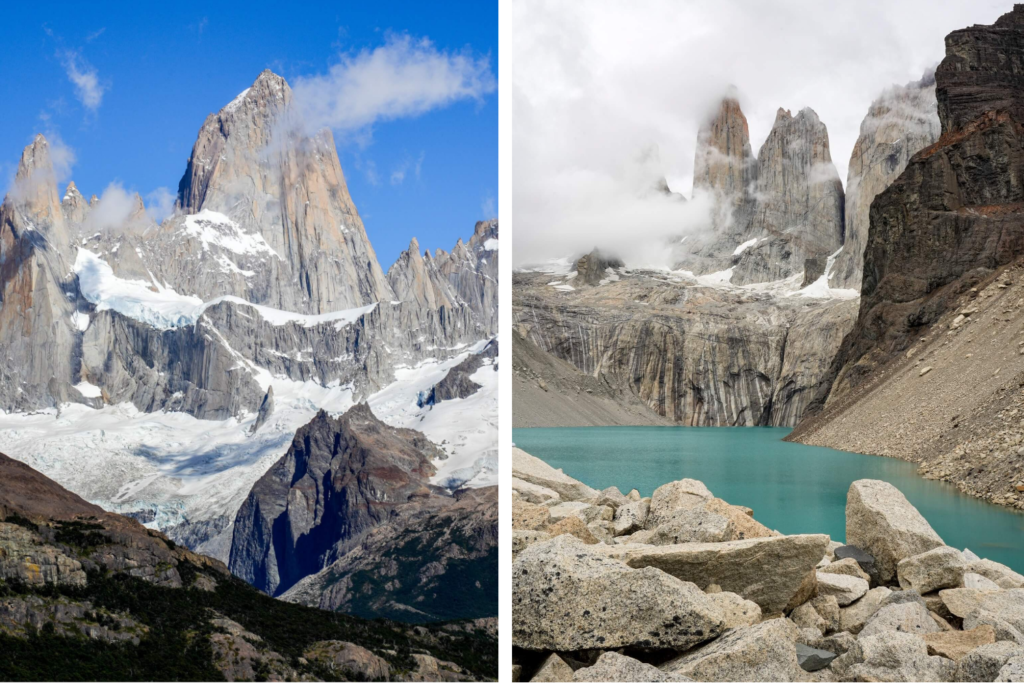
About Los Glaciares and Torres del Paine National Parks
Los Glaciares National Park is located in the southwest of the Santa Cruz Province in Argentine Patagonia. It was established in 1937 and was declared a UNESCO World Heritage Site in 1981. The park gets its name because of the high number of large glaciers in the area, such as Perito Moreno, Upsala, Viedma and Spegazzini. Many of the glaciers are actually fed by the Southern Patagonian Ice Field, the southern hemisphere’s largest expanse of ice outside of Antarctica.
Torres del Paine National Park is located in southern Chilean Patagonia. It borders Bernardo O’Higgins National Park to the west and Los Glaciares National Park to the north. Established as a national park in 1959, it also incorporates part of the Southern Patagonian Ice Field.
|
Los Glaciares (Argentina) |
Torres del Paine (Chile) |
|
|---|---|---|
|
Gateway Town |
El Calafate / El Chalten |
Puerto Natales |
|
Admission Fee |
$50,000 ARS (~$34 USD) |
$32,400 CLP (~$35 USD) |
|
Official Website |
||
|
Iconic Hiking Trails |
|
|
|
Top Glacier |
Perito Moreno Glacier |
Grey Glacier |
|
Advance Booking |
Not needed too far ahead |
Needed for campsites/refugios |

Travelling to Patagonia: Los Glaciares vs Torres del Paine
Travelling to El Calafate/El Chalten vs Puerto Natales
The cost and availability of your international flight will be the first major decision you face when visiting Los Glaciares or Torres del Paine. Both Santiago, the capital of Chile, and Buenos Aires, the capital of Argentina, offer direct flights from Europe, North and South America.
Our Tip. If you can visit both parks, consider booking a multi-city flight which saves you going back-and-forth between the two countries.
In Argentina, there are two main hubs close to Los Glaciares: El Calafate (for Perito Moreno Glacier) and El Chalten (for hiking Mt Fitz Roy). There are regular direct flights to El Calafate from Buenos Aires. From there, El Chalten is easily accessible either by hire car or public bus.
The closest city you’d need to travel to in Chile is Puerto Natales. You can take a direct flight there from Santiago or from Puerto Montt, the gateway city to the Lake District of Chile. Torres del Paine is still about 112 km (70 mi) north of Puerto Natales though, which you can reach by either hire car or public bus.
No matter which park you’re going to, you’ll have to account for a very long travel day (or two) to reach either of them.
Find Flights to Patagonia✈️
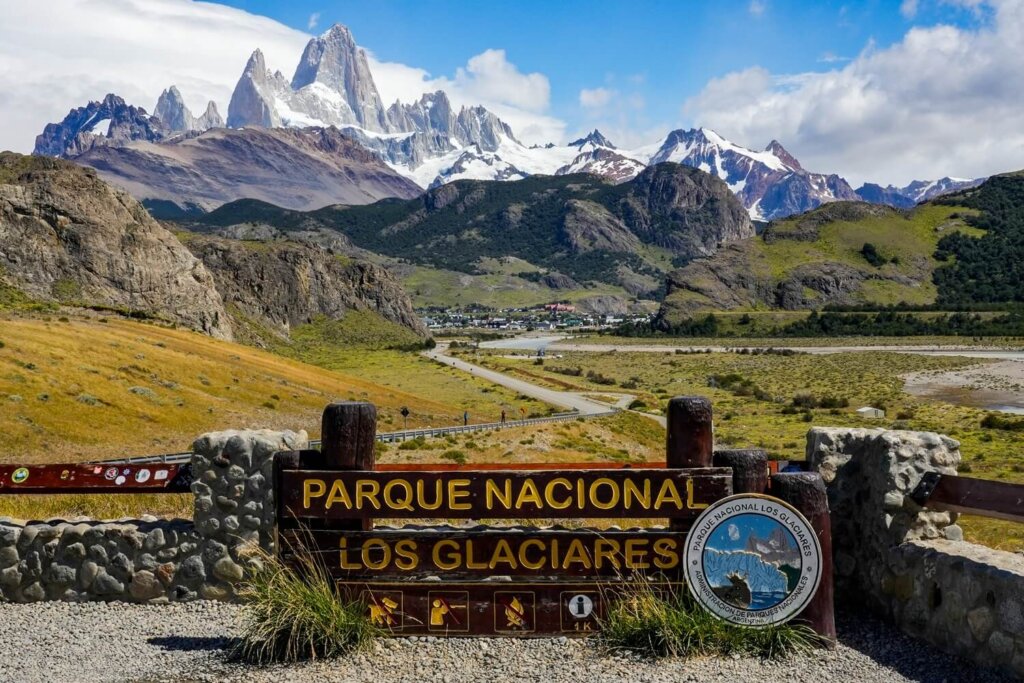
Where to Base Yourself in Los Glaciares and Torres del Paine
Los Glaciares essentially has two hubs: El Calafate and El Chalten. For easy access to the most iconic hiking trails in the park, you’ll want to spend a few days in El Chalten. Then, if you also want to visit Perito Moreno Glacier, we suggest allocating a night or two in El Calafate.
Both places have plenty of accommodation options (see next section), although expect prices to be slightly higher in El Chalten as it’s much smaller. There are plenty of amenities in both towns, including restaurants and cafes.
For Torres del Paine, you can either stay in Puerto Natales or inside/right around the entrance to the national park. As you’d expect, Puerto Natales will have more accommodation options, including more affordable ones. Staying in or around Torres del Paine will come with a much higher price-tag due to the limited number of hotels, refugios and campsites. Thanks to this, you’ll also need to book everything way further in advance, especially if you’re planning to complete either the W-Trek or the O-Circuit. Amenities will also be limited once you’re in the park, so bear that in mind when deciding on your base.
Read Next: Best Accommodations in Torres Del Paine
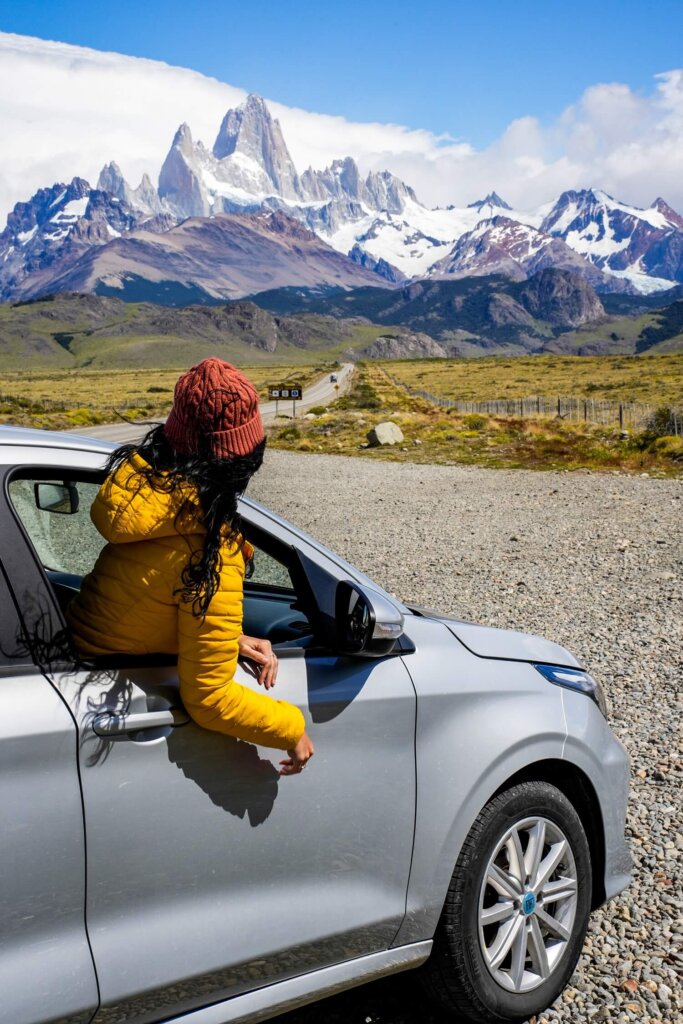

Accessing & Getting Around the National Parks
Let’s talk about accessing and getting around Los Glacieres and Torres del Paine. In short, you can reach the main attractions and trailheads in both parks either with a rental car, public bus or organised tour.
What we personally loved about Los Glacieres was that once we were in El Chalten we could access all hiking trails on foot. This didn’t just cut out the cost of a hire car but also the extra travel time we would’ve needed to reach the trailheads. In return, we could stay in bed a little longer and still be able to set off early to hike during the cooler hours.
Staying in El Calafate after El Chalten meant that we only needed a hire car for a day to visit Perito Moreno Glacier independently.
On the contrary, reaching Torres del Paine from Puerto Natales added an additional 3 hours of driving each day just between the entrance to the park and the city. Now, if you stay inside the park then your journey time will be much less. However, you’ll still need some sort of transport to get to the park initially and then to get around if you’re not doing the W or O-Treks. Some hotels in the park do offer excursions and transport for an extra fee, but for us it was still more cost-effective to rent a car and drive in every day.
If we ever returned to Torres del Paine, doing the W or O-Trek would be the best way to maximise our time spent inside the park.

Travel Between Los Glaciares and Torres del Paine
Travelling between Los Glaciares and Torres del Paine is quite easy. You can take an international bus from Puerto Natales in Chile to El Calafate in Argentina or vice versa. The bus journey time is only around 6 hours, which is quite a short journey in South America. Make sure to secure your bus ticket early in the high season.
It’s worth noting that not all car rental companies allow you to cross the border. If that’s your plan, you need to find one that does permit it and be prepared to pay a much higher price for that.
Tour operators offer day trips between Torres del Paine and Los Glaciares. So, if you’re really keen to see a bit of both parks, you could still do it if you’re short on time. Personally, we think that it’s quite a long way to go – including two border crossings – just for the sake of a few hours in the other park. There’s so much beauty in both alone that we would much rather spend that time hiking or booking an unforgettable adventure, such as horseback riding, wildlife spotting or cruising, instead of sitting on a bus and queuing for passport control.
Cost of Visiting Los Glaciares vs Torres del Paine
Entry Fee to Los Glaciares vs. Torres del Paine National Park
Both national parks require an entry pass. Currently, the entry fee for foreign visitors to Los Glaciares National Park is $50,000 ARS per day. You can purchase your entry pass to Los Glaciares via the official website. There are options for multi-day passes as follows:
- 1‑day pass – $50,000 ARS
- 3‑day pass – $100,000 ARS
- 7‑day pass – $175,500 ARS
- Annual pass – $300,000ARS
There are two ticket options to Torres del Paine National Park for foreign visitors that you can purchase on the CONAF website:
- 1-Day Pass – $32,400 CLP
- “More than 1 Day” Pass – $48,500 CLP
Overall, entry to Torres del Paine is definitely better value for money, as you can visit the park for more than 1 day for around $53USD, whereas a 3-day pass for Los Glaciares alone would be $67USD.
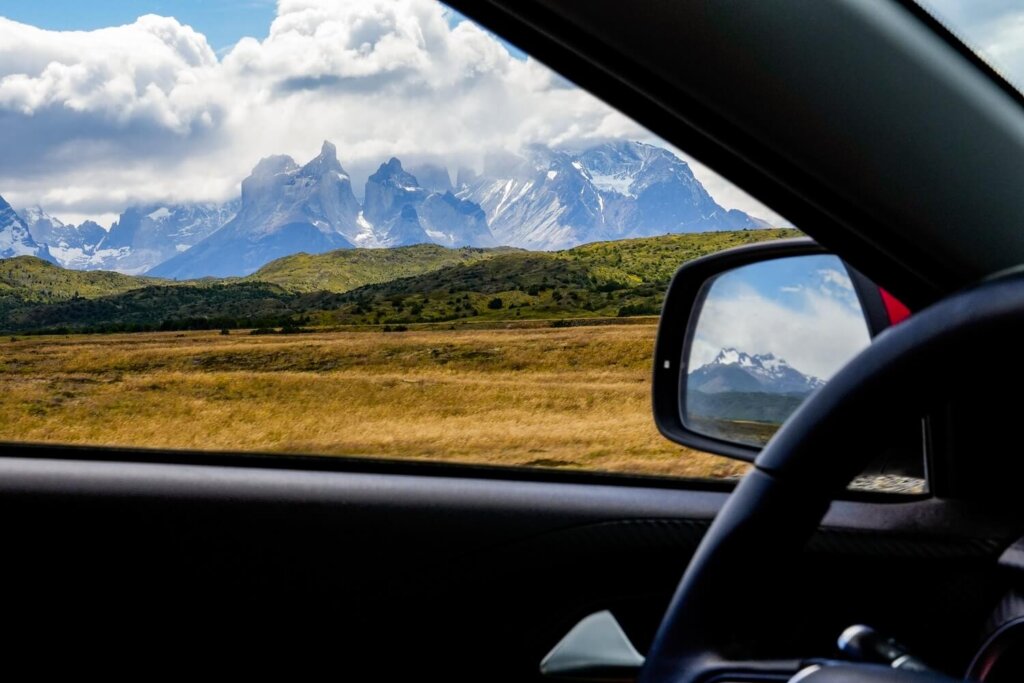
Cost of Transport Around Los Glaciares vs Torres del Paine
The cost of transportation to/from and around the national parks will depend on the activities you wish to do.
For Los Glaciares, just take a local bus from El Calafate to El Chalten to save some pennies. Hiking trails are accessible on foot in El Chalten, so you don’t need a hire car during your stay. If you wish to visit Perito Moreno independently, then you only need to rent a car for a day from El Calafate.
To reach Torres del Paine, you can also take a local bus from Puerto Natales to various points within the park. This is the best option if you’re doing the W or O Trek. You’ll also likely need a boat ticket or a shuttle bus to reach the trailheads. Otherwise, having a rental car for the duration of your stay will be the best way to visit the park independently from Puerto Natales.
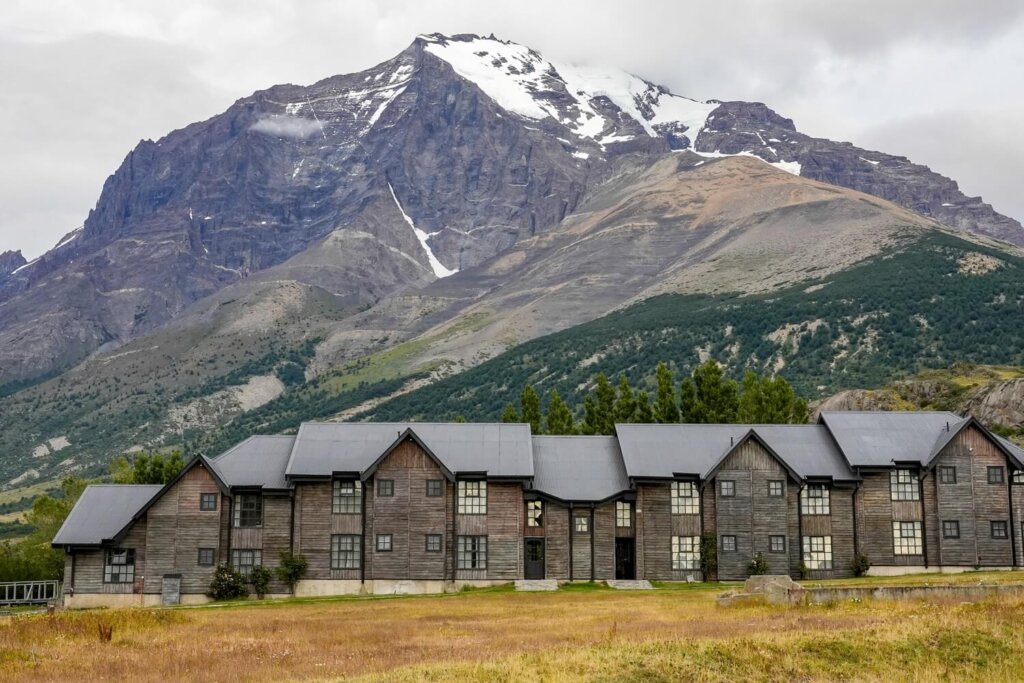
Cost of Accommodations Around Los Glaciares vs Torres del Paine
Both El Chalten and El Calafate have a wide variety of accommodation options that cater for all budgets. Whilst the cost of accommodation is generally slightly higher in El Chalten than in El Calafate, it is made up for by the fact that you can access the trails on foot from the town.
🛏️Accommodations in El Chalten:
🛏️Accommodations in El Calafate:
In Torres del Paine you can book campsites, refugios and more luxurious hotels. However, the number of accommodation options inside Torres del Paine is limited. The price of even the basic campsites will also be much higher per night, so you can imagine what the more luxurious options cost.
If you wish to keep your costs down, then we suggest booking either the “self-supported” or “semi-supported” camping options, especially if you’re doing a multi-day trek. You can reserve your spot on the Las Torres and Vertice Patagonia websites.
You can also keep your accommodation costs lower if you stay in Puerto Natales. The city has way more options to fit different budgets. Bear in mind though that staying in Puerto Natales isn’t an option if you’re doing any of the multi-day treks.
🛏️Accommodations in Torres del Paine:
- Hosteria Pehoé ($$)
- Hotel Las Torres ($$$)
- Explora Patagonia ($$$)
🛏️Accommodations in Puerto Natales:
- Wild Hostel ($)
- Bungalow by Toore Patagonia ($$)
- Vinnhaus ($$$)
Things to Do in Los Glaciares vs Torres del Paine
Hiking & Trekking
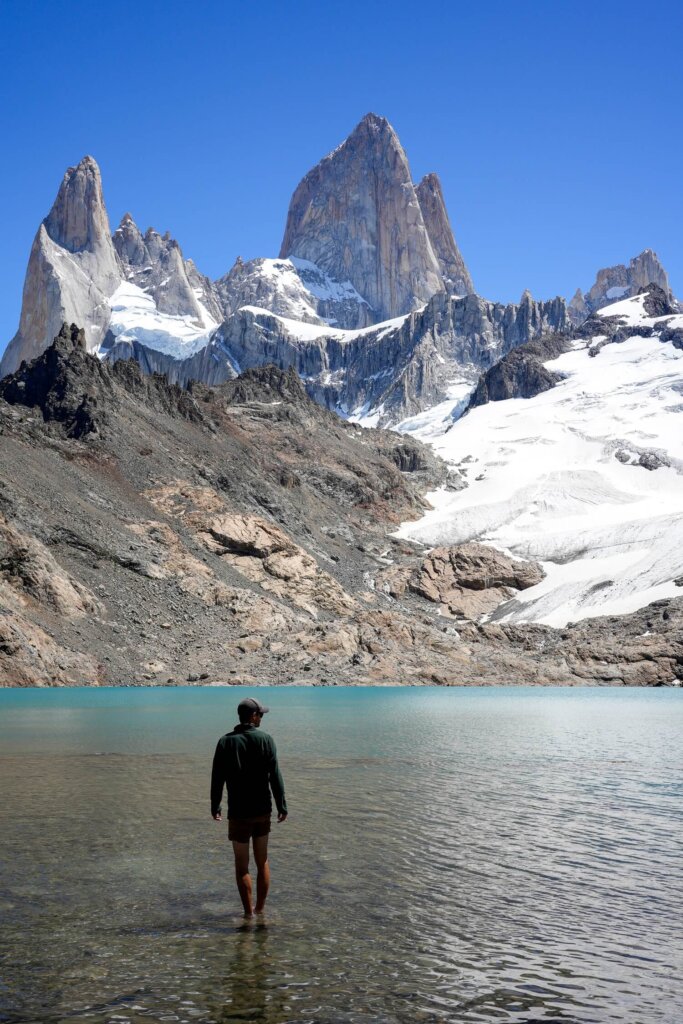
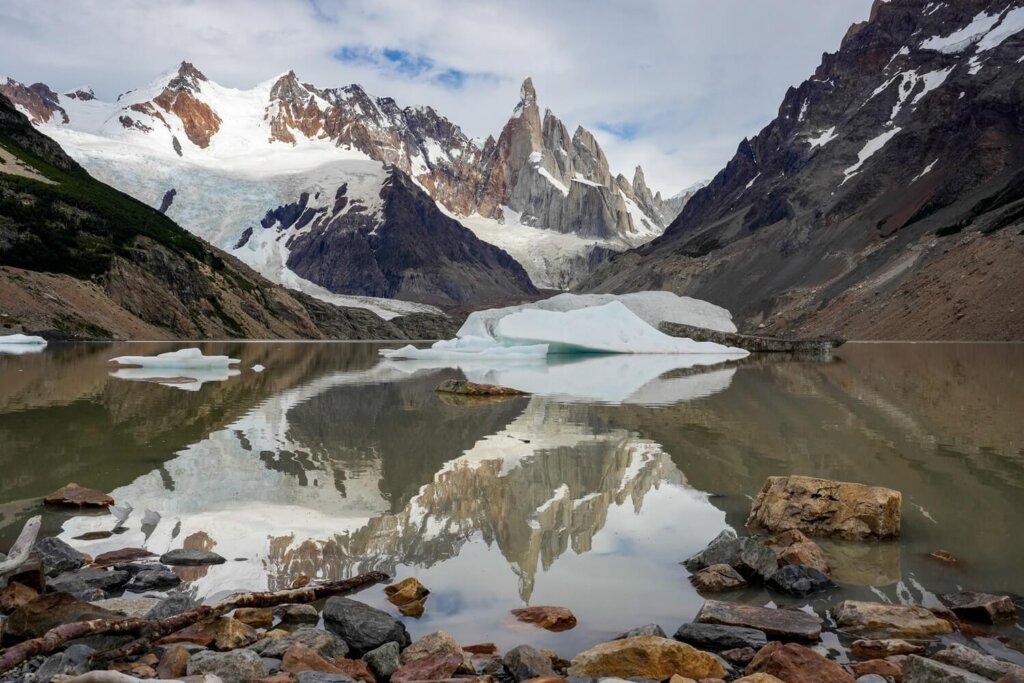
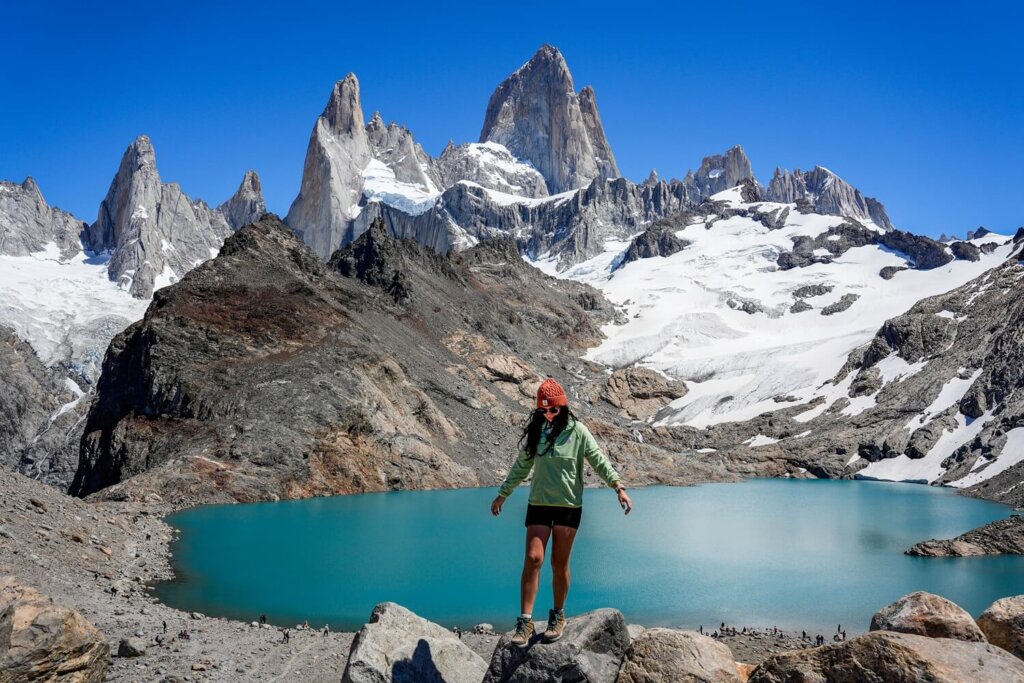
There is absolutely no shortage of amazing hiking trails in both Los Glaciares and Torres del Paine. You can do many day hikes, as well as multi-day treks, in both parks. In Los Glaciares the most popular day-hike is to Laguna de los Tres at the base of the impressive Mount Fitz Roy. The trail is incredibly scenic and you can also make it into a 2-day hike if you carry on towards Laguna Torre, where you can see floating icebergs.
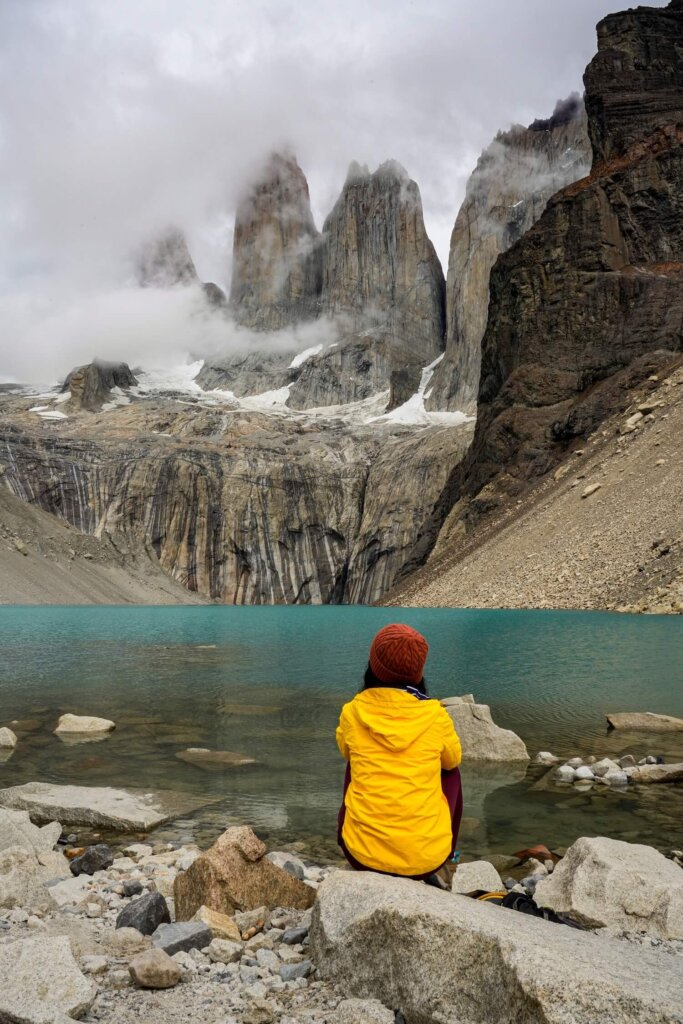
In Torres del Paine the most well-known treks are the W-Trek and O-Circuit, which incorporate the trail to Mirador las Torres Base where you can see the iconic granite towers, Las Torres. Luckily, you can also do this trail as a day hike if you don’t want to trek for multiple days.
Of course, these are just the most iconic trails. There are way more hikes and treks you can do in both parks depending on how much time you have.
Glaciers
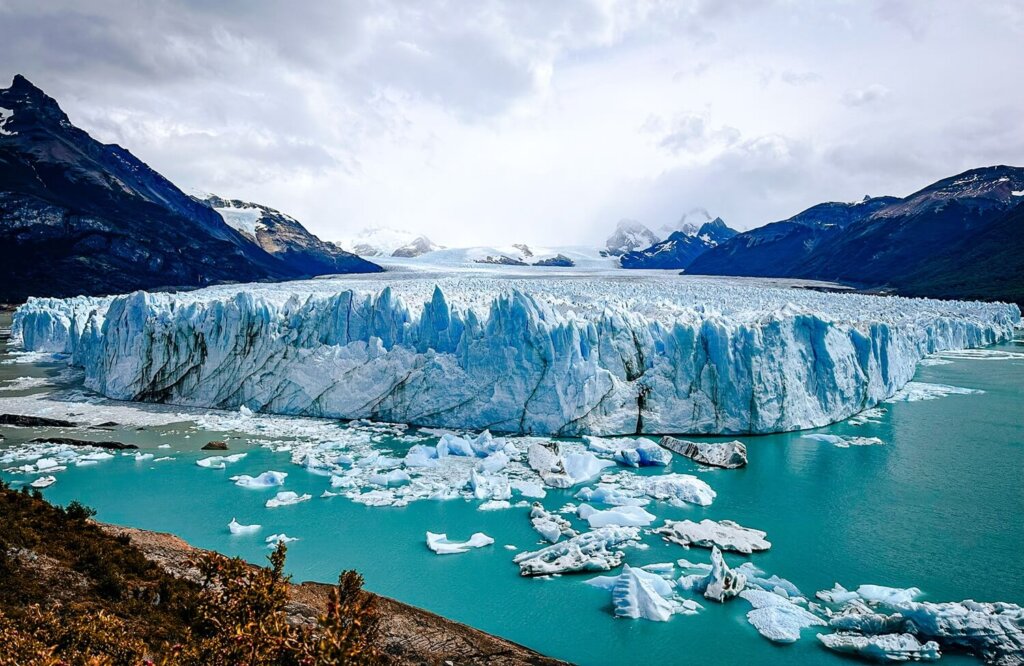
Los Glaciares means “glaciers” in English and the park got its name because of the high number of large glaciers in the area. The most famous and easily accessible glacier is Perito Moreno. You can just enjoy the views from the network of walkways that offer different perspectives of the glacier. However, you can also book this 1 hour cruise only tour or a kayaking experience tour. In addition, there’s also an option to do ice-trekking on Perito Moreno.
Perito Moreno isn’t the only impressive glacier. Upsala Glacier is actually much larger and wider than Perito Moreno, and is only accessible by boat. There’s also Spegazzini Glacier, which has the tallest ice wall in the park. You can book this all-day boat tour that sails to Upsala and Spegazzini Glaciers.
The main glacier you can see in Torres del Paine is Glacier Grey. There are multiple ways to experience the glacier depending on your time constraints and level of adventure. You’ll get closer to it if you do the W or O Trek, although you can also try to see it by doing a day hike out to Mirador Glacier Grey. In addition, you can also book this 3-hour scenic boat tour, operated by Hotel Lago Grey or a more adventurous experience such as this kayaking tour or this ice trekking tour, operated by Big Foot Patagonia.
Wildlife
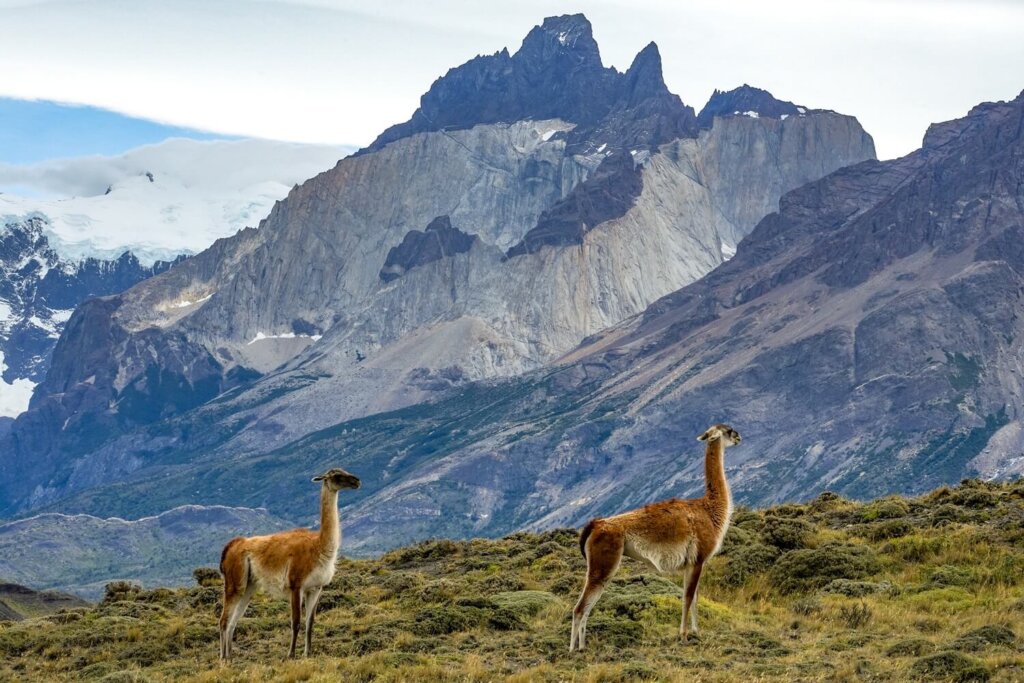
Both national parks are home to incredible wildlife. In Los Glaciares, we saw many guanacos roaming the steppe and a few condors when we walked up to the Mirador de los Condores viewpoint just outside El Chalten. There were a few grey foxes at Laguna de los Tres and we came across wild horses on our way to Chorrillo del Salto waterfall. We also visited the Laguna Nimez Reserve in El Calafate, which is home to more than a hundred species of birds, including flamingos. Unfortunately, we didn’t see any huemul deer or pumas.
However, Torres del Paine is considered one of the best places in the world for puma viewing. Booking a dedicated puma watching tour will increase your chances to see one or two in their natural habitat. Whilst we didn’t see any pumas, we saw plenty of guanacos.

Viewpoints & Scenery
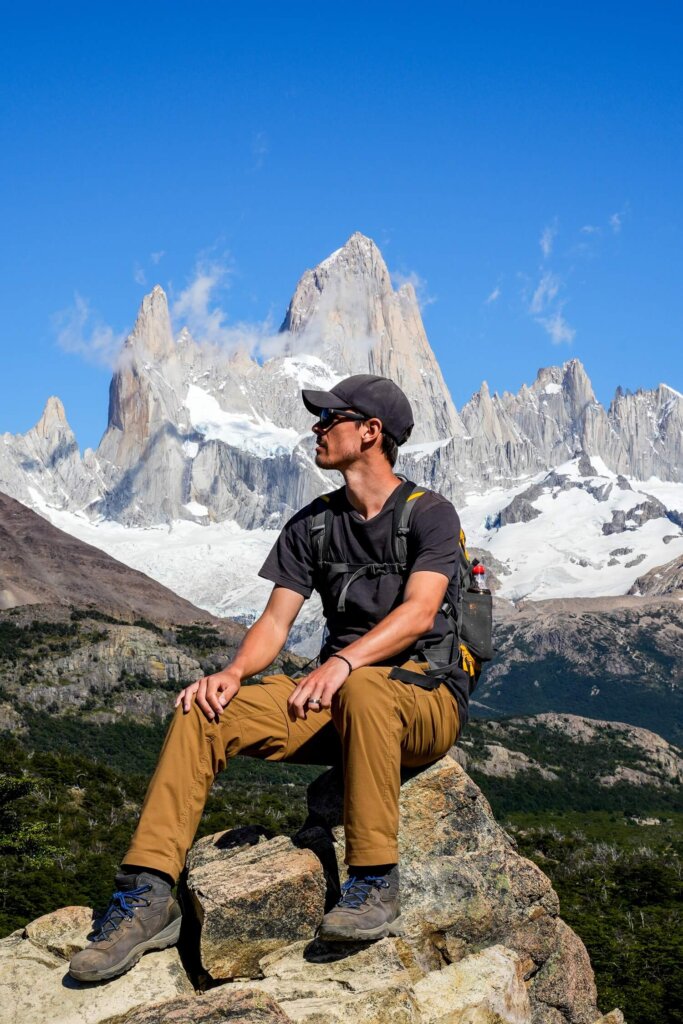
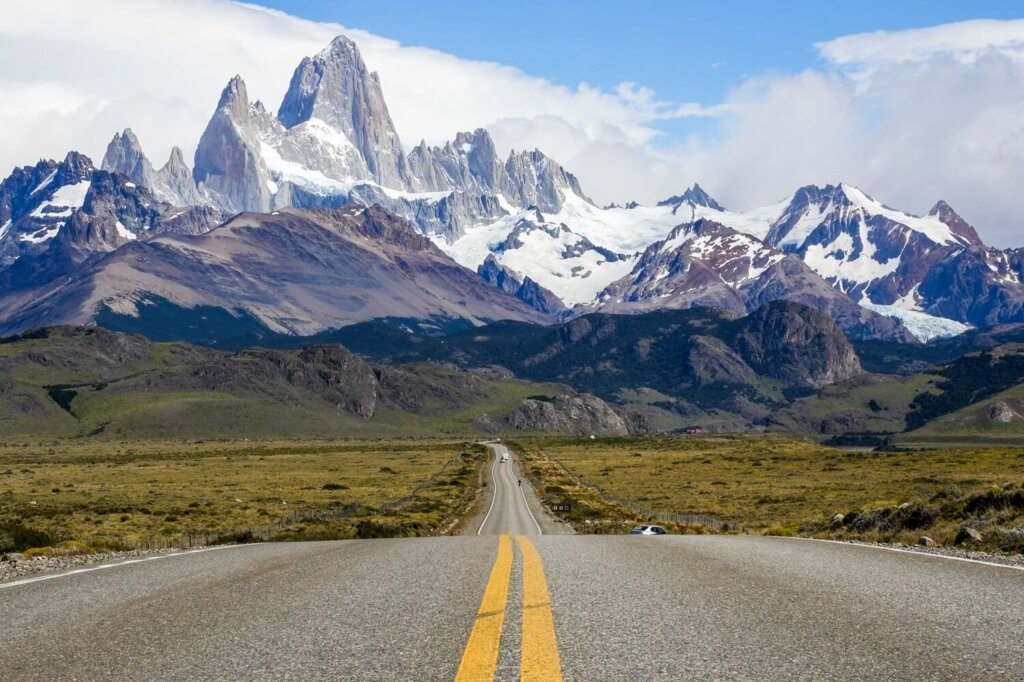
When it comes to scenery there’s no clear winner. Both national parks are absolutely stunning and will leave you in awe. El Chalten’s skyline is dominated by the majestic and jagged peaks of Fitz Roy and Cerro Torre. In addition, there are many blue and turquoise coloured glacier lakes, meandering rivers and Lenga forests.
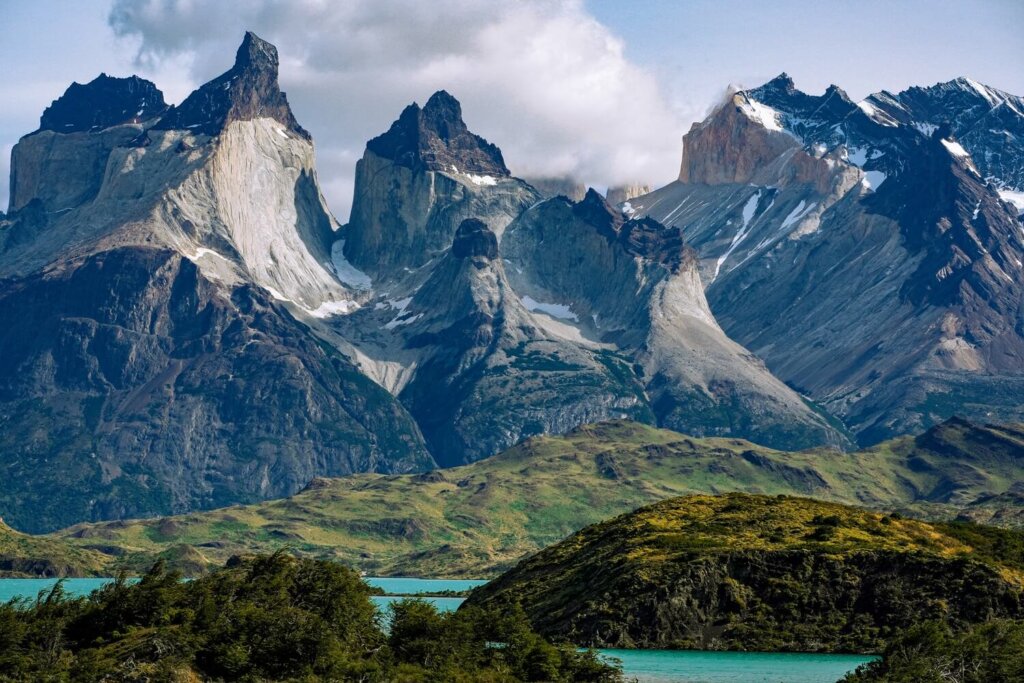
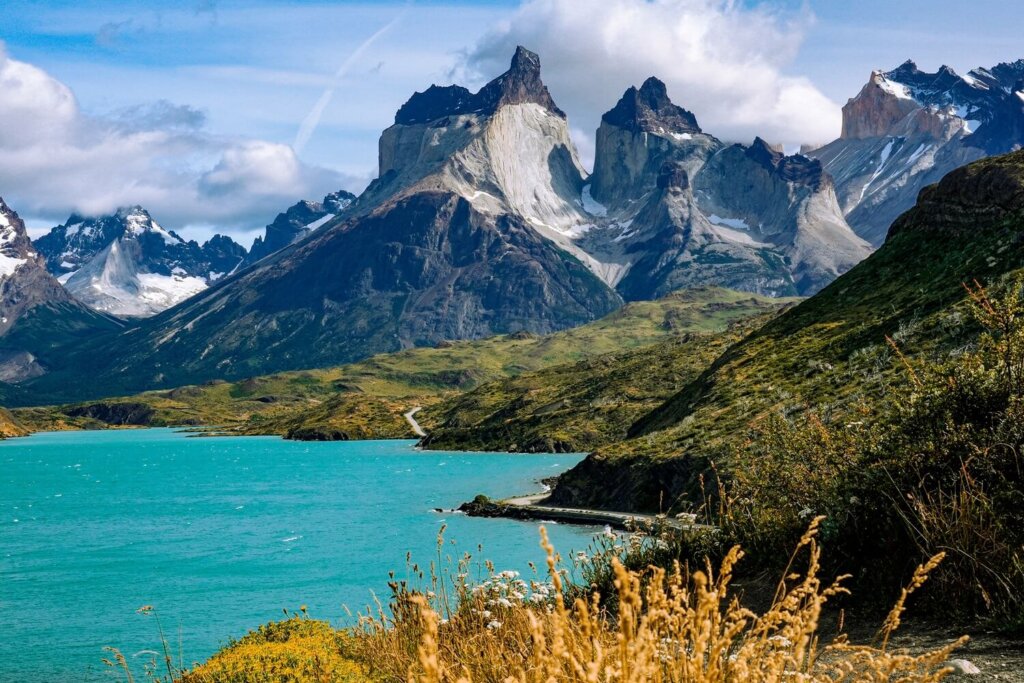
Torres del Paine is dominated by the Paine Massif with the 3 iconic granite “Towers”, or Las Torres, as well as the “Horns of Paine”, or Cuernos del Paine. Again, you’ll see lakes with different shades of blues and greens, as well as lush valleys.
When it comes to low-effort viewpoints, Torres del Paine will probably have more where you can just hop in and out of the car as you drive around. The best viewpoints within Los Glaciares on the other hand would involve more easy to moderate hikes.
Additional Things to Know About Los Glaciares and Torres del Paine
How Far in Advance Do You Need to Book a Trip to Patagonia
You’re probably also wondering how far in advance you’ll need to book your trip to Patagonia.
If you’re visiting Los Glaciares, then you don’t need to have everything sorted super early. We would still book our accommodation in El Chalten early enough and reserve a campsite if you wish to camp, as they have limited spaces.
When it comes to Torres del Paine, you generally need to think several months ahead. This is especially important if you want to complete the W or O Trek. Spaces are limited at campsites and refugios, so you have to have your itinerary ready months in advance.
Even if you’re only planning some day-hikes but wish to treat yourself to a stay at one of the lovely hotels within the park, you still need to book early. However, if you only want to stay in Puerto Natales and visit the park from there, then the only thing we wouldn’t wait too long with is reserving a hire car.
How Long Do You Need in Los Glaciares vs Torres del Paine
We suggest around 5 full days in Los Glaciares National Park as a minimum. We would do 3 days in El Chalten and 2 days in El Calafate. This split would allow you to complete two of the most popular hikes – Mount Fitz Roy and Laguna Torre – whilst having an extra day for a shorter hike or two. Three days would also give you a little wiggle room in case the weather conditions aren’t ideal.
Two days in El Calafate would then be enough to visit Perito Moreno Glacier and another day for wandering around El Calafate itself.
The number of days you should spend in Torres del Paine will depend on whether you want to complete the W Trek or O Circuit and how many other hikes and activities you want to do in the park. Below are a few suggestions:
- Completing the W Trek. It takes between 4 or 5 days to hike the W Trek.
- Trekking the O Circuit. It typically takes 8 days to complete the O Circuit.
- Only doing a few hikes and activities. In this case, you will need the absolute minimum of 2 days, but ideally 3 to 4 full days.


Food & Dining Options in Los Glaciares vs Torres del Paine
Without doubt, El Calafate and El Chalten have the best range of restaurants, bars and cafes. If you love Argentine cuisine, then you’ll really enjoy eating out around Los Glaciares. We loved picking up some medialunas from local bakeries, as well as some delicious empanadas for lunch. In El Chalten, many places had happy hour promotions, which was a great way to enjoy a craft beer after our hikes. Not to mention other delicious meals and treats, such as asado, locro, pizza, ice cream and alfajores.
Food options are much more limited inside Torres del Paine. Hotels, campsites and refugios have the option to include all or some of your meals during your stay. However, you won’t have a massive selection compared to eating out in El Calafate/El Chalten and the prices will also be higher. Unless you’re staying in a more luxurious all-inclusive hotel the food will be more basic too.
If you’re staying in Puerto Natales, you’ll find more restaurants and cafes at more budget friendly options. We enjoyed getting some pastries and other typical Chilean dishes, such as pastel de choclo, empanada de pino and chorrillana.
Additional Guides to Plan Your Trip to Patagonia
Below we’ve listed some useful blog posts to help plan your dream Patagonia trip.
Further guides for visiting Los Glaciares National Park in Argentina:
- A Complete Guide to Los Glaciares National Park
- Things to Know Before Visiting El Chalten
- Best Hikes in El Chalten
- How to Visit Perito Moreno Glacier from El Calafate
- How to Hike the Mount Fitz Roy and Laguna de los Tres Trail
Further guides for visiting Torres del Paine in Chile:
Final Thoughts on Visiting Los Glaciares or Torres del Paine
Overall, if you wish to embark on a multi-day trekking adventure, or want to splurge on a more luxurious accommodation with incredible views of the Paine Massif, then consider Torres del Paine. However, if you don’t have as much time and wish to do a more “spontaneous” day-hiking and glacier experience with comfortable but more convenient and affordable accommodation options, then Los Glaciares may be more suitable.
One thing is for sure: you won’t regret visiting either of the parks. And, if your time and budget allows you to see both, then we highly encourage you to do so. If you found this blog post useful and want to show your support, you can buy us a coffee here.
Now, let your adventure begin,

Remember…It all starts with a Pin…


Thanks for such a detailed article! Patagonia is on my bucket list and I hope to visit it one day