
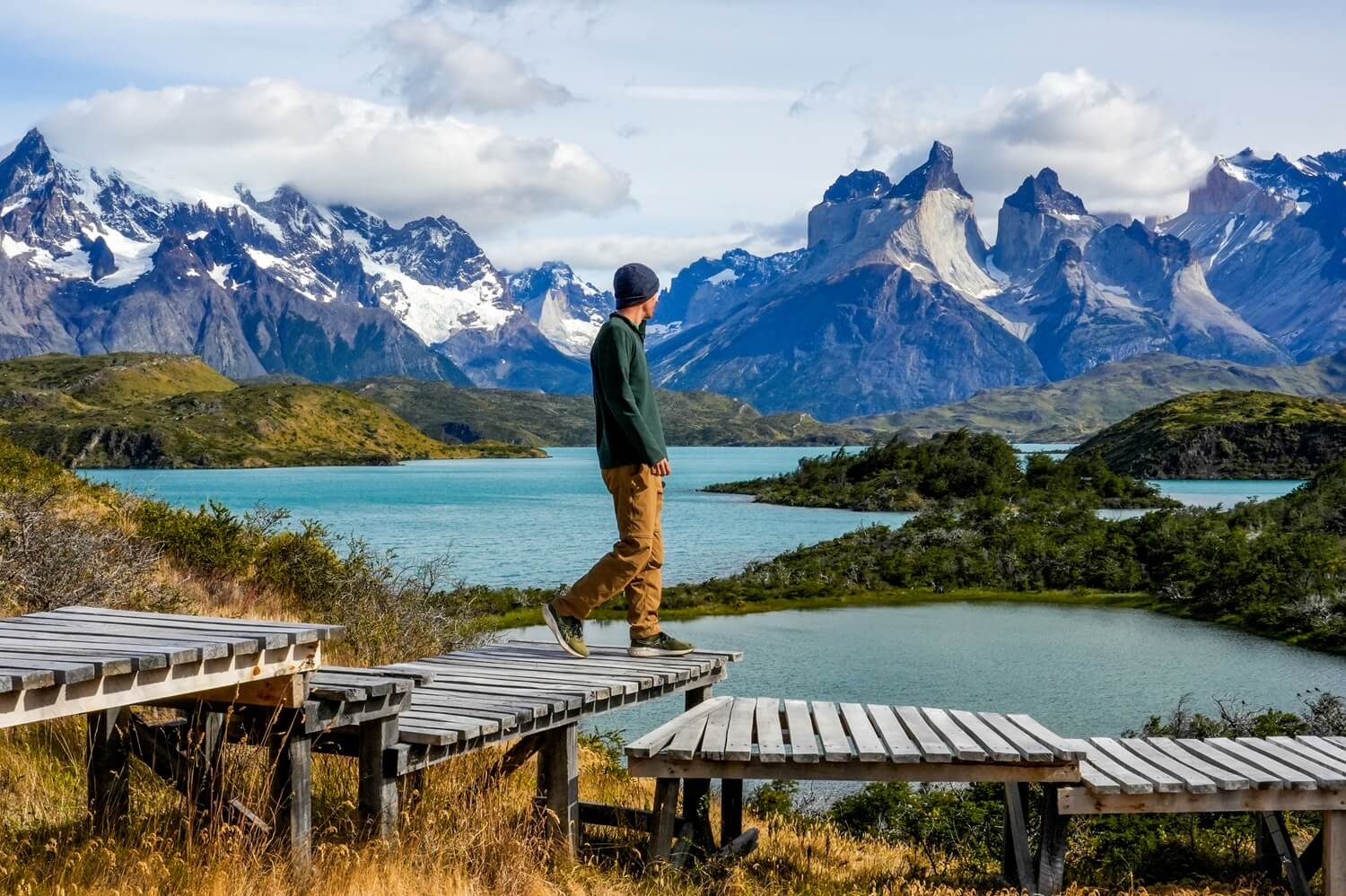
Best Things to See and Do in Torres del Paine, Chilean Patagonia

Visiting Torres del Paine National Park in Chilean Patagonia has been on our bucket list for years. Whilst we’d seen countess photos of the impressive Paine Massif, including the iconic Las Torres peaks, nothing could have prepared us for seeing the national park with our own eyes.
In this guide, we’ve collated some of the best things to do and see in Torres del Paine, from day hikes to multi-day treks and other fun activities. We suggest reading this post in conjunction with our guide on how to plan a trip to Torres del Paine.
If you’d like to see what we got up to in the national park, then watch our Torres del Paine video, which we shared on our YouTube channel Kitti and Jon. For more videos from the country, check out our Chile playlist.
Disclosure: This post may contain affiliate links, which means we may receive a small commission if you click a link and purchase something. Clicking these links won’t cost you anything, but it will help us to keep this site up and running! Learn more about our affiliate policy.
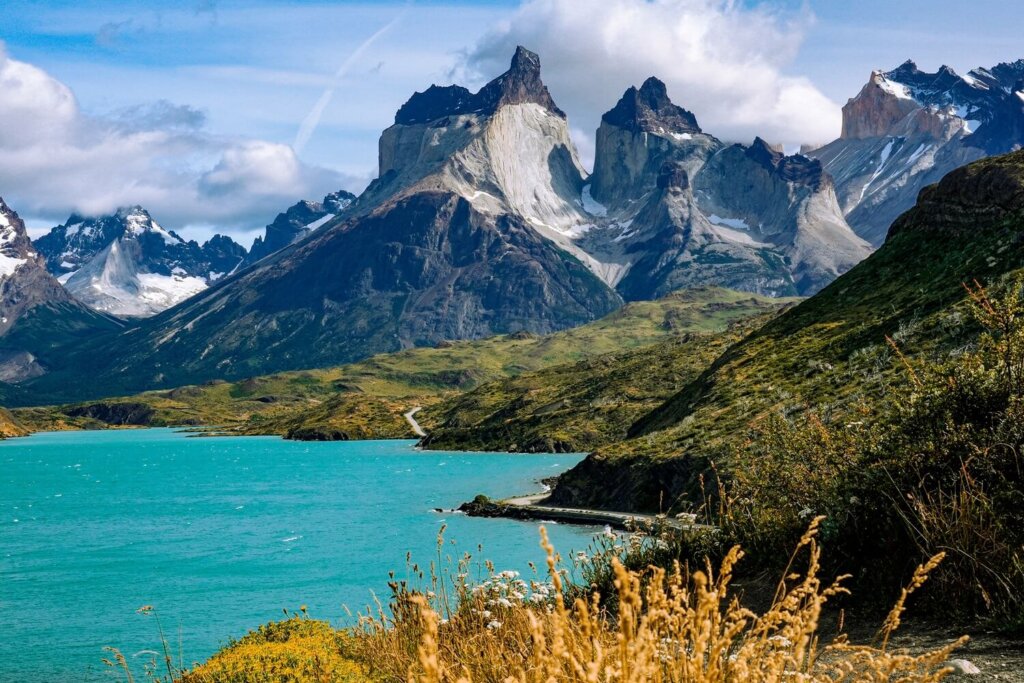
About Torres del Paine National Park
Torres del Paine National Park is located in southern Chilean Patagonia. It borders Bernardo O’Higgins National Park to the west and the Los Glaciares National Park to the north, which is in Argentine Patagonia.
Torres del Paine was established as a national park in 1959. Initially, it was named Grey Lake Tourism National Park, after Lake Grey and Glacier Grey, one of the most impressive glaciers in the park, similar to Perito Moreno Glacier in Argentina. They renamed it to its current name in 1970. In 1978, Torres del Paine also became a UNESCO World Biosphere Reserve.
It covers an area of 240,000 hectares, making it one of the largest national parks in the country. The national park also incorporates part of the Southern Patagonian Ice Field, the southern hemisphere’s largest expanse of ice outside of Antarctica.
Read Next: How to Plan a Trip to Torres del Paine


Best Things to See and Do in Torres del Paine
Day Hike to Mirador las Torres Base
- Trailhead / Car Park: Welcome Centre car park or just across from Hotel las Torres
- Trail Length: 21 km / 13 miles (Out-and-back)
- Elevation Gain: 1,041 m / 3,415 ft
- Highest Point: Mirador Las Torres Base (890 m / 2,920 ft)
- Level of Difficulty: Moderate to Hard (fitness level dependent)
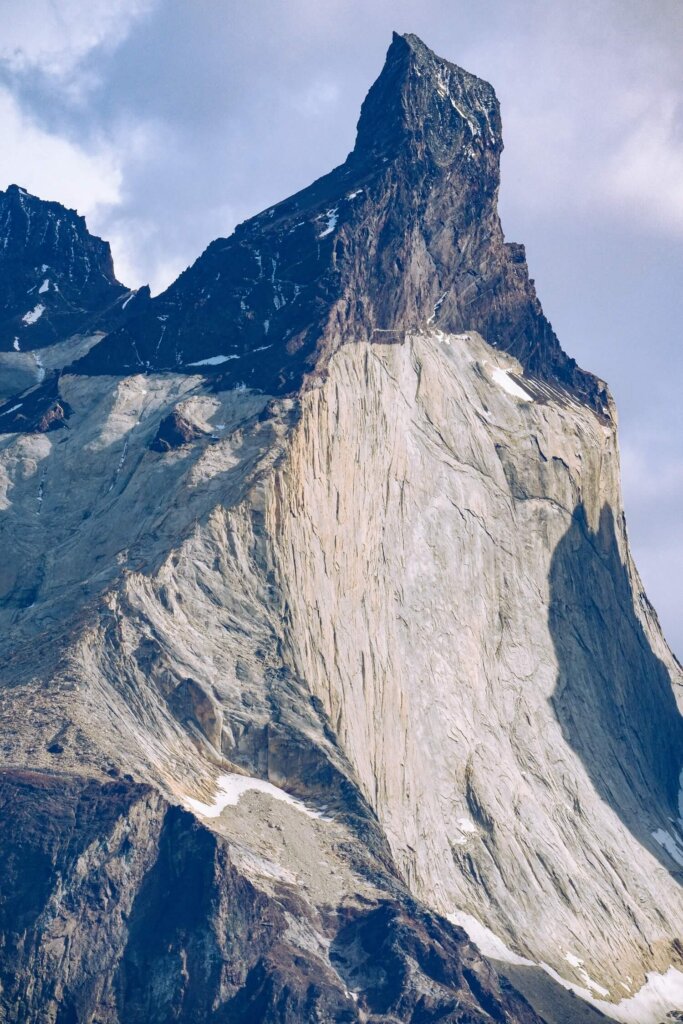
Mirador las Torres is one of the most popular day hikes in Torres del Paine, although the trail is also part of both the W-Trek and O-Circuit. The path takes you to the iconic viewpoint on the shore of Lake Torres, which sits at the base of the three granite towers, or torres (Central, Monzino and Dagostini), in the Paine Mountain range.
Starting from the Welcome Centre car park, the trail is about 21 km (13 miles) long (out-and-back). There’ll be a total elevation gain of 1,041 m (3,415 ft), with some pretty steep sections at the start and again at the end. The length and elevation gain, combined with the Patagonian weather, can make this hike challenging depending on your fitness level and experience in the mountains. It took us 6 hours to complete the hike, which included spending a good hour at the viewpoint, having lunch and waiting for the peaks to clear.
For more details on the trail, read our dedicated Mirador las Torres hiking guide.
Top Guided Hikes to Base Torres
Complete the W-Trek
- Start / End: Welcome Centre car park or just across from Hotel las Torres
- Trail Length: 75 km / 46 miles (point-to-point)
- Elevation Gain: 2,948 m / 9,672 ft
- Highest Point: Mirador Las Torres Base (890 m / 2,920 ft)
- Level of Difficulty: Moderate to Hard (fitness level dependent)
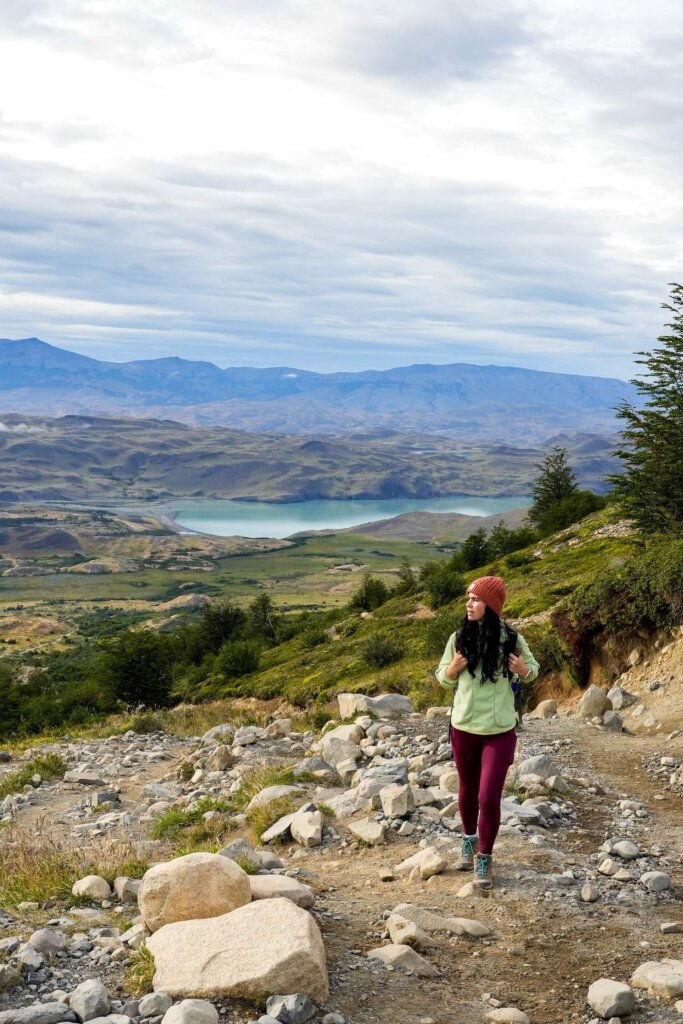
One of the most famous multi-day treks is the W-Trek, attracting people from all over the world. The whole route is 75 km (46 miles) connecting three stunning valleys: Las Torres, the French Valley and Glacier Grey. It takes about 5 days/4 nights to complete this trek.
You can do it completely unsupported (carry all your equipment, including food); semi-supported (booking equipped tents, just carrying food); or fully supported (booking dorms/tents that include your meals). Thanks to its popularity, combined with the limited accommodation options, you really need to reserve it way in advance. The campsites and refugios are managed by two private companies: Las Torres and Vertice Patagonia.
However, if you don’t want the hassle of booking and arranging everything yourself, consider booking an organised trek.
Hike the O-Circuit
- Start / End: Welcome Centre car park or just across from Hotel las Torres
- Trail Length: 120 km / 75 miles (Circular)
- Elevation Gain: 5,223 m / 17,136 ft
- Highest Point: John Gardner Pass (1,200 m / 3,937 ft)
- Level of Difficulty: Challenging
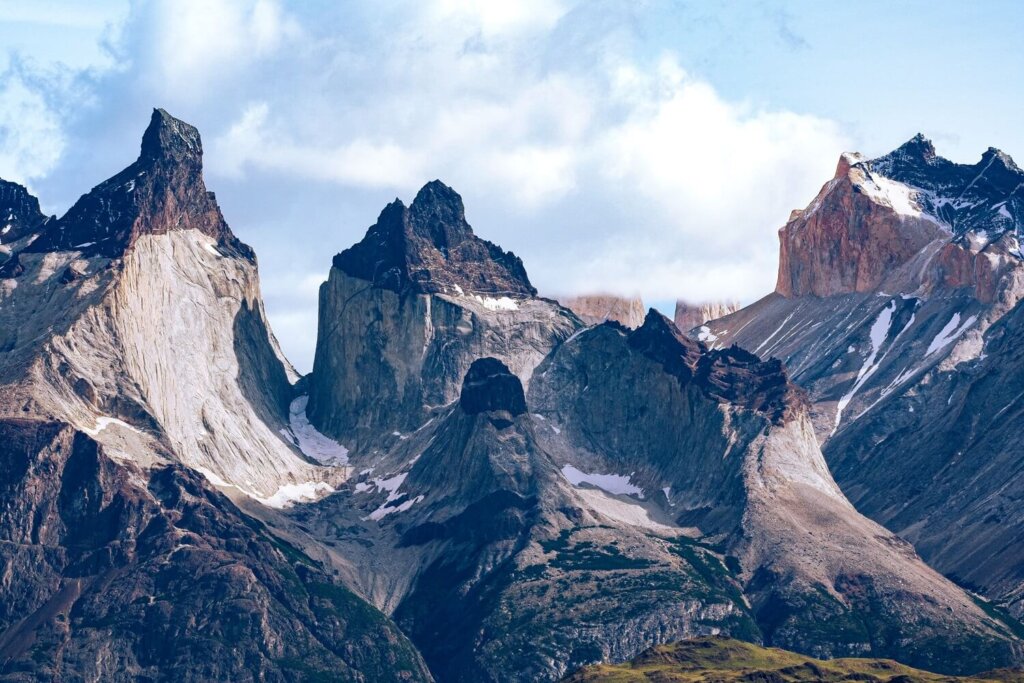
If you have the time, you can also hike the O-Circuit, which is the longer version of the W-Trek. Encircling the entire Paine Massif, the whole route is around 120 km (75 miles), which usually takes 8 days/7 nights to complete. Due to this, it’s going to be much quieter than the W-Trek. Along the way you’ll get incredible views of not just Torres del Paine but the Southern Patagonian Ice Field as well.
You can do this trek completely unsupported (carry all your equipment, including food); semi-supported (booking equipped tents, just carrying food); or fully supported (booking dorms/tents that include your meals). For the last option, you would need to book way in advance due to limited availability. The campsites and refugios are managed by two private companies: Las Torres and Vertice Patagonia.
Unfortunately, we couldn’t fit 8 days of trekking into our already packed Chile itinerary. However, we would absolutely return to Patagonia just to do the O-Circuit in the future.

Go Puma Viewing
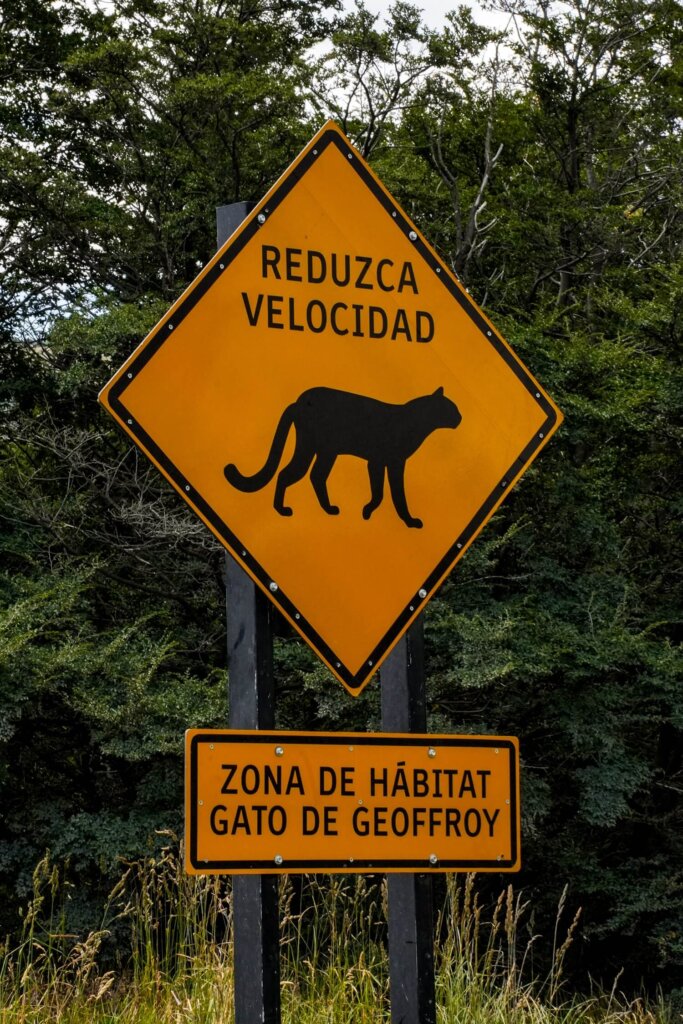
Torres del Paine is one of the best places in the world for puma viewing. You may be lucky enough to spot one during one of your hikes, or if you’re staying in one of the hotels in the park. Pumas are very shy though and most active at dawn and dusk. Thanks to their colouring, they also blend in with their environment, so spotting one randomly will be very hard.
Therefore, if you really want to increase your chances of seeing pumas, we recommend booking a dedicated tour. These puma tracking tours usually involve a very early start and a lot of driving around the areas where pumas are likely to be seen. You’ll have some safety briefings, as well as the chance to learn about their behaviour. Pumas’ main prey is the guanaco, so you may spot pumas either stalking them or feeding on a carcass.
Local guides normally monitor the pumas’ recent movements, which will significantly increase the chances of a sighting. However, it’s never guaranteed.
Check Availability of Puma Spotting Tour

Find Scenic Viewpoints in Torres del Paine
Mirador Rio Serrano
Just before we entered Torres del Paine through the southern entrance, we took the small access road up to Rio Serrano Viewpoint. From here, we could see the meandering Serrano River with the steppe and the majestic Paine Massif rising tall in the distance.
There are actually a few hotel options in this area, such as the Rio Serrano Hotel and Spa. Just imagine watching the sunrise and sunset from this vantage point with your morning coffee.
🛌Book your stay at the Rio Serrano Hotel and Spa.
Mirador Panoramico
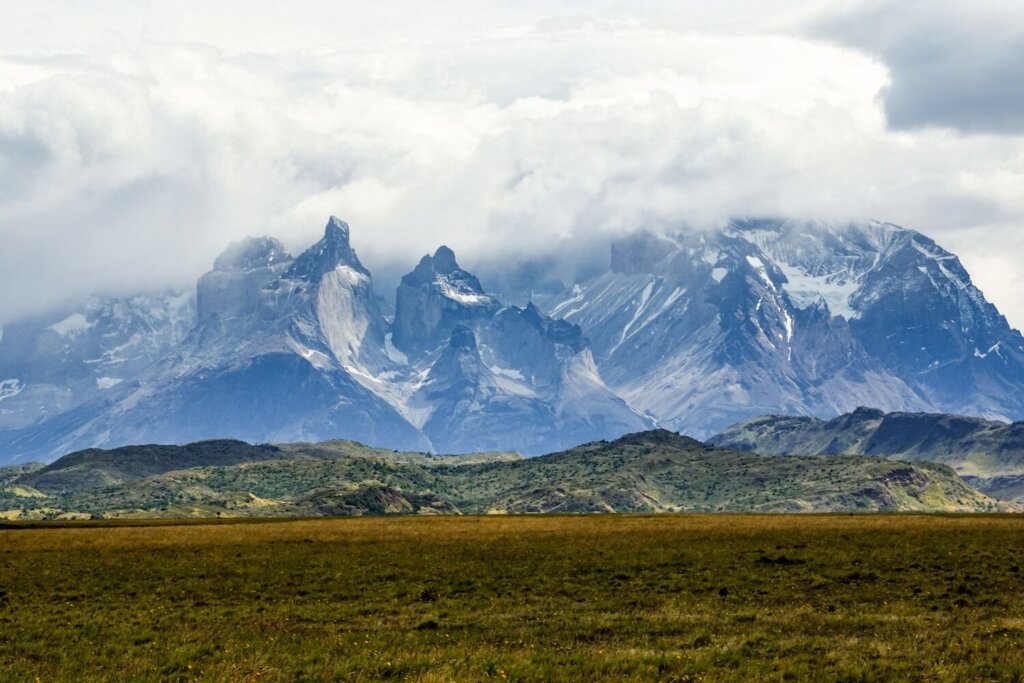
As we drove past the southern entrance of Torres del Paine, we had to stop and check in before we could officially start driving around the park. The visitor centre will have a lot of information on trail closing times and the weather, as well as toilet facilities.
Just around the back of the building, there’s a lovely viewpoint over the steppe with the mountains in the distance.

Boardwalk at Explora Patagonia Hotel
One of the most photographed spots in Torres del Paine is the boardwalk around the Explora Patagonia Hotel at Lago Pehoé. This spot is definitely worth the hype and we can understand why people come to take photos here. From this vantage point, there are some incredible views of the turquoise Pehoé Lake with the Cuernos del Paine mountains rising tall in the background. Needless to say that it became our favourite viewpoint and we came back here twice.
There’s a small car park where the short trail starts from, just off the main road. People come and go here regularly, so you can definitely take some really nice photos here if you’re patient.
Note. The wind can be super strong here, so be careful and don’t stand too close to the edges.
🛌Book your stay at the Explora Patagonia Hotel.
Hosteria Pehoé Viewpoint
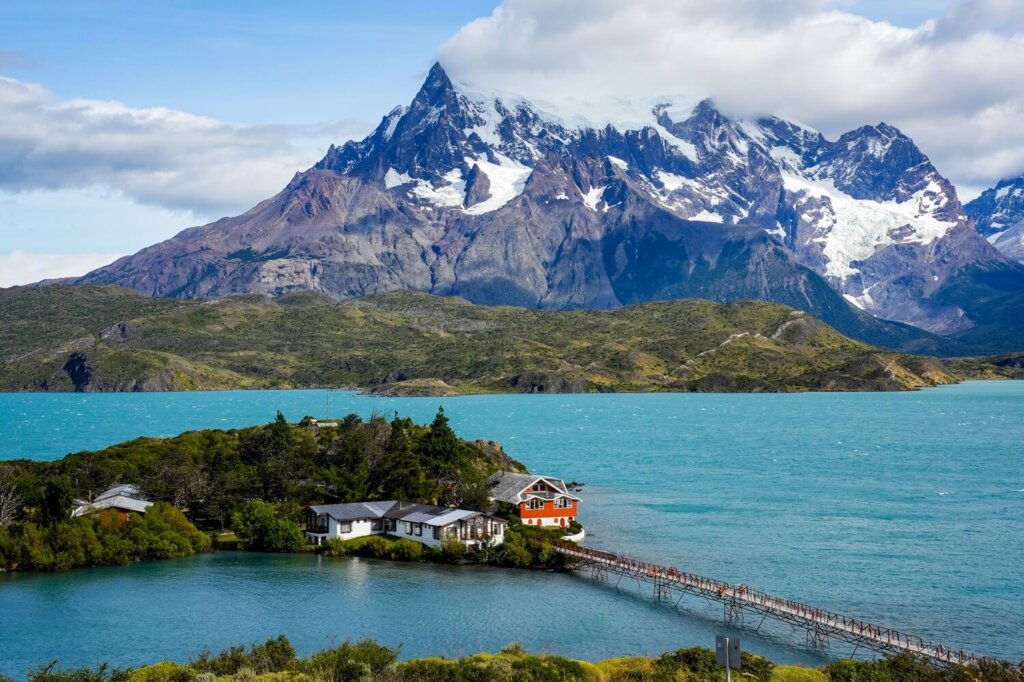
Just a little further along the road, the Hosteria Pehoé viewpoint was another iconic spot that we found incredibly photogenic.
There’s a tiny car park just before the hostel, from where you can walk up to a rise and enjoy a view of Hosteria Pehoé. What’s unique about this location is that the hostel is on a tiny island on Pehoé Lake, connected to the mainland by a small bridge. Of course, the mountains in the backdrop give this hostel an even more dramatic setting.
🛌Book your stay at Hosteria Pehoé.
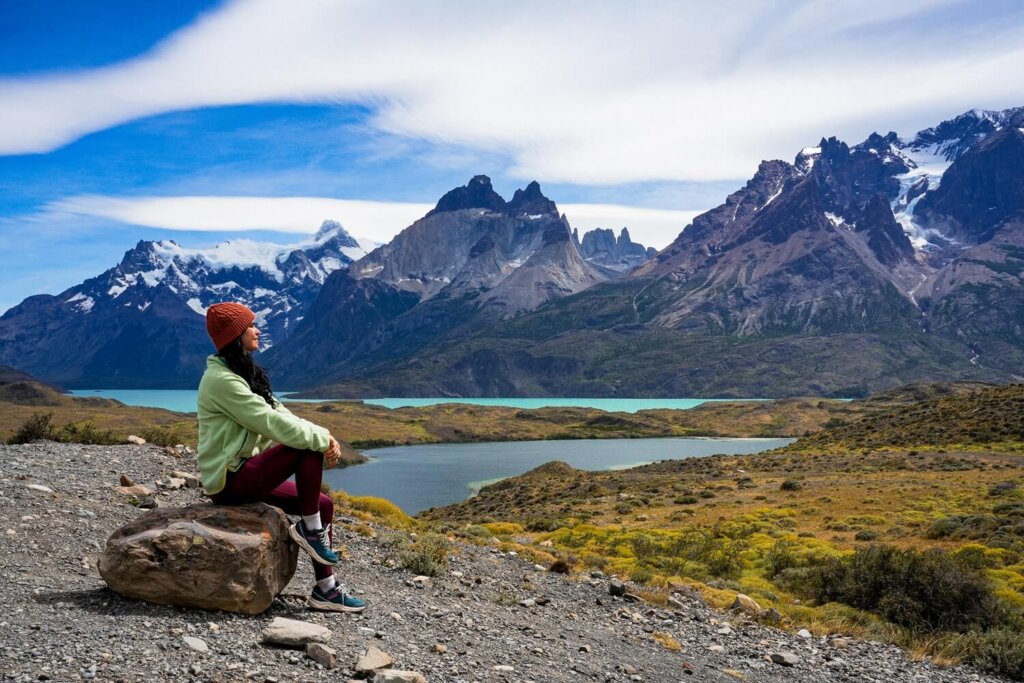
Mirador Lago Nordenskjöld
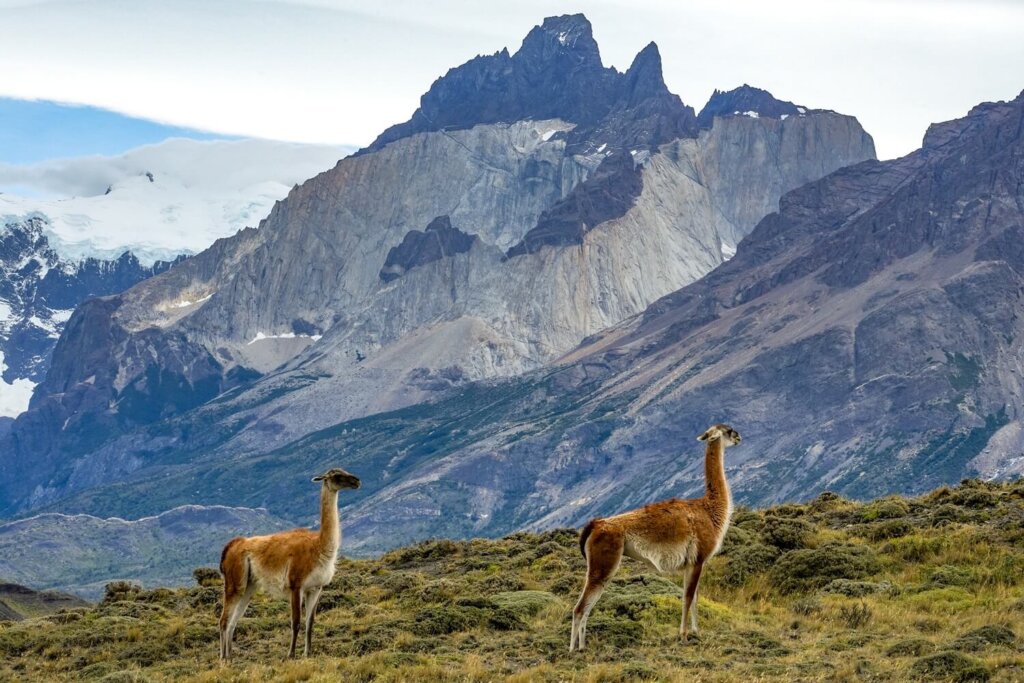
This was another fantastic viewpoint where we could enjoy the mountain range from a slightly different angle, with Lake Nordenskjöld front and center. We also got lucky in that there were a bunch of guanacos hanging out here, which just made this spot even more photogenic.
We stayed for a bit longer here in the hopes of spotting a puma going after the guanacos, but of course we weren’t that lucky. It’s still a stunning location to appreciate the snow-capped mountains from.
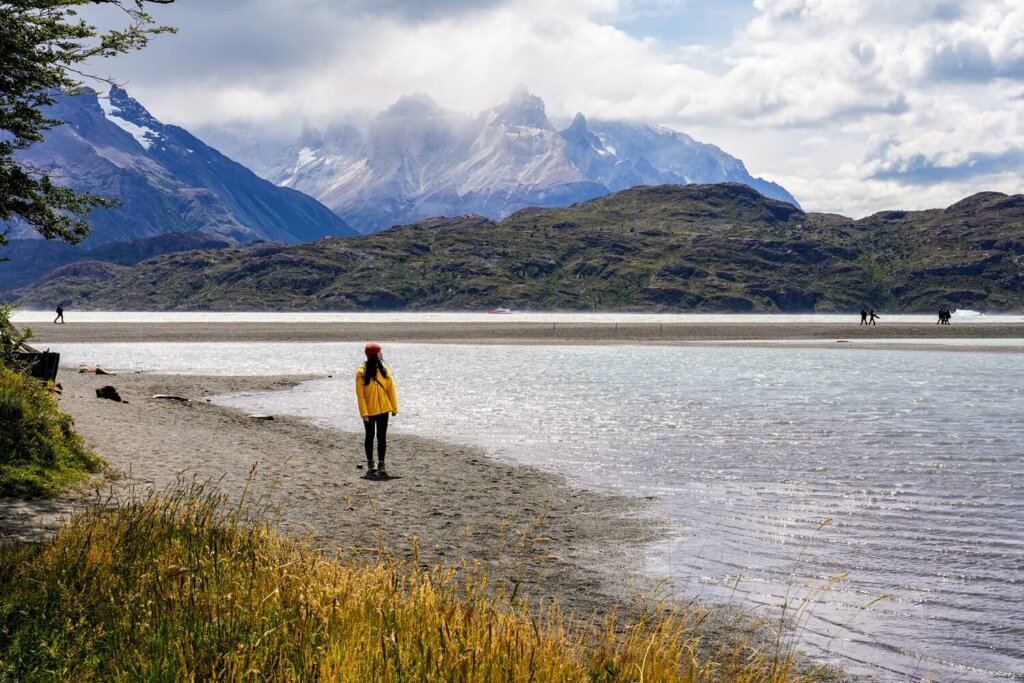
Experience Glacier Grey & Lago Grey
With a width of 6km (4 miles), a height of 30m (100ft) and a length of 19km (12 miles), Grey Glacier is the largest glacier in the national park. It is also part of the Southern Patagonian Ice Field. There are multiple ways to experience both the lake and the glacier depending on your time constraints and level of adventure.
Read Next: How to visit Perito Moreno Glacier in Argentina
Day Hike to Mirador Glacier Grey
- Start / End: Refugio Paine Grande on the northern shores of Lago Pehoé
- Trail Length: 23 km / 14 miles (out-and-back)
- Elevation Gain: 660 m / 2,165 ft
- Level of Difficulty: moderate to hard (fitness level dependent)
If you’re not doing the full W or O-Trek, consider completing a day hike out to the Grey Glacier Viewpoint. First, you’ll have to take a short catamaran ride across Lago Pehoé from Pudeto Pier to the trailhead. From there, you’ll walk past Laguna los Patos before continuing to follow Lago Grey.
From the viewpoint, you’ll see many floating icebergs, with the glacier and snow-capped peaks beyond it. You can also carry on hiking beyond the viewpoint (this is part of the longer O-Circuit) to a few suspension bridges for some even better views of the glacier.
Note. If you’re planning on doing it as a day hike, you’ll have to be mindful of getting back to the trailhead to catch the last ferry back across the lake. The time between the first and last ferry is quite tight, so you’ll need to keep a good pace. Alternatively, you can consider reserving a night at one of the refugios or campsites along the route.
Enjoy the Views from Mirador Lago Grey
If doing the full day hike out to Mirador Glacier Grey doesn’t fit into your itinerary, then we suggest taking a much shorter walk out to Mirador Lago Grey.
To get to the trailhead, just turn off the main road shortly after driving past the southern entrance to the park. Follow the signs towards Lago Grey until you reach the car park marked as Guarderia Grey on the map. It’s also close to Hotel Lago Grey, which is a fantastic hotel if you want to stay inside Torres del Paine.
The roughly 5km (3.1 miles) roundtrip walk starts from the car park, initially following a little forested area. You’ll end up on the shores of Lago Grey, where you have to walk along the southern shores of the lake before you reach a small islet. This section can be quite muddy, as it’s essentially where Rio Avutardas would empty into Lago Grey. The views are spectacular though, as you’ll get to see Glacier Grey in the distance as well as the surrounding snow-capped peaks.
Top Tip. Check the little wind forecast board placed just before the bridge. At the time, ours was set on amber (50-80 km/hr) and walking across the causeway into this headwind was incredibly difficult.
Boat Tour on Lago Grey
If you wish to get up close to Grey Glacier but don’t have the time for a full-day hike, then take a boat tour.
This 3-hour scenic boat tour, operated by Hotel Lago Grey, will take you along the lake, surrounded by beautiful scenery, before reaching the glacier. You’ll have the chance to admire Mother Nature’s jaw-dropping creation with a pisco sour in your hand before sailing back to the shore. They offer 3 or 4 departures per day, so it’ll allow you to fit in a few more activities before or after the ride.
Apart from hiking, this boat ride is probably the best way to get up close to Glacier Grey.
Check Availability of Lago Grey Boat Tour
Kayak on Lago Grey
Whilst being on a boat is already a pretty great experience, if you really want to feel the scale of Glacier Grey, you might want to book a kayaking tour. At water level, you’ll be able to fully appreciate the size of the floating icebergs.
It’s a more intense activity compared to a boat tour, so be mindful of that before booking.
Trekking on Glacier Grey
Another pretty intense, but also unforgettable activity, is a glacier trekking tour. Walking on a glacier is definitely a unique adventure and you physically cannot be any closer to Glacier Grey than that.
This ice trekking tour – operated by Big Foot Patagonia – is 5 hours long, of which you’ll spend about 2.5 hours on the glacier itself. It’s important to note that the tour begins at Grey Base Camp, about a 15-minute walk from the Grey Refuge, on the shores of Grey Lake very close to the glacier. This means that you’ll have to either hike or take the boat to the meeting point.
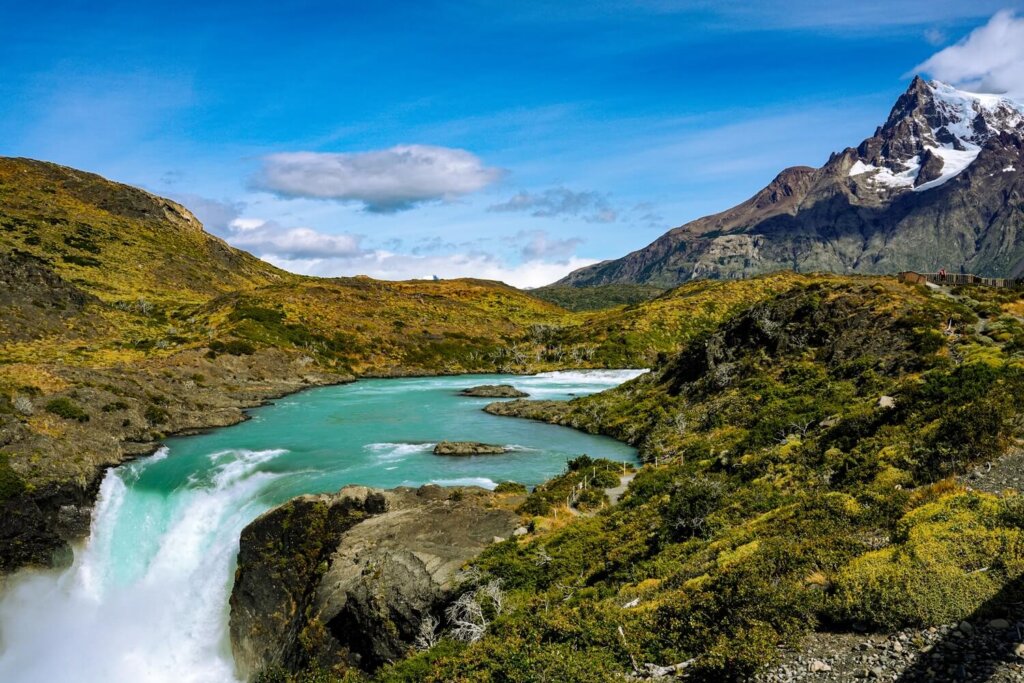
Enjoy the Views of Cascada del Salto Grande
There are a few lovely waterfalls within Torres del Paine National Park that you should add to your itinerary. You can park at Pudeto ferry docks and follow the track until you reach the viewing platform after about 1.5km (1 mile).
The waterfall sits on the border between Nordenskjöld and Pehoé lakes. Salto Grande may only be 10m tall but it is incredibly powerful. Not to mention the incredible scenery around it, which made us linger here for a while despite the Patagonian wind.
Note. Check the wind information board to have an idea just how windy it’ll be at the lookout. At the time we were there, it was only showing green (30-50 km/h) but the wind gusts were still incredibly strong.
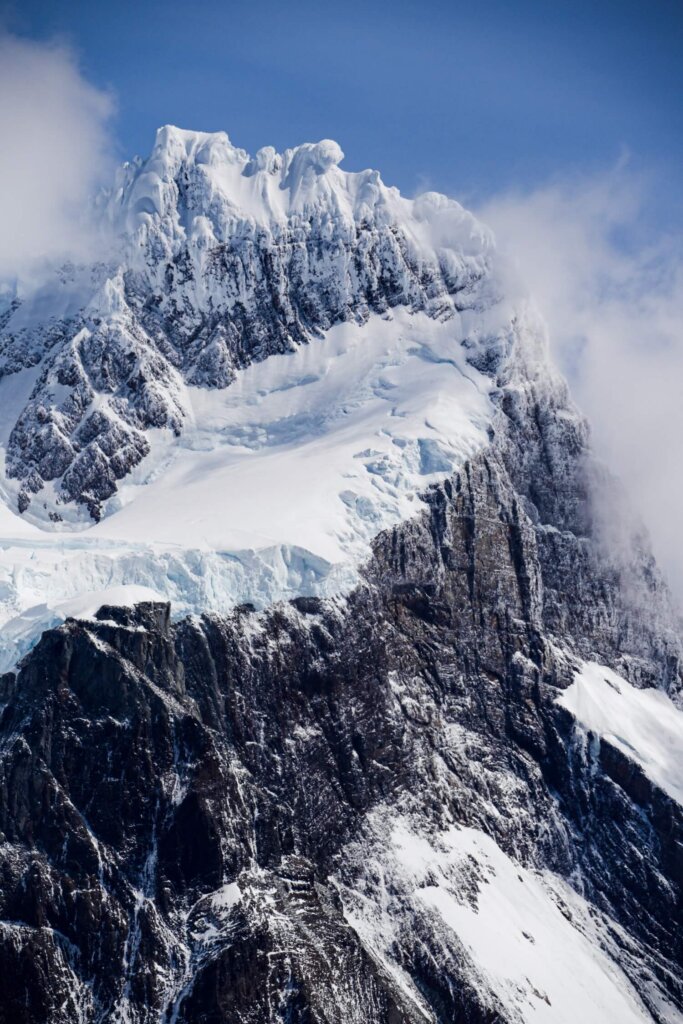
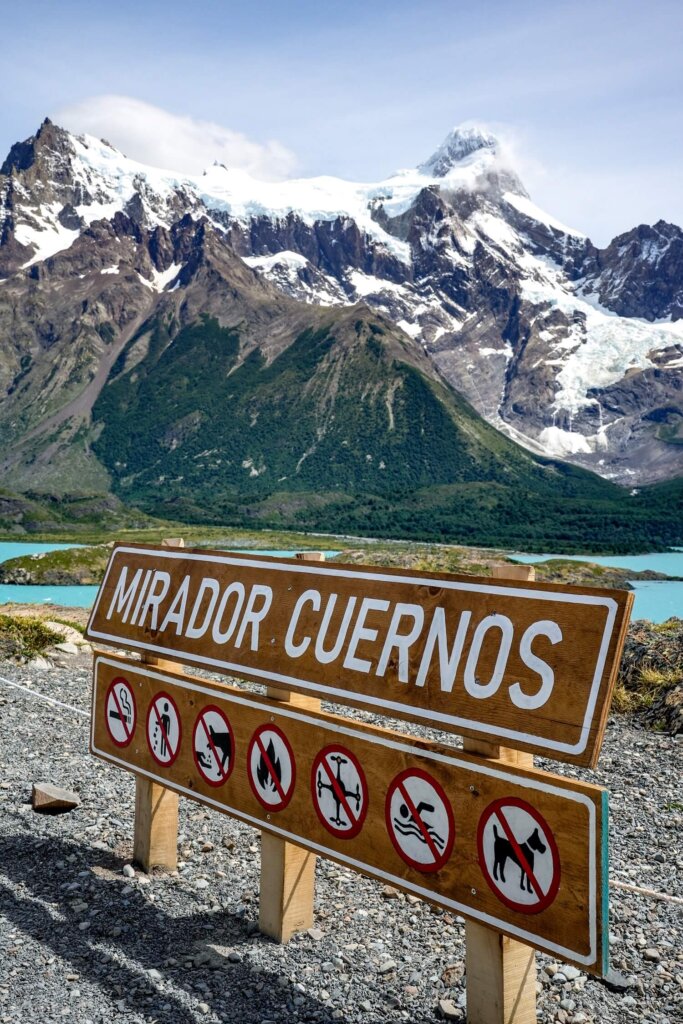
Top Tip. From here, we suggest following the trail out to Mirador Cuernos. We’ll provide more detail below.
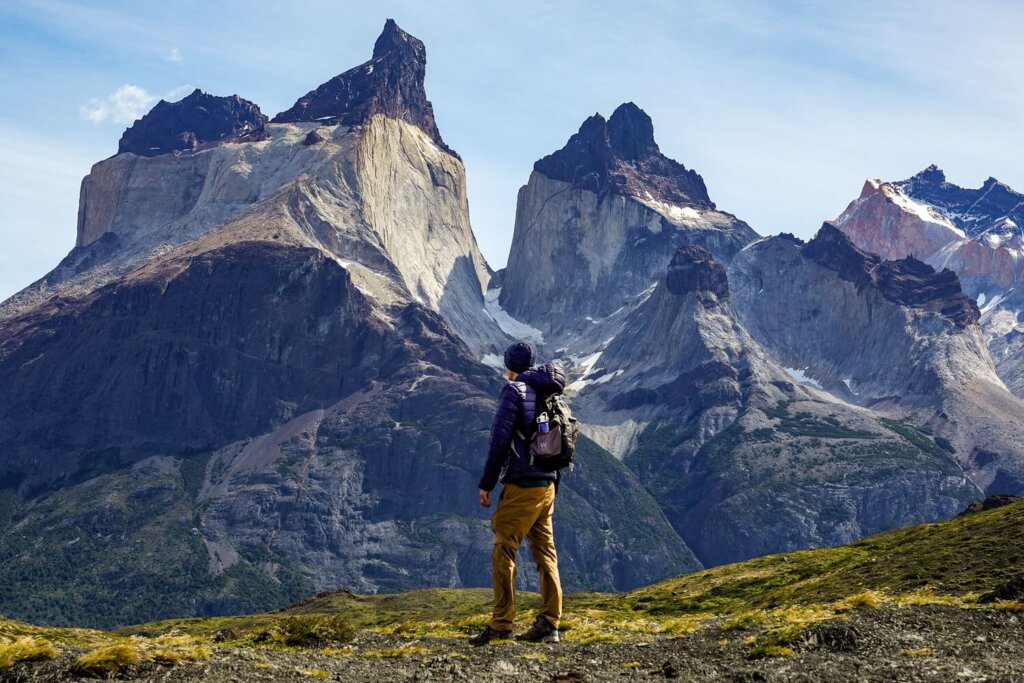
Hike to Mirador Cuernos
- Start / End: Pudeto dock on the north-east corner of Lago Pehoé
- Trail Length: 7.8 km / 4.8 miles (out-and-back)
- Elevation Gain: 238 m / 780 ft
- Level of Difficulty: easy to moderate (fitness level dependent)
From Salto Grande, we highly encourage you to carry on walking along the path out to Cuernos Viewpoint. From the waterfall, it’s only a 5km (3.1 miles) roundtrip. The trail itself is probably one of the easiest ones in the park but the pay-off is incredible.
Along the way we had undisturbed views of Cuernos del Paine right in front of us. The viewpoint overlooks Nordenskjöld Lake just across from the French Valley. Luckily, the viewpoint wasn’t very windy, so we could sit there with a snack admiring what ultimately became one of our favourite viewpoints in Torres del Paine.

Stop By Cascada Rio Paine
Another spectacular waterfall you should stop at is Cascada Rio Paine. To get there, just turn off from the main road after the Amarga entrance and follow the smaller road to the car park.
What was unique about this viewpoint is that in the distance we could clearly see Las Torres, the three iconic granite towers. It was actually the only time we could see them completely clear, which wasn’t the case when we did the hike to the base the following day.
Top Tip. Follow the road all the way to Laguna Azul for some more incredible views of the Paine Massif, including Las Torres.

Visit Milodon Cave Natural Monument
Although it’s technically just outside Torres del Paine, we highly recommend a visit to the Milodon Cave Natural Monument.
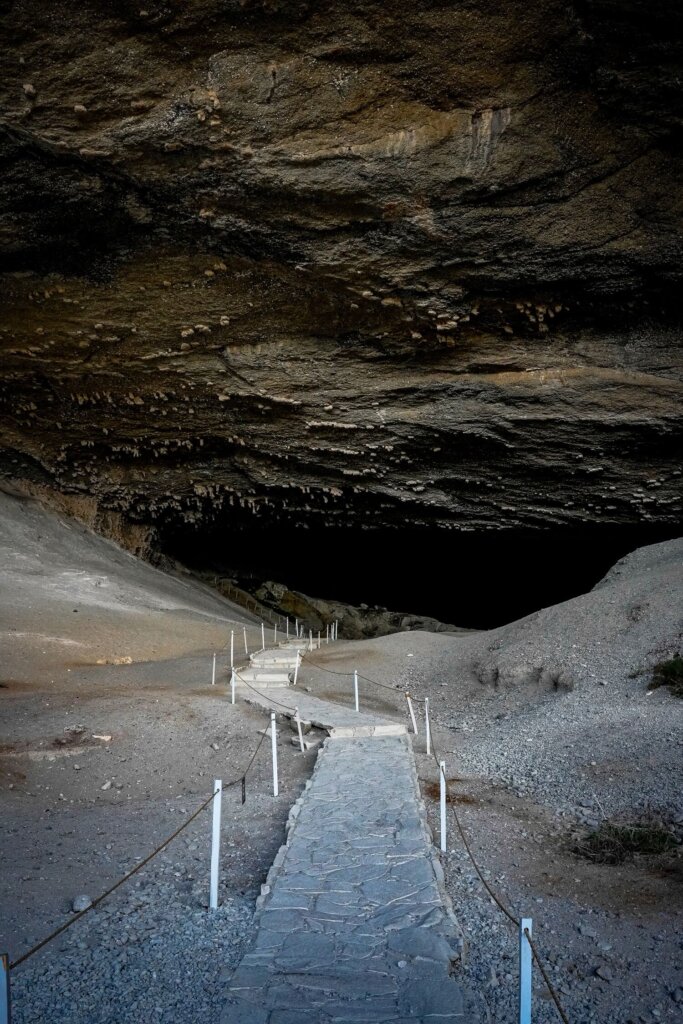
It is a large natural cave where preserved skin and remains of the giant sloth called Mylodon darwinii were found by German explorer Hermann Eberhard in 1895. Research suggests that the cave was also inhabited by humans 12,000 years ago. Cueva del Milodon was declared a historical monument in 1968 and a national monument in 1993.
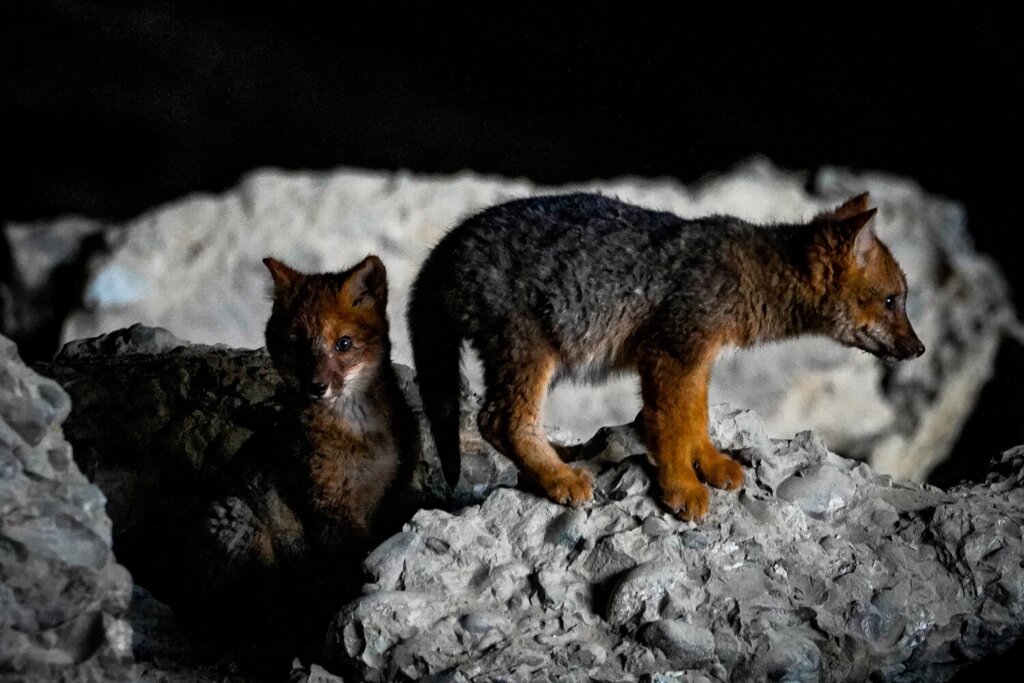
There are three different caves you can visit, as well as a few viewpoints and the Devil’s Rock (Silla del Diablo). The largest and most impressive cave is located closest to the main entrance. It reminded us of the ones around Castleton in the Peak District in the UK, near where we live. Here we could follow a trail that circled around the inside and even saw a family of playful foxes.
From there, we took the short but steep trail up to the top of the cave and got some lovely views of the surrounding area. Then we also followed the path out towards the Devil’s Rock, passing the medium sized cave followed by the smallest one.
Admission is 12,000CLP for foreigners and you can book your ticket on the official website. (Note that this is in addition to your Torres del Paine entry fee). It’s open between 8AM and 7PM, with the last entry at 6:30PM.
If you’re visiting Torres del Paine with an organised tour, then this day trip also includes a stop at the Mylodon Cave.
Check Availability:


Practical Information on Visiting Torres del Paine
Note that we’ve dived deeper into all the information on how to plan a visit to Torres del Paine in this dedicated guide.
Torres del Paine Entry Fee
There are two entry pass options to Torres del Paine National Park:
- 1-Day Pass – $32,400 CLP per person for foreign visitors.
- More than 1 Day Pass – $48,500 CLP per person for foreign visitors.
You can purchase your entry pass on the CONAF website, as well as see up-to-date prices and potential discounts.
How to Get to Torres del Paine
Hire car. If you wish to visit the park independently, then we suggest renting a car. From Puerto Natales, both the Amarga ranger station (East Entrance) and the Serrano Entrance (South) are about a 1.5- 2 hour drive away. It’s worth noting that the closest petrol station is in Puerto Natales.
Public Bus. Bus companies, such as Bus-Sur, run services between Puerto Natales and various points within the national park. Buses depart from Rodoviario Puerto Natales. Make sure to secure an early-departure ticket online in the high season.
Organised Tour. You can also get to the park with an organised tour. There are a variety of tours you can book depending on whether you wish to hike, enjoy more of a sightseeing tour or go on a wildlife excursion.
How Long You Need in Torres del Paine
You will need the absolute minimum of 2 days, but ideally 3 to 4 full days, if you don’t want to do any multi-day trekking. In case you are doing the W or O-Trek, then you’ll have to allocate anywhere between 5 and 8 days.
Read Next: Visiting Patagonia: Los Glaciares or Torres del Paine National Park
Best Time to Visit Torres del Paine
The best time of the year to visit Torres del Paine National Park is between November and March. This is essentially late spring, summer and early autumn in Chile.
Final Thoughts on Things to Do in Torres del Paine
We absolutely loved our time in Torres del Paine, even though we didn’t end up doing any of the multi-day treks. We loved our day hikes as well as all the beautiful viewpoints we stopped at. Even experiencing the Patagonian wind was an adventure in itself!
Torres del Paine is a place we would return to in a heartbeat given the opportunity, and next time we would plan ahead to complete the O-Circuit and go for the puma watching experience.
If you found this blog post useful and want to show your support, you can buy us a coffee here.
Now, let your adventure begin,

Remember…It all starts with a Pin…


It’s so gorgeous! I’m convinced that I’ve been missing out for sure. How far is this from the nearest city? Seems far away!
I visited Torres del Paine a couple of years ago… it’s one of the most spectacular places in the whole world, isn’t it?? I loved reading this… it brought back so many beautiful memories!
Thank you for such a detailed article! It looks like an amazing place to explore!
I would love to hike Torres del Paine, though I think a group tour would suit me.