
Things to Do in Recoleta, Buenos Aires, Argentina

Recoleta is without doubt one of the most elegant neighbourhoods, or barrios, in Buenos Aires. The streets here are filled with trendy cafes, luxury apartments, parks, museums and art galleries, as well as architecture that’ll make you feel like you’ve accidentally boarded the wrong plane and ended up in Paris. Well, they do call Buenos Aires the “Paris of the South” for a reason.
In this guide, we’ll list all the top places to see and best things to do in Recoleta. Trust us, there are plenty of them! Before we knew it, we’d spent an entire day just within Recoleta and had gotten plenty of steps in to satisfy our smart watches.
If you’d like to see what we got up to in the Argentine capital, then watch our dedicated Buenos Aires video, which we shared on our YouTube channel Kitti and Jon. For more videos from the country, check out our Argentina playlist.
Disclosure: This post may contain affiliate links, which means we may receive a small commission if you click a link and purchase something. Clicking these links won’t cost you anything, but it will help us to keep this site up and running! Learn more about our affiliate policy.
About Barrio Recoleta in Buenos Aires
Sandwiched between the Barrios of Palermo and Retiro, Recoleta is one of the most elegant neighbourhoods in Buenos Aires.
The name La Recoleta comes from a monastery called the Recollect Convent (Convento de la Recoleta). It was founded by the Franciscan Order in the early 18th century and consisted of a church, dedicated to Nuestra Señora del Pilar, and a cemetery. This cemetery is actually the renowned La Recoleta Cemetery, which is one of the most popular places to visit in Buenos Aires.
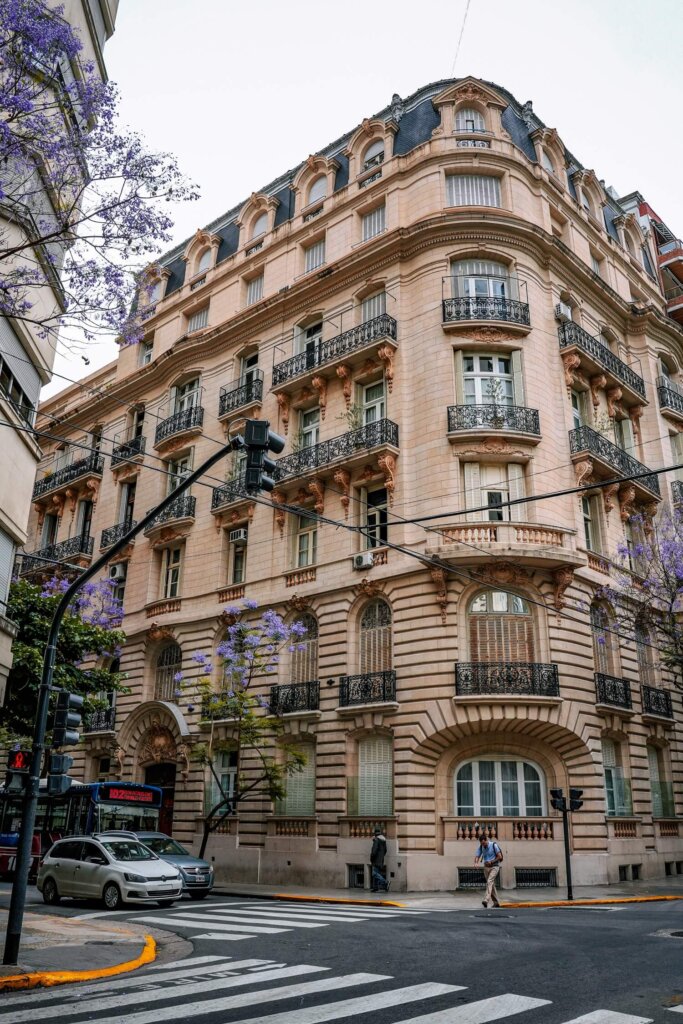
Recoleta’s transformation into an upscale neighbourhood started in 1871, during a yellow fever outbreak. Wealthy families fled the southern barrios, where the disease was particularly bad, to the northern areas, such as Recoleta. Of course, this migration was followed by the construction of luxury mansions, hotels and foreign embassies. Most of these buildings were designed by French architects, who used materials imported from France.
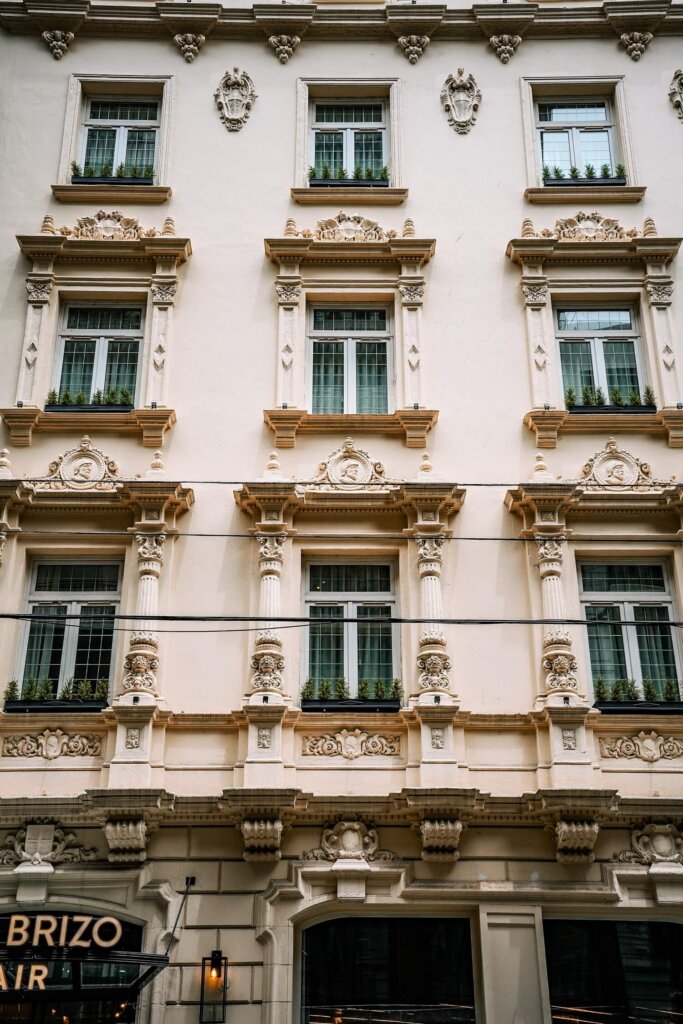
Despite many buildings being demolished and replaced by modern ones over the years, Recoleta is still one of the best neighbourhoods to see Belle Époque architecture.
Our Top Travel Resources for Visiting Recoleta in Buenos Aires
- 🏨 Find your accommodations on Booking.com
- 🎫 Book an organised tour with GetYourGuide or Viator
- 🛜 Stay connected with Holafly eSIM. (5% off with code ‘KITTIAROUNDTHEWORLD’)
- ⚕️ Don’t forget to buy travel insurance via SafetyWing
- 🚌 How to get around Buenos Aires
Things to Do in Recoleta Buenos Aires
1. Visit Recoleta Cemetery (Cementerio de la Recoleta)
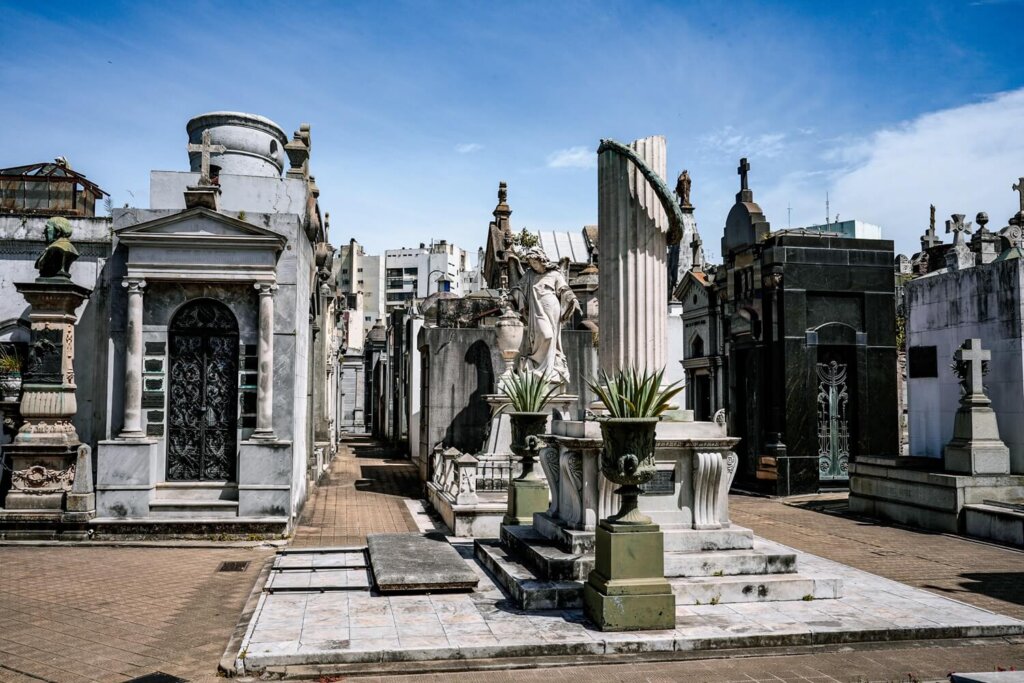
Without doubt one of the most popular things to do in Recoleta, and in Buenos Aires for that matter, is to visit the Recoleta Cemetery. Yes, we totally appreciate that visiting a cemetery could be considered a strange activity, but it’s definitely a must if you’re in BA.
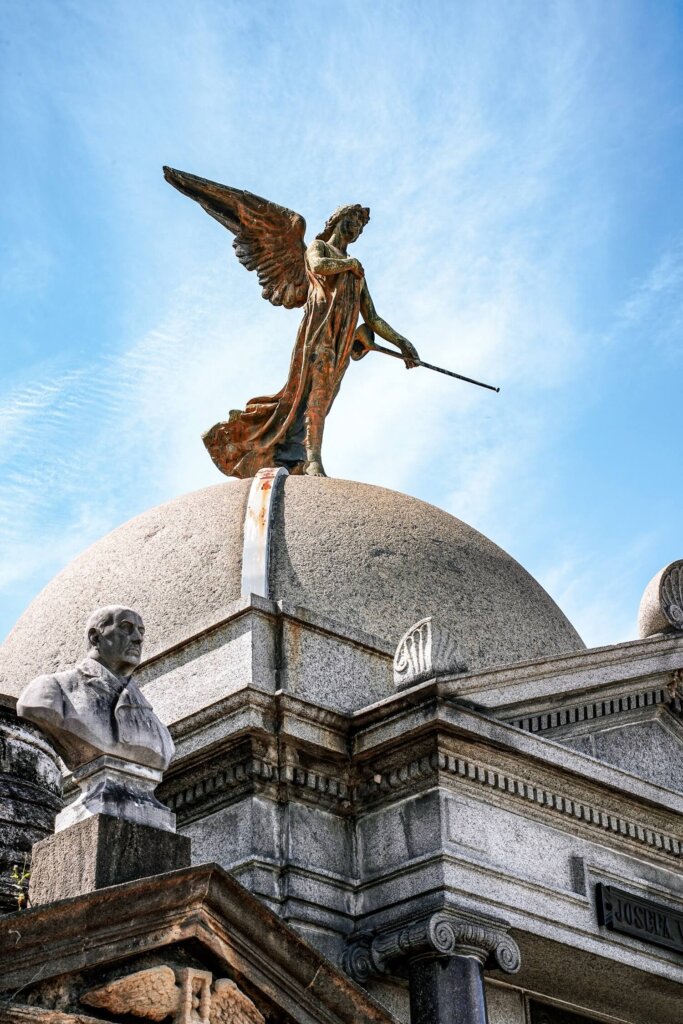
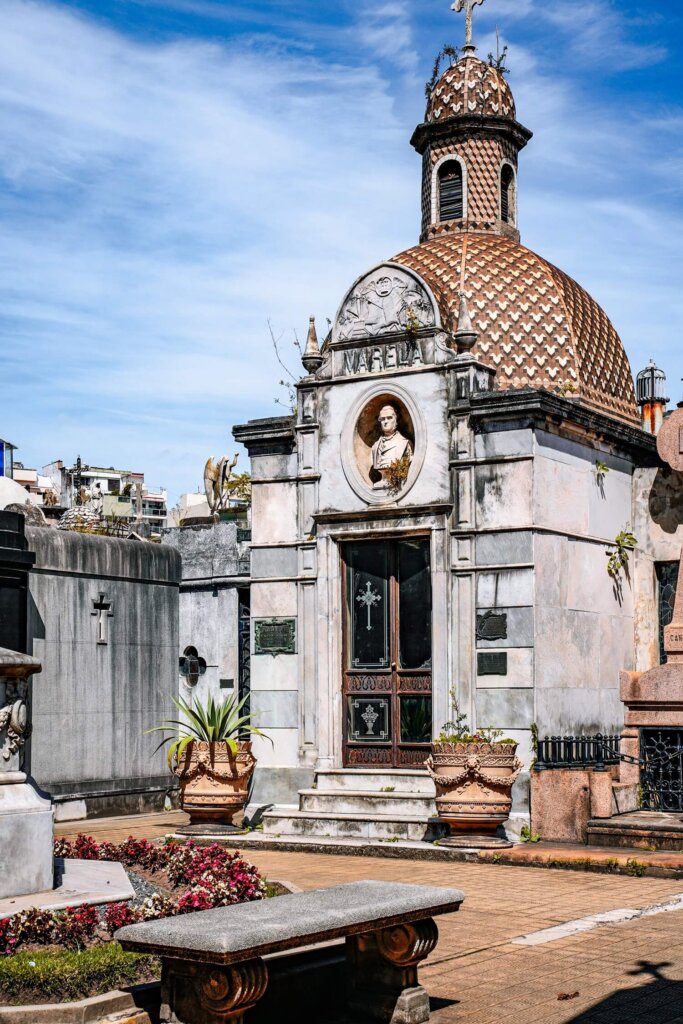
The cemetery was built in the early 18th century by Franciscan monks. In 1822, it was converted into BA’s first public cemetery after the Franciscan order dissolved. To our surprise, its layout felt more like a miniature city, with tree-lined avenues, roundabouts and blocks. The layout was designed by Prospero Catelin who was – surprise, surprise – a French engineer. However, the cemetery was later remodelled by the Italian architect Juan Antonio Buschiazzo.
The cemetery is the resting place of many important people including presidents, businessmen, poets and writers. Possibly the most visited mausoleum is Eva Perón’s, who was the First Lady of Argentina from 1946 until she died in 1952.
Since 1946, Recoleta Cemetery has been a National Historic Museum and nearly 100 mausoleums are National Historic Monuments. To some extent, Recoleta Cemetery reminded us of the cemeteries in Guatemala, with their huge, albeit more colourful, mausoleums.
Don’t forget to stop by the Basílica Nuestra Señora del Pilar church right next to the cemetery.
Note. Whilst it will be packed with tourists, it’s still an active cemetery, so please be respectful during your visit.
Entry fee is $20,100 ARS pesos per person.
Visit Recoleta Cemetery with this FREE Walking Tour. (Of course, you’ll still have to pay the entry fee yourself.)
2. Relax in the Parks of Recoleta
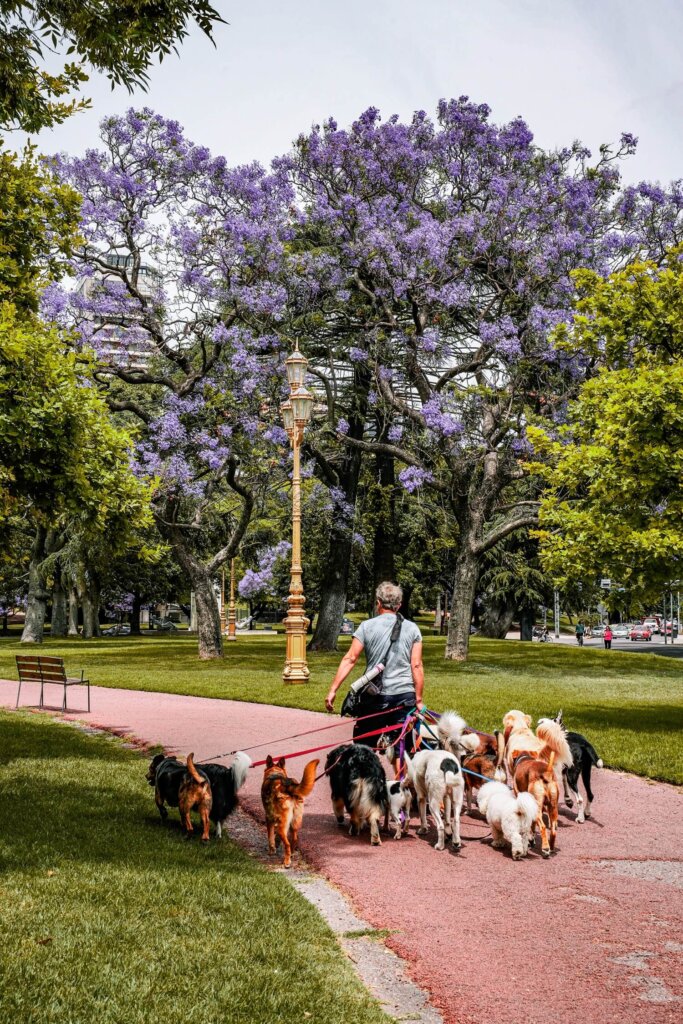
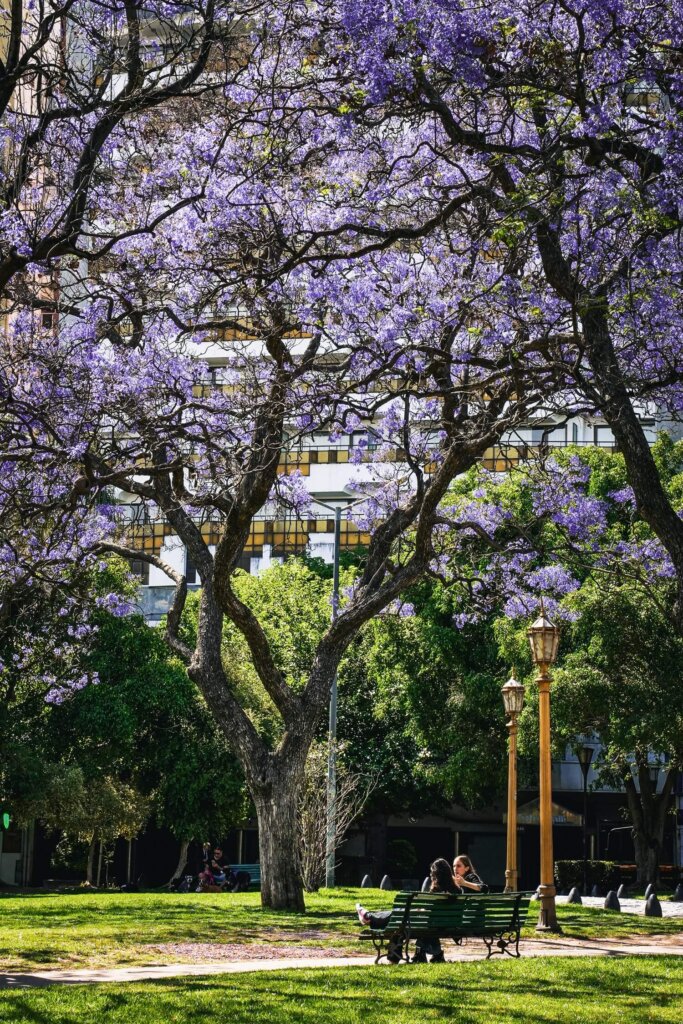
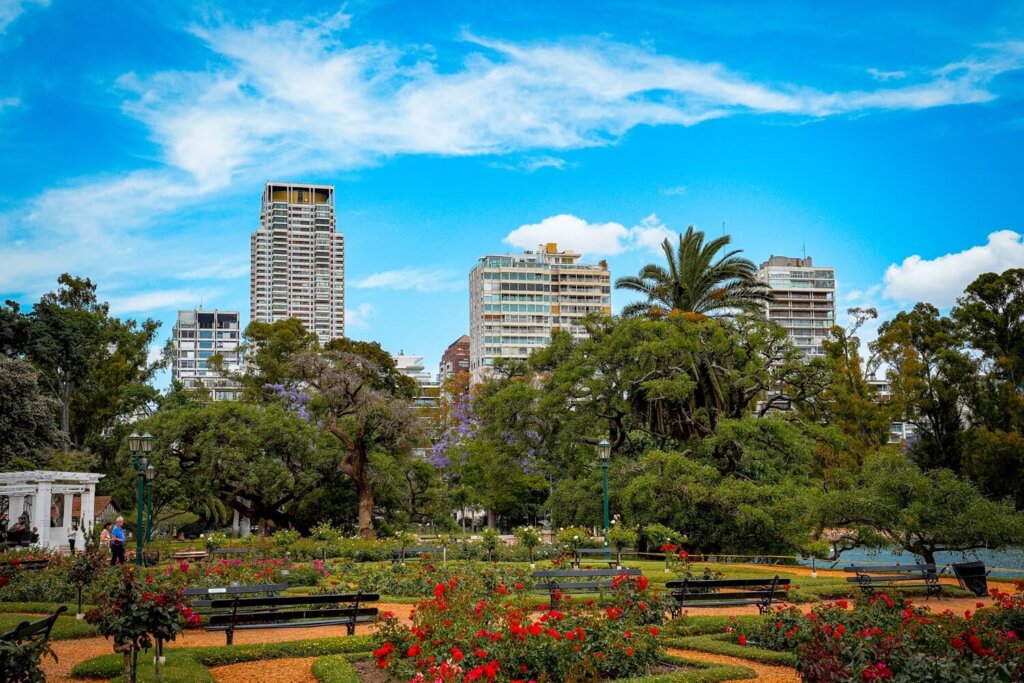
What we really loved about Buenos Aires was the amount of green spaces the city had. Although the parks in barrio Palermo are much larger and more popular, the small parks in Recoleta are still worth a visit. Apart from people watching, we started to enjoy dog watching in Buenos Aires’ parks. We’ve never seen so many people walking so many dogs – sometimes up to 20 at the same time – anywhere else we’ve been.
Most of the green space is concentrated around the main tourist attractions, so it was a nice way to walk through them as we made our way around the neighbourhood.
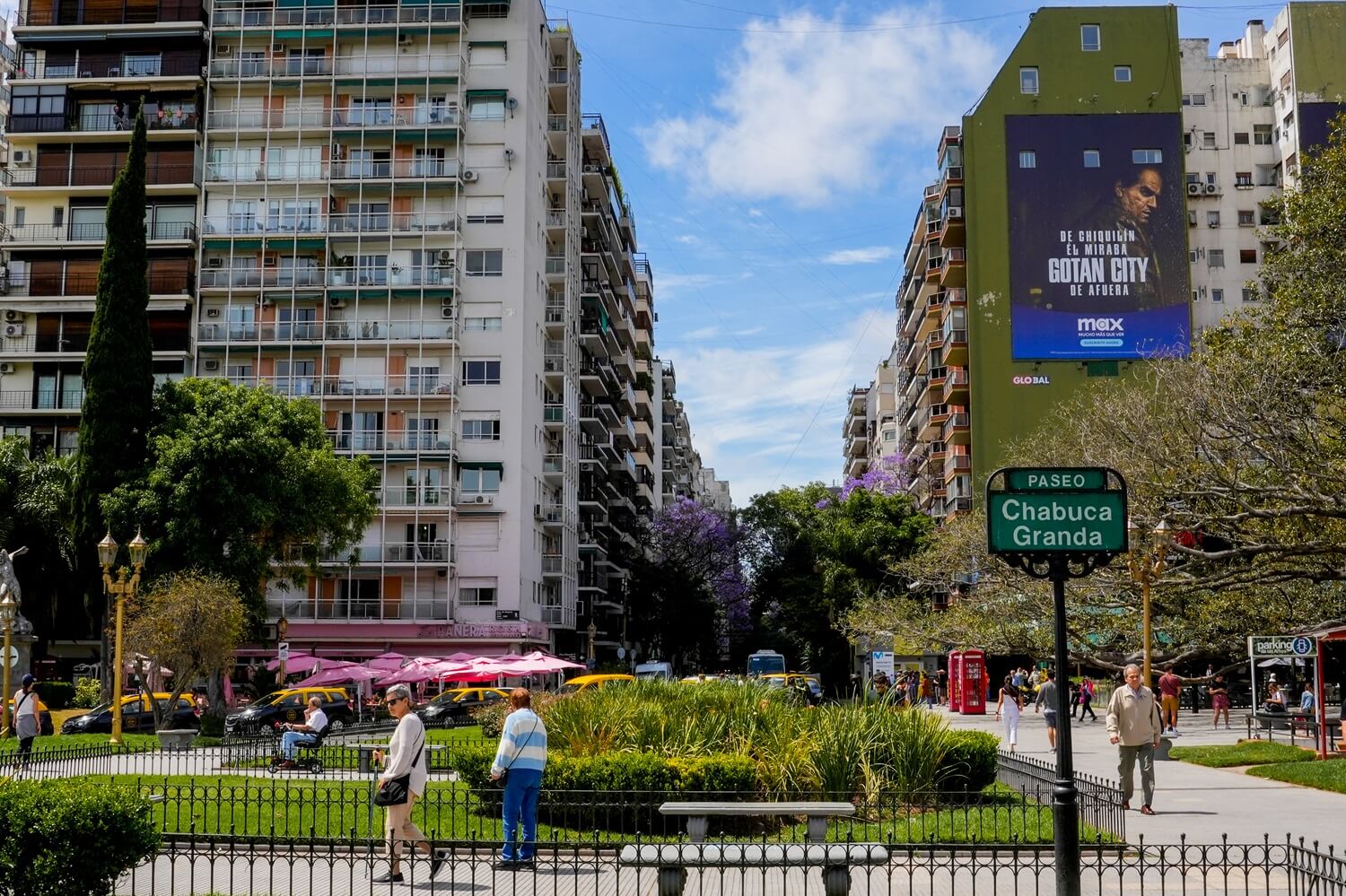
- Plazoleta Juan XXIII & Plazoleta Chabuca Granda are located just across from the Recoleta Cemetery. From here we could enjoy a nice view of the Basilica del Pilar church.
- Plaza Intendente Torcuato de Alvear is the park a little further north. It’s a slightly bigger green space, from where we could see the colourful façade of the Recoleta Cultural Center.
- Plaza Francia, Plaza Mitre and Plaza Evita are three smaller parks side by side. They’re all beautiful, tree-lined green spaces with monuments in the middle. Just across from Plaza Francia is the National Museum of Fine Arts.
- Parque Thays is located just across Avenida del Libertador. The park houses a few sculptures from various artists, including the Male Torso statue (Torso Masculino) by Fernando Botero, whose work we really enjoy since discovering it on our visit to Colombia.
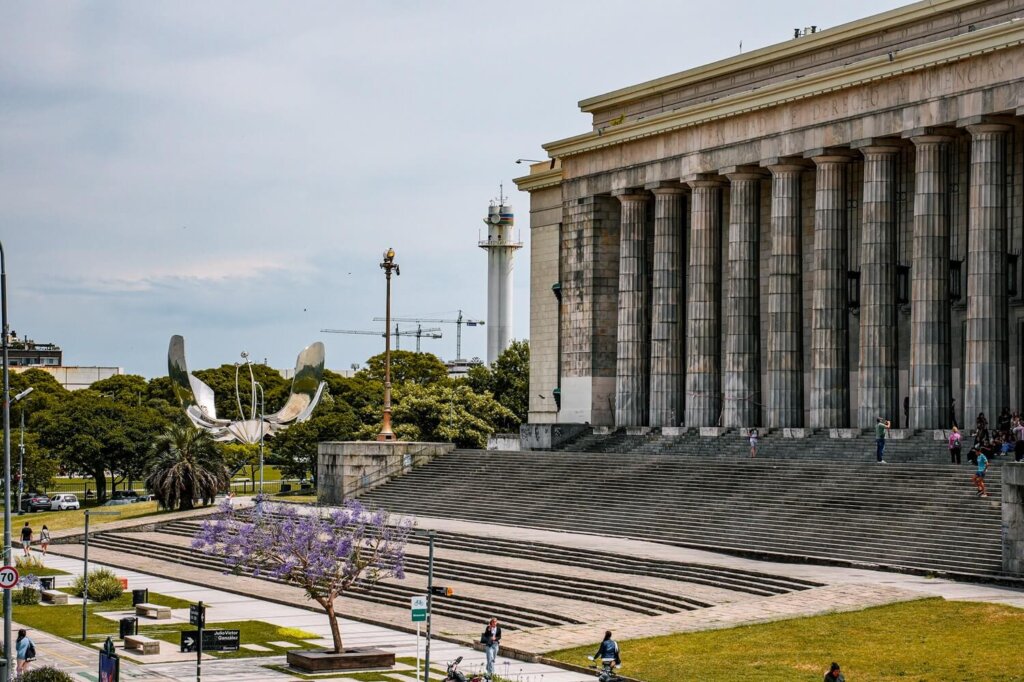
- United Nations Square is just on the other side of the Law School. The highlight of the park is the Floralis Generica sculpture, which is a steel flower in the middle of a fountain. What’s unique about this installation is its built-in electrical system that makes the flower open in the morning and close at night.
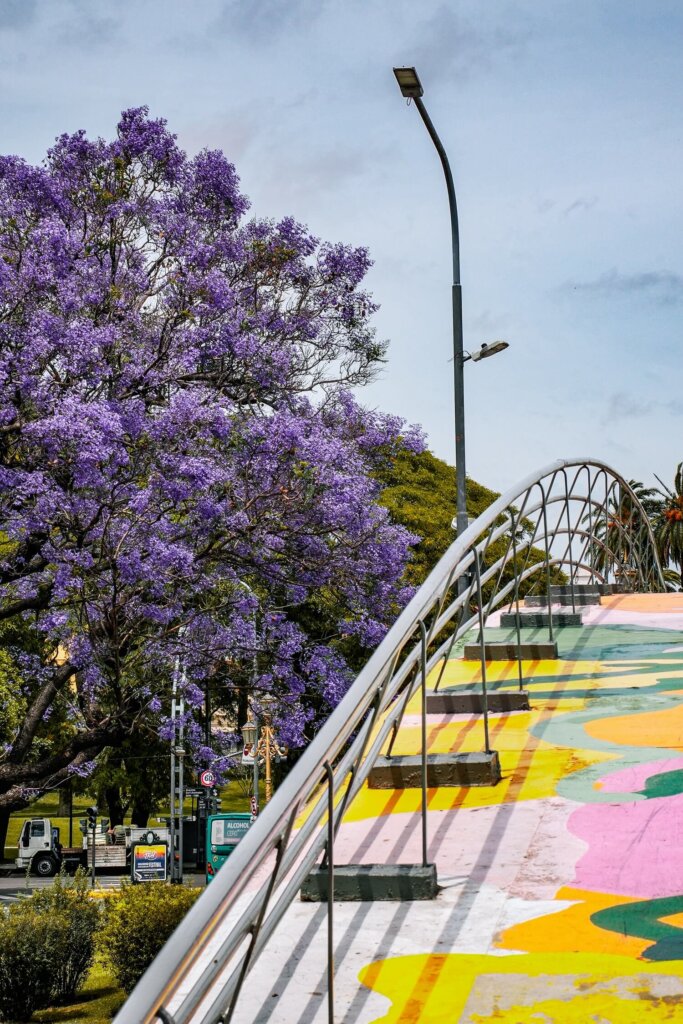
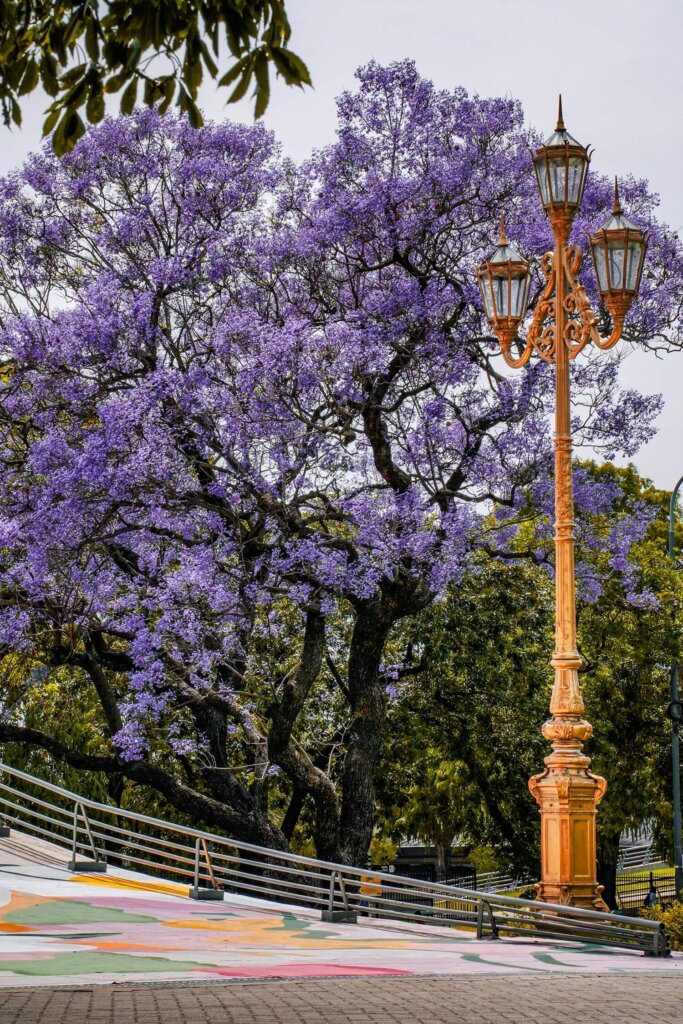
3. Cross the Colourful Dr. Alfredo Roque Vítolo Footbridge
Puente Peatonal Dr. Alfredo Roque Vítolo is a colourful footbridge that crosses Figueroa Alcorta Avenue. Initially, we just intended to use this bridge as a means to get to the parks on the other side of the road.
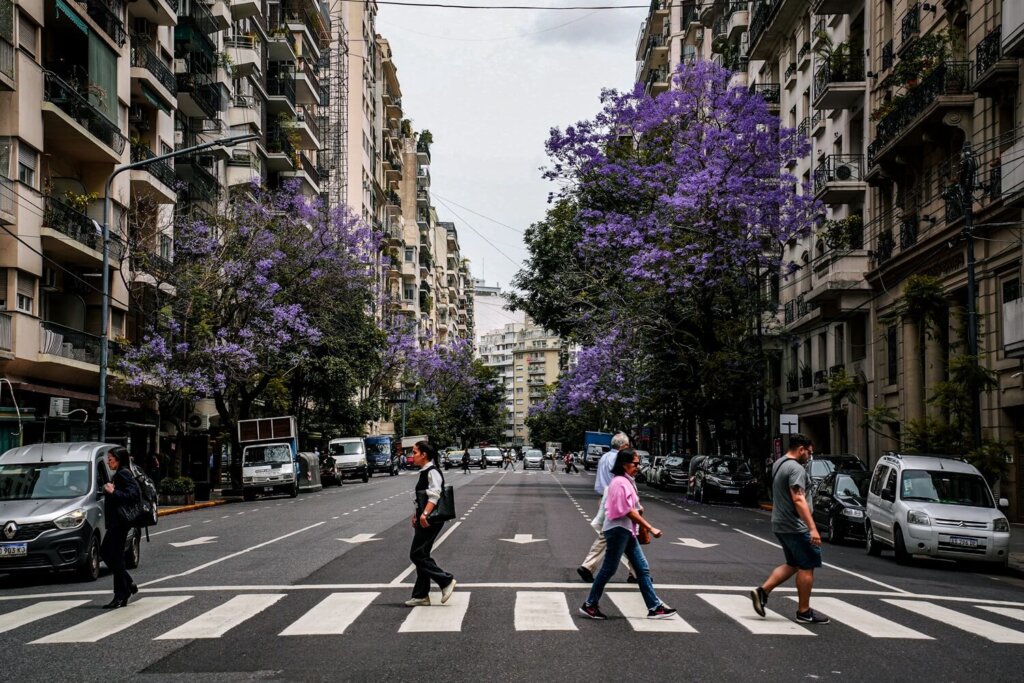
However, since we were in Buenos Aires in November, the whole Jacaranda-lined avenue was blooming, painting the otherwise average looking main road into an incredibly photogenic one. From this vantage point, we could also appreciate the impressive law school building (Facultad de Derecho (UBA)).
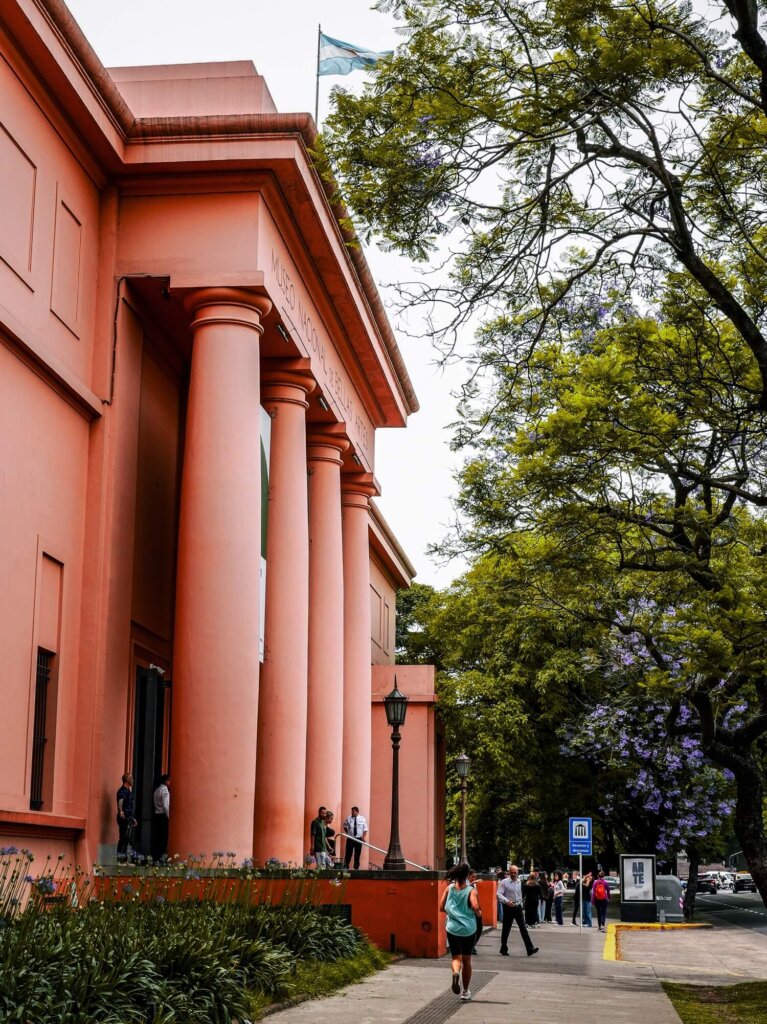
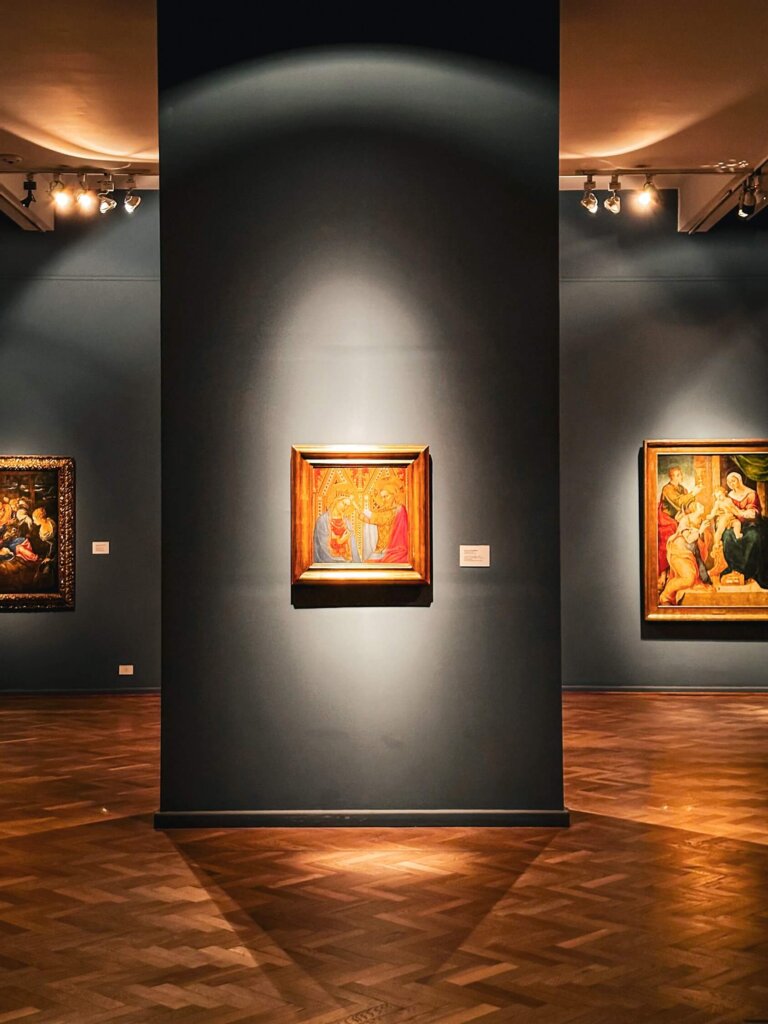
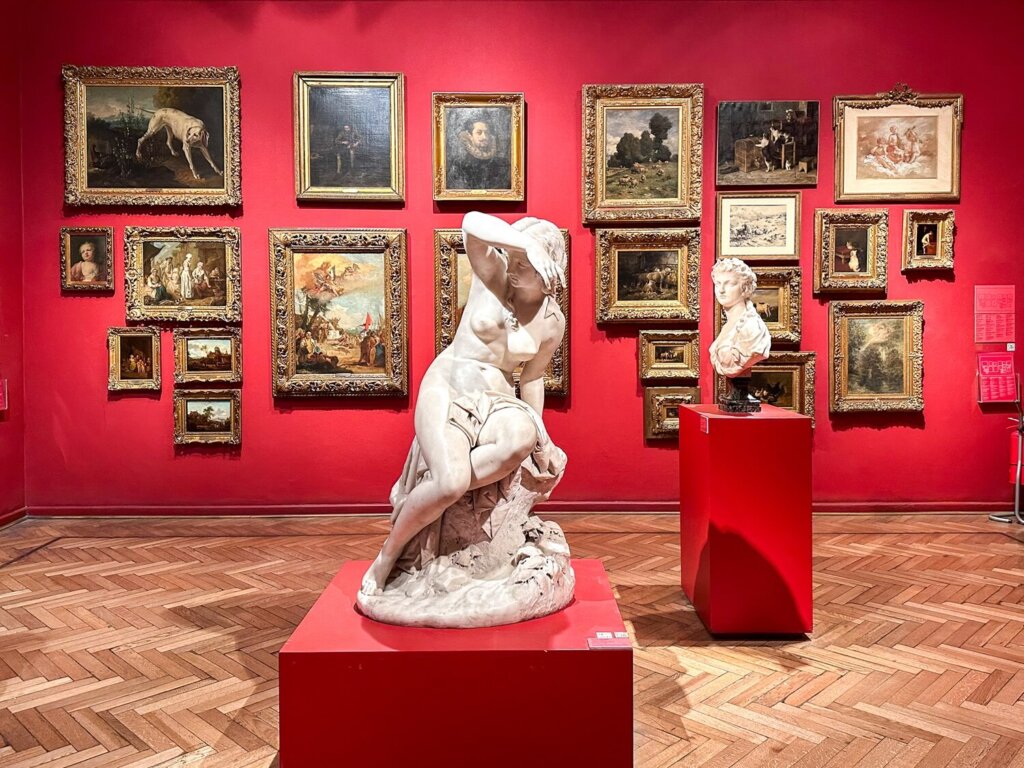
4. Visit the National Museum of Fine Arts
Museo Nacional de Bellas Artes was inaugurated in 1896 and is among the most well-known museums in Argentina. It displays a huge number of European works, including Goya and Van Gogh, as well as a massive collection of Argentine art. The building itself is also quite beautiful with its pink exterior.
Even though we don’t know all that much about fine art, we still found the museum well worth a visit. The ground floor was mainly dedicated to fine art, with the first floor showcasing more modern / abstract art. They also had a few sculptures, although the museum mainly displayed paintings.
Note. Descriptions were mainly in Spanish, although they had some English ones too. The museum has a free cloakroom, and you can’t take food and drinks inside. If you have a small backpack, then you’ll need to carry that on your front. They were also very alert and will tell you if you accidentally cross any lines in front of the paintings.
Opening times: Tuesday to Friday between 11AM and 7:30PM, and weekends between 10AM and 7:30PM. The museum is closed on Mondays.
Admission: free to enter, although you can make a small donation if you wish. For more information about the exhibitions, check out the museum’s official website.
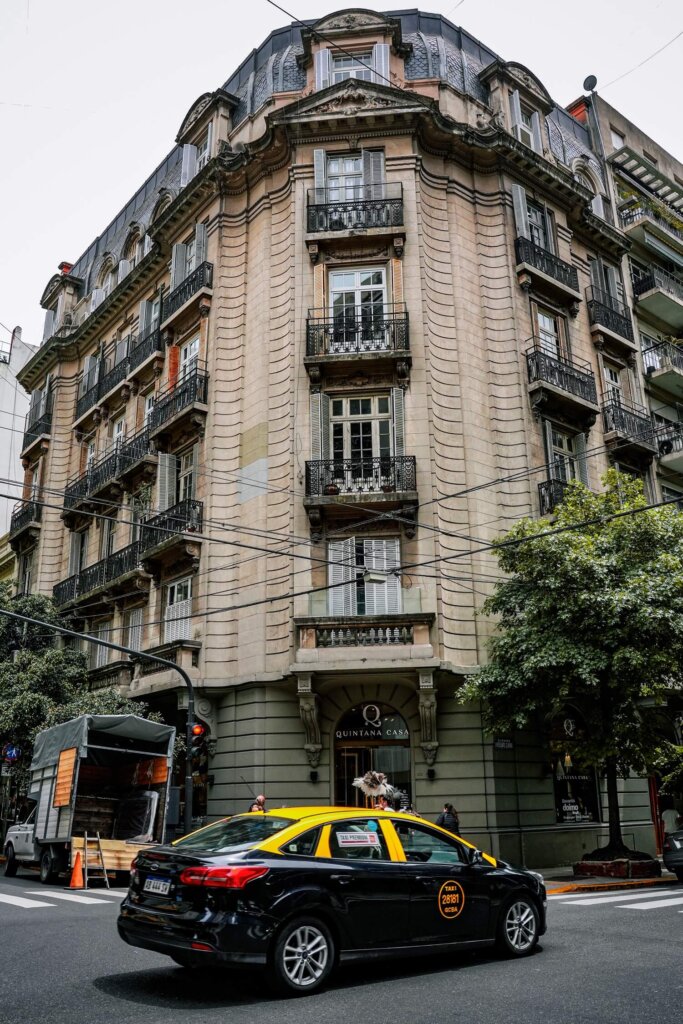
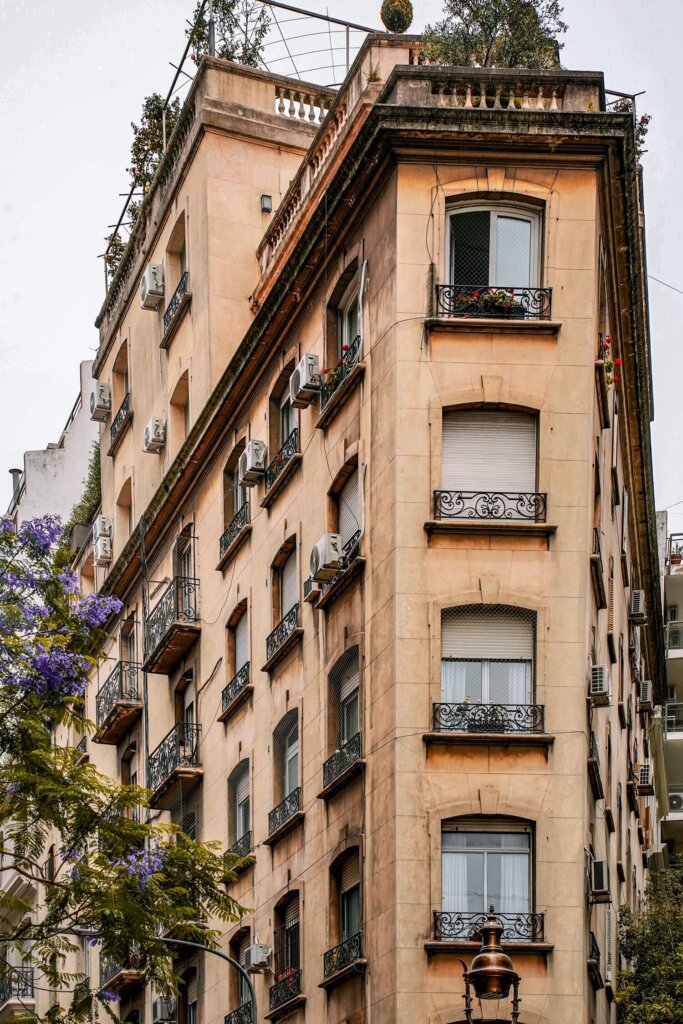
5. Admire the French Architecture of La Recoleta
The capital has 48 different barrios but here in Recoleta you’ll really see why Buenos Aires is often referred to as the “Paris of the South”.
As mentioned above, the yellow fever outbreak marked the start of the transformation of Recolata into the most European-looking neighborhood. During the economic boom in Argentina, the elite of the city wanted to follow the French architectural styles that were popular in Europe at the time.
In 1885, Mayor Torcuato de Alvear’s master plan was to create a “Little Paris” and Recoleta seemed like the perfect barrio to do so. French architects were hired, using materials exclusively imported from France. Whilst some of the grand buildings have since been demolished to make space for residential apartments, the ongoing preservation efforts meant that we still felt like we were visiting France and not a city in South America.

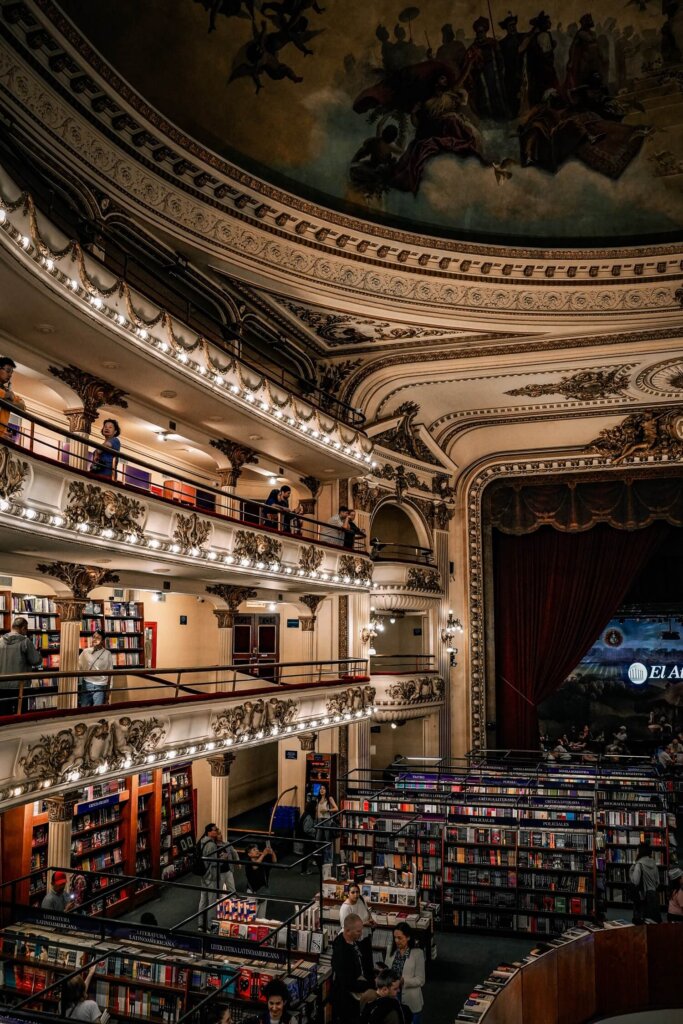
6. Find Your Next Book in Ateneo Grand Splendid
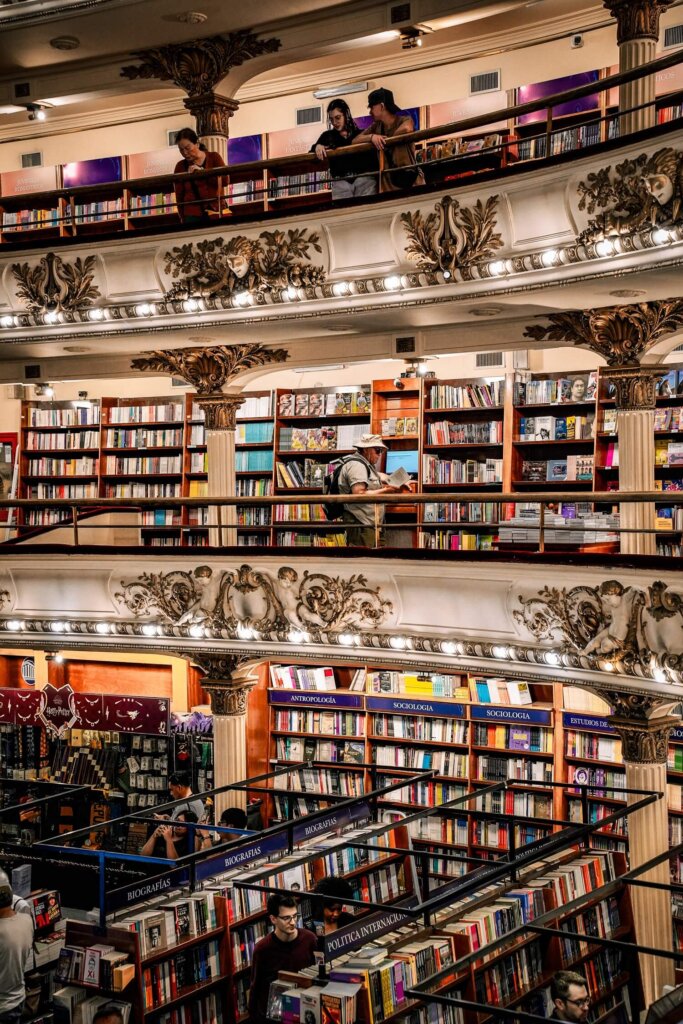
Apart from finding the most beautiful parks in a city, our next favourite thing to do is visiting bookstores. As we wandered the streets of Buenos Aires, we realised that the capital has an incredible literary scene. We couldn’t walk down a street without seeing smaller or larger stores selling books. Ateneo Grand Splendid isn’t just your average bookstore though. When National Geographic names a bookshop “the world’s most beautiful bookstore”, you can bet that it’s going to be special.
Ateneo Grand Splendid is housed in an old theatre building! If we didn’t see the bookshelves, we could’ve easily thought that we were here to see a play. The interior is absolutely stunning, with ornate balconies and frescoed ceilings. Where the stage would have been, there’s now a Havanna cafe, which is probably the most popular cafe chain in Buenos Aires. You can enjoy some delicious alfajores with the hot drink of your choice. Don’t forget to head upstairs for a better vantage point, so you can really appreciate the interior of the most unique bookshop you’ll probably ever visit.
It’s worth noting though that Ateneo Grand Splendid can get very busy. It seemed like tour buses drop large groups of people off here, which is unsurprising. The books were also quite a lot more expensive here than anywhere else we went in.
7. Go on a Mate Workshop
What we discovered during our time in Argentina was that Argentinians love to drink mate. (Okay, maybe they’re not as obsessed as Uruguayans, as we saw during our week in Uruguay, where it was hard to spot anyone not carrying a mate kit).
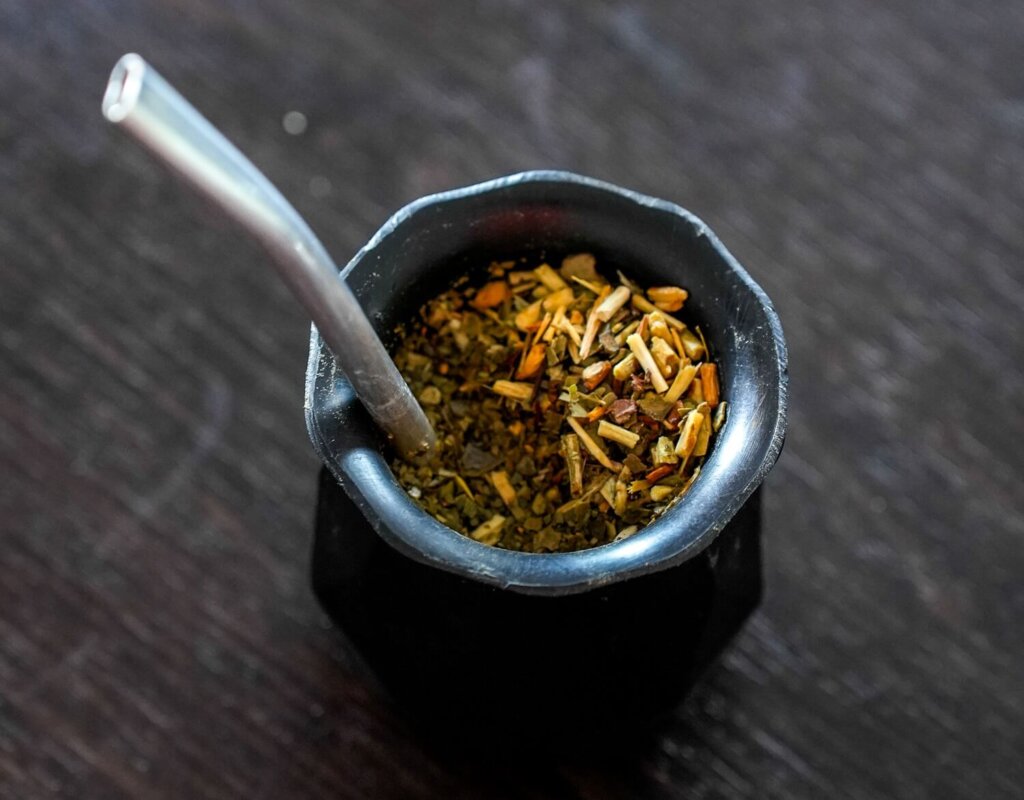
The only reason we knew about mate before coming to Argentina was because of our dear Argentine friends, who told us about their mate-drinking habits and invited us to join them. Okay, so mate (pronounced “mah-tey”, not the British “you alright, mate?”) is a bitter, caffeinated tea made from the dried leaves of the yerba mate plant. It’s consumed mainly in Argentina, Uruguay, Paraguay and even in Brazil. They drink it out of a cup called a mate with a metal straw, that has a strainer on one end called a bombilla.
So, if you also want to learn more about the origins of the drink, how to prepare it, and most importantly how to drink it – yes, there are certain rules you need to follow – then we highly recommend booking a mate workshop. This way you’ll know what to do if you’re ever offered mate during your trip across Argentina.
Where to Stay in Recoleta, Buenos Aires
Recoleta is a fantastic neighbourhood to base yourself in during your visit to BA. It’s close to the most popular barrios such as Palermo, Montserrat and San Telmo, and is filled with a ton of cafes and restaurants. We ended up staying in Recoleta during our first two weeks in the capital. Below are a few hotel options to choose from.
- Hotel Impala is a great budget friendly accommodation option in Recoleta. It’s close to a subway station, the Recoleta Cemetery, and many restaurants and cafes.
- Sileo Hotel has a great location right next to Recoleta Cemetery. The best part is that the rooms have private balconies overlooking the city and you also get breakfast included.
- Cyan Recoleta Hotel is also right next to Recoleta Cemetery, and has rooms with city views and breakfast included.
- Departamento Monoambiente is great option if you want to book an entire apartment. It has one-bedroom with a living room and a kitchenette.
- Mio Buenos Aires is perfect for a more luxurious stay in BA. Apart from their lovely rooms, they also have spa facilities, including a sauna, an indoor pool and a massage room. They offer a buffet breakfast and shuttles to Ezeiza Airport.
Other Neighbourhoods to Visit in Buenos Aires
San Telmo is full of antique shops and historical buildings. It’s a great barrio to spend a few hours in, browsing for souvenirs or watching the tango performed in Plaza Dorrego. Read our detailed guide on visiting San Telmo.
La Boca is one of the most colourful barrios in Buenos Aires. You can stroll down Caminito, admire the murals and street art and also visit “La Bombonera” (Boca Juniors Stadium). Read our detailed guide on visiting La Boca.
Downtown Buenos Aires is made up of three neighbourhoods: Monserrat, San Nicolas and Retiro. You’ll find many important government buildings, historical sites and religious buildings, as well as fantastic architecture and eateries. Read our detailed guide on Downtown Buenos Aires.
Palermo is the largest barrio in Buenos Aires. It has some of the best public parks and museums, as well as trendy sub-neighbourhoods with bars, cafes and plenty of street art. Read our detailed guide on how to spend a day in Palermo.
Read Next: How to Spend 3 Days in Buenos Aires
Final Thoughts on Things to Do in Recoleta, Buenos Aires
It was so easy to spend a full day in Recoleta. Whilst this neighbourhood didn’t seem like it had a massive list of things to do and see, we spent a good chunk of our day visiting the cemetery, walking around the nearby parks and in the fine art museum. Just walking along the streets in this barrio wasn’t a quick activity either, thanks to the beautiful architecture to admire everywhere we looked. Add into the mix the blooming Jacaranda trees and before we knew it the day was over.
Of course, we were lucky that we spent 2 weeks in Buenos Aires, so we could take things a bit slower. If you’re in a bit of a rush, then you can always combine your visit to Recoleta with Palermo, or Montserrat, Buenos Aires’ “downtown” district.
Now, let your adventure begin,

Remember…It all starts with a Pin…


What a lovely guide! I really enjoyed how you captured the charm of Recoleta — it’s such a beautiful mix of history, architecture, and calm green spaces.
Thank you so much!
I absolutely loved the cemetery! We had an all-day private walking tour of Buenos Aires so our guide dazzled us with all the stories of people buried there. We even saw the lady who feeds the stray cats. It made me happy that they were not forgotten.
It must’ve been amazing to have a private guide! I’m also happy to hear that the cats are being taken care of.
What a wonderful neighborhood guide! What time of year are the Jacaranda trees blooming? That would be the perfect time to go. I’d definitely visit the cemetery. I love the history and the art and architecture in cemeteries, and many are gorgeous green spaces as well.
Thank you so much. The Jacaranda trees start blooming in November and they are fully out by mid-November. It’s really a great time to visit.
Such a great guide! Would love to visit Recoleta so will definitely be adding it to the Buenose Aires bucket list.
Thank you so much. Hope you can visit BA and Recoleta soon.
Your guides are so thorough and useful. They give a great introduction to places, before travelling. Great photo’s too. x
Thank you for the lovely feedback.
Great guide! I haven’t been to South America yet but it’s top of my list!
Hope you can visit soon!
Thanks for sharing, Recoleta looks a lovely place to visit, with a nice mix of things to do and with the trees in full bloom, the colour on them is amazing 🙂
November is really a lovely time to visit BA!