

A Short Guide to San Telmo in Buenos Aires

San Telmo is one of Buenos Aires’ oldest and most traditional neighbourhoods. It has a long and interesting history, which you can still witness by walking along its narrow cobblestone streets lined with colonial buildings. In the past, it’s been home to dockworkers, slaves, immigrants, artists and writers. Today, San Telmo is an area where you can spend a day learning about its history, watch tango shows, browse handicraft markets and shop for antiques. In this guide, we’ll detail some of the best things to do and places to visit in San Telmo, whether you have a whole day or just a few hours to spend there.
If you’d like to see what we got up to in the Argentine capital, make sure to watch our dedicated Buenos Aires video, which we shared on our YouTube channel Kitti and Jon. For more videos from the country, check out our Argentina playlist.
Disclosure: This post may contain affiliate links, which means we may receive a small commission if you click a link and purchase something. Clicking these links won’t cost you anything, but it will help us to keep this site up and running! Learn more about our affiliate policy.
No Time to Read?
🚍Getting there: Taxi or cabify or public transport
🥾Top Experiences: San Telmo FREE walking tour; watch tango at Plaza Dorrego; San Telmo Market; El Zanjon de Granados underground tunnels
🏨 Accommodations: America Del Sur Hostel; Hostel Carlos Gardel; L’Adresse Hotel Boutique
🛜Stay connected with this travel eSIM.
⚕️Don’t forget about travel insurance.
About Barrio San Telmo in Buenos Aires
Barrio San Telmo is bordered by Monserrat to the north, Puerto Madero to the east, La Boca and Barracas to the south, and Constitucion to the west.
During the 17th century it was known as San Pedro Heights and was separated from the city proper by a ravine. At the time, mainly dockworkers, brickmakers, immigrants, and the free and enslaved people of African origin called this barrio home.
In 1708 the barrio officially became part of Buenos Aires. The Jesuits founded a Spiritual House here to help with the increase in poverty. After the order got shut down in 1767, the Parish of San Pedro Gonzalez Telmo was established in 1806. Unfortunately, the barrio continued to deteriorate until 1852, when the neighbourhood started to see some development. Once again this didn’t last long, thanks to the Yellow Fever outbreak of 1871, which resulted in many of the wealthiest residents of the barrio relocating to the northern areas of the city, such as Recoleta and Palermo. The abandoned buildings became home to European immigrants arriving to Argentina between 1875 and 1930.
In this now multicultural district, tango was born and more writers and artists were drawn to the barrio. This was coupled with a large restoration project, meant to restore San Telmo to its 19th century glory. So, the neighbourhood quickly became a popular area to visit for tourists.
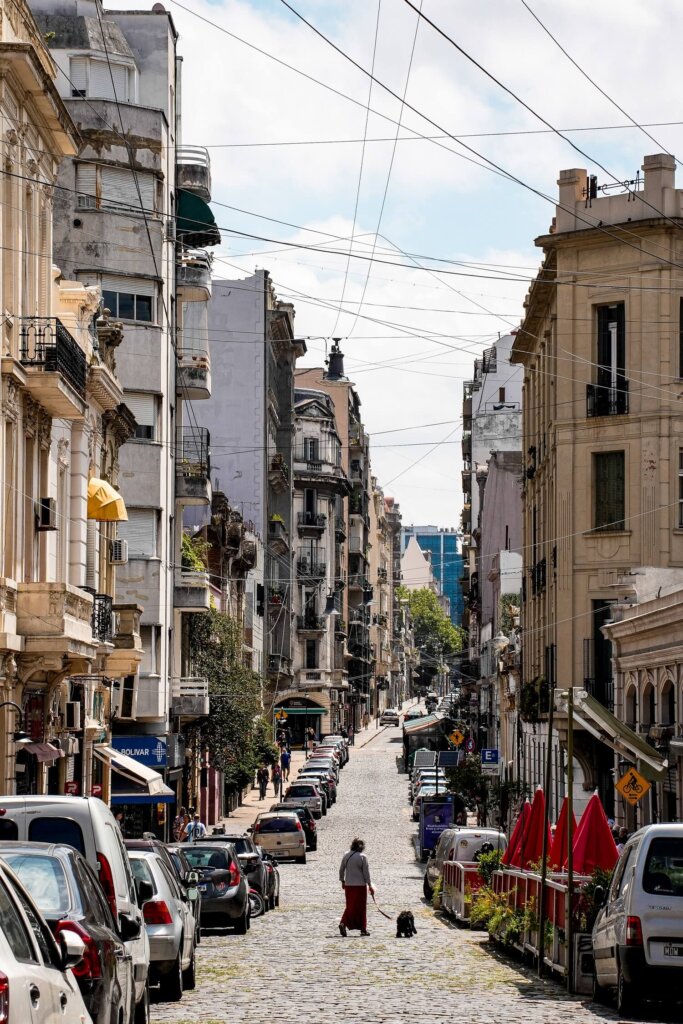
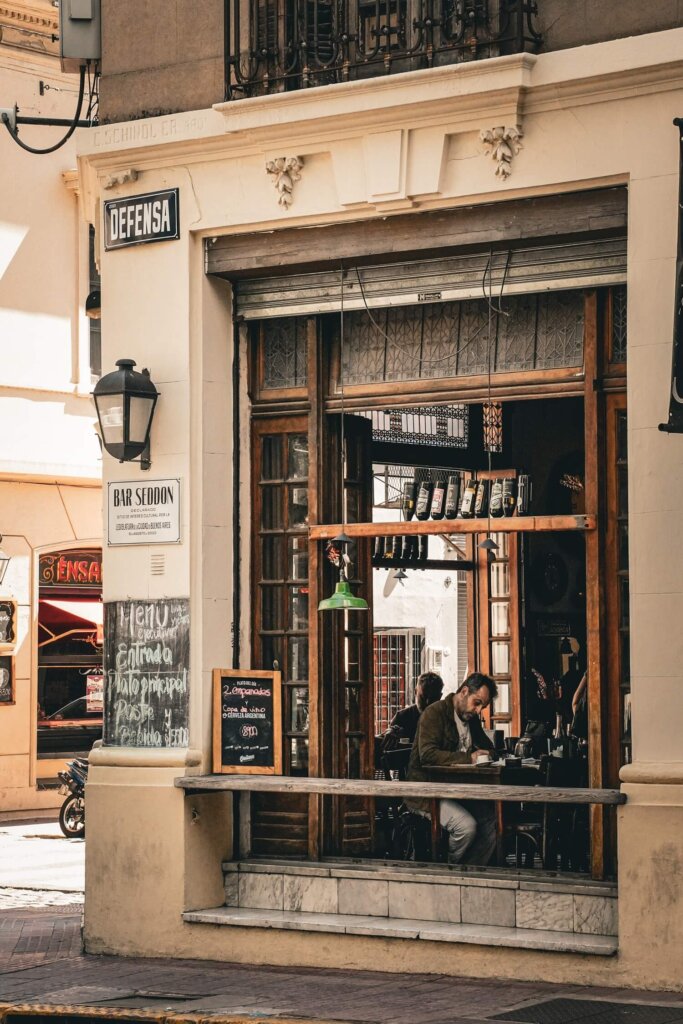
Things to Do in San Telmo in Buenos Aires
Although we probably could’ve spent a full day around San Telmo alone, we actually combined our visit with a trip to La Boca, the capital’s most colourful neighbourhood. So, if you’re also short on time, you can either visit La Boca and San Telmo together like we did, or visit the downtown area of Buenos Aires (Monserrat & San Nicolas) and San Telmo on the same day.
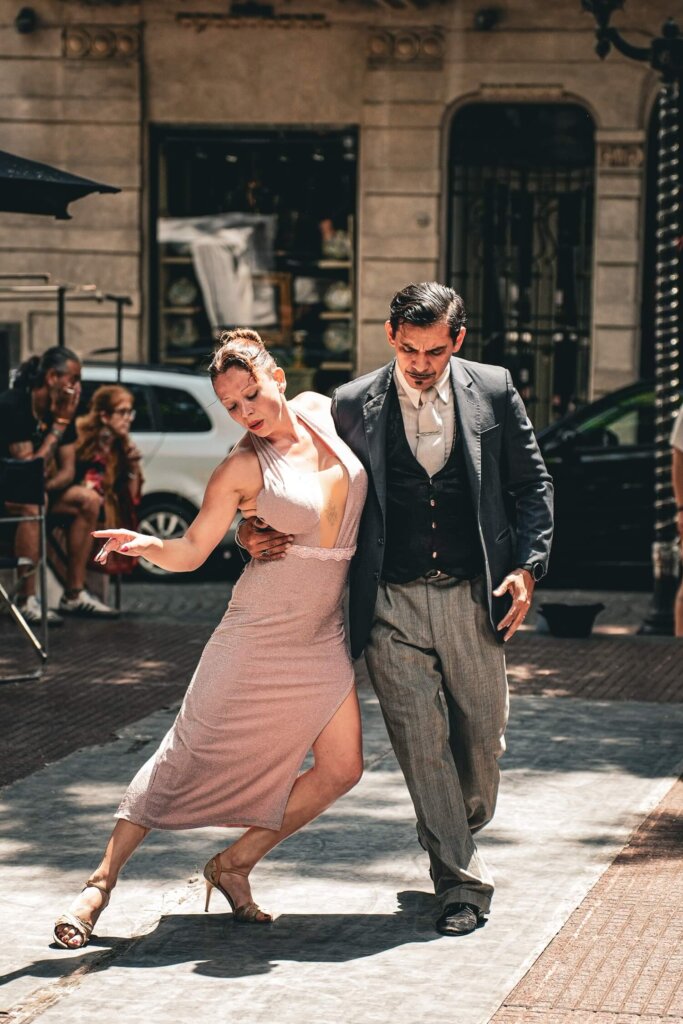
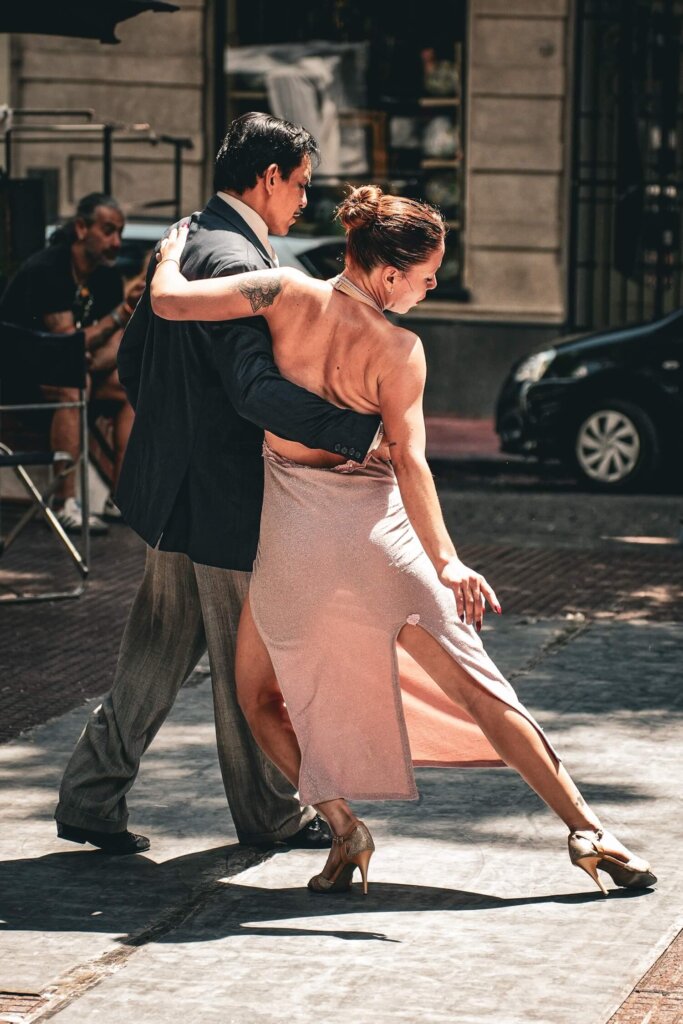
Watch Tango at Plaza Dorrego
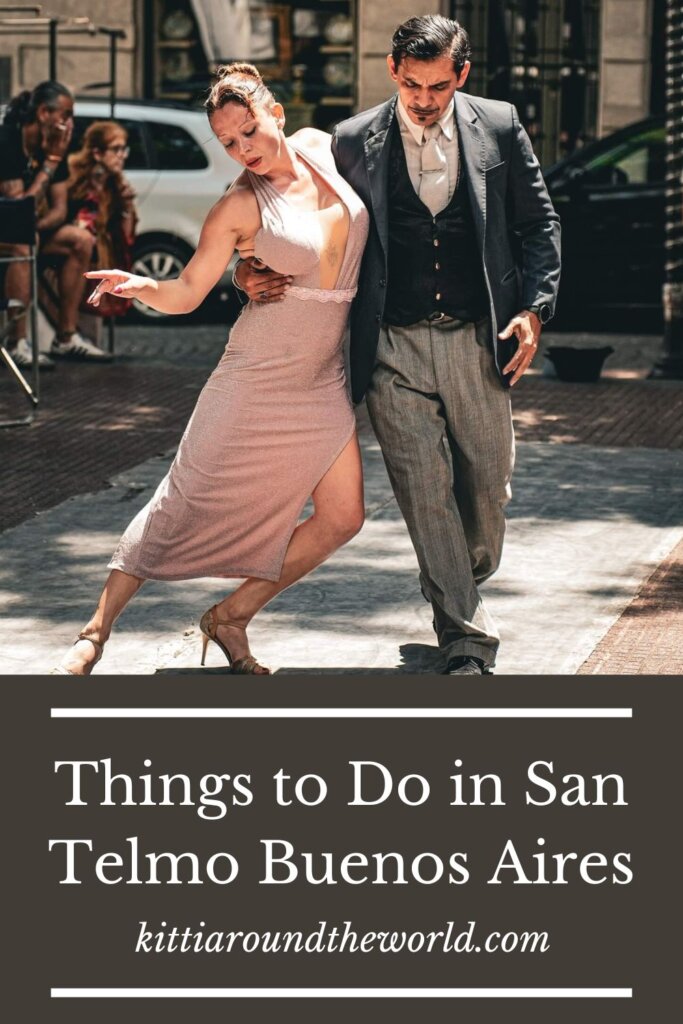
Plaza Dorrego is located in the centre of San Telmo, so as you’d probably guess it’s the beating heart of this neighbourhood. Surrounding the leafy plaza are bars and cafes, where you can sit outside, enjoy the sunshine and also watch people dance the tango or sing for the crowds. If you haven’t been to a tango show before, then Plaza Dorrego is a fantastic place to watch the dance.
If you’re visiting San Telmo on a Sunday, you’ll have the chance to experience the weekly Feria de San Telmo. This open-air street market takes place along Calle Defensa and around Plaza Dorrego. There will be countless stalls with vendors selling beautiful handicrafts and cool antiques. I actually found some of the prices for typical souvenirs to be slightly cheaper here than in La Boca.
Next to the plaza is an ice cream shop called Iceland. They have 2 for 1 ice-cream offers on Thursdays.
Browse San Telmo Market
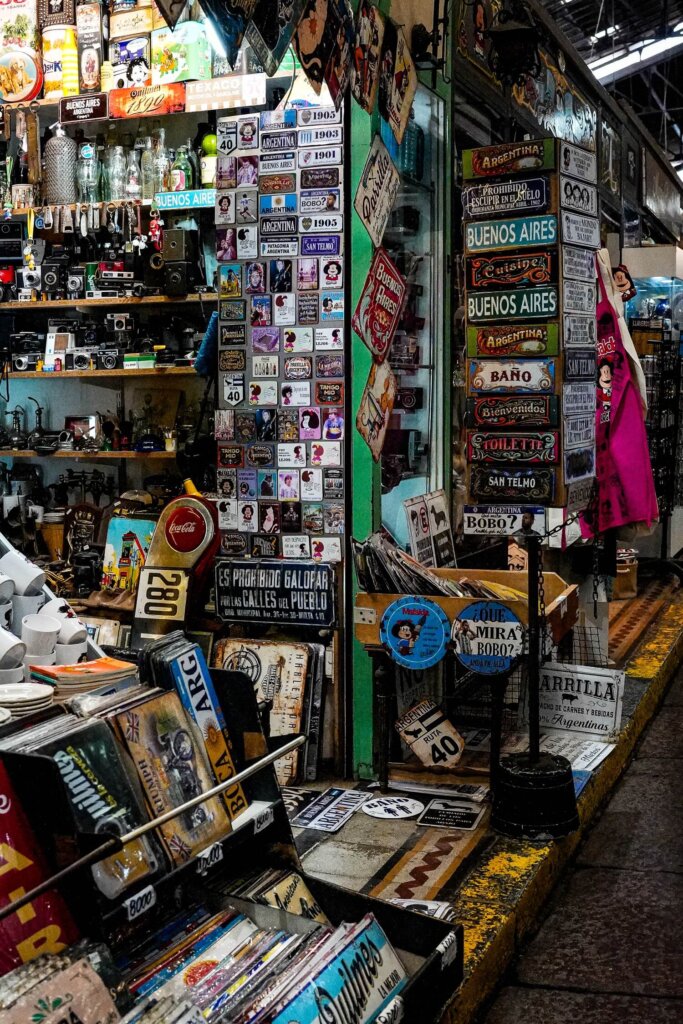
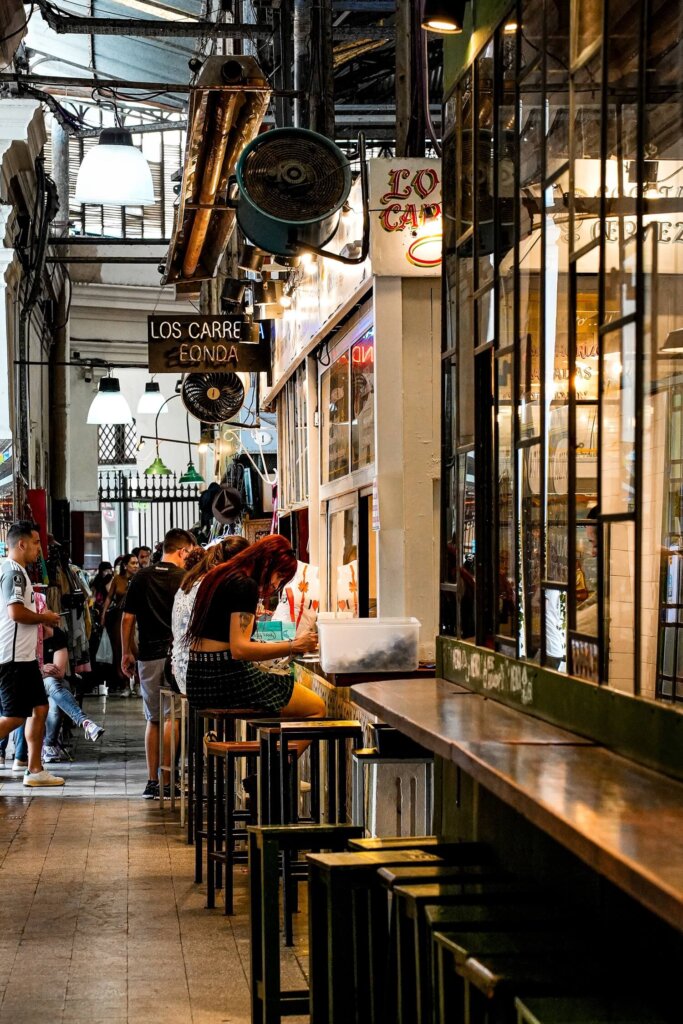
Don’t worry if your visit doesn’t fall on a Sunday though. You can still get your market fix in the indoor San Telmo Market (Mercado San Telmo).
The market opened in 1897 to cater for the immigrants arriving from Europe at the time. Even though there have been some updates over the years, the market maintains its original structure, which was designed by Italian architect Juan Antonio Buschiazzo. He also designed many other buildings and landmarks across the city, such as the famous Recoleta Cemetery. Since 2000, Mercado San Telmo has been a National Historic Monument.
Inside we found many stalls selling fresh produce as well as antiques, handicrafts and more. Knowing that the structure was original felt like being transported back in time as we browsed the products on display.
Check Out Casa Minima – The Narrowest House in Buenos Aires
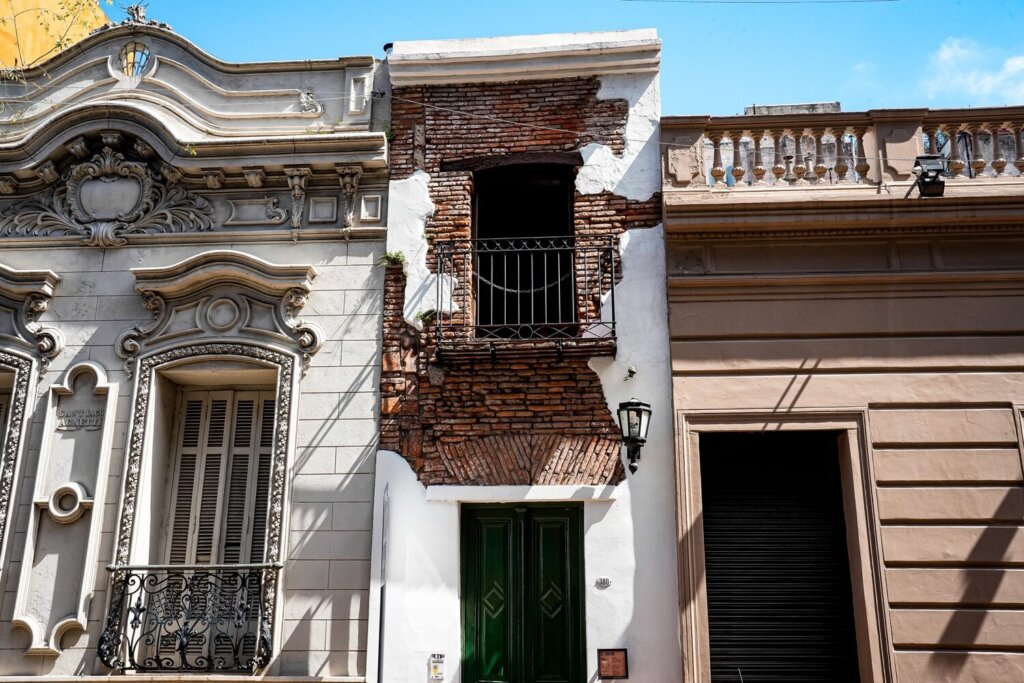
One of the most unique landmarks in Buenos Aires is in barrio San Telmo. Measuring a width of just 2.5 metres, Casa Minima is the narrowest house in the capital. If we didn’t know what we were looking for, we could’ve easily have walked past it, as it’s sandwiched between two larger buildings. Although it has a very simple façade, it’s recognisable by its green door, iron balcony and crumbly plaster walls.
This narrow house dates back to 1813. There are a few stories around its history, with the most popular one being that it was given to freed slaves after the abolition of slavery in Argentina. What doesn’t quite add up with this story is that slavery didn’t end in the country until 1853. Based on other research, it’s more likely that Casa Minima was once part of a larger building which was split up to be rented out or sold by the owner.
If you want to learn more about its history, we suggest taking a guided tour inside. The tour lasts a good 45 minutes and costs $20,000 ARS. However, if you also visit the underground tunnels, then you can buy a combo ticket and save some pennies. More information on prices and opening times can be found on the official website.

Take a Tour of El Zanjon de Granados Underground Tunnels
Located close to Casa Minima are the underground tunnels of El Zanjón de Granados, another interesting historical landmark in San Telmo.
El Zanjón has a long and interesting history which dates all the way back to the 16th century, when Spanish colonisers built the first settlements in this area. However, flooding during the rainy season had become an issue for the early residents. The actual tunnels were built under Marcos Miguens’ mansion in 1830 to help manage the sewerage system in the area. However, during the yellow fever outbreak the wealthy owners moved to the northern barrios and, over time, the building became tenement housing (conventillos) before it was eventually abandoned in the 1970’s. Later, in 1986, Jorge Eckstein bought the abandoned property and it was during his renovation work that he discovered the underground tunnels, turning his simple property investment into an archeological discovery.
There are English guided tours every day at 12PM and 4PM, and on the weekends there’s also one at 2PM. The tour lasts about an hour and costs $28,000 ARS. However, if you also want the tour of Casa Minima, then you can buy a combo ticket and save some pennies. More information on prices and opening times can be found on the official website.

Visit the Museums in San Telmo
There are other interesting museums in San Telmo to visit on top of El Zanjon de Granados.
National History Museum. Located in Parque Lezama, this museum allows you to learn about Argentina’s history through a collection of documents, paintings and historical objects. It’s closed on Mondays and Tuesdays. For more up-to-date information, visit the museum’s official website.
MACBA (Museum of Contemporary Art in Buenos Aires). It’s a private museum displaying contemporary art from many national and other Latin American artists. For more up-to-date information, visit the museum’s official website.
Museum of Modern Art of Buenos Aires (Museo Moderno). Located right next to MACBA, Moderno displays works from many Argentine and international artists. It’s closed on Tuesdays. For more up-to-date information, visit the museum’s official website.
Check Out the Churches of San Telmo
Apart from the numerous antique shops, there are also many religious buildings in San Telmo. A few notable ones to incorporate into your itinerary are:
- Parroquia de San Pedro Gonzalez Telmo. Located only a few minutes to the east of Plaza Dorrego. It is one of the oldest churches in Buenos Aires.
- Santísima Trinidad Russian Orthodox Church. Located at Plaza Lezama, it’s a stunning 17th century Muscovite style church.
- Danish Church. Located along Carlos Calvo street, this Lutheran church has a neo-Gothic style and brick façade.

Wander Around Pasaje de la Defensa (Casa Ezeiza)
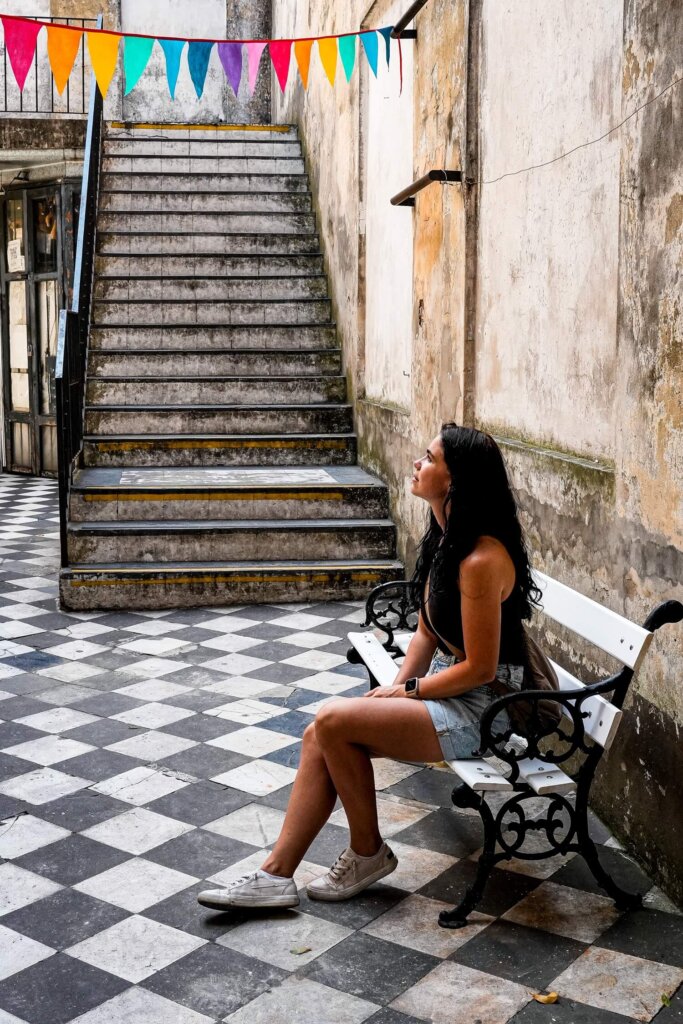
One of our favourite places in San Telmo was Casa Ezeiza. It’s a mansion built in the 1870’s, and was the home of the Ezeiza family. Later, it became tenement housing and for several years was also a school for the deaf. In 1981, the mansion was turned into a unique shopping centre.
We spent a good chunk of time here taking a few too many photos, as it was very photogenic. It’s also a great spot to find something unique, as there are a few independent shops inside.
Keep Your Eyes Peeled for Street Art
Unlike La Boca and Palermo Soho, San Telmo doesn’t have a crazy amount of street art, or dedicated “go-to” streets to see it. Although we saw a couple along San Lorenzo street, where Casa Minima is located. However, as you walk around the neighbourhood, just keep an eye out for street art scattered on the walls around the barrio.
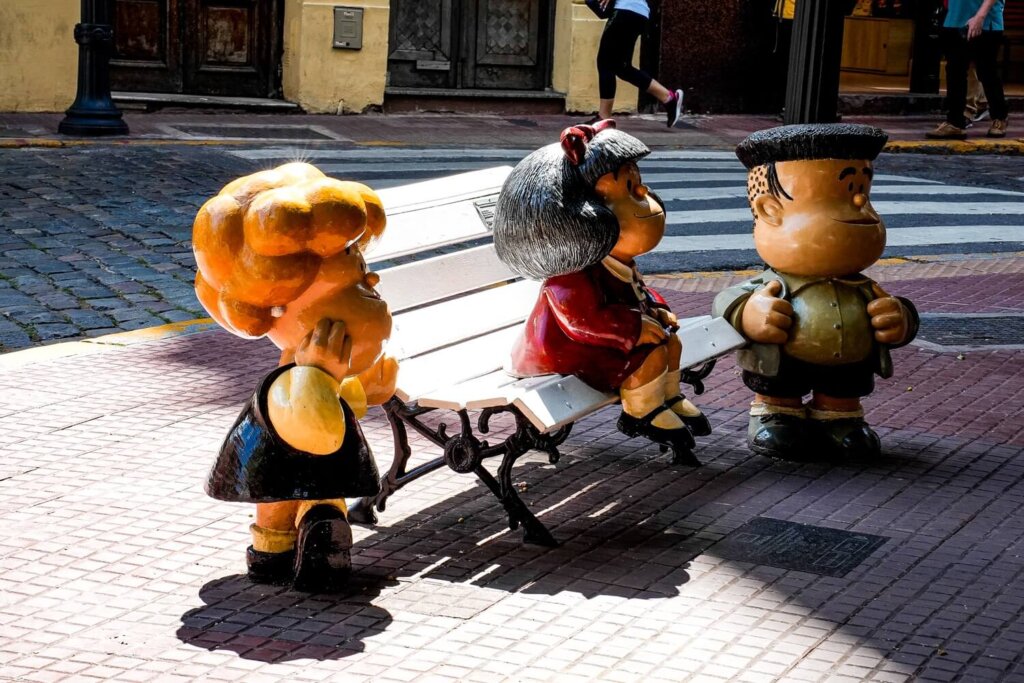
Find the Mafalda Statue
If you’ve been paying close attention to some of the souvenirs around the markets of San Telmo, you’ve probably noticed a lot of merch with the comic figure “Mafalda” on it. At first we had no clue who Mafalda was, only that it must be popular in Argentina because suddenly we started to see it everywhere.
So, after a quick search we learnt that Mafalda is indeed a much-loved comic strip character in Argentina, created by the cartoonist Quino. Mafalda is a 6-year old girl who was introduced to the world in 1964. She questioned humanity, world problems and political issues through the perspective of a young child.
In 2009, the cartoon statue was installed in San Telmo where Quino once lived, as a tribute to the Mafalda comic strip. Don’t be surprised if you have to join a little queue to snap a photo with Mafalda.
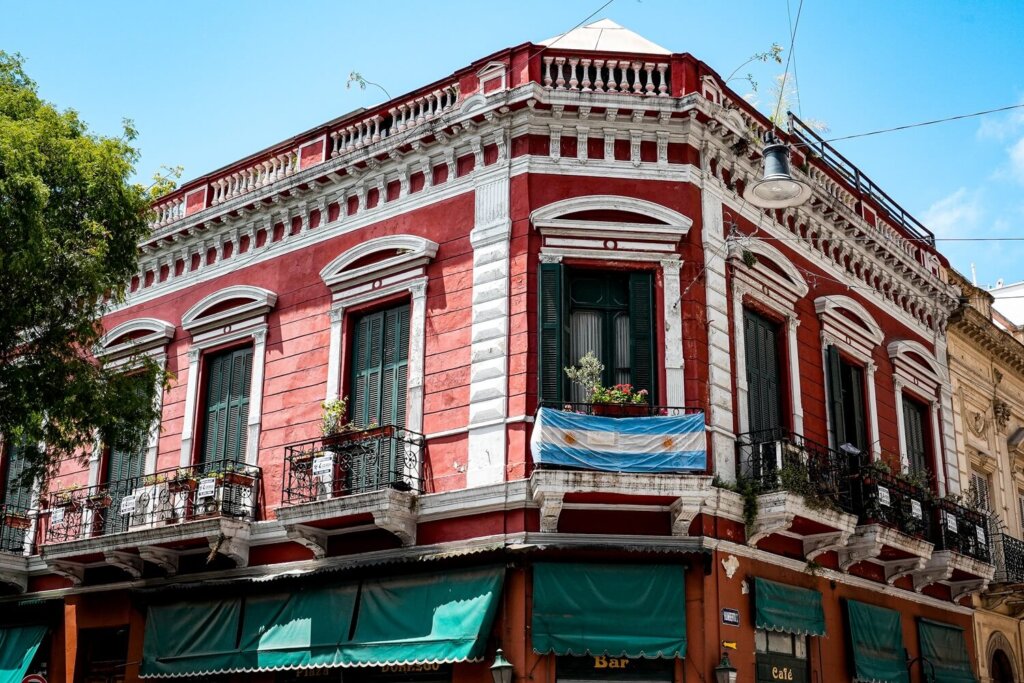
Where to Stay in San Telmo Buenos Aires
San Telmo is generally a more affordable area to stay in Buenos Aires compared to other barrios such as Recoleta. Whilst nowadays it’s much safer, we still recommend being careful in this area, especially at night. If you’d like to stay in this historical neighbourhood, here are a few different hotel and hostel options:
- America Del Sur Hostel is a popular hostel in San Telmo offering free breakfast for its guests and plenty of communal areas to socialise or cook your dinner in.
- Hostel Carlos Gardel is located close to Plaza Dorrego and also offers fully-equipped kitchen facilities to their guests.
- This townhouse loft in San Telmo is a great place if you’re staying in BA for a few extra nights. It’s been recently renovated and has a fully equipped kitchen and a terrace with some city views.
- L’Adresse Hotel Boutique is one of the best luxury hotels in San Telmo. It’s housed in a historic building and is also close to La Boca. The hotel’s interior is really beautiful and your stay will also include breakfast.
Other Neighbourhoods to Visit in Buenos Aires
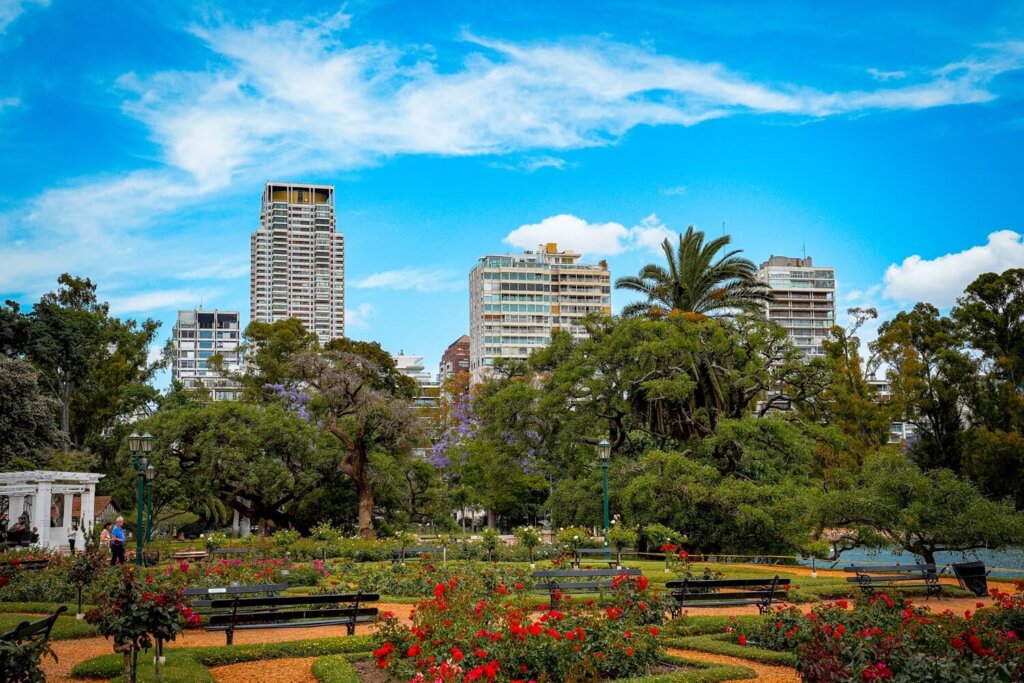
Palermo is the largest barrio in Buenos Aires. It has some of the best public parks and museums, as well as trendy sub-neighbourhoods with bars, cafes and plenty of street art. Read our detailed guide on how to spend a day in Palermo.
Recoleta is without doubt one of the most elegant neighbourhoods in Buenos Aires. There are many trendy cafes, parks, museums and art galleries to visit in Recoleta. Not to mention the architecture, which’ll make you feel like you’re walking along the streets of Paris. Read our detailed guide on how to spend a day in Recoleta.
Downtown Buenos Aires is made up of three neighbourhoods: Monserrat, San Nicolas and Retiro. You’ll find many important government buildings, historical sites and religious buildings, as well as fantastic architecture and eateries. Read our detailed guide on Downtown Buenos Aires.
La Boca is one of the most colourful barrios in Buenos Aires. You can stroll down Caminito, admire the murals and street art and also visit “La Bombonera” (Boca Juniors Stadium). Read our detailed guide on visiting La Boca.
Read Next: How to Spend 3 Days in Buenos Aires
Final Thoughts on Visiting the San Telmo Barrio of Buenos Aires
We really enjoyed exploring San Telmo. Of course it felt a bit touristy, but it was nowhere near as busy as La Boca, where we were earlier in the day. Out of all the neighbourhoods we visited in Buenos Aires, it was here in San Telmo that we really felt as if we’d travelled back in time. Browsing the antique shops was so much fun, as was watching people dance tango in Plaza Dorrego. We definitely could’ve spent much longer here, just sitting in a café and soaking up the atmosphere.
Have you ever visited barrio San Telmo in Buenos Aires? If so, what was your favourite thing to do? If not, would you add San Telmo to your Buenos Aires itinerary? Let us know in the comments below.
Now, let your adventure begin,

Remember…It all starts with a Pin…


Have always wanted to visit Buenos Aires so will be saving this for future. Super helpful, thank you!
Thank you so much. Hope you can visit BA soon.
This looks incredible – saving!
Thank you!
What a lovely guide to San Telmo. I love places with a mix of culture, history and local energy, and your photos really captured that. The Sunday market sounds like such a fun experience.
Thank you. San Telmo is such a great neighbourhood. The markets are also great here.