

One Day in Palermo, Buenos Aires – Best Things to Do

Spending one full day in the Palermo neighbourhood of Buenos Aires is not going to be very difficult. This barrio is packed with so many places to see and things to do, including some of the best public parks and museums, as well as trendy sub-neighbourhoods filled with bars, cafes and street art.
This is unsurprising given that Palermo is the largest barrio in Buenos Aires, covering an area of 17.4 square kilometres. So, don’t be surprised if you either have to rush through it, skip a few things, or come back to Palermo for a second day of sightseeing. At least this was the case for us, so we were so glad that we spent 2 full weeks in Buenos Aires, which allowed us to see the majority of the attractions that we’d pinned on our map.
If you’d like to see what we got up to in the Argentine capital, then watch our dedicated Buenos Aires video, which we shared on our YouTube channel Kitti and Jon. For more videos from the country, check out our Argentina playlist.
Disclosure: This post may contain affiliate links, which means we may receive a small commission if you click a link and purchase something. Clicking these links won’t cost you anything, but it will help us to keep this site up and running! Learn more about our affiliate policy.
No Time to Read?
🚍Getting there: Taxi / cabify, or public transport
🥾Top Experiences: Palermo FREE walking tour; visit the parks (Carlos Thays Botanic Garden, Tres de Febrero, Japanese Garden); Museums (Museo Evita, MNAD); Palermo Soho murals
🏨 Accommodations: Meridiano Hostel Boutique; Casa Joseph (apartment); Mine Hotel
🛜Stay connected with this travel eSIM.
⚕️Don’t forget about travel insurance.
About Barrio Palermo in Buenos Aires
Palermo is the largest neighbourhood in Buenos Aires. In fact, it’s so big that it’s divided into multiple sub-barrios such as Palermo Soho, Palermo Viejo, Palermo Hollywood, Palermo Nuevo, Palermo Chico, Palermo Norte, Las Canitas, Pacifico, Alto Palermo and Palermo Botanico. Each area has its own distinct character, from bohemian vibes to cultural and economic centres, as well as incredible green spaces. So, you really cannot get bored in Palermo.
The name of the barrio derives from the Franciscan abbey of Saint Benedict of Palermo. It was originally a rural area before it was turned into a modern neighbourhood in the late 19th century, when it started to attract wealthy families who built luxurious residences there.

One Day in Palermo, Buenos Aires – Best Things to Do
Walk Around the Best Parks in Palermo
There’s no shortage of green spaces and public parks in Buenos Aires. Each neighbourhood we visited during our stay had their own lovely green areas or small tree-lined plazas. However, barrio Palermo wins our imaginary “most beautiful parks in Buenos Aires” competition. In all honesty, we could’ve easily spent an entire day just walking around enjoying the peace and quiet of these public parks, away from the hustle and bustle of the otherwise busy capital.


Carlos Thays Botanic Garden
Jardín Botánico Carlos Thays is a beautiful, well-kept botanic garden that’s free to enter. It occupies seven hectares and has a large collection of plant and tree species, mainly from Argentina; although about 2 hectares is dedicated to species from across the other five continents. The botanic garden was declared a National Monument for its cultural and natural character in 1996.
We spent a good chunk of time wandering around the different sections of the garden. We visited BA in November, which meant that the gardens were blooming with seasonal flowers. Apart from the stunning art nouveau structures and beautiful flowers, we were probably most excited to see yerba mate plants. The leaves of this plant are used to make the caffeine-rich herbal drink that you’ll see many people from Argentina, Uruguay and Paraguay drink daily. If you want to learn more about mate, then you can book a mate workshop which takes place in the Recoleta neighbourhood.
Opening hours: Tuesday to Friday 8AM to 7PM; on weekends from 9.30AM to 7PM. It’s closed on Mondays.
Admission: free to enter.


Buenos Aires Eco-park
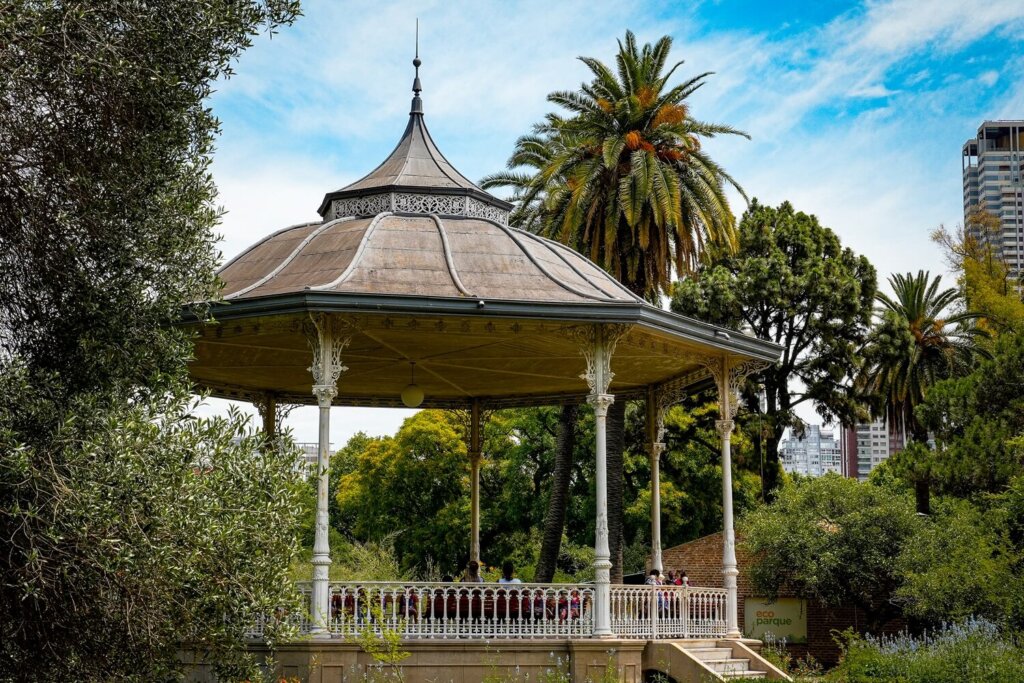
Just north of the botanic garden is the Buenos Aires Ecoparque, another – even larger – green space you can wander around for free. The park has an interesting history. It opened in 1888 and operated as a zoo until 2016, when the government decided to close it and release the animals into the wild. They then transformed the area into a modern eco-park to raise awareness of the current environmental issues and importance of protecting our wildlife.
Whilst it’s not a zoo any longer, to our initial surprise there were still some residents living here that we hadn’t anticipated seeing, such as some giraffes and ostriches. We learnt that the reason for them being there was because the park also operates as a Wildlife Rescue Centre. They receive injured, trafficked, or orphaned animals who undergo a rehabilitation process here. Many of them are released again but some unfortunately cannot leave the eco-park due to them either being too old or not healthy enough to survive in the wild.
Opening hours: Tuesday to Sunday from 10AM to 5PM.
Admission: free to enter.
Tres de Febrero Park
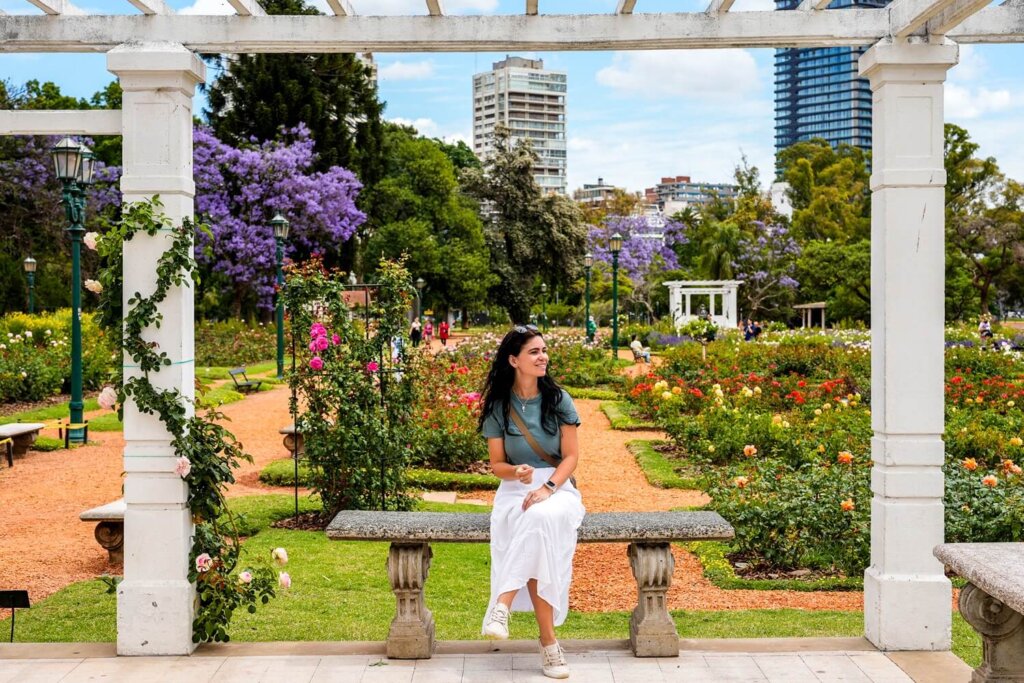
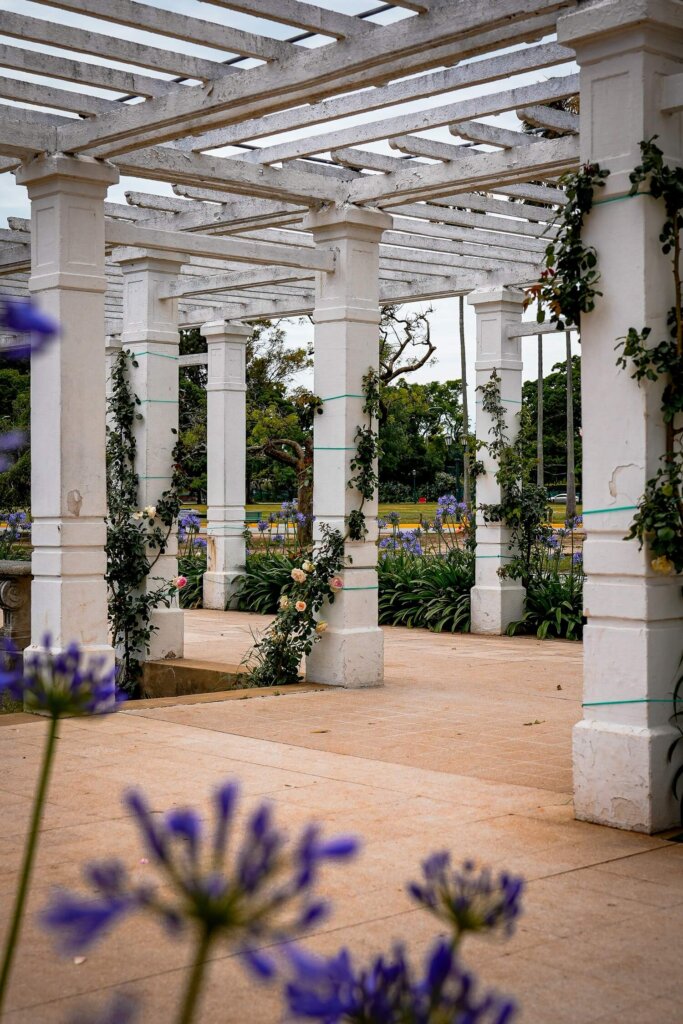
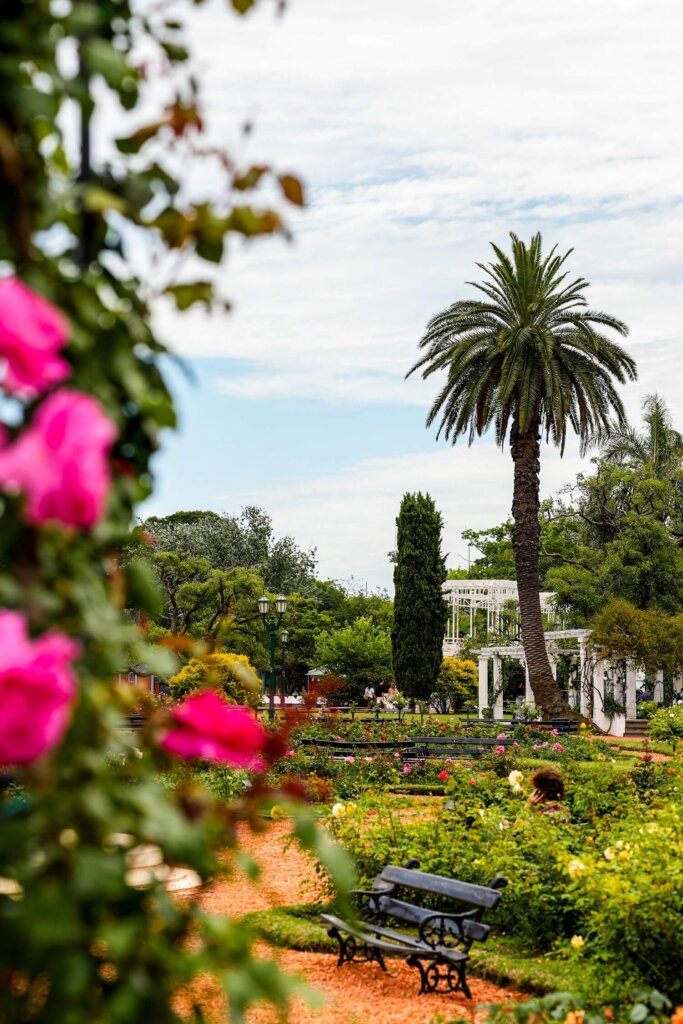
Also known as Los Bosques de Palermo (the Forests of Palermo), Parque Tres de Febrero is a huge park just north of the Eco-park. The park opened in 1875 and is a place where people come to exercise, have a picnic, catch up with friends, or simply to escape the city noise.
Tres de Febrero has small man-made lakes where you have the option to rent a boat and pedal around. It also has a Poet’s Garden filled with sculptures dedicated to iconic poets. Right next to the Poet’s Garden is an Andalusian courtyard which was apparently donated by Seville, Spain. However, hands down our favourite area was the Rose Garden which is located in the heart of the park. We’ve been to a few rose gardens before, but this one wins on both scale and beauty. The Rose Garden had thousands of rose bushes that were in full bloom during our visit.
We could’ve spent way longer in this park, as it was so beautiful and peaceful.
Admission: free to enter.

Japanese Garden
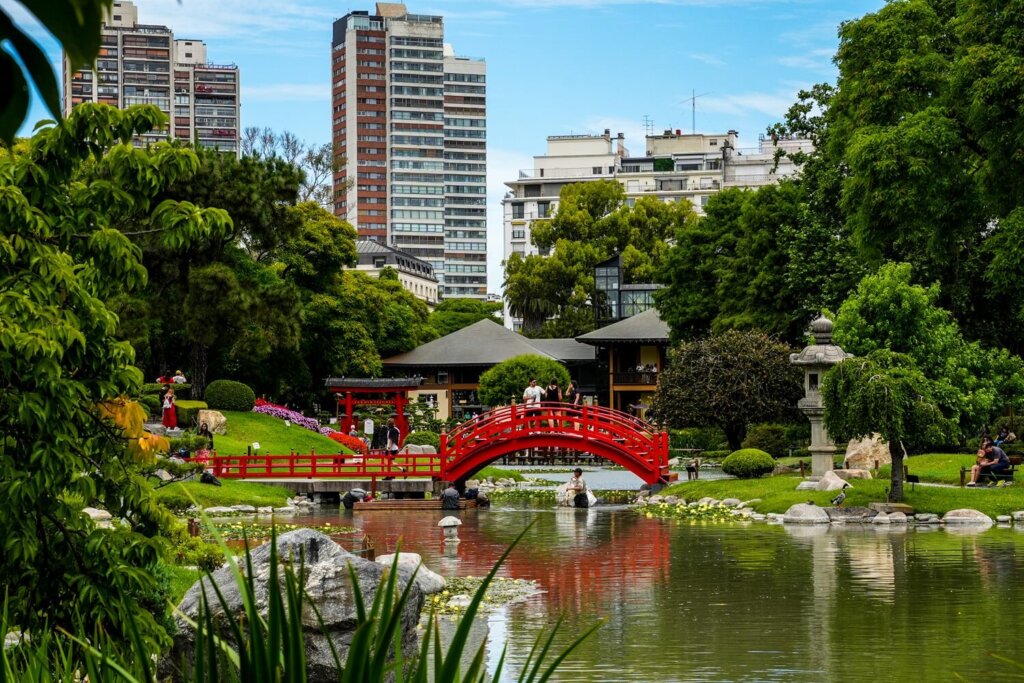
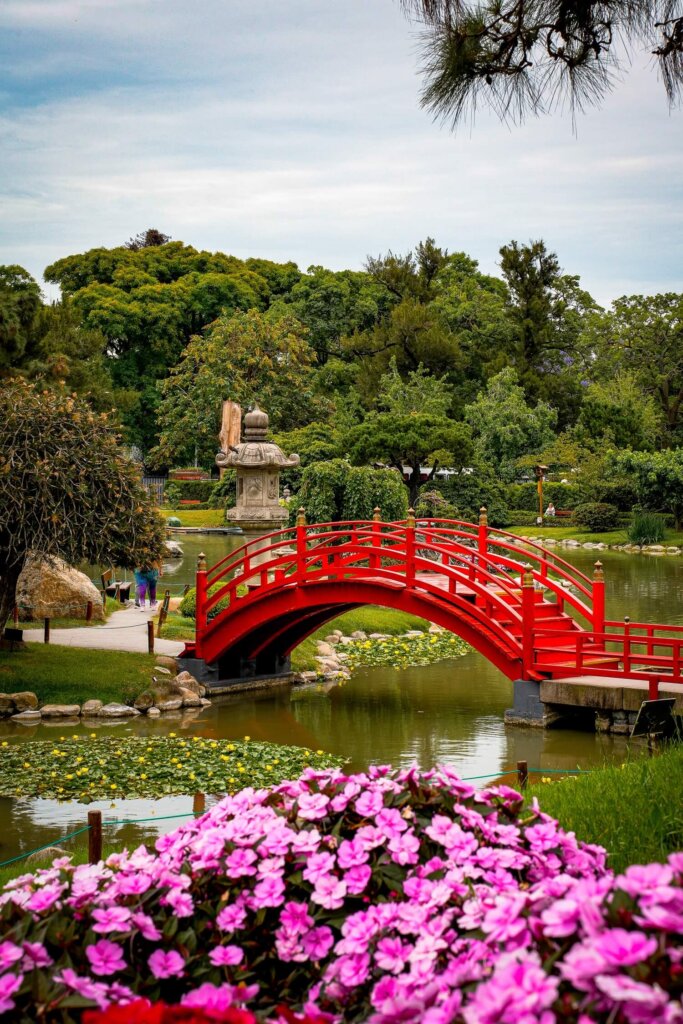
Another garden we highly recommend visiting in Palermo is the Japanese Garden. It was designed and built by the Japanese community and donated to Buenos Aires through the Embassy of Japan, as a thank you to Argentina for welcoming the Japanese people. The garden was inaugurated in 1967, in time for the Crown Prince and Princess Michiko and Akihito’s visit to the country.
Due to the garden being well visited, the Buenos Aires City Tourism Secretariat declared it as a “site of tourist interest” in 2004. A few years later, in 2008, it was declared a “site of historical and artistic interest to the Nation” by the National Executive Branch.
Without doubt the Japanese Garden is absolutely stunning, which we weren’t surprised by at all. It had everything and more that you would expect from a Japanese garden, including a small lake with bridges, blooming flowers and countless structures surrounding it. They was even a small exhibition room that showcased some different items from Japan, such as clothing and origami. From the balcony of the exhibition room, we could enjoy a lovely overview of the entire garden.
However, what we weren’t prepared for was the sheer volume of people in this park compared to any of the other (free) parks that we’d visited that same day. Of course, the Japanese Garden is much smaller, so naturally it’ll feel more crowded. We suggest timing your visit on a neutral weekday if you can.
Opening times: every day between 10:00AM and 6:45PM.
Admission: small entry fee applies. Up-to-date information is available on the garden’s official website.
Stop by the Plazas of Palermo
Although Palermo is definitely more known for its massive green parks, there are quite a few small squares that are worth stopping at as you make your way through this neighbourhood.
Plaza Italia
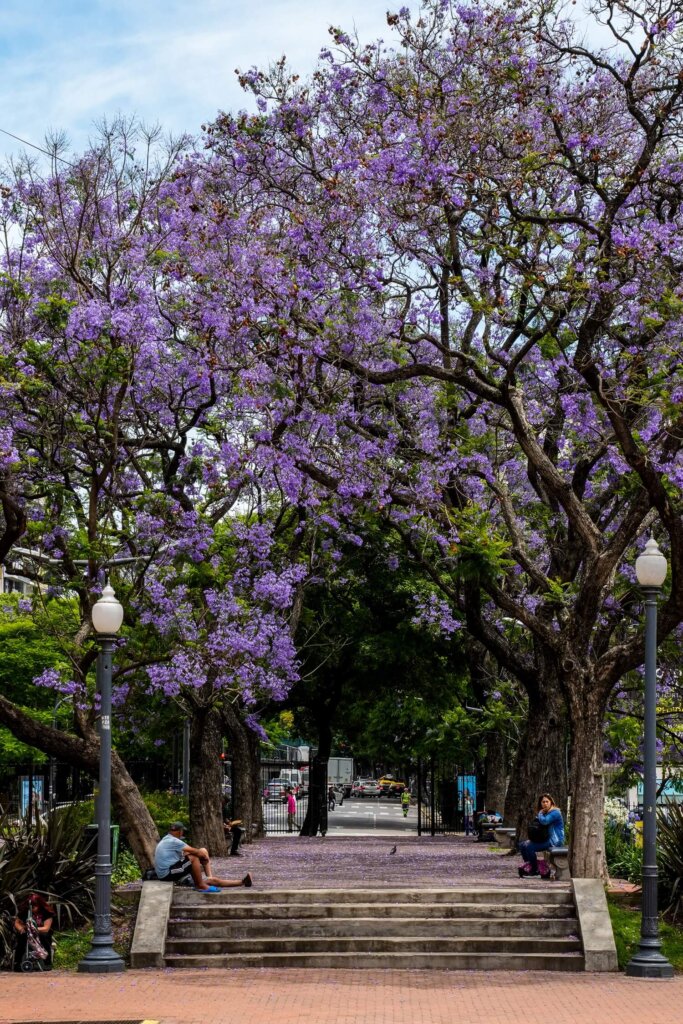
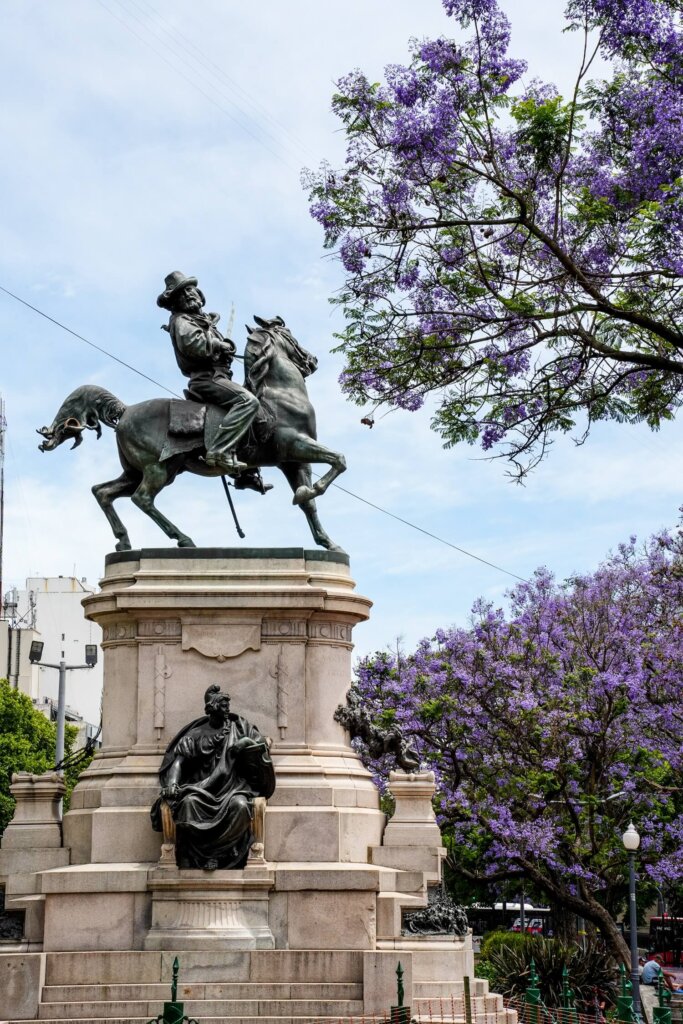
This square is located between the Botanic Garden and the Eco-park, so could easily be overlooked by those walking between the two parks. It’s a small plaza but it was exceptionally beautiful in November when the Jacaranda trees were blooming. If you’re visiting during this time too, then definitely stop by on your way to the Eco-park. In the middle, there’s a replica of the Giuseppe Garibaldi monument from Brescia, Italy.
Plaza Güemes
Guemes Square is located within the Villa Freud sub-barrio of Palermo. Apparently, this part of Palermo, especially around the plaza, has a high concentration of psychiatrists and psychotherapists. For us though, the most interesting landmark was the impressive Basilica of the Holy Spirit church (Basílica del Espíritu Santo), which occupied one side of the square.
Plaza Serrano (Plaza Cortázar)
Each weekend, Honduras Street next to Serrano Square in Palermo Soho turns into a lively street market. Feria Honduras is a great place to find some handmade products such as jewellery, bags and clothes, as well as some antiques. It’s a great place to find something unique, although the prices will be a bit higher.
Plaza Inmigrantes de Armenia
This is a bigger and greener square in the vicinity of Plaza Serrano. They also hold a weekend market here, and there are many bars and cafes around it. It’s a great place to hang out for a while.
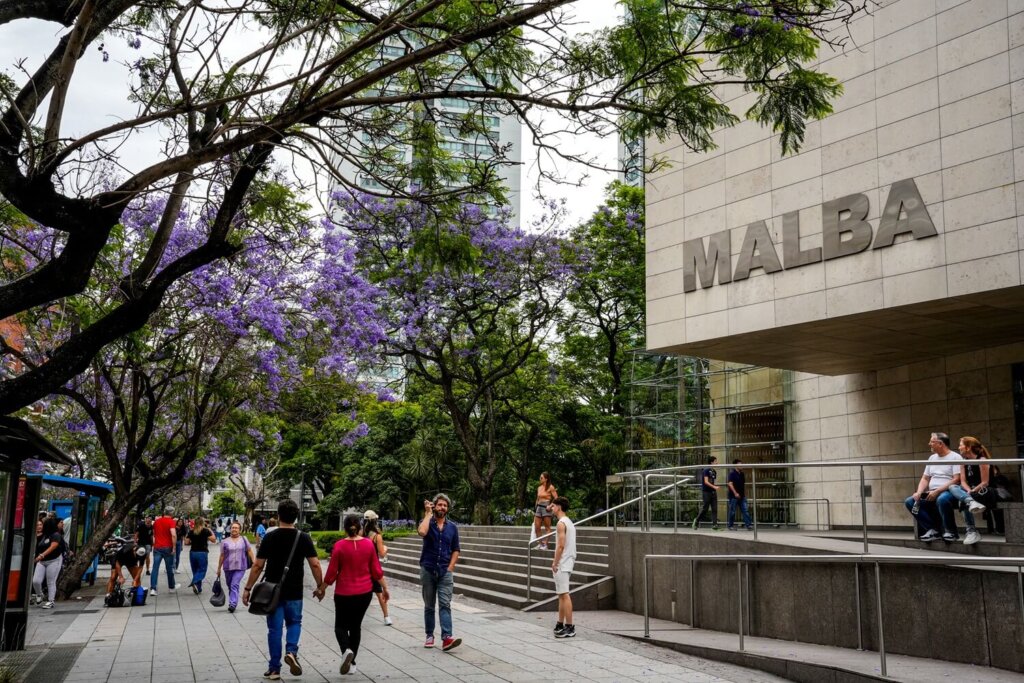
Visit the Museums of Palermo Buenos Aires
Museo Evita
The name that kept coming up during our Buenos Aires research was Eva Peron, or “Evita”. She was the First Lady of Argentina from 1946 until she died in 1952, and people have many different opinions about her, as we learnt from our friends. Apart from visiting Eva Peron’s final resting place in the Recoleta neighbourhood, you can also learn more about her life and accomplishments in the Eva Peron Museum. It’s housed in an early 20th century townhouse where you’ll see documents, photos, and even dresses and accessories displayed.
The museum is open from Tuesday to Sunday between 11AM and 7PM. It’s closed on Mondays. Up-to-date information is available on the museum’s official website.
Museo de Arte Latinoamericano de Buenos Aires (MALBA)
This is a fantastic modern art museum in barrio Palermo. It displays numerous artworks by Latin America’s most prominent artists, such as Frida Kahlo and Diego Rivera, but of course there’s plenty from Argentine painters as well, such as Antonio Berni and Alejandro Xul Solar.
The museum is open Thursday to Monday between 12PM and 8PM and between 11AM and 8PM on Wednesdays. It’s closed on Tuesdays. More information about current exhibits is available on the museum’s official website.
Museo Nacional de Arte Decorativo (MNAD)
The National Museum of Decorative Art is another museum you can visit in Palermo. It is located in the Errazuriz Alvear Palace, which was designed in the French neoclassical style in 1911. The museum essentially showcases how the richest people furnished their homes at the time. However, it also displays a huge collection of European and Oriental art pieces, sculptures, paintings and tapestries. They have permanent and temporary exhibitions.
The museum is open between Wednesday and Sunday from 1PM until 7PM. It’s closed on Mondays and Tuesdays. Find more information on the museum’s official website.
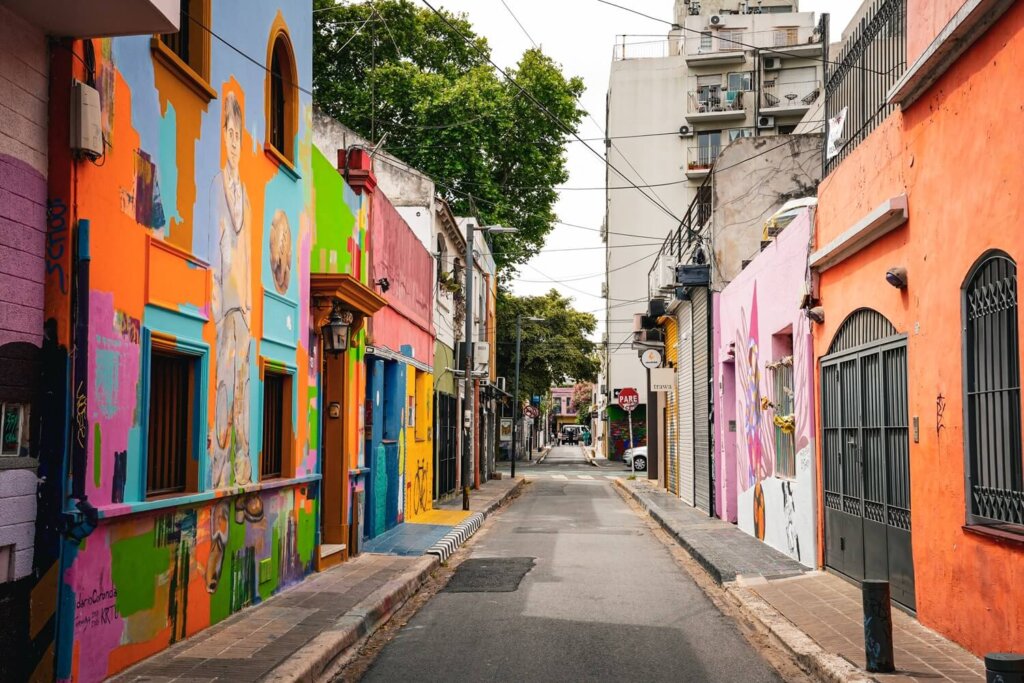


See Street Art in Palermo Soho
Palermo Soho is one of the sub-barrios in the Palermo neighbourhood. Inspired by Soho in New York and London, it’s a trendy area of Buenos Aires, filled with cafes, bars and restaurants that really come alive in the evenings and at night.
We visited during the day, which meant that it was a lot quieter, but we were actually here to see the street art that this area is well-known for. We just wandered around the streets admiring the murals, and came across some really impressive ones along Russel Street.
If you want an insight into some of the murals, then we suggest booking a street art tour. This 2-hour Graffiti and Street Art Guided Tour starts from Plaza Serrano and finishes at Plaza Inmigrantes de Armenia.
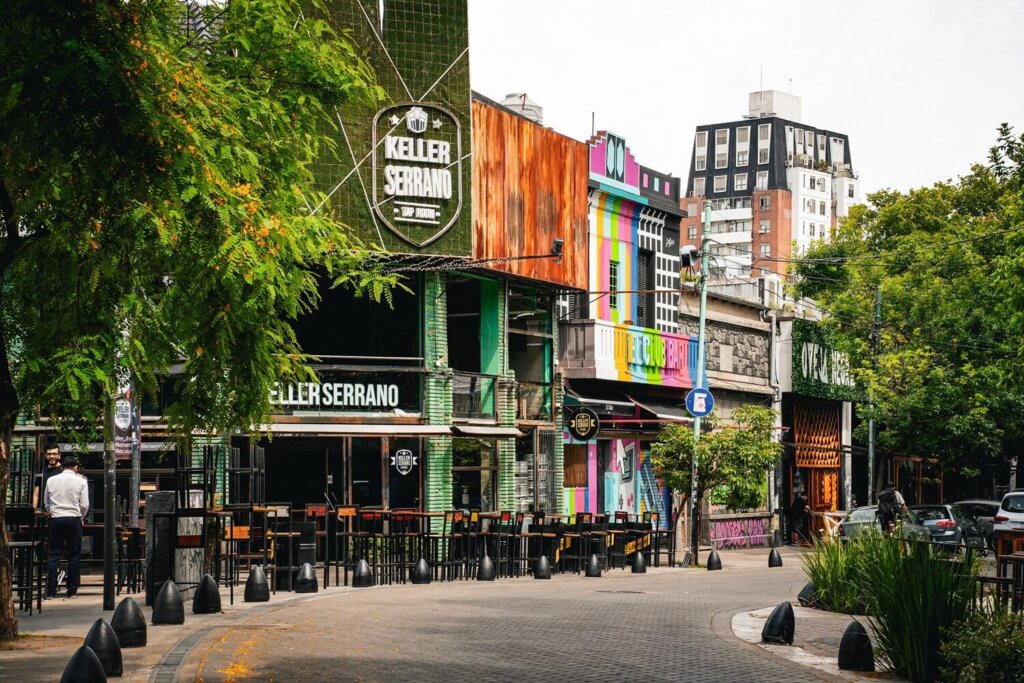
Where to Stay in Palermo, Buenos Aires
Palermo is a popular place to stay during your visit to Buenos Aires. Many expats choose this area because there is a good variety of green spaces where they can escape the hectic city, as well as many shopping, dining and nightlife opportunities. So, it’s a great neighbourhood for both shorter and longer stays.
Not to mention that the domestic airport (Aeroparque Jorge Newbery, or just Aeroparque) is also located in Palermo. Most flights to other parts of the country, such as to Iguazu Falls, Patagonia, or Ushuaia, would depart from there.
- Meridiano Hostel Boutique is a good budget option in Palermo, located between Palermo Soho and the parks. It has a lively bar if you want to socialise with fellow travellers.
- Estudio en lo mejor de Palermo is a great apartment only a short walk from the museums and parks. It has a fully equipped kitchen and even a balcony, so is perfect for a slightly longer stay.
- Casa Joseph is close to the Eco-park and the Botanic Garden. It’s a stylish apartment with a rooftop swimming pool, sun terrace and bar.
- Mine Hotel is located in Palermo Soho and has stylish rooms, as well as a lovely courtyard, garden and pool. Breakfast is included.
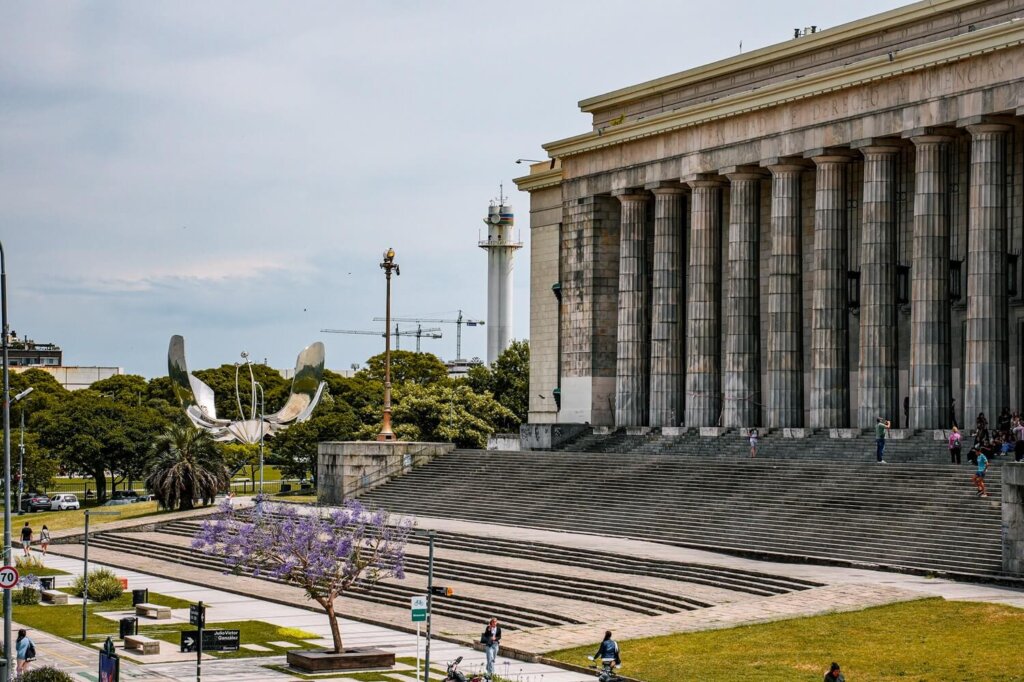
Other Neighbourhoods to Visit in Buenos Aires
Recoleta is without doubt one of the most elegant neighbourhoods in Buenos Aires. There are many trendy cafes, parks, museums and art galleries to visit in Recoleta. Not to mention the architecture, which’ll make you feel like you’re walking along the streets of Paris. Read our detailed guide on how to spend a day in Recoleta.
Downtown Buenos Aires is made up of three neighbourhoods: Monserrat, San Nicolas and Retiro. You’ll find many important government buildings, historical sites and religious buildings, as well as fantastic architecture and eateries. Read our detailed guide on Downtown Buenos Aires.
San Telmo is full of antique shops and historical buildings. It’s a great barrio to spend a few hours in, browsing for souvenirs or watching the tango performed in Plaza Dorrego. Read our detailed guide on visiting San Telmo.
La Boca is one of the most colourful barrios in Buenos Aires. You can stroll down Caminito, admire the murals and street art and also visit “La Bombonera” (Boca Juniors Stadium). Read our detailed guide on visiting La Boca.
Read Next: How to Spend 3 Days in Buenos Aires
Final Thoughts of Spending One Day in Palermo, Buenos Aires
We really loved Palermo, but also underestimated just how big the barrio was. Whilst our list doesn’t seem like a long one, you have to account for the time spent at each of the parks and museums, as well as the time getting between them. Before we knew it half a day was gone and we were still just strolling through the parks.
Luckily, it wasn’t a big deal for us because we had plenty of days in Buenos Aires to return on another day, but we appreciate that not everyone has this luxury. For this reason, we suggest picking a few places you really want to see and spending some quality time there, instead of trying to cram everything into one day. This way, you’ll return to your accommodation at the end of the day feeling the “good” kind of tired and not overwhelmed and exhausted.
Have you ever visited the Palermo neighbourhood of Buenos Aires? If so, how much time did you spend in the barrio and what was your favourite area? If not, which places would you visit or choose to skip? Let us know in the comments below.
Now, let your adventure begin,

Remember…It all starts with a Pin…


I’m Italian but I didn’t know there was a Palermo (like in Sicily) in Buenos Aires too! Such an interesting article!
Yes, I think it’s because a lot of immigrants from Italy came to Argentina.
I love all your posts on Buenos Aires! I visited for a week in 2019. I did a private walking tour. We visited Parque Tres de Febrero, the huge park north of the Eco-park and ate bakery treats!
Sounds like you had a lovely time in BA. We loved hanging out in the parks too, especially in spring when everything was blooming.
Such a timely post! We are just putting together an Argentina itinerary and your post (with so many outdoor spaces to visit!) has convinced me to add another day in Buenos Aires?
That’s amazing to hear Amy. We really enjoyed all the green spaces in BA. Hope you’ll have a lovely time.