
Which Side of Iguazu Falls is Better? Argentina or Brazil

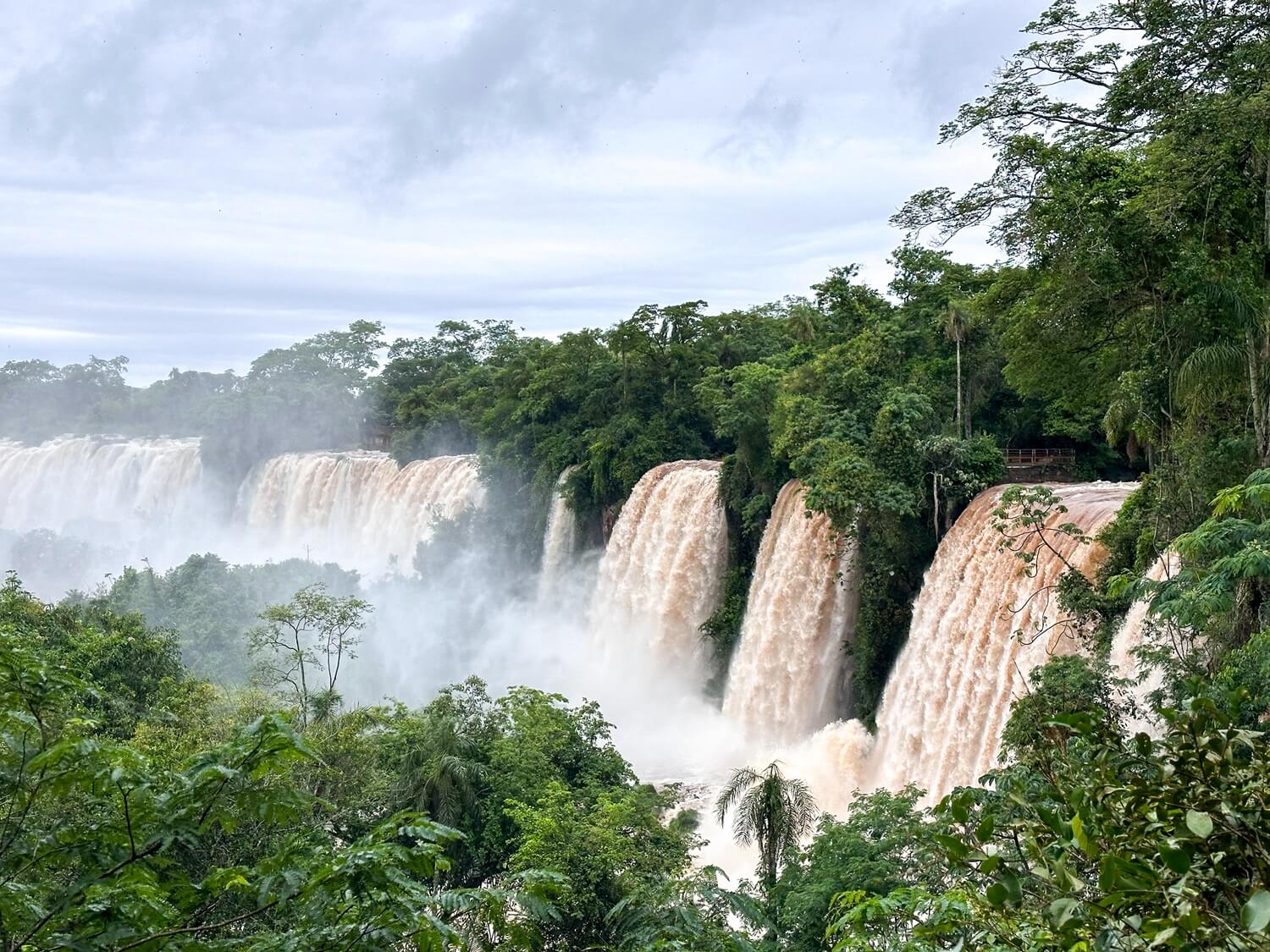
Generally speaking, visiting Iguazu Falls is usually on most people’s bucket lists when they visit South America. After all, Iguazu is one of the most impressive waterfalls in the world. However, it’s a waterfall that can be visited from two countries. So, naturally, the question that comes to everyone’s mind when planning their trip is, “Which side is better: Argentina or Brazil?
For us, visiting the falls from both countries was never in doubt. We were lucky enough to have the time and money to see both. However, we appreciate that not everyone has these privileges. So, after writing dedicated Argentina and Brazil side of Iguazu guides, we thought that we needed a separate article that compares both. We’ve picked out the main factors that will influence your decision, including how to get to the falls, entry ticket costs, scenic trails, viewpoints, boat rides, crowds, facilities and other special experiences. We hope that this article either helps you decide which side to visit, or even convinces you to try to visit both if possible.
If you’d like to see our crazy experience visiting these majestic waterfalls, make sure to watch our Iguazu Falls video, which we shared on our YouTube channel Kitti and Jon. For more videos from the country, check out our Argentina playlist.
Disclosure: This post may contain affiliate links, which means we may receive a small commission if you click a link and purchase something. Clicking these links won’t cost you anything, but it will help us to keep this site up and running! Learn more about our affiliate policy.
About Iguazu Falls
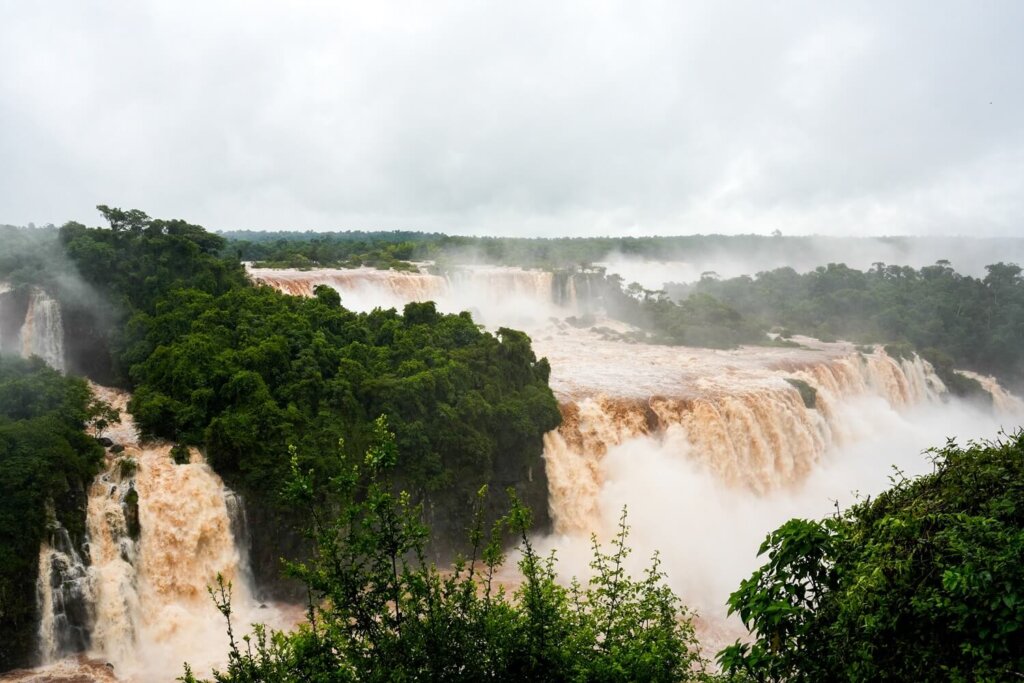
The Iguazú Falls, or Iguaçu Falls, are located on the border between Argentina and Brazil.
80% of Iguazu Falls are in Argentina, whilst only 20% of it is in Brazil. The waterfall sits within Iguazu Falls National Park and has been a UNESCO World Heritage Site since 1984. In 2011, it also became one of the New 7 Wonders of Nature along with the nearby Amazon Rainforest.
Boasting 275 individual waterfalls, Iguazu is considered the largest waterfall system in the world. Even Eleanor Roosevelt said “My poor Niagara” upon visiting these waterfalls that are both taller and wider than Niagara. The name “Iguazu” translates from the native Guarani for ‘big water’.
|
Argentina |
Brazil |
|
|---|---|---|
|
Closest City to Iguazu |
Puerto Iguazu |
Foz do Iguacu |
|
Admission Fee |
$60,000 ARS (~$40 USD) |
$130 BRL (~$25 USD) |
|
Official Website |
||
|
Iguazu Falls Hiking Trails |
|
|
|
Additional Hiking Trails |
Macuco Trail |
Poco Preto Trail |
|
Boat Rides |
|
|
|
Helicopter Ride |
Not Available |

Which Side of Iguazu Falls to Visit? Argentina or Brazil
- Iguazu Falls Argentina Side – A Complete Guide
- How to Visit the Brazil Side of Iguazu Falls from Argentina
Getting to Iguazu Falls in Argentina and Brazil
In Argentina, the closest city to Iguazu Falls is Puerto Iguazu, located in the Misiones province in northeast Argentina. The city you need to travel to in Brazil is called Foz do Iguacu, located in the state of Parana in southern Brazil.
Although both cities are quite far from any major cities in their relevant countries, they are both easily accessible by either a domestic flight or a long-haul bus. Each city offers regular public buses to the entrance of Iguazu Falls. In addition, crossing the border between Argentina and Brazil is pretty straightforward and can be easily done with a local bus.
Some of you may just want to visit the side of Iguazu Falls within the country you’re currently travelling in, to avoid border crossings and potential visa requirements. For example, if you’re travelling with a U.S. passport, you’ll need a visa to enter Brazil. Unless you’re planning to continue to travel through the country, it may not be worth it for you to go through the visa application for a quick day trip.

Admission Fee to Iguazu Falls in Argentina and Brazil
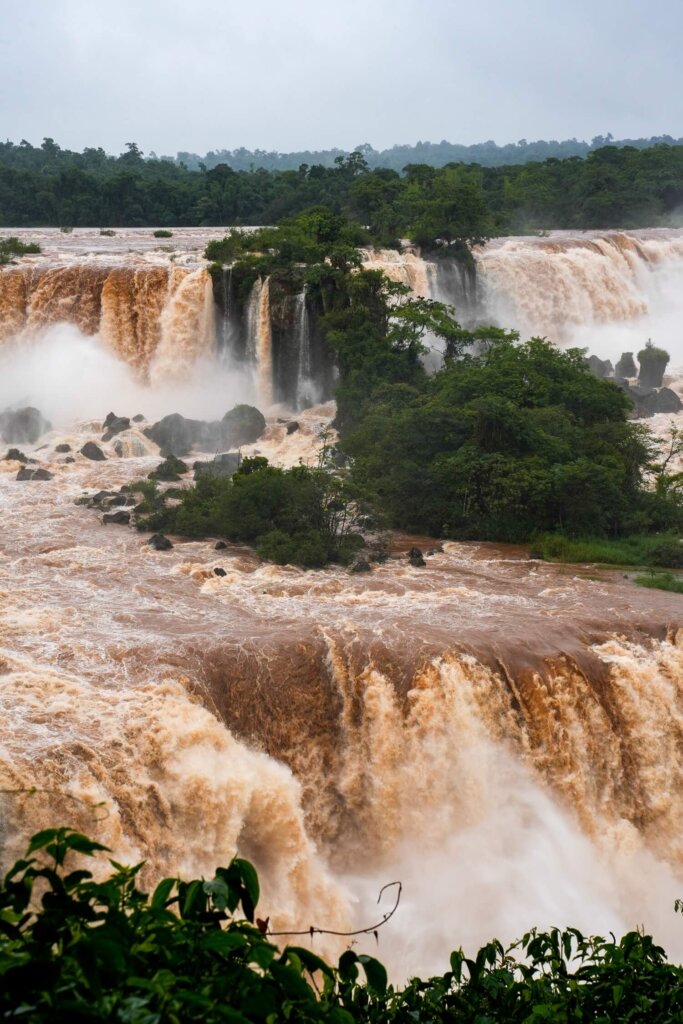
Admission fee to Iguazu Falls for foreign visitors in Argentina is currently $45,000 ARS ($32 USD) per person. Entry fee to Iguazu on the Brazil side for foreign visitors is currently $130 BRL ($24 USD) per person.
If you’re purely looking at the cheapest way of seeing Iguazu Falls, then Brazil wins. However, considering there are 3 scenic hiking trails in Argentina compared to only 1 in Brazil, Argentina gives you more value for the extra money. Of course, you have to factor in that the Devil’s Throat trail may not be open in Argentina.
Buying Tickets for Iguazu Falls
You can buy your Iguazu Falls tickets on the official website of each respective country, or at the entrance to the sites. Both countries accept payment in cash (local currency), or card. In this sense there’s no real difference.
What we liked about the Argentina side was that our tickets were valid any time on the day of purchase, right from the opening time at 8AM until the last entry at 4:30PM. However, we had to create an account with the official Argentine National Parks website. Whereas we needed to select an entry time slot for the Brazil side. These are offered at 30 minute intervals and you need to arrive during your designated time slot.
Top Tip. We personally recommend purchasing your entry tickets online in advance. This way you can avoid queueing at the ticket office in the morning on the Argentina side and avoid missing out on your desired time slot on the Brazil side. Make sure to download your ticket to your phone in advance because the signal can be spotty at the sites.
- The official site for the Argentinian side of Iguazu Falls is: https://iguazuargentina.com
- The official site for the Brazilian side of Iguazu Falls is: https://cataratasdoiguacu.com.br/
Getting Around Iguazu Falls: Shuttle Bus vs Jungle Train
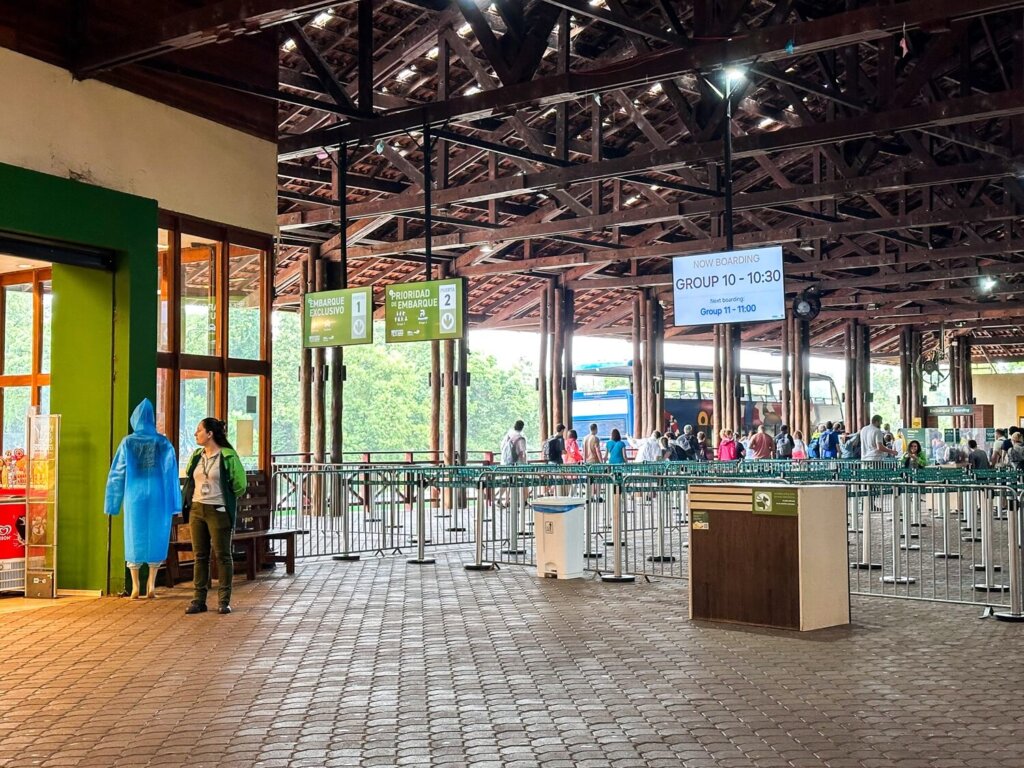
In Argentina, your entry ticket includes free rides on a train and in Brazil the ticket includes transportation by shuttle bus.
What we liked on the Argentina side was that we didn’t have to take the train to access the Upper and Lower Circuits. This cut out queueing and waiting time for the train, which can result in many people accessing the trails all at once. The only time you need to take the train is to get to the Devil’s Throat trailhead. We can imagine the queues for the train can get pretty long unless you do it first thing in the morning when the site opens.
In Brazil, we had no choice but to use the shuttle bus to reach the trailhead. Thanks to the timed entry though, we didn’t have to queue up for very long.
In terms of accessibility, it’s worth noting that the Devi’s Throat trail and the Upper Circuit in Argentina are fully accessible. Only the Lower Circuit has stairs. However, in Brazil the waterfall trail itself has many stairs, although the viewpoints at the start and end of the trail are accessible.

Facilities on the Brazil vs. Argentina Side of Iguazu Falls
Both sides have all the basic amenities you’d expect including toilets, cafes, restaurants, gift shops and even lockers.
We personally felt like the Brazil side was more commercialised compared to the Argentinian side. This was probably because there’s only one trail in Brazil and we had to take a shuttle bus to access it. Whereas in Argentina the site is much bigger, so we felt more like we were wandering through the jungle once out on the trails, rather than through a theme park.

Crowds at Iguazu Falls in Argentina vs. Brazil
Iguazu Falls is an incredibly popular place to visit, so there will always be a steady stream of people on the trails. However, depending on the time of year, both sides of Iguazu Falls can have greater or fewer visitors. We saw plenty of videos on social media showing how incredibly busy Iguazu can get. Luckily, it wasn’t as busy when we were there at the start of December.
If the Devil’s Throat Trail is open in Argentina then expect that to be quite busy. However, since there are three different trails, the crowds are allowed to spread out a bit more. Plus, there’s a one-way system in place, so you won’t have people arriving at the viewpoints from both directions. In Brazil, there’s only one trail that can be done in both directions. This means everyone who visits will be on this trail, so expect longer queues around the viewpoints.
To avoid the crowds as much as possible, we suggest visiting in the shoulder season and on a neutral weekday if possible.


Things to See and Do at Iguazu Falls: Argentina vs Brazil
Iguazu Falls Trails and Scenic Viewpoints in Argentina vs. Brazil
There are three main walking trails in Argentina: the Devil’s Throat, and the Upper and Lower Circuits. In Brazil, there’s only one main walking trail from which Iguazu Falls are visible: the Path of the Falls or Waterfall Trail (Trilha das Cataratas). So, if you’re looking at it in terms of the variety of trails that allow you to see Iguazu Falls, then the Argentina side is better.
Most visitors enjoy the Argentina side mainly because of this variety of trails. The Upper Circuit takes you above the waterfalls and gives you some incredible views of many of them. Whereas the Lower Circuit will take you along the bottom of the waterfalls. Without doubt, the Devil’s Throat is the waterfall at Iguazu Falls that everyone wants to see. A 1 km long trail leads you to the iconic viewpoint, although it can only be accessed by the Jungle Train. The issue with this particular trail is that it is closed more often than you think. During the wet season, when the rainfall is its highest, the walkway can be damaged or just simply too dangerous to use.
The waterfall trail on the Brazil side of Iguazu Falls is only 1.5 km long, but it gives you some incredible panoramic views. From Brazil, we could see some of the waterfalls that aren’t quite visible from any of the trails in Argentina, such as Saltos Tres Mosqueteros and Salto Rivadavia. It also takes you pretty close to the Devil’s Throat, although you’ll be viewing it from lower down.
Overall, in Argentina we could get up close and personal with Iguazu Falls and appreciate just how powerful many of the individual cascades were. What we couldn’t quite do in Argentina was get a sense of the true scale of the waterfalls. Especially with the Devil’s Throat trail being closed. In Brazil, we essentially walked parallel to Iguazu Falls, which really allowed us to see just how enormous the area actually is.


Additional Jungle Trails at Iguazu Falls
In addition to the scenic walking trails, there are other hiking trails that take you through the jungle.
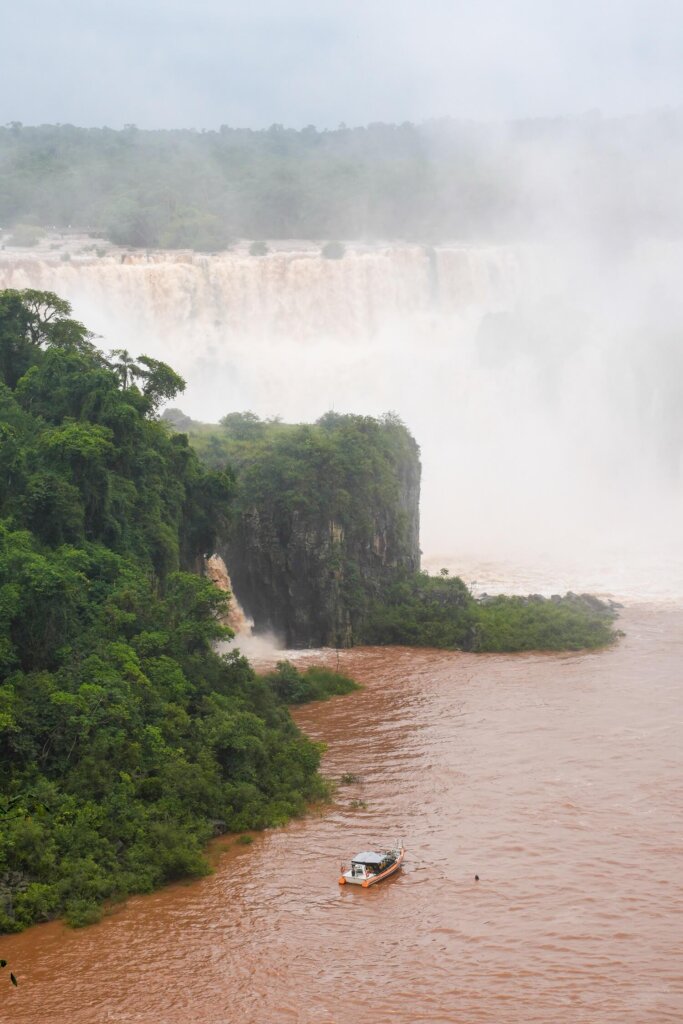
In Argentina it’s the Macuco Trail, which is a 7.6 km out-and-back trail down to the 23m tall Arrechea Waterfall. On the Brazilian side, it’s the Poco Preto Trail. This 18km round-trip can be done on foot, by bike or in an electric vehicle, and takes you through the jungle. Both offer the chance to see wildlife including birds and plenty of coatis.

Iguazu Falls Boat Rides
Boat rides are available to book at an extra cost on both the Argentina and Brazil sides of Iguazu Falls. Both countries offer an adventurous boat ride that will take you up close to and under some of the cascades. In Argentina it’s called Gran Aventura and in Brazil it’s called Macuco Safari.
They both last about 2 hours and include a ride through the jungle before you get absolutely drenched on the boat. Although the Macuco Safari in Brazil seems to be more expensive than the Gran Aventura in Argentina.
If you don’t want to do the crazy boat ride, or cannot for medical reasons, then in Argentina you can also book a more relaxing one called Paseo Ecologico. This is a 30-minute ride that will take you above the waterfalls and gives you a more tranquil experience. In addition, you can also book the Travesia Iguazu boat ride which takes you down the Iguazu River, out to the confluence with the Parana River, and then drops you off back in Puerto Iguazu.
- Find more information about the boat rides on the Argentina side on the Iguazu Jungle website.
- Read more about the Macuco Safari experience in Brazil.

Iguazu Falls Special Experiences in Brazil vs Argentina
As you can imagine, both Argentina and Brazil offer special Iguazu Falls experiences at an additional cost.
A popular splurge is a helicopter ride that gives you a birds-eye view of Iguazu Falls. Due to environmental reasons, you cannot take a helicopter ride from the Argentina side of Iguazu Falls anymore. If you wish to see Iguazu from above, then you’ll need to visit the Brazilian side. The helicopter ride will be quite short (only about 10-minutes) and it comes with a high price-tag! Book an Iguazu Falls Helicopter Tour.
In Brazil, you can also book a sunset or sunrise experience at Iguazu Falls with either drinks or breakfast included, as well as a night sky experience.
Argentina offers a Sunset Walk that allows you to access the Devil’s Throat during the golden hour, after the park has closed to day visitors. If you’re visiting during a full moon, you can also sign up for a Full Moon Walk, which will be more of a sensory experience.
Additional Things to Do Around Iguazu Falls in Argentina and Brazil
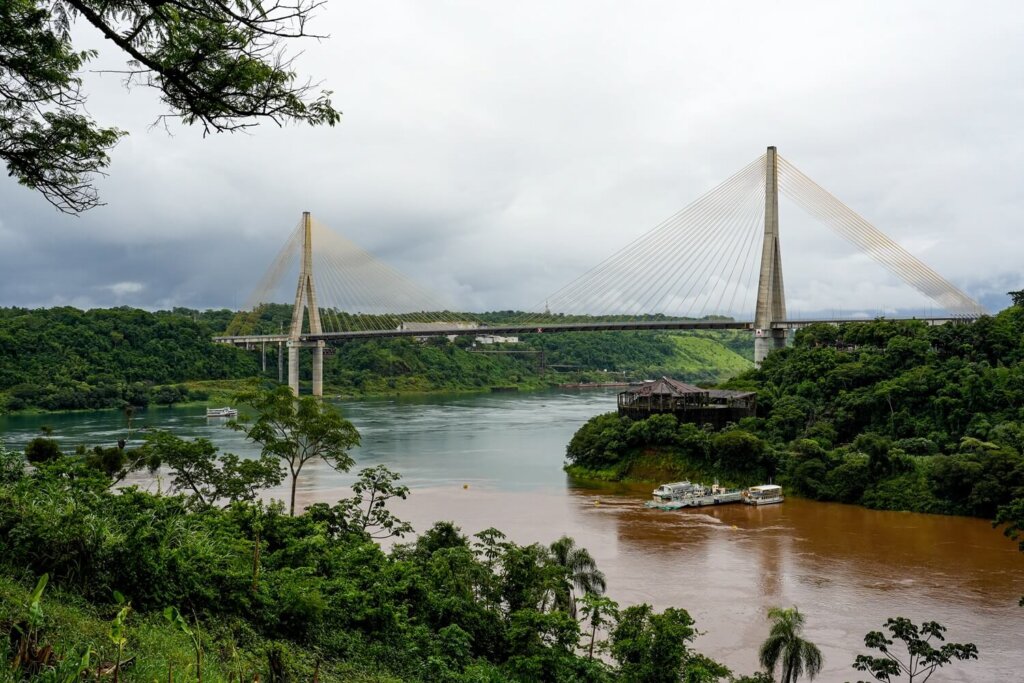
In both countries you can visit the Three Fronteras Landmark from their respective border cities. They are panoramic spots where it’s possible to see three countries at the same time: Brazil, Argentina and Paraguay. In addition, from this vantage point, you can see the confluence of the Iguazu and Parana rivers.
Just across from the Iguaçu National Park main entrance in Brazil, you can also visit the Bird Park (Parque das Aves). It focuses on the conservation of birds from the Atlantic Forest, although there’s a separate admission fee. You can book your ticket here.

Iguazu Falls: Argentina or Brazil? Final Thoughts
So, as you can see, both the Argentina and Brazil sides of Iguazu Falls offer something similar, as well as being quite different. We think they actually complement each other and, if you can, we really think you should visit both sides to get a true appreciation of Iguazu Falls. However, if we had to pick one side over another, then we would probably pick Brazil. The reason for this is because from Brazil we could really appreciate the true scale of Iguazu. This is quite a contrast to what most people would say, and it’s probably also influenced by the fact that the Devil’s Throat Trail was closed for us in Argentina. It would be interesting to return in the future and see if our decision would change with this trail factored in.
Have you ever visited Iguazu Falls? If so, did you visit both sides or just one? Which one did you prefer and why? And, if you’re just planning your trip, which side of Iguazu Falls would you visit: Brazil or Argentina, or perhaps both? Let us know in the comments below.
Now, let your adventure begin,

Remember…It all starts with a Pin…




wow! You just gave me a travel spot to put on my list. Thanks for sharing all the details and amazing photos. Loved watching the YouTube video too :).
Thank you so much for the lovely feedback on our guide and video.
This is such a unique place to me. I love all the options to get there and by various ways.
Iguazu is definitely a unique waterfall!
Like you, I choose to visit both countries to experience the grandeur of this magnificent falls, and stayed on the Brazilian side.
It’s so great that you could also visit both sides of Iguazu.
What a helpful comparison post! Good to know the differences between the two sides
Thank you so much!