

How to Visit the Brazil Side of Iguazu Falls from Argentina

For us, visiting the Brazil side of Iguazu Falls was non-negotiable. Even after reading that most people preferred the Argentine side, we still wanted to see it for ourselves. And we’re so glad that we didn’t skip a day trip to Cataratas do Iguaçu. Although the Brazilian side only has one main walking trail, this gave us an incredible overview of the 275 individual waterfalls that make up Iguazu Falls, something that we didn’t quite get on the Argentine side.
So, we’ve put together this guide to give you all the information you’ll need if you want to visit the Brazilian side of Iguazu from Argentina as a day trip. Of course, it’ll also be useful if you’re planning on travelling through Brazil afterwards. Our experience visiting the Argentina side of Iguazu Falls is in a separate post. We’ve also written a guide where we compare the Brazil and Argentina sides of Iguazu Falls if you really only have time to do one.
If you’d like to see our crazy experience visiting these majestic waterfalls, make sure to watch our Iguazu Falls video, which we shared on our YouTube channel Kitti and Jon. For more videos from the country, check out our Argentina playlist.
Disclosure: This post may contain affiliate links, which means we may receive a small commission if you click a link and purchase something. Clicking these links won’t cost you anything, but it will help us to keep this site up and running! Learn more about our affiliate policy.
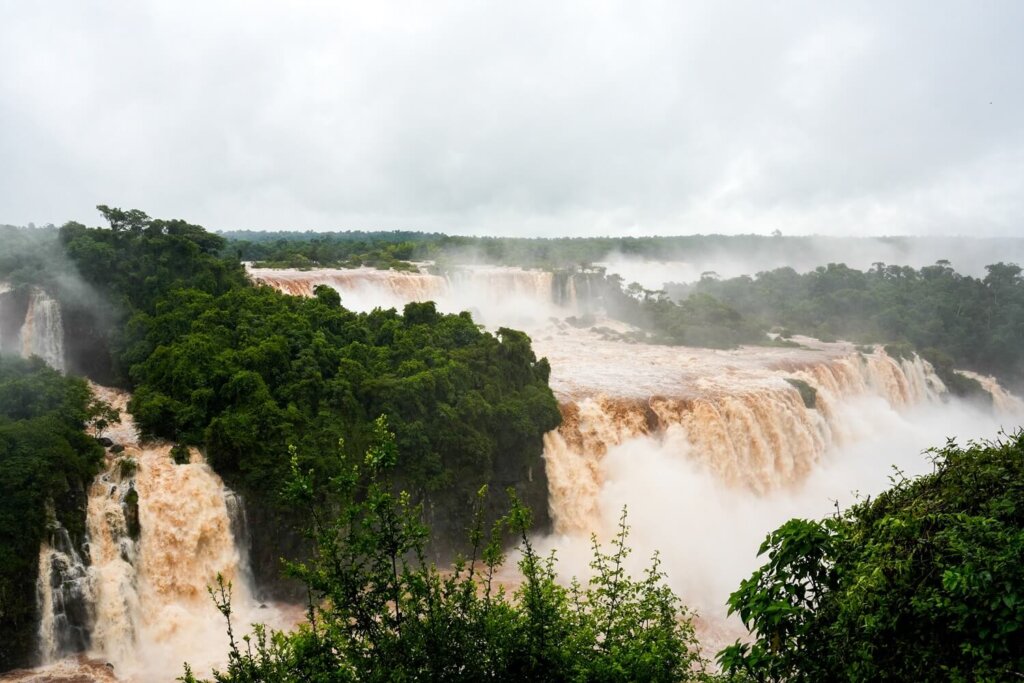
Where are Iguazu Falls?
Iguazu Falls are located on the border between Argentina and Brazil. 80% of Iguazu Falls are in Argentina, whilst only 20% of it is in Brazil. The waterfall sits within Iguazu Falls National Park and has been a UNESCO World Heritage Site since 1984.
In Brazil, the closest city to Iguazu Falls is Foz do Iguacu and in Argentina it’s Puerto Iguazu.

How to Get to the Brazil Side of Iguazu Falls from Puerto Iguazu in Argentina
The most cost effective way to visit the Brazilian side of Iguazu Falls from Argentina is by bus. Buses, operated by Rio Uruguay, depart from the main bus station in Puerto Iguazu (Terminal de Buses De Puerto Iguazu).
It’s worth noting that there are buses that go straight to Iguazu Falls and also buses that go to the city of Foz do Iguacu. If you’re only planning a day trip to the falls from Argentina, then take the bus that says “Cataratas Brazil” on it. The first bus departs at 7:30AM, then every hour after that. It can take at least an hour to get to the waterfall entrance, depending on how long immigration takes. For this reason, make sure to book the time slot for your Iguazu Falls entry ticket accordingly. We’ll discuss that in more detail below, including our own personal advice.
Top Tip. You can also take the same bus if you want to stay in Foz do Iguacu and carry on backpacking through Brazil afterwards. There are lockers where you can leave your luggage at the waterfall entrance, so you can visit the waterfalls and then take a bus to Foz do Iguazu.
Argentina – Brazil Border Crossing at Iguazu Falls
Don’t forget to bring your passport to visit the Brazil side of Iguazu Falls from Argentina. Make sure to check entry requirements to the country based on the passport you’re travelling with. (For example, if you’re a U.S. citizen, then you’ll need a visa to visit Brazil.)
If you’re only visiting the Brazil side of Iguazu Falls as a day trip, then be ready to go through immigration a few times that day. First, the bus will stop at the Argentine border, where they scan your passport. After crossing Tancredo Neves Bridge across the Iguazu River, you’ll have to go through Brazilian immigration. Some posts we read beforehand said that the bus didn’t wait for them there, so it’s important that you keep hold of your bus ticket so you can hop onto the next bus if necessary. Luckily, the bus driver waited for everyone, which made the whole journey much quicker than we initially anticipated.
Then, on your way back to Argentina, you’ll have to get off at Brazilian border control to exit the country, and stop at the Argentine border to re-enter. Just like at every border crossing we did into Argentina, we had to put our backpacks through a scanner. So, it’s important that you don’t have any goods you can’t take into the country with you, such as fresh fruit.
Useful Tip. Make sure to bring a dry-bag or zip-lock bag to keep your passport and other important documents dry!
Practical Information on Visiting the Brazil Side of Iguazu Falls
Iguazu Falls Opening Times and Admission Fees
Iguaçu National Park is open from 9AM until 6PM. The last entry is at 4:30PM.
Admission fee for foreign visitors is currently $130 BRL per person. Whilst you can buy your Iguazu Falls ticket online or at the entrance, we recommend buying it online. This is because you need to buy a timed entry so they can sync the number of visitors with the free shuttle that takes people to the trailhead. So, if you just show up, there may or may not be any spaces left for the time you arrive at (especially in the high season), so you’ll have to wait around for the next available time slot.
If you’re coming from Argentina, we suggest calculating in a minimum of an hour for the bus journey and immigration. If you arrive quicker than that, you can ask if it’s possible to change your time-slot to an earlier one, although this will be more likely in the low season. We had to wait around for a bit, but it gave us a chance to have a nosy in the gift shop. There’s also a restaurant and café here, so you can easily kill the time.
Best Time to Visit Iguazu Falls
When it comes to the best time to visit Iguazu Falls there are a few things to bear in mind: the amount of rainfall, the heat and humidity, and the crowds. This area has a tropical climate which means it’ll be hot and humid all year round. However, there will still be better and worse times to visit, especially when it comes to rainfall and crowds.
Temperatures and Humidity. The dry season starts from April to May, so it’ll be less hot and humid with higher chances for clear blue skies. Whilst the temperatures and humidity will stay low for June, July and August, the crowds will increase. September and October are considered another shoulder season, with temperatures and humidity still on the lower side. There’ll still be less rainfall too, as these months mark the end of the dry season. Between November and March (the wet season) expect higher temperatures and humidity levels.
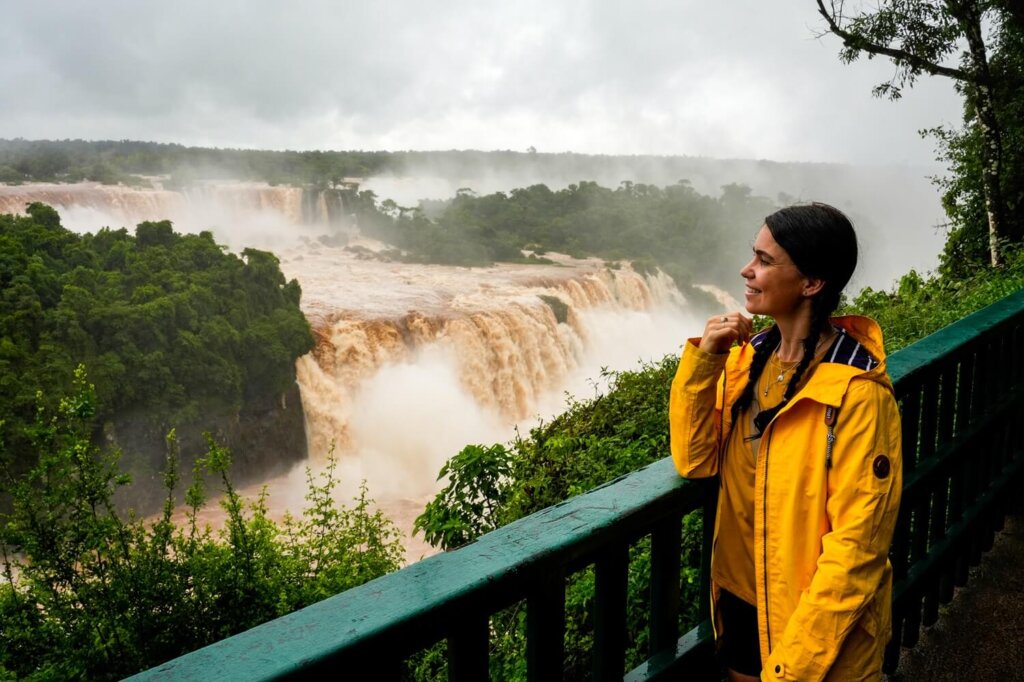
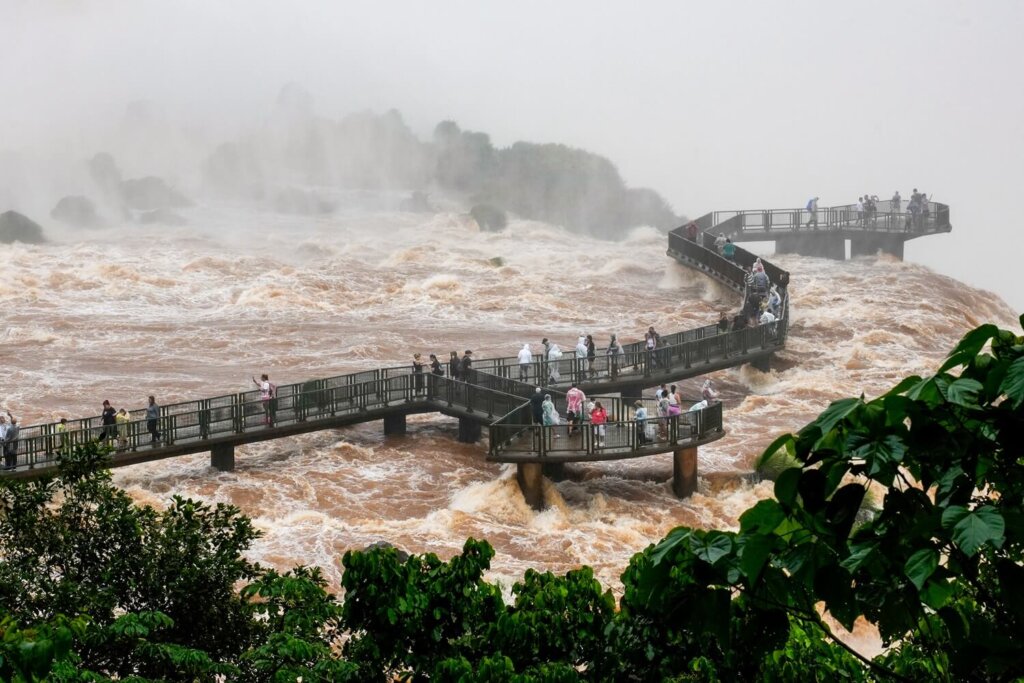
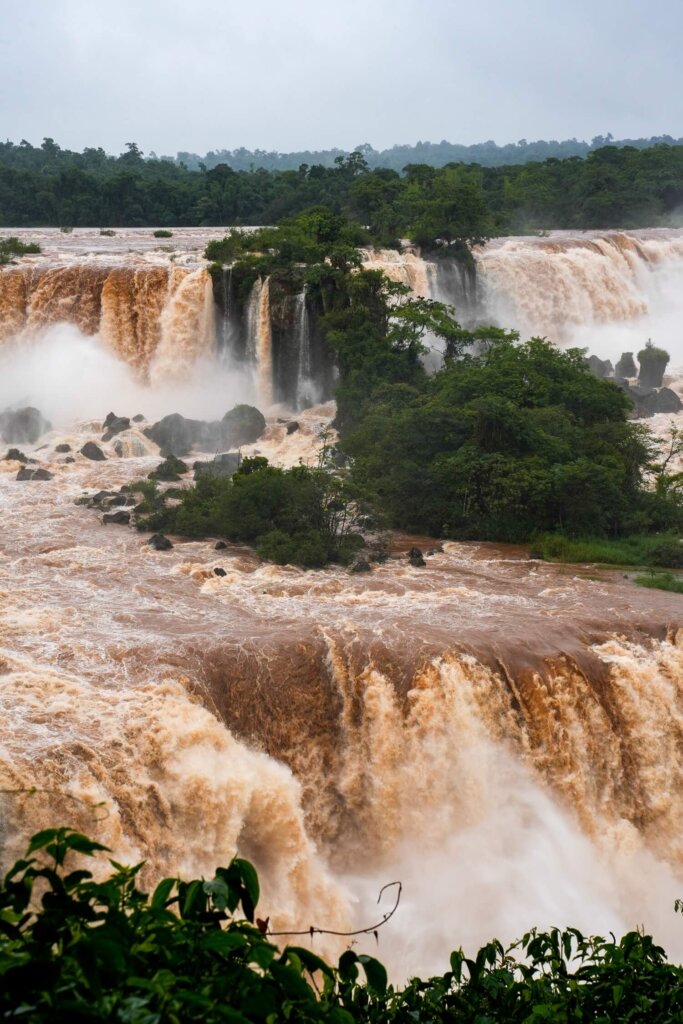
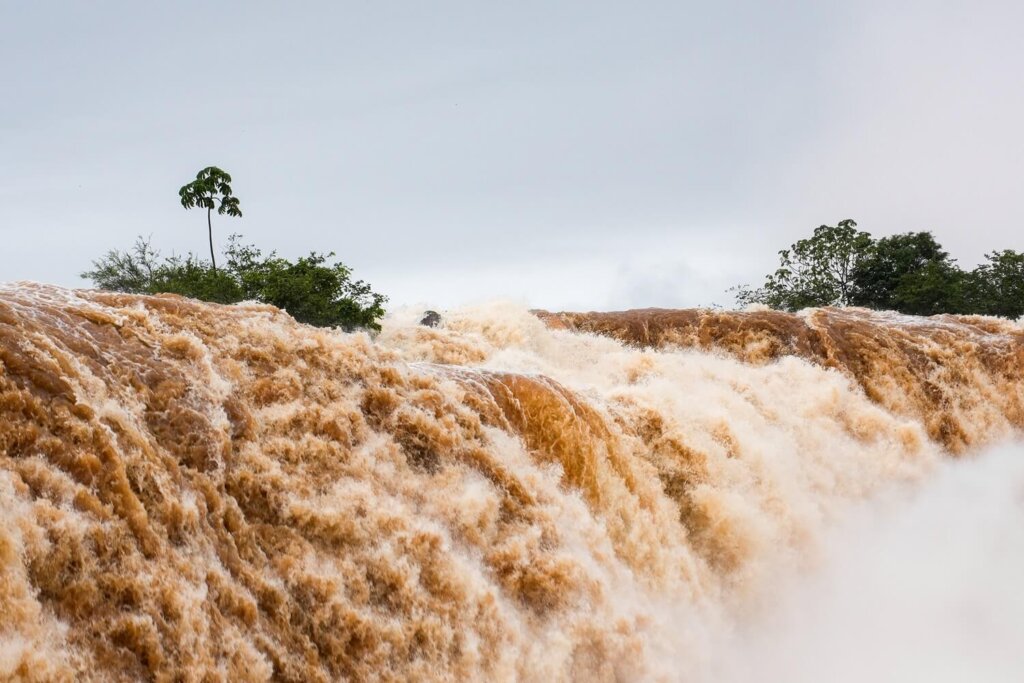
Rainfall. November and December will bring the highest rainfall and chances for extreme weather conditions. For reference, we visited Iguazu Falls in mid-December right after a heavy period of rain. As you can see on my photos, the waterfall was incredibly full. So much so that the walkway out towards the Devil’s Throat actually felt a little unsafe. (The footpath to it was closed on the Argentina side.) We also had a lot of mist and grey skies, the complete opposite of the countless photos with rainbows that we’d seen beforehand. Having said that, our friends sent us some photos of Iguazu during a dry spell and the difference was insane!
Crowds. Expect higher crowds during the Easter holidays in April and the winter holidays for the Southern Hemisphere, which are in July and August. The summer holidays also bring more people in December, January and February.
Facilities at the Brazil Side of Iguazu Falls
Toilet facilities. There are toilets at the entrance, then around the middle of the trail and further ones at the end.
Lockers. They had lockers at the entrance, which is great if you’re planning on staying in Brazil after your visit and have all your belongings with you. It costs $30 BRL to rent one, which you also do online when you buy your entry ticket.
Picnic areas, cafes and restaurants. There are cafes and other eateries at the entrance before you get on the shuttle bus. Then we saw a few foodie spots along the Waterfall Trail, with more eateries at the end overlooking the Devil’s Throat area.
Gift shop. They had a gift shop after the ticket office and at the end of the Waterfall Trail.


What to Wear and Bring With You to Iguazu Falls
Documents. If you’re coming from Argentina as a day trip, then bring your passport plus any visa documents you need.
Clothing items. Depending on which season you visit Iguazu Falls in, you may get a little or a lot wet from the spray. It’s going to be hot and humid too, so wear something lightweight and ideally made of quick-dry materials. You can also bring a rain jacket or poncho. In terms of shoes, we suggest wearing something comfortable to walk in.
Food and drinks. Whilst there are places to buy food and drink on the site, if you want to save some money we suggest bringing your own food and drink. It’s also important to stay hydrated, so bring enough water with you. (Also, don’t forget to consume everything you can’t take back to Argentina with you, including fruit, meats and vegetables).
Other items. We recommend a waterproof cover for your backpack to keep your belongings dry. It’s even better if you have a dry-bag to keep any of your electronics in, such as your camera gear and phone, as well as other important things like your wallet and passport. Zip-lock bags can also do the trick if you don’t have a dry bag. Don’t forget about sun protection, such as sun-cream, a hat and sunglasses.

Other Things to Know When Visiting Iguazu Falls
Don’t feed or touch the coatis. They may look cute from afar, but can become pretty vicious around food. We saw all the scary pictures they had on display on the Argentina side, showing people with nasty scratches caused by coatis. So, make sure not to feed them or get too close to them.
Leave No Trace. As always, it’s important that whatever you bring with you, you take it back or dispose of it in the bins provided across the site.

How to See Iguazu Falls in Brazil
1. Take the Shuttle Bus
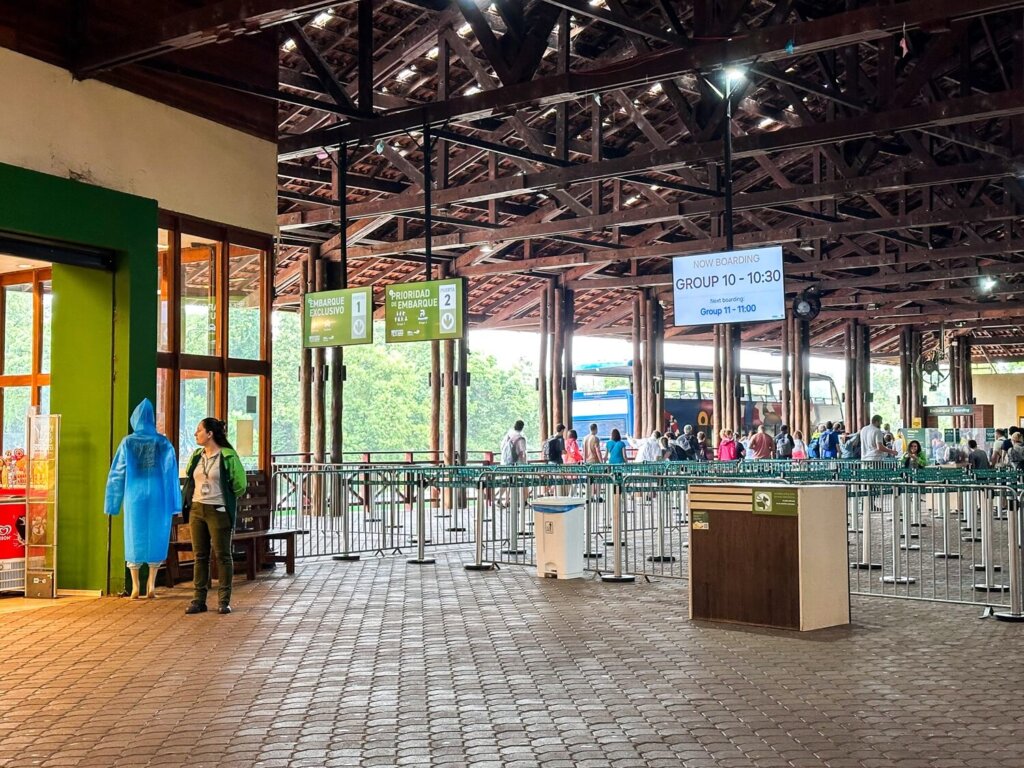
After arriving at the national park entrance, you’ll see some airport-style lines with people queuing. These are for the free shuttle buses that transport people from the main entrance to various stops within the national park. You can only board the bus within your booked timed entry slot, which is displayed clearly on your ticket.
The buses have four main stops and run about every 20 to 30 minutes. They will announce the stops in multiple languages. The first stop is for the Poco Preto Jungle Trail, the second is for the Macuco Safari, the third is for the start of the Waterfall Trail and the last stop is at the Devil’s Throat, at the end of the trail.
You can get off at the third stop, walk all the way to the end and take the bus back from there. Or, you can get off at the last stop and walk back to the start of the path before taking the bus back. Lastly, you can also do what we did and walk there and back along the trail to enjoy Iguazu Falls for as long as possible.
2. Hike the Path of the Falls Trail (Trilha das Cataratas)
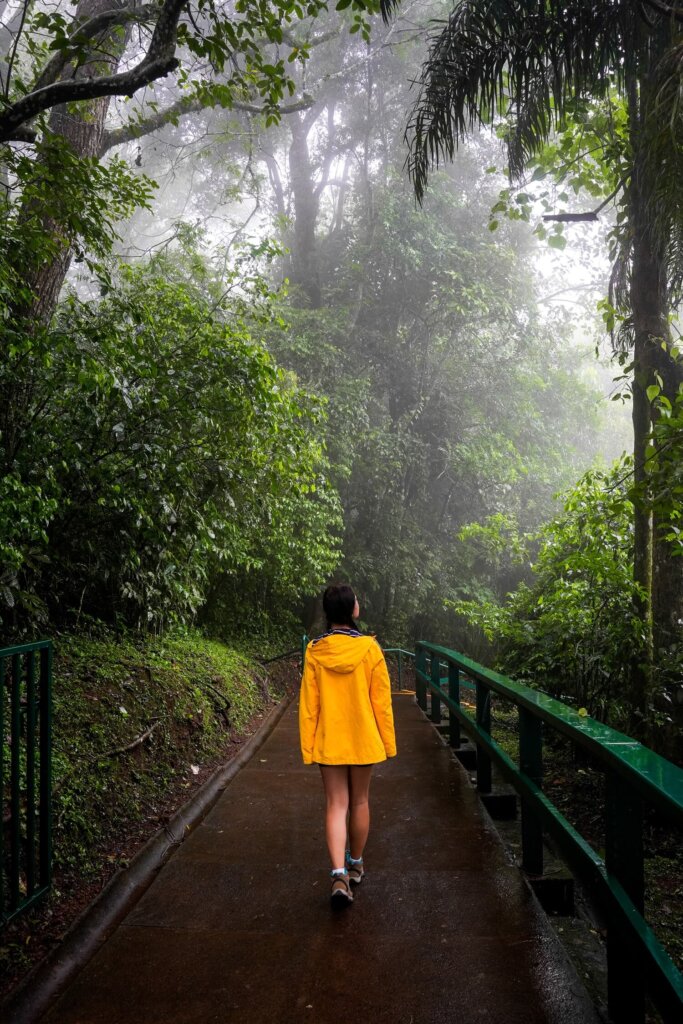
The best way to see Iguazu Falls in Brazil is to hike the entire length of the Path of the Falls or Waterfall Trail (Trilha das Cataratas). This is actually the only trail that gives you a chance to see Iguazu Falls on the Brazilian side. The whole route is only 1.5 km long, but gives you some incredible views of Iguazu. It’s not a difficult path but can be slippery when wet, and consists of stairs and some uneven surfaces here and there.
From the first few viewpoints we could see Salto Eva, Adan and Bernabe Mendez and other cascades. Then the path got pretty close to San Martin Island, as well as Saltos Tres Mosqueteros and Salto Rivadavia. You actually can’t really see these ones from Argentina, unless you’re on a boat.
The path ended at the Devil’s Throat viewpoint platform (Garganta del Diablo / Garganta do Diablo). Here we could walk out above the river all the way to the drop off and appreciate the incredibly powerful cascade to our left. The water levels were super high and the spray was pretty strong in a thick mist, so we didn’t walk along the entire length of the walkway to save our cameras from getting soaked. Since the Devil’s Throat Trail was closed on the Argentine side, this was actually the closest we got to it during our visit. Even though we didn’t really see much due to the mist!
Salto Floriano next to the main viewing platform was incredibly strong and it felt like we could have been washed away by it very easily! After seeing our friends’ video of it during a dry spell, we could appreciate the difference in the volume of water even more.

3. Take a Boat Ride (Macuco Safari)
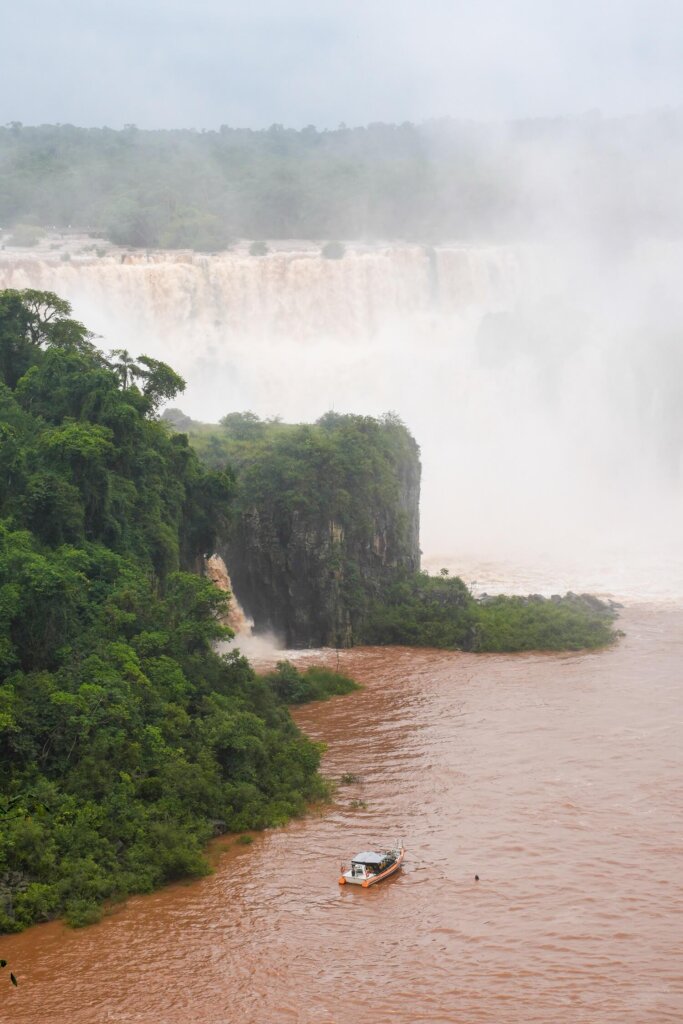
Lastly, if you want to get even closer to Iguazu, consider taking a boat ride. Also known as the Macuco Safari, the tour starts with an electric vehicle ride through the jungle, followed by a short walk before you board a boat. This tour isn’t included in your entry fee and you have to book it separately.
You can read more about the Macuco Safari experience online.
4. Additional Trails and Experiences on the Brazil Side of Iguazu Falls
Poço Preto Trail. Although there’s only one trail that allows you to see Iguazu Falls in Brazil, there is another hiking trail called Poco Preto. This 18km round-trip can be done on foot, by bike, or in an electric vehicle and takes you through the jungle. It’s great if you want to spot some wildlife, especially birds.
Helicopter Ride. The only way you can get an overhead view of Iguazu Falls is if you book a helicopter tour. You can only do this from Brazil now, as Argentina banned it for environmental reasons.
Other special experiences can also be booked online, such as sunset or sunrise at the falls with either drinks or breakfast, or even a night sky experience.
Bird Park (Parque das Aves). Just across from the Iguaçu National Park main entrance, you can also visit the Bird Park. It focuses on the conservation of birds from the Atlantic Forest. You can book your ticket here.

Final Thoughts on Visiting the Brazil Side of Iguazu Falls from Argentina
We personally think that visiting the Brazilian side of Iguazu Falls was absolutely worth it. Even if it meant going through immigration multiple times in a day! Since the Devil’s Throat Trail was closed on the Argentine side, we actually didn’t get to see too much of this specific waterfall, even though we could get much closer to other individual cascades. Therefore, if we hadn’t have visited the Brazil side, we couldn’t have gotten a taste of what the Devil’s Throat was actually like. Even if the trail is open in Argentina, you’ll still get to see certain angles of Iguazu Falls from Brazil that you won’t be able to from Argentina.
Plus, from Brazil, we could really appreciate just how incredibly massive Iguazu Falls are and can only agree with Eleanor Roosevelt who said “My poor Niagara” upon visiting the waterfalls. Have you ever been to the Brazil side of Iguazu Falls? If so, what was your experience like? If not, would you want to see Iguazu from both countries or just one? Let us know in the comments below.
Now, let your adventure begin,

Remember…It all starts with a Pin…




Beautiful waterfall. I’m not sure what side I like better!!
It’s definitely hard to decide which side of Iguazu Falls is better.
I would love to visit! Thank you for such a detailed and useful article.
Thank you! Hope you can visit in the near future.
Wow! This is so cool! And I love that you can visit from both sides. Adding it to my list for sure.
Thank you, hope you can visit soon.
Wow the volume of the water in the waterfall looks insane in your pictures!! I can see how time of year would really affect the experience. I’m making a mental note to myself to visit in the dry season haha.
Yes, it was pretty insane the day we visited. I would probably aim to visit in the shoulder season or at the start of the dry season.
Now I’m really sad that we missed the Brazilian side of the falls! Next time!
Hope you can return to see the Brazil side of Iguazu in the near future.
We visited the Brazilian side years ago. Such a fun (and humid) adventure! We did it as an add on to visiting Buenos Aires and loved it.
It is such an impressive waterfall isn’t it?
Great post! Your explanations are so clear, and the photos are stunning. I love how you walk through each step of visiting the Brazil side from Argentina, including the bus options, border-crossing process, and what to expect once inside Iguaçu National Park. The way you describe the viewpoints, the walkways, and the overall experience makes everything feel exciting and easy to understand. Iguazu Falls has been on my bucket list for many years, and this post makes it seem so much more attainable! I’ll definitely reference this when I plan my trip!
Thank you so much for the positive feedback on our Iguazu guide. Hope you can visit in the near future.
I’m glad you didn’t skip the Brazilian side! Even if it only has one main walking trail, this clearly gave you an amazing overview of the 275 individual waterfalls that make up Iguazu Falls!!!
I agree, we’re so glad that we didn’t have to pick only one side.
Helpful post with clear explanations. I liked how you explained the bus options, border crossing, and what to expect inside Iguaçu National Park. The details about the viewpoints and walkways make planning much easier. This will be useful when I plan my trip.
Thank you for the positive feedback! Hope you can visit soon.