

Tierra del Fuego National Park, Ushuaia, Argentina – A Complete Guide

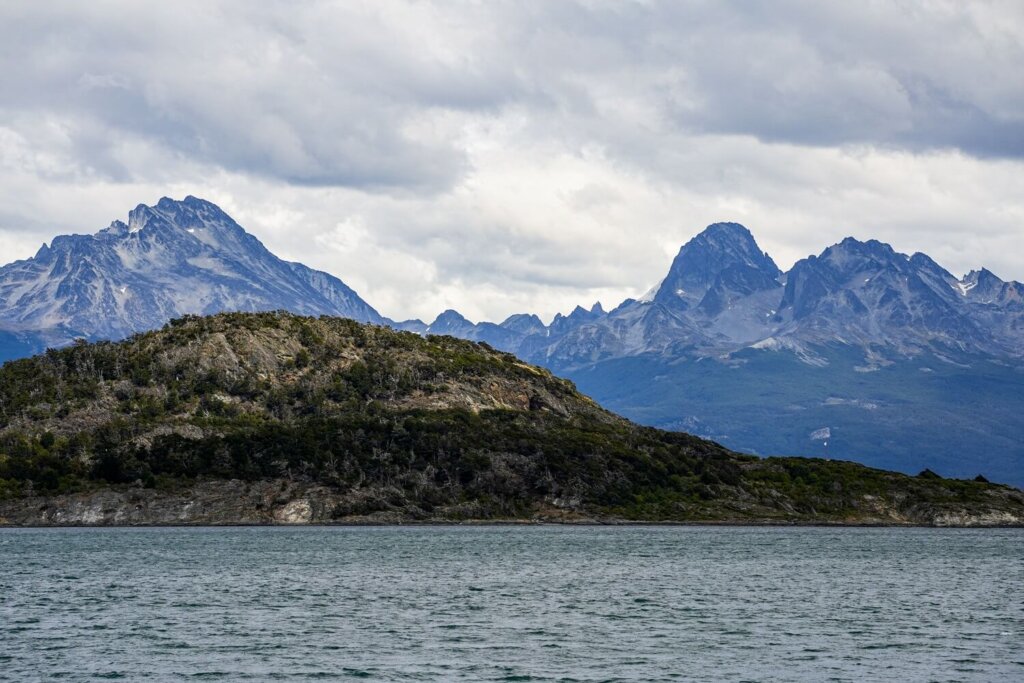
Located at the southernmost tip of Argentine Patagonia, Tierra del Fuego National Park is a must visit place on any trip to Ushuaia. Its landscape is a mixture of snow-capped mountains, coastlines, rivers, lakes and forests, which makes the park a paradise for nature and outdoor lovers like us.
There are a few things you should know about before visiting Tierra del Fuego National Park. We’ve grouped these into different categories, such as how to get there, where to stay, how long to stay for, the best time to visit, entry fees and, of course, the best things to do.
If you’d like to see everything we did in Tierra del Fuego, make sure to watch our Ushuaia video, which we shared on our YouTube channel Kitti and Jon. For more videos from the country, check out our Argentina playlist.
Disclosure: This post may contain affiliate links, which means we may receive a small commission if you click a link and purchase something. Clicking these links won’t cost you anything, but it will help us to keep this site up and running! Learn more about our affiliate policy.

Where is Tierra del Fuego National Park?
Tierra del Fuego National Park is located in Argentina, on the Island of Tierra del Fuego, which is separated from the mainland by the Strait of Magellan. It’s only a short drive west of Ushuaia, the southernmost city in the world.
The national park was created in 1960 in order to preserve this region’s rich biodiversity and unique landscapes. Tierra del Fuego is the only national park in the country that combines marine, subantarctic forest and mountain ecosystems.
Read Next: Things to Do in Ushuaia, Argentina

How to Get to Tierra del Fuego National Park?
Travelling to Ushuaia
By Air. The fastest way to reach Ushuaia is to fly. The city is served by Malvinas Argentinas International Airport (USH) and you can take a direct flight there from places like Buenos Aires or El Calafate. Flight time is just over 3.5 hours from the capital and less than 1.5 hours from El Calafate. The main airlines offering flights are Aerolinas Argentinas and JetSmart.
Find Flights to Ushuaia✈️
By Bus. Alternatively, you can also take a long-haul bus if you’re coming from Chile after visiting Torres del Paine. Bus Sur operates regular services between Punta Arenas and Ushuaia. Whilst the journey takes 11 hours, it’s still quicker – and more environmentally friendly – than taking three flights to reach Ushuaia.
There’s also a bus that runs between El Calafate and Ushuaia, but it takes over 17 hours and only runs twice a week.
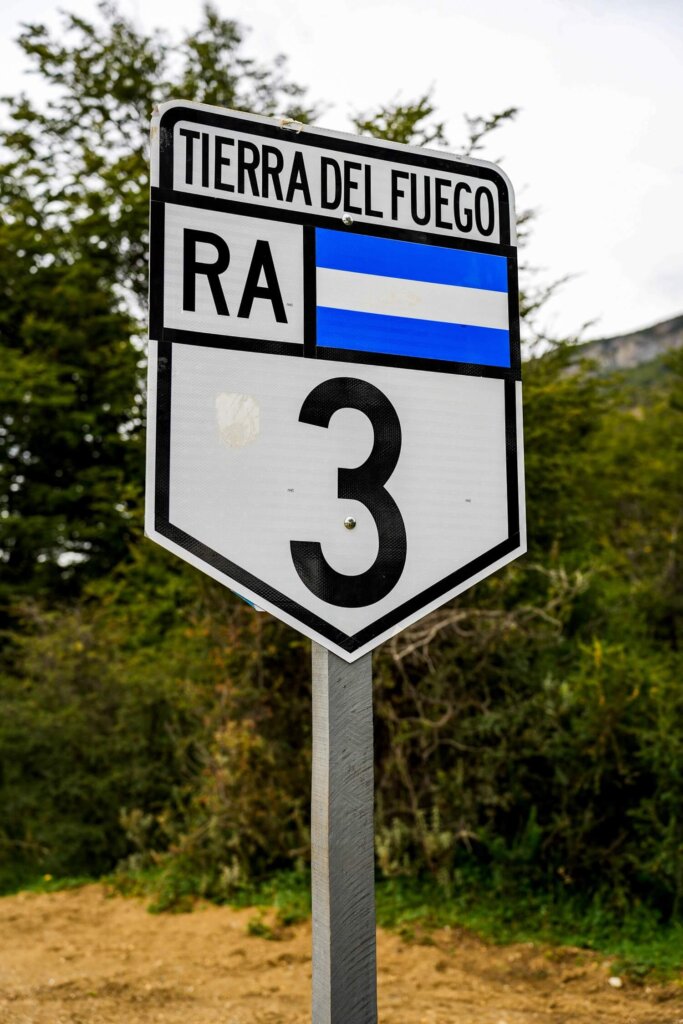
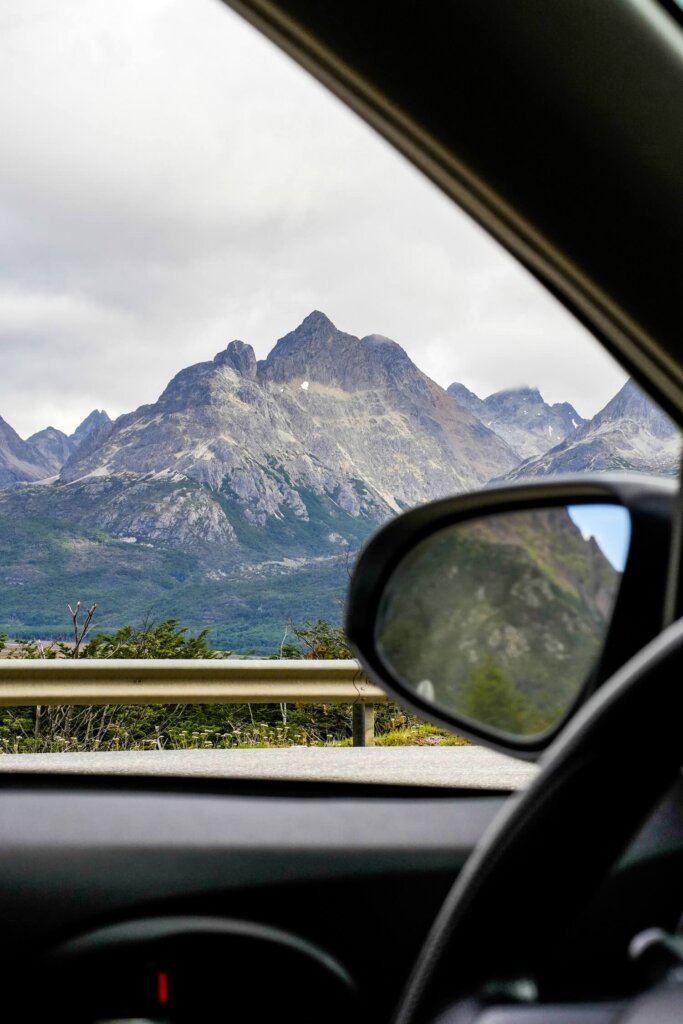
How to Get to Tierra del Fuego from Ushuaia
Hire Car. We decided to hire a car for a few days in Ushuaia, which allowed us to drive to the national park at our own convenience. This also allowed us to get around the park easily and see a lot in just one day. If you also wish to visit Tierra del Fuego in your own time, we recommend renting a car.
Shuttle Bus. For an independent visit to Tierra del Fuego, you can opt for the shuttle bus. They depart from this bus terminal, with the first shuttle leaving around 9AM. It’s a good way to get to a certain trailhead within the park, but it won’t be the best option to hop between attractions.
Group Tour. If you only have a day to see the highlights of Tierra del Fuego and don’t want to think about transport, then we suggest booking an organised tour. This day tour will stop at iconic locations such as Lapataia Bay and also gives you the option to ride the End of the World Train into the park.
Day Tours to Tierra del Fuego
Entry Fee to Tierra del Fuego National Park
Currently, the entry fee for foreign visitors to Tierra del Fuego National Park is $40,000 ARS per day. If you’re planning on visiting for more than one day, there are options for a 3-day or 7-day flexipass. In addition, you can also buy an annual pass for $300,000ARS, which grants you access to all national parks in Argentina for one year. This may work out cheaper if you’re spending a few months backpacking through Argentina.
You can purchase your entry pass via the official website, as well as see up-to-date prices and discounts.
|
National Park Pass |
Daily Pass |
3-Day Flexipass |
7-Day Flexipass |
|---|---|---|---|
|
Cost (ARS) |
$40,000ARS |
$80,000ARS |
$140,000ARS |

Where to Stay in Ushuaia
Even though Ushuaia is often referred to as “the city at the end of the world”, there are plenty of accommodation options to choose from. Below are some of our favourites:
- 🛏️Hosteria y Restaurante America ($). This hotel is located a short walk from the centre and offers comfortable rooms and free parking if you have a hire car. Breakfast is also included.
- 🛏️Australis Apartamentos ($). If you’re staying in Ushuaia a bit longer, then this is a great one bedroom apartment with a fully equipped kitchen. It’s also right in the centre of the city, close to all the amenities.
- 🛏️Original House Hotel Boutique ($$). This hotel is just outside the centre. It has spacious rooms with sea or mountain views and each room includes a kitchenette and breakfast.
- 🛏️Arakur Ushuaia Resort & Spa ($$$). For the ultimate luxury experience, consider staying at this 5-star hotel located in Cerro Alarken Natural Reserve. Perched high on the hills, you’ll get some incredible views across Ushuaia, the Beagle Channel and the surrounding mountains. They have their own restaurant, spa and other facilities. We spent 2 nights here before our expedition cruise to Antarctica and summarised our experience staying at the Arakur in this post.

Things to Do in Tierra del Fuego National Park
Ride the End of the World Train (Tren del Fin del Mundo)
One of the most popular experiences in Tierra del Fuego is actually to arrive to the park on the End of the World Train. Also known as the Southern Fuegian Railway or “prisoner’s train”, it’s a steam train that was originally built to transport prisoners, food and other materials. The original route was about 25km long, connecting the city of Ushuaia to the prison. After the prison’s closure in 1947, the train didn’t run until 1994, when the line was restored to transport tourists into the national park.
Today, the route is only 7km and is widely known as the End of the World Train because it’s the southernmost train in the world still in operation. The ride takes about 1 hour 45 minutes (round trip) and depending on your budget you can upgrade for a more immersive experience, including special onboard services. The train station itself has toilets, a café and a gift shop, as well as some information boards and photos detailing its history.
Our Tip. In the high season, we suggest booking your End of the World Train ticket in advance.
Note. Since the train takes you inside Tierra del Fuego National Park, you’ll also need to purchase your national park entry pass on top of your train fare, as it’s not included.
🚂 This day tour offers the option to ride the End of the World Train into the park.
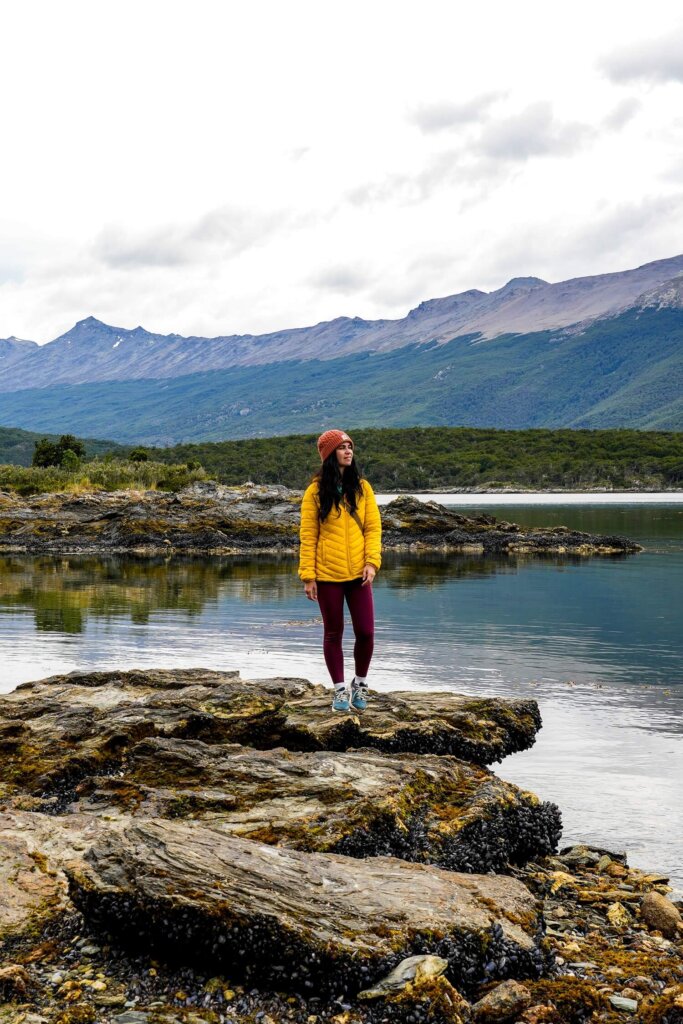

Go Hiking in Tierra del Fuego
There are a few hiking trails in Tierra del Fuego you can consider completing, depending on the level of difficulty you want and how much time you have. Below, we’ve listed them in order from easiest to most strenuous.
Short & Easy Hiking Trails
Laguna Negra. It is a short (1.1km out-and-back) and easy path that leads you out to Black Lagoon, which is surrounded by peat bogs. Whilst it wasn’t the most interesting trail, it was a nice one for stretching our legs.
Mirador Bahía Lapataia. It’s another short (1 km) out-and-back trail, starting from Lapataia Bay and taking you up to a beautiful viewpoint. This path was less crowded than the boardwalks around the bay and gave us a lovely elevated view of the surrounding area.
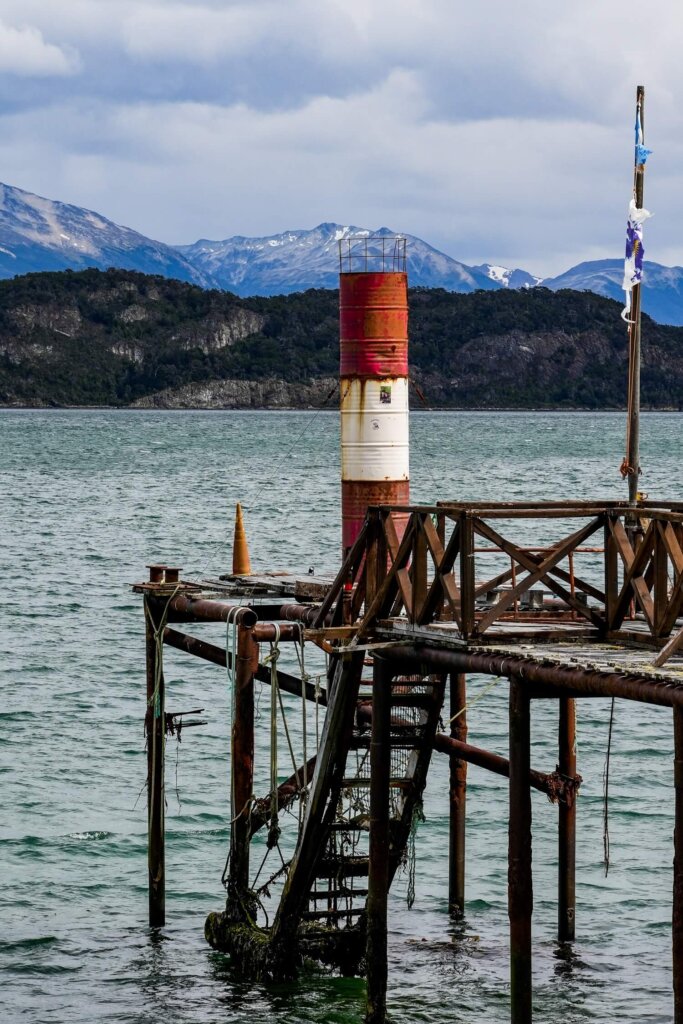
Senda La Baliza. Starting from Lapataia Bay, this is a 2.5km long out-and-back trail that follows the bay out to Baliza Lighthouse. Along the way, we got some lovely views of our surroundings and saw many rocks covered in mussels.

Moderate Hiking Trails
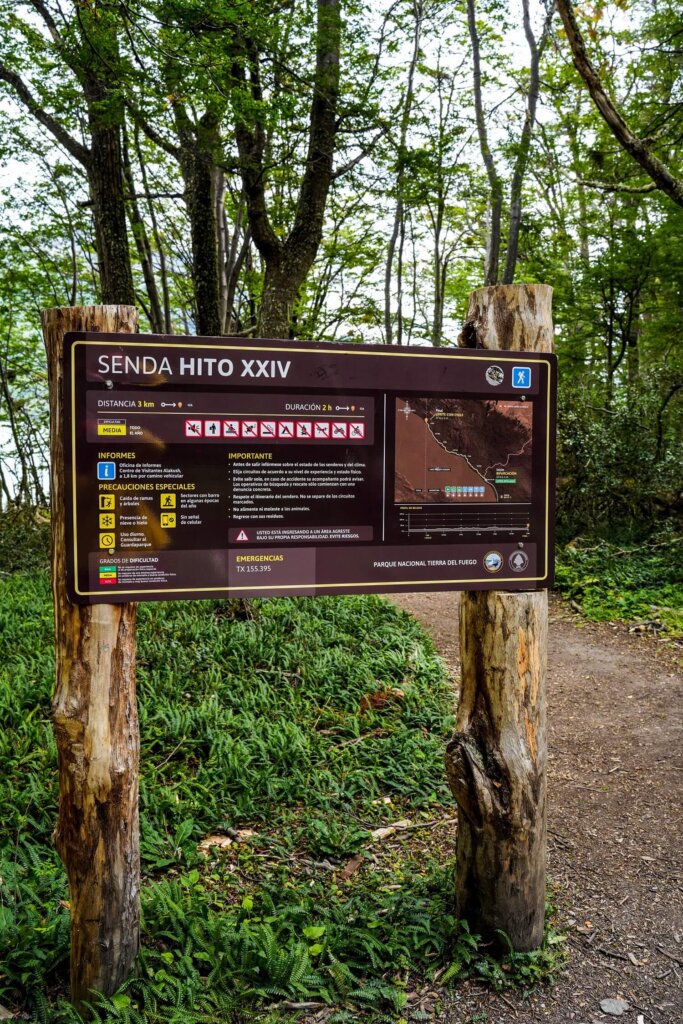
Hito XXIV. This nearly 8km out-and-back moderate trail takes you along the shores of Lago Roca all the way to Milestone XXIV, the official border between Chile and Argentina. Although it’s a longer trail, the elevation gain is only around 150m.
Pampa Alta Trail. This hike starts near the Fin del Mundo Train station and ends at Ensenada Zaratiegui Bay. The trail is about 10km long (out-and-back) with an elevation gain of 540m. It also climbs to the top of Cerro Pampa Alta, which is only about 307m high but gives you lovely views of the surrounding peaks, such as Cerro Guanaco.
Longer & More Challenging Hiking Trails
Senda Costera (Coastal Trail). It’s a 16km out-and-back trail that follows the coast of Lapataia Bay and Ensenada Zaratiegui Bay. You can either start at the visitor centre or from the End of the World Post Office. The trail has a total elevation gain of 560m.
Cerro Guanaco. This trail is the most strenuous hike in Tierra del Fuego. The 14km out-and-back route initially follows the Hito XXIV path along the shores of Lago Roca before heading up to the summit. Your efforts will be rewarded with panoramic views of the Beagle Channel, as well as the surrounding peaks. There’s a total elevation gain of over 1,000m. Also, note that the latest you can start the hike is at 12pm.

Check Out the End of the World Post Office (Correo del Fin del Mundo)
Whether you’re hiking Senda Costera or not, we recommend a visit to Bahia Ensenada Zaratiegui. Here, you’ll find what’s known as the End of the World Post Office building.
It used to be operational and you could get a souvenir stamp or send a postcard from here, but it’s been closed for a few years now. Regardless, it’s a lovely photo spot, with views looking out to the bay and the Beagle Channel, as well as the mountain peaks in the distance on the Chilean side of the channel.

Stop at Alakush Visitor Centre (Centro de Visitantes Alakush)
Alakush Visitor Centre is located just off Ruta 3 along Rio Lapataia, near Lago Roca. It’s a huge, modern building where you’ll find many amenities.
There’s a big café where you can grab a hot drink or something to eat, such as delicious empanadas or sweet treats. Their bathrooms were also very clean. There’s also a gift shop and a postal service where you can send postcards (we assume this is now the one that operates instead of the End of the World Post Office). In addition, they also had some information on the park.
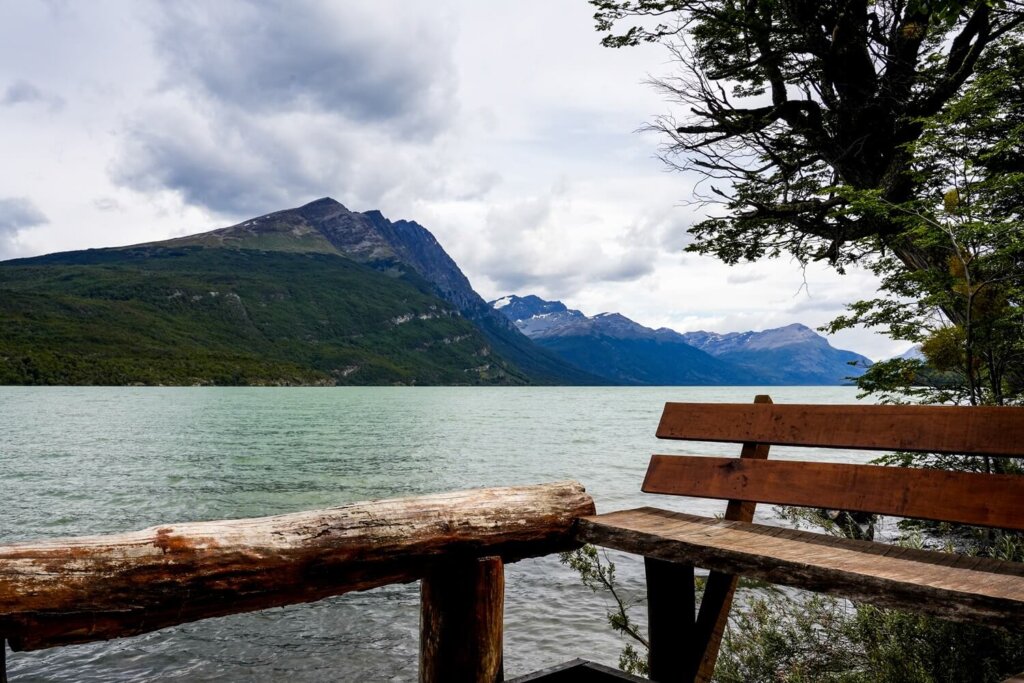
It was a great place to warm up in between walks. Plus, the views of the nearby peaks were also very beautiful from here.
Enjoy the Views from Mirador Lago Roca
Just a short drive further along the road from the visitor centre will take you to Roca Lake. This lake is one of many in Argentina that shares its border with Chile, where it’s called Lago Errazuriz.
It’s a lovely spot for a picnic if the weather isn’t too bad. The reflection of the surrounding peaks when the lake is glassy makes this spot extra beautiful. Usually tour buses stop here, although it was very quiet and peaceful when we arrived.
From here, you can also start the Hito XXIV trail that follows the shore, or the more challenging one up Cerro Guanaco.

End of National Route 3 (Fin de Ruta 3) & Lapataia Bay (Bahía Lapataia)
Ruta Nacional 3 (RN3) is the second longest highway in Argentina, after the iconic Ruta 40. It runs for 3,045 km (1,892 miles) in a north-south direction on the eastern side of the country, between Buenos Aires and Tierra del Fuego.
In fact, it’s also marks the end of the 30,000 km (19,000 miles) long Pan-American Highway, which starts from Prudhoe Bay, Alaska, USA. At the end of the road there’s a sign which you can take a photo with. Bear in mind that it can be a very busy here if you arrive at the same time as the group tours.
We also suggest going on a stroll along the wooden walkways here for some lovely views of Lapataia Bay. If you want, you can carry on following the Senda La Baliza, which runs along the shores out to Baliza Lighthouse.

Best Time to Visit Tierra del Fuego National Park
Overall, the best time of the year to visit Tierra del Fuego is between November and March. This is late spring, summer and early autumn in Argentina. During this timeframe, you’ll have more chances of dry, clear and warmer days, with plenty of daylight hours.
On the other hand, the summer is also the high tourist season in Patagonia, as well as when expedition cruises would depart to Antarctica from Ushuaia. Therefore, expect the national park to be more crowded.
If you can visit independently with a rental car, then set off earlier to avoid larger crowds at popular spots.
How Much Time Do You Need in Tierra del Fuego National Park
We recommend allocating at least one full day to visiting Tierra del Fuego National Park. This will allow you to see some of the highlights and complete a few shorter trails.
However, if you wish to do one of the longer hikes and also stop at the handful of attractions, then you may need to visit over two days. Whilst the section of the national park that people can visit is small, some of the trails can take quite a few hours to complete.

Final Thoughts on Visiting Tierra del Fuego National Park
Tierra del Fuego National Park really made us feel like we were at the end of the world. We really enjoyed walking along the few shorter trails we did and snapping a photo with the End of the World Post Office and the End of Route 3 sign. Although we only allocated one full day for our visit, in hindsight we probably should’ve done it over two days. That would’ve allowed us to complete the Cerro Guanaco trail, which we couldn’t fit into our initial day trip.
Have you ever visited Tierra del Fuego National Park? If so, let us know what your experience was like? If you found this blog post useful and want to show your support, you can buy us a coffee here.
Now, let your adventure begin,

Remember…It all starts with a Pin…


Wonderful place — and great article!
What about access to the park in fall and winter? Is all of the park open? Are there special activities one can do (nordic / cross country skiing, snowshoeing, ice climbing, dog sledding, etc.)?
Thank you!
I never heard of the End of the World until now! You have my interest! Thank you for the post!