
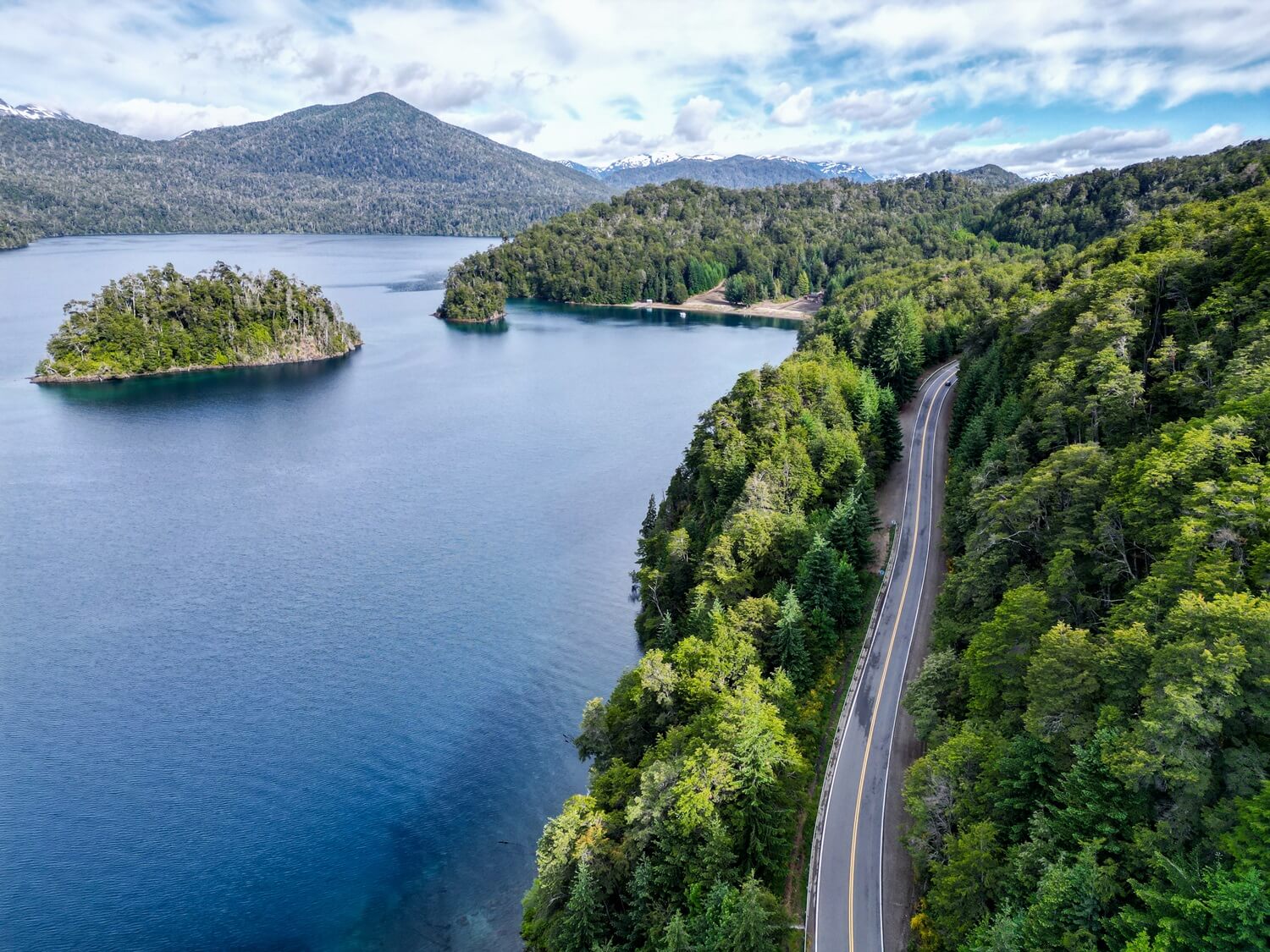
Driving Ruta de los 7 Lagos (Seven Lakes Route) in Argentine Patagonia

One of the most scenic road trips in Argentina is Ruta de los 7 Lagos (also known as Ruta de los Siete Lagos, Seven Lakes Route, or Route of the Seven Lakes). This stunning 110-km long route winds through the Rio Negro province of northern Patagonia and offers an incredible experience for visitors.
We’ve collected all the necessary information you should know about in this blog post, to help you plan your day driving down Ruta de los 7 Lagos. We’ll detail why driving the road is the best option but also list all the other ways you can visit this stunning part of the Argentine Lake District. As always, you’ll find a detailed list of all the scenic viewpoints and attractions you should add to your itinerary, as well as other tips on the best times to visit and places to stay.
If you’d like to see our experience driving the Seven Lakes Route, make sure to watch our Bariloche video, which we shared on our YouTube channel Kitti and Jon. For more videos from the country, check out our Argentina playlist.
Disclosure: This post may contain affiliate links, which means we may receive a small commission if you click a link and purchase something. Clicking these links won’t cost you anything, but it will help us to keep this site up and running! Learn more about our affiliate policy.


What is the Ruta de los 7 Lagos (Route of the 7 Lakes)
The Ruta de los 7 Lagos is part of Argentina’s Ruta 40 (National Route 40) which runs the entire length of western Argentina, between La Quiaca in the Jujuy Province and Cabo Virgenes in the Santa Cruz Province. Since this 5,194 km long road runs parallel to the Andes Mountains, Ruta 40 is considered one of the most scenic roads in the world. Trust us, we drove along quite a few sections of it during our 4 months in Argentina and can vouch for its beauty.
Whilst driving the entire length of Ruta 40 may not be realistic for most of us, there are many sections that are worth doing. One of them is the Ruta de los 7 Lagos, which is a 110-km stretch between the towns of Villa la Angostura and San Martin de los Andes, near the popular city of San Carlos de Bariloche. It got its name because of the seven beautiful turquoise and teal coloured lakes that you can stop at along the way.
Read Next: Best Things to Do in Bariloche

Why Driving is a Great Way to See Ruta de los 7 Lagos
The Seven Lakes Route is one of the best road trips in Argentina, and to really enjoy it, we suggest renting a car. Having our own vehicle gave us the freedom to set off early, so we could enjoy many of the viewpoints without the crowds. We could stop and spend as long or as little as we wished at certain locations without feeling rushed, like we would’ve on a tour. Having a car also meant that we could complete the route in one day, which would not have been the case if we’d opted to cycle it. (Although, cycling is probably the next best way to experience Ruta de los 7 Lagos).
Lastly, there’s also another beautiful road trip from Bariloche called the Circuito Chico that we cannot recommend enough. Therefore, we suggest hiring a car for a minimum of 2 days and driving both routes during your visit.
Hire a Car in Bariloche
Hire your car using Discover Cars where you can find the best rates as they compare local, national and international companies.
Tips for Driving Ruta de los 7 Lagos from Bariloche
Type of vehicle to rent. Since the road is paved and in good condition, you don’t need to rent a 4×4.
Driving time. The official Seven Lakes Route starts in Villa la Angostura and finishes in San Martin de los Andes. It takes less than 2 hours to drive the 110km one way without stopping. However, if you’re starting from Bariloche, then you’ll need to add an extra 80km (1.5 hours) of driving time one way.
Which direction should you drive Ruta de los 7 Lagos in? Depending on where you’re staying, you can either drive it from north to south or south to north. We did the route from south to north because we stayed in Bariloche. However, if you’re doing it as a day trip, you’ll have to head back the same way, so will end up doing it in both directions anyway.
Road conditions. The Seven Lakes Route is a two-way, paved highway which is in good condition. Some of the lakes can only be reached by dirt roads off the main highway. However, they were in pretty good condition too.
Gas stations. There are gas stations (YPF) in Bariloche, Villa la Angostura and San Martin de los Andes. We suggest departing with a full tank from Bariloche.
Speed Limit. The speed limit is between 40, 60 and 80 km/hr. There are some speed cameras and police checks too. Make sure to drive carefully, because many people cycle along the road.
Other Ways to See the Seven Lakes Route
Cycling. If you’re up for more of a physical challenge and have a few days to spare, consider renting a bike and cycling along Ruta de los 7 Lagos. Bear in mind that there’s no designated cycle lane. For this reason, make sure to wear a helmet and consider wearing a hi-vis vest or something more colourful.
Organised Tour. A hassle-free way to see the Seven Lakes Route is with an organised tour. Departing from Bariloche, there are many full-day tours that would take you along the route, stopping at many of the iconic viewpoints.
Best Seven Lakes Route Day Tours

Best Time to Drive Ruta de Los 7 Lagos in Bariloche
The best time to drive the Seven Lakes Route is between September and May. This is late spring, summer and autumn in Argentina. Probably the most popular time of the year is the summer (between December and March). During this time the weather conditions are usually pretty good, although expect some windy days. End of spring and autumn can also be nice, especially with the fall foliage. Those months would also be less crowded. Thanks to the nearby ski resort and other winter activities, people visit Bariloche during the colder months as well. However, winter weather can be more unpredictable and many places can also be shut for the season. It could give you the chance for some winter wonderland conditions though.
No matter what time of the year you intend to visit in, make sure to check the weather forecast before you set off. The weather conditions can change here very quickly. Try to pick a less windy and clear day, otherwise visibility will be pretty low. You can check for any alerts (bad weather, high winds, fire, etc.) on the Nahuel Huapi National Park’s website.
How Long Do You Need to Drive the Seven Lakes Route
You can drive along Ruta de los 7 Lagos and stop at many of the viewpoints in just one day. We suggest setting off earlier in the morning, especially if you’re driving it in both directions. It’s still quite a lot to fit into one day, especially if you want to do it at a more leisurely pace.
If you have the time, then we suggest doing it over two days. This way you can take your time at each location and even visit Los Arrayanes National Park in Villa La Angostura. We didn’t have time to hike in this forest, which was one of our regrets. You can spend a night in San Martin de los Andes to reduce your driving time.

Where to Stay Along Ruta de los 7 Lagos
San Carlos de Bariloche. Having a base in Bariloche is probably the most popular option when it comes to accommodation. The city has everything you need for long and short stays, including plenty of more affordable hotels and hostels, car rental offices and of course a ton of amenities. Day tours would also depart from Bariloche.
San Martin de los Andes. If you wish to split your drive over two days, then consider staying in San Martin for one night. It’s a picturesque alpine town with a good amount of accommodation options, as well as cafes and restaurants. We suggest booking your stay early in the high season.
Villa la Angostura. Lastly, you can also stay in Villa la Angostura, the official starting point of the route. There are many accommodation options here, as well as lots of amenities too. Again, we suggest securing your stay early in the summer season.
Map of Viewpoints Along Ruta de los 7 Lagos
Ruta de los 7 Lagos (Route of the Seven Lakes) Itinerary
When you look at the map, you’ll see that there are definitely more than seven lakes scattered around this area. However, seven of them can be viewed right from Ruta 40. (Or eight if you also count Nahuel Huapi Lake next to Bariloche).
The lakes in order are: Nahuel Huapi, Lago Correntoso, Lago Espejo, Lago Escondido, Lago Villarino, Lago Falkner, Lago Machónico and Lago Lacar.

Mirador del Limay (Lago Nahuel Huapi)
Soon after we left Bariloche but just before we turned onto the official Ruta 40, we stopped at Limay Viewpoint. Whilst it’s not on the Seven Lakes Route, we got some amazing views of Nahuel Huapi Lake, the surrounding mountains and Bariloche from here.
This viewpoint would also be great during sunset, so you can always stop here on your way back. The rest of the drive until you reach Villa la Angostura is really beautiful, so take your time and enjoy the incredible scenery.


Villa La Angostura
After driving alongside Lago Nahuel Huapi we reached Villa La Angostura, the official starting point of the Ruta de los 7 Lagos. This small resort town is incredibly picturesque, with typical wooden alpine buildings lining the main street. Despite its small size compared to Bariloche, Villa La Angostura can be quite busy all year round thanks to the nearby ski resorts.
Things to Do in Villa La Angostura:
- Stroll through the town. We walked around the centre and enjoyed the typical architecture. There were also many chocolate shops, cafes and restaurants, so it’s a great stop for breakfast or a quick drink. They also have an artisan market that you can browse through for some handmade gifts.
- Cascada Rio Bonito. If you’re up for a drive on a dirt road, head to Rio Bonito Waterfall. You’ll need to follow Route 66 towards Cerro Bayo Ski Boutique, just outside of town.
- Punto Panoramico. We headed down to Bahia Brava to a lovely beach and viewpoint called Punto Panoramico. It’s actually where boat trips to the Arryanes National Park would depart from.
- Arrayanes National Park. From the beach, you can either hike or take a boat to Arrayanes National Park on the Quetrihue Peninsula. Boat trips are actually cheaper from here than from Puerto Pañuelo along the Circuito Chico. It’s a bit of a commitment, so if you don’t have enough time, just do the short hike up to Mirador Brazo Norte for a different vantage point of the bay.

Mirador Lago Correntoso
Lago Correntoso is the second lake along the route, or the first one if you don’t count Nahuel Huapi Lake. The best spot to appreciate the lake from is the beach (Playa Lago Correntoso) just north of the town centre of Villa La Angostura.
It’s a really beautiful spot but can also become quite busy. One of the reasons we enjoyed driving the Seven Lakes Route ourselves was because we could linger at spots like this for as long as we wanted. If you drive a bit further down that road, you’ll end up at the Rio Correntoso Bridge, where the Correntoso and Nahuel Huapi Lakes connect.
Note. After passing Lago Espejo, there will be a few more viewpoints of the northern tip of Correntoso Lake.

Mirador Puerto Arauco & Mirador Inalco
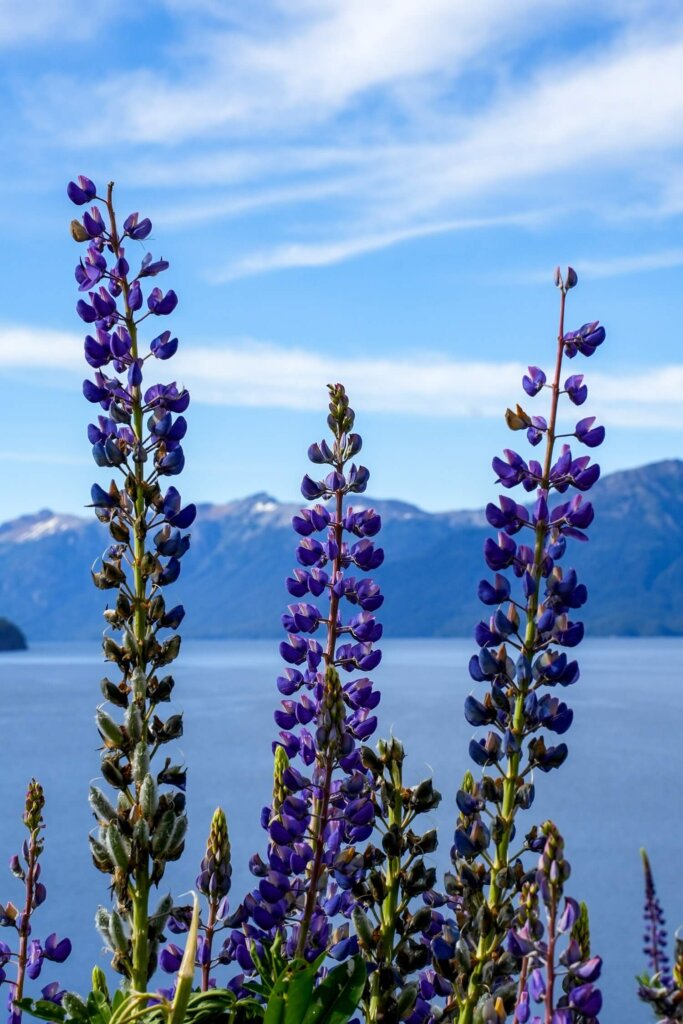
Between Lago Correntoso and Lago Espejo there are two small viewpoints that you can also stop at: Mirador Puerto Arauco and Mirador Inalco. We stopped at the latter as it had more parking spaces. Both viewpoints will give you some panoramic views of Nahuel Huapi Lake with the mountains as a backdrop.


Mirador Lago Espejo
The next official lake along Ruta de los 7 Lagos is Lago Espejo. Translating to “Mirror Lake” in English, the name was given by Enrique Wolff. He was an explorer, topographer and engineer who explored this area between 1895 and 1896. He said that the lake “resembles a mirror” and if you’re visiting on a clear day with no wind, you can also enjoy the beautiful reflection of the surrounding landscape in the water.
Now there are two viewpoints of Lago Espejo. One is along Ruta 40, which is where most tours would stop (here on Google Maps). This is a lovely view, however, if you’re after an even better one, turn onto Ruta 231 at the junction with Ruta 40. This road actually leads to Paso Cardenal Antonio Samoré, one of many border crossing stations to Chile. Just after the turnoff, there is a small car park and a short walkway that leads to another fantastic view of Lago Espejo. From this vantage point, we could see the beach in the above picture (Playa Lago Espejo), one that you can also stop at if you have the time.

Mirador Lago Escondido & Mirador del Lago Villarino
After stopping at the viewpoints of the north section of Lago Correntoso, we briefly stopped at Mirador Lago Escondido. If not for the small car park, we probably would’ve easily driven past this viewpoint. The word “escondido” means “hidden” in English and the name of this lake appropriately refers to its secluded location. We didn’t get a clear view of the lake thanks to the trees, so feel free to skip this one if you want.
Just a little further from Lago Escondido is a better viewpoint of Lago Villarino. This lake was named by Francisco Moreno in honour of explorer Basilio Villarino, although he probably never actually visited the lake. It has a great view of the surrounding mountains.


Mirador Lago Falkner & Cascada Vuliñanco
Just across from Lago Villarino is Lago Falkner, the next official lake along Ruta de los 7 Lagos. You can park along the road and access the sandy beach from there. Francisco Moreno also named this lake in memory of Thomas Falkner, who was an English Jesuit missionary, scientist and explorer.
We noted many tour buses stopping here too, so having our own vehicle was a nice way to have the beach almost to ourselves. It was also a fantastic picnic spot.
A little further up the road, there’s a lovely viewpoint of Vuliñanco Waterfall. In the Mapuche language, “vuliñanco” means harrier’s hill. A harrier is a bird of prey, also known as the “white-throated hawk”. Although the waterfall was quite far away, it was actually nice to see a different landmark other than all the lakes.

Mirador Lago Machónico
The next lake along the route is Lago Machónico. In the Mapuche language, “machonico” means “water with pancora”. Pancoras are fresh water crabs that call this area home.
From this elevated viewpoint, we could enjoy a decent view of the lake and the surrounding landscape. At this point, we definitely started to get a bit of “lake view fatigue” but luckily there was only one more left before reaching San Martin de los Andes.
Mirador Pil Pil & Mirador Lacar
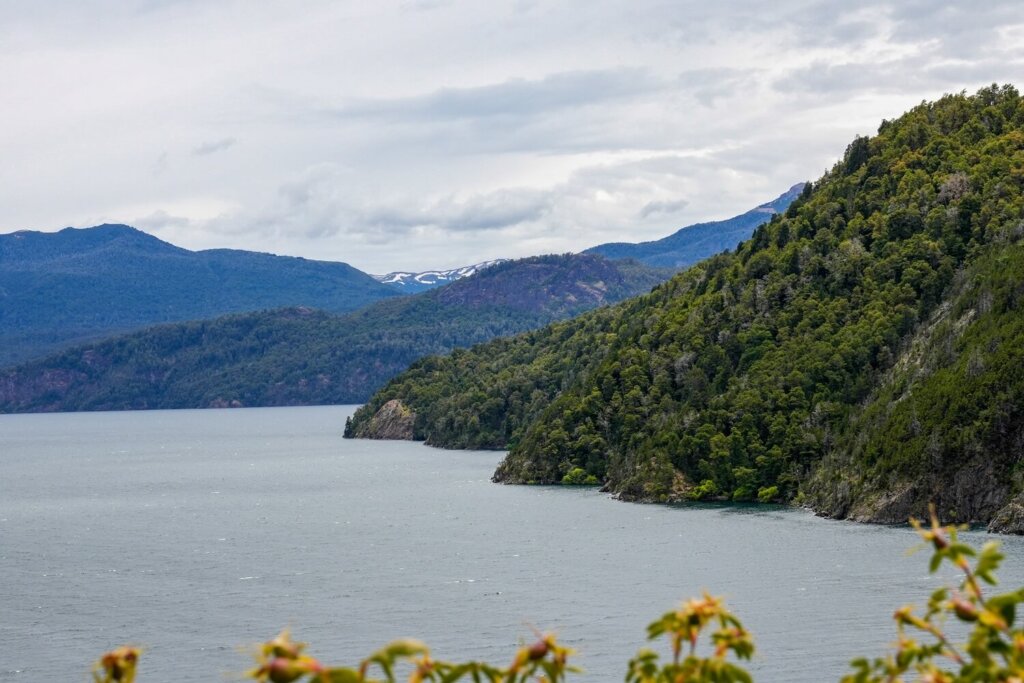
We briefly stopped at Mirador Pil Pil. This viewpoint provides a view of Lake Lacar in the distance and the valley of the Pil Pil creek. Pil Pil is a climbing plant that grows in this area and is used for weaving and other crafts.
Further down the road is a much better view of Lake Lacar. There are a few options marked on the map as Mirador Lago Lacar, so just see where you can stop once you get there. Even though we’d had enough of lake views by this point, it was a really nice mirador where we could also see San Martin de los Andes in the distance.


San Martin de los Andes
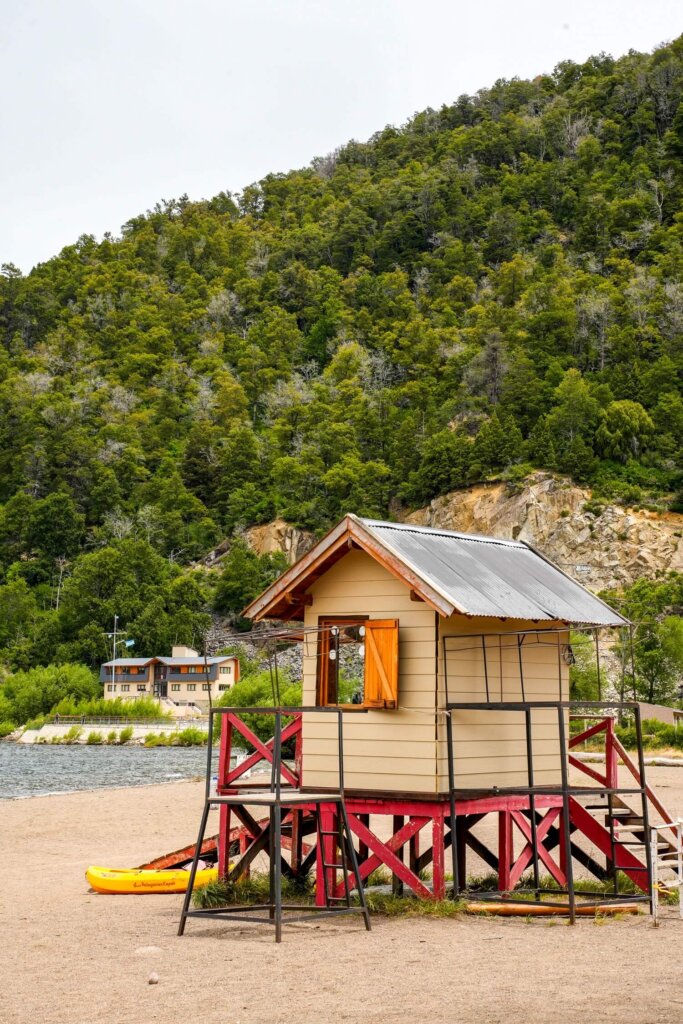
At last, we’ve made it to San Martin de los Andes, which also marks the end of the Ruta de los 7 Lagos section of Ruta 40. San Martin is often called Bariloche’s little sister, as it’s another popular holiday destination thanks to its nearby ski resort, Chapelco. Thankfully, it has retained its small-town charm with typical alpine architecture. There’s plenty to do nearby, which is why it’s a great place to spend at least one night.
Unfortunately, we couldn’t spend long here because we had to drive all the way back to Bariloche. We only had time for a quick stroll around the town centre. However, if you have time to spare, you can do many fantastic hikes in Lanin National Park such as Cerro Falkner, Achen Ñiyeu volcano, or to Lanin volcano itself.

Final Thoughts on Driving Ruta de los 7 Lagos
The Seven Lakes Route is an incredibly scenic section of Ruta 40 and we’re so glad that we could drive it. It was completely doable in just one day, but looking back now, it would’ve been much better to allocate a few days to this area. First of all, it was a long drive back and forth from Bariloche in just one day. Because of this, we only really had time to stop at the viewpoints, which after a while started to look the same. If we had booked a few nights in either San Martin de los Andes or Villa la Angostura, then we could’ve done some hiking in either Arrayanes National Park or Lanin National Park.
Have you ever visited the Lake District of Argentina? If not, would you add this scenic drive to your future Argentina itinerary? Let us know in the comments below. If you found this blog post useful and want to show your support you can buy us a coffee here.
Now, let your adventure begin,

Remember…It all starts with a Pin…


What a thorough and complete post. This looks beautiful and exactly the type of travel I like to do.
Thank you so much!
I think I would take a couple of days to do this road trip so I’m not limiting myself of missing out on spending time in each place to enjoy them.
I totally agree, it would’ve been much better to drive it over a few days instead just one.
I haven’t visited Argentina yet, but the Ruta de los 7 Lagos looks absolutely stunning. Very extensive guide. The lakes, forests, and mountain scenery make it feel like one of those drives where the journey itself is the highlight.
Thank you so much. Argentina is really beautiful so I hope you can visit in the near future.
I think you are reading my mind. A trip to Argentina has been on the table for us. We only had a few days when we visited 6 years ago. I really want to get back for a longer visit. I love this post and itinerary. Saving!
I really hope that you can return soon and spend longer in Argentina.
Stunning pictures and incredibly detailed article!
Thank you so much.