

How to Get Around Buenos Aires in Argentina – A Complete Transportation Guide

Buenos Aires is a huge city and planning a trip there can be overwhelming when you’re trying to find the best areas to stay in, where to eat and what to do. In this guide, we’ll focus on something that people often overlook: how to get around Buenos Aires? As someone who also works as a transport planner, trying out a city’s public transport system is one of my favourite things to do in a new place.
Since the main attractions in the capital are spread across different neighbourhoods, you’ll most likely need to use one method of public transport or another to get around. Don’t worry though, navigating Buenos Aires is actually pretty straightforward. There are many different modes of transport available and we used pretty much all of them during our stay. In this article, we’ll list all the transport options, whether private or public, and what the pros and cons are for using each one.
If you’d like to see what we got up to in the Argentine capital, then watch our dedicated Buenos Aires video, which we shared on our YouTube channel Kitti and Jon. For more videos from the country, check out our Argentina playlist.
Disclosure: This post may contain affiliate links, which means we may receive a small commission if you click a link and purchase something. Clicking these links won’t cost you anything, but it will help us to keep this site up and running! Learn more about our affiliate policy.

How to Get Around Buenos Aires with Public Transport
Buenos Aires has an extensive bus network which is complemented by the metro (subway) and a suburban train line. Public transport is an affordable, authentic and environmentally friendly way to get around the Argentine capital.
Note. In order to use public transport in Buenos Aires, you’ll need a travel card called SUBE. We’ll go into more details about what that is and where to purchase it shortly.
We recommend buying an Argentine SIM Card or eSIM, so you have data that you can use to plan your travel route on the go. We use Holafly eSIM’s which offer unlimited data. This comes in useful for things such as following our location and tracking a taxi or Uber ride. Get 5% off by using our code ‘KITTIAROUNDTHEWORLD’.
Read Next: How to Spend 3 Days in Buenos Aires

Public Buses
Also known as “colectivos” or “bondi”, public buses are the most used method of transport in Buenos Aires. Buses run pretty much anywhere you’ll want to go as a visitor and this was the mode of transport we used the most during our stay too.
There are hundreds of bus lines connecting the 48 barrios of the sprawling capital. The buses have vivid colours and designs, which somewhat reminded us of the colourful chicken buses we used in Guatemala. (Although they don’t look like old USA school buses). The bus network might feel overwhelming at first, but it is easy to use.
First, open Google Maps to see where the closest bus stop is to you and find the line or number bus you’ll need to take to your destination. Omnilineas is also a great site for journey planning. Once at the bus stop, just flag down the right bus as it’s approaching. The fare is calculated by distance, so you’ll just need to say which bus stop you’re getting off at to the driver, then tap your SUBE card. Make sure to press the stop button when your stop is coming up.
Honestly, we don’t really see any cons of using the buses in BA. There are many dedicated bus lanes too, so you won’t always sit in traffic like you would in a car. Another bonus is that the buses run until late at night, so if you’re familiar with the city, you can use them safely then too. If not, or if you’re traveling solo, we suggest getting a taxi or Uber (more on that later).

Metro / Subway
The Buenos Aires Metro, also known as “Subte”, currently has 6 lines. Apart from La Boca, we could reach most barrios with the Subte. We used Google Maps to plan our routes, although more often than not, taking a bus was quicker than the subway. This was mainly because the metro stations were further from our accommodation / final destination. However, if you want to use the metro, it works the same as anywhere in the world. You’ll need to tap your SUBE card to enter the station and, unlike the bus, there is a set fare per ride. If you use it a lot, a discount will be applied to your SUBE card.
It’s worth noting that the metro doesn’t run 24/7. The first one usually starts at 5:30AM on weekdays and later on weekends. The last one runs around 11:30PM. Therefore, if you need to be somewhere during unsociable hours, we suggest either getting a taxi or Uber.
View the Buenos Aires metro (Subte) map here.

Suburban Train
Lastly, Buenos Aires also has a few suburban trains that connect the city with the suburbs. If you’re planning a day trip to Tigre, you’ll likely need to use one of these trains. These trains depart from one of the main trains stations in BA. For example, Retiro Train Station (Estación Retiro) is the hub for several lines including Mitre, which is the one you would take to visit Tigre.
The good news is that you can use your SUBE card to pay for your journey. Just tap the card when you enter the origin station and again when you leave the station at your destination. The cost of your journey will be calculated when you tap out of the station.


How to Use Public Transport in Buenos Aires
What is a SUBE Card and Why Should You Get One
You’ve seen the SUBE card mentioned a few times already, so it’s high time we told you more about it. A SUBE card is a contactless travel card that you need to use public transport in Buenos Aires. Travel cards are common in big cities across the world, but what’s unique about Argentina is that the SUBE card isn’t just used in Buenos Aires. In fact, the SUBE card can be used across the whole country including in Mendoza, Cordoba and even at the “end of the world” in Ushuaia.
So, purchasing a SUBE card when you arrive to Argentina is a must, especially if you’re planning to stay in the country for a longer period.
Where to Buy and Top Up a SUBE Card
You can buy a SUBE card from multiple locations including metro stations and kiosks. See on this website where the closest place to buy one is to your accommodation. It’s worth noting that you may not be able to top your SUBE card up where you purchased it.
We also recommend topping it up in the morning, as shops will have limited credits they’re allowed to sell per day and they can run out by the afternoon. This is especially true in more remote locations, as we learnt the hard way from a little fumble in Bariloche. Since the price for bus journeys varies according to distance, it can be hard to know how much you need to have on your card. We suggest always having more credit than you think you’ll need, although you can go into the minus by a small amount.
How to Get Around Buenos Aires with Private Vehicles
Official Licensed Taxi
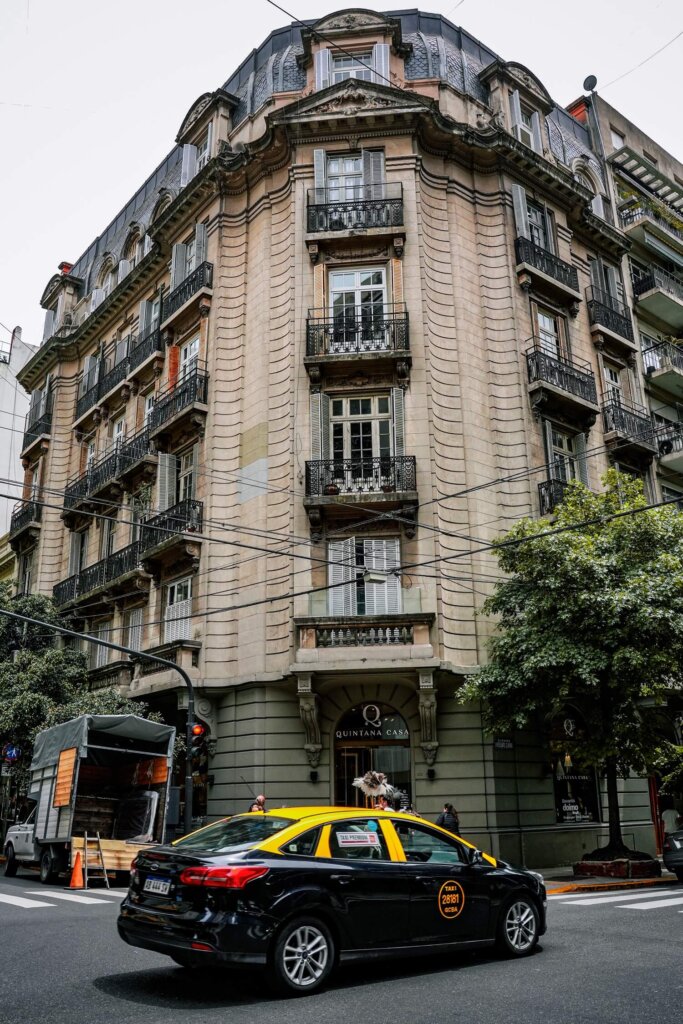
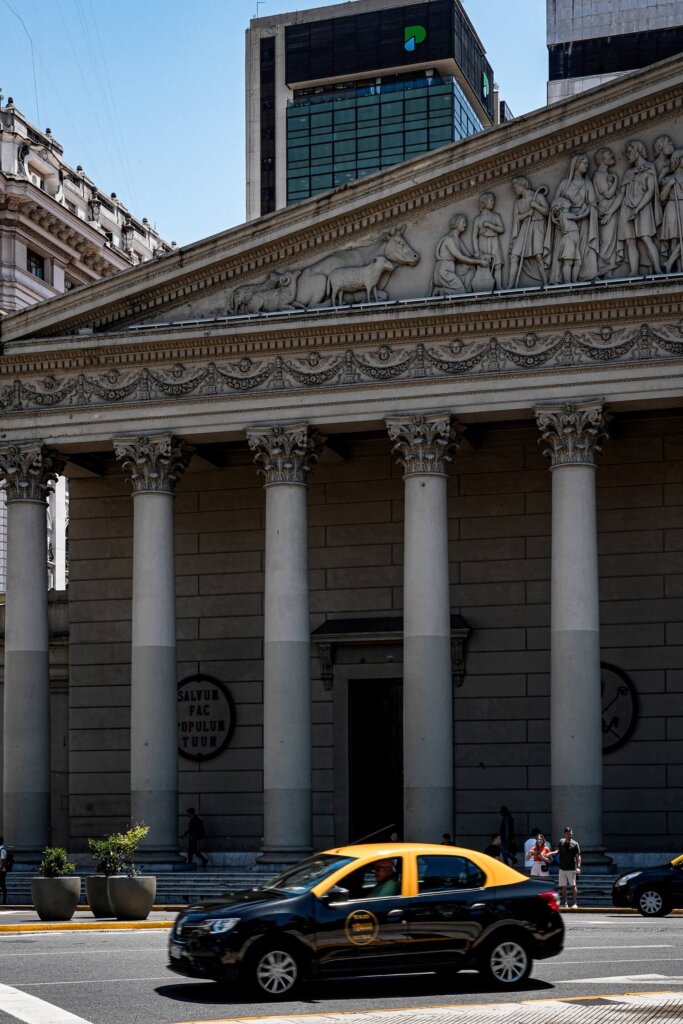
There are many official taxis in Buenos Aires. They are easily identifiable by their black and yellow colour combination. Taxis have to use a meter, so you can easily follow how much your ride will cost.
Some taxis now also accept card payments, but it’s always good to have enough local currency on you just in case. See if you can spot the “MercadoPago” sticker, or just check with the driver before your ride if card payment is possible.
We also personally found taxis a little on the pricey side. For example, we paid 10,000 pesos for a 15 minute ride from our accommodation in Recoleta to the bus terminal in Retiro. If you’re a budget traveller like us, then we suggest using public transport as your main method of travel around BA. Note that it’s also expected to give a small tip to the person who comes and helps with your bags when you get in or out of the taxi at large hubs like bus terminals.

Uber / Cabify
Uber is a common private transport method for getting around Buenos Aires, even though it’s not quite legal. Our friends told us stories about issues between taxi and Uber drivers. This is why we don’t recommend getting an Uber from the airport for example, as drivers might ask you to meet them further outside the airport. On the other hand Cabify is legal, so you can also use that to get a ride in BA.
It’s a good idea to use Uber or Cabify if you’re traveling during unsociable hours, with a lot of luggage, or traveling solo and haven’t yet familiarised yourself with the public transport system.


Active Travel Options in Buenos Aires
Walking
We love wandering around a new place on foot. Buenos Aires is a pretty walkable city once you get to your desired neighbourhood, or barrio. We highly recommend exploring the parks in Palermo on foot, or walking around Recoleta to admire the French architecture.
Since Buenos Aires is a huge city, we suggest taking the bus or metro between the main areas and then continuing on foot once you’re there.
Fancy wandering the streets of Buenos Aires on foot whilst learning about the history of the landmarks around you? Then why not join one of the many walking tours (a lot of them are also free) in specific barrios across BA:


Cycling
Cycling is definitely a fun way to get around Buenos Aires. There are many bike lanes across the city, which makes it a safe and environmentally friendly method for traveling between attractions.
There is a bike-sharing program called EcoBici, which offers a low cost bike rental service. They have numerous bike stands across BA where you can rent one and then drop it off somewhere else once you’re done.
Alternatively, you can also join one of the many bike tours in Buenos Aires. This way, you can bike around the city with a group of people whilst also learning more about its landmarks.

Final Thoughts on Getting Around Buenos Aires
Apart from cycling, we used every single method of transport on this list to get around Buenos Aires. We preferred using buses because they were usually the most affordable, convenient and fastest option for reaching our destination. However, once we were in a particular barrio, we just walked between the major landmarks and parks. Exploring BA on foot in November was especially beautiful thanks to the blooming Jacaranda trees.
Have you ever been to BA before? If so, what was your preferred method for getting around? If not, we hope that this post helped you understand how public transport works in the city, and we hope you’ll opt for using it during your future visit.
Now, let your adventure begin,

Remember…It all starts with a Pin…


Buenos Aires is somewhere I would love to visit so these helpful tips to get around are really useful to me.
I’m happy that you found our BA transportation guide useful for your future trip.
This is a great guide! The local bus systems always stress me out slightly, not knowing which exact bus stop I want, will I know when it’s coming, etc. But your guide makes it sound easier than my brain does 🙂
Thank you! It’s always confusing at first, but once you take one bus the next will be much easier. It also helps that Google Maps was pretty accurate.
Great guide for anyone planning a trip to Buenos Aires. It will help them feel more confident to explore.
Thank you so much!
I also think bike tours are one of the most efficient ways to get around a city as well as learn about its history and architecture, I wish I did a bike tour when I visited Buenos Aires in 2019!
I agree, taking a bike tour would’ve been so much fun!
I love this kind of in-depth information. When you travel with this kind of advice, it feels as though you can hit the ground running and know what you are doing in a new country.
Thank you so much! I love writing these transport guides, I find them very useful when planning a trip.
This is so helpful! Definitely one of the reasons that I haven’t visited early. Saving this!!
Thank you. Hope you can visit BA soon.