

How to Spend One Week in Uruguay

In this guide, we’ll share how to spend one week in one of the smallest and lesser visited South American countries: Uruguay. Bordered by Argentina and Brazil, Uruguay wasn’t initially on our itinerary. However, after being convinced by our friends, we decided to spend a few days in the country. We visited three of the most popular places in Uruguay: Colonia del Sacramento, Montevideo and Punta del Este.
Uruguay was probably the least touristy and most laidback country we visited in South America, a combination which definitely made our time there more memorable. This is mainly because even though we traveled slowly, we still often ended up rushing between tourist attractions in many of the other countries on the continent. However, upon entering Uruguay we immediately felt more relaxed and adjusted to the slower rhythm of life, which never normally happens to us in cities and towns.
If you’d like to see what we got up to in the country, make sure to watch our dedicated Uruguay video which we shared on our YouTube channel Kitti and Jon.
Disclosure: This post may contain affiliate links, which means we may receive a small commission if you click a link and purchase something. Clicking these links won’t cost you anything, but it will help us to keep this site up and running! Learn more about our affiliate policy.

How to Get to Uruguay
By plane. If you’re coming from further afield, the easiest way to reach Uruguay is by flying to Montevideo. There’s a direct flight to Montevideo from most capital cities in South America, as well as a direct flight from Madrid in Europe and Miami in Florida.
If you’d like to learn more about how to get around Montevideo, then make sure to read our complete Montevideo transportation guide.
By ferry. If you’re planning to visit Uruguay from Argentina, you can take the ferry across the Rio de la Plata from Buenos Aires. We suggest going to Colonia del Sacramento first, since it’s the shortest and most popular ferry route, although direct ferries to Montevideo are available. There are two ferry companies that provide quick and easy transport between Buenos Aires and Colonia: Buquebus and Colonia Express.
Both companies get you across the Rio de la Plata in about 1 hour 15 minutes. In Buenos Aires, there is a separate Colonia Express Terminal and Buquebus Terminal, both within the Puerto Madero neighbourhood, an upscale area of Buenos Aires. There’s only one joint terminal in Colonia del Sacramento where both ferries depart from.
To learn more about which company to use, how the check-in and immigration process works, and what the ferry ride is like, read our dedicated Buenos Aires to Colonia ferry guide.

How to Spend One Week in Uruguay
This one week Uruguay itinerary starts from the beautiful city of Colonia del Sacramento, before taking you to Montevideo, the country’s capital city, and finishing in Punta del Este, a popular resort town. Of course, if you’re arriving to Montevideo, just adjust your itinerary accordingly. For example, you can spend a few days in Montevideo, travel to Punta del Este, then go all the way back to Colonia before travelling to Argentina.
Day 1: Arriving in Colonia del Sacramento
If you’re taking the ferry from Buenos Aires to Colonia del Sacramento, we recommend getting on the earliest ferry possible to make the most of your first day in Uruguay.
We suggest dropping your bags off at your hotel and starting to wander around Colonia’s Historic Quarter, or Barrio Historico, which has been a UNESCO World Heritage Site since 1995. Colonia del Sacramento was founded in 1680 by the Portuguese, which makes it one of the oldest towns in Uruguay. You’ll quickly see the blend of different architectural influences (Portuguese, Spanish and post-colonial) as you walk around its cobblestone streets.

Things to See and Do in Colonia del Sacramento
Puerta de la Ciudadela (Old City Gate) was built in the 18th century. The gate was part of the stone wall that used to defend Colonia when the Portuguese and Spanish fought for control of it.
Calle de los Suspiros (“Street of Sighs”), is a small cobblestone street dating back to the 17th century. It is one of the most beautiful historical streets in Colonia, lined with colonial buildings dating back to the same time period.
Plaza Mayor is one of two squares in Colonia. It was built in 1680 by the Portuguese as the main public square and was surrounded by important buildings. Here you can also visit some popular museums, such as the Portuguese Museum.
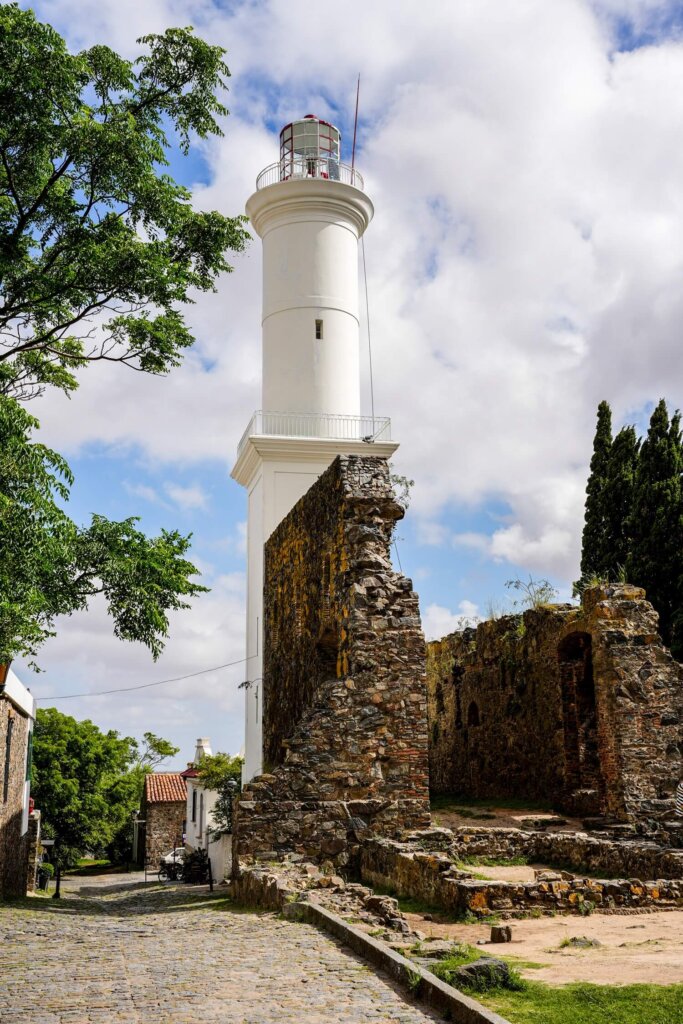
Colonia del Sacramento Lighthouse is a 26-metre tall lighthouse which was first lit in 1857. Climb 100 steps to the top for panoramic views across Colonia and the Rio de la Plata.
Paseo de San Gabriel is a cobbled street running around the edge of Colonia, often referred to as the Rambla. It’s lined with colonial buildings on one side and views out to the Rio de la Plata on the other.
Plaza de Armas is the other main square in Colonia. Here you’ll find the Basilica of the Holy Sacrament, the excavation of the remains of Colonia’s governors house and many eateries with colorful seating areas.


Day 2: Colonia del Sacramento / Travel to Montevideo
Morning: A Quiet Stroll Around Colonia
We suggest waking up early and having another wander through the cobblestone streets of Colonia. The streets will be much emptier and more peaceful just before the first ferry arrives with day-trippers from Argentina. This was one of the main reasons we enjoyed spending a night in Colonia.
You can also stroll along the Rambla (Paseo de San Gabriel), enjoying the morning breeze off the Rio de la Plata, and have a filling breakfast at one of the many cafes before it’s time to check out of your hotel and make your way to the capital.
We suggest taking a late morning / early afternoon bus to Montevideo. We used a bus company called COT buses for ground transport in Uruguay. The bus to Montevideo departed from the Terminal de Omnibus in Colonia and dropped us off at the Tres Cruces Bus Terminal in Montevideo. The journey took about 3 hours. From there, we took a taxi to Ciudad Vieja but you can also take a local bus from the terminal.
Read Next: How to Get Around Montevideo


Afternoon: Enjoy the Evening Light at Plaza Independencia
After checking into your hotel in Montevideo, we recommend checking out the historical landmarks at Plaza Independencia in Barrio Centro, followed by an evening stroll along Montevideo’s La Rambla.
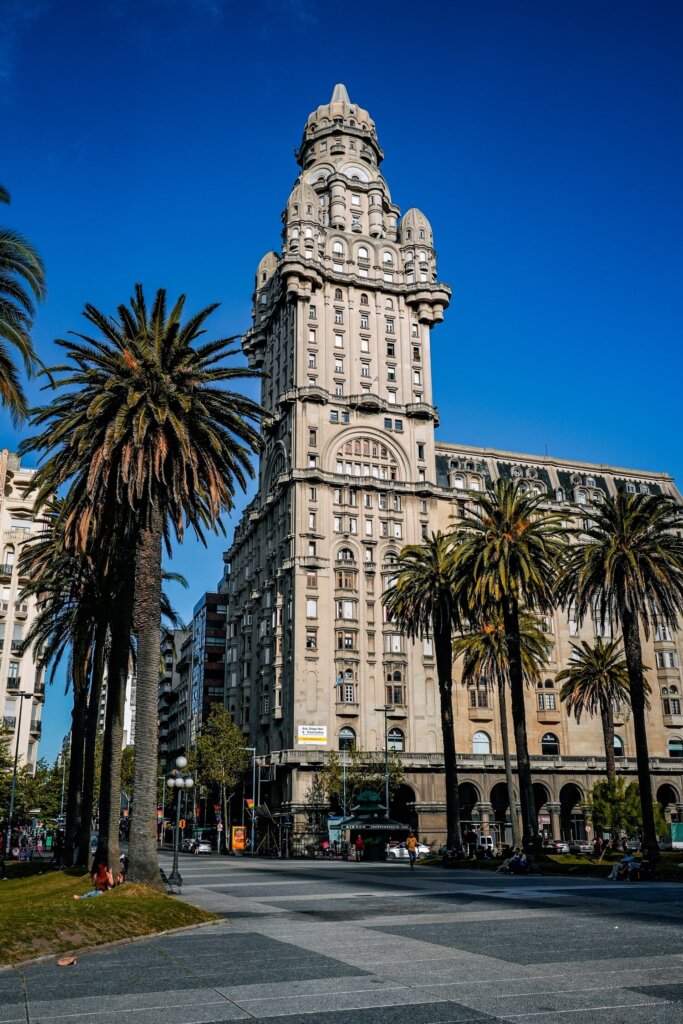
Plaza Independencia is the gateway between the old and new parts of Montevideo. In the middle of the palm tree lined square is the statue of General Artigas, with the Artigas Mausoleum beneath the monument. Palacio Estevez and the Executive Tower (Torre Ejecutiva) occupy the south side of the plaza. There’s also the Solis Theater (Teatro Solís) in the southwestern corner of the square. The most recognisable building, however, is on the eastern side of the plaza: Palacio Salvo.
Towards the end of the day, just head down to the waterfront and take a leisurely stroll along La Rambla. Pick a spot amongst the many locals and visitors who also come down here every evening for a catch up, romantic walk, or some exercise.


Day 3: Full Day in Montevideo
Morning / Early Afternoon: Wander Around Ciudad Vieja
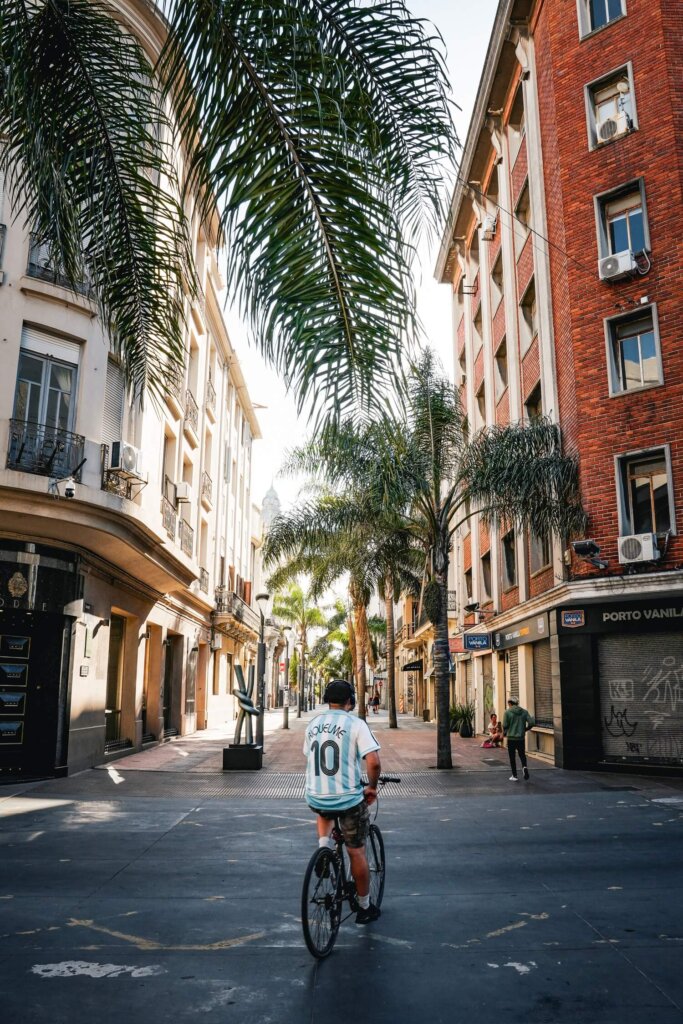
Start your first full day in the capital with a wander around Ciudad Vieja, Montevideo’s Old City. The Gateway of the Citadel at the western end of Plaza Independencia marks the start of the Old City. From there you can follow the half mile long pedestrianised street called Peatonal Sarandi. It connects important landmarks in this part of Montevideo and you can also witness how the past and the present can coexist through crumbling historic buildings, bookstores, art galleries, antique shops, quaint cafes and independent boutiques.
Stop briefly at Constitution Plaza, which is dominated by the Metropolitan Cathedral of Montevideo on one side. You can also stop at Plaza Zabala, another small square in Ciudad Vieja. There are also quite a few museums you can visit in this neighbourhood before heading towards the Port Market (Mercado del Puerto) for a delicious asado.
Afternoon / Evening: Beach & La Rambla
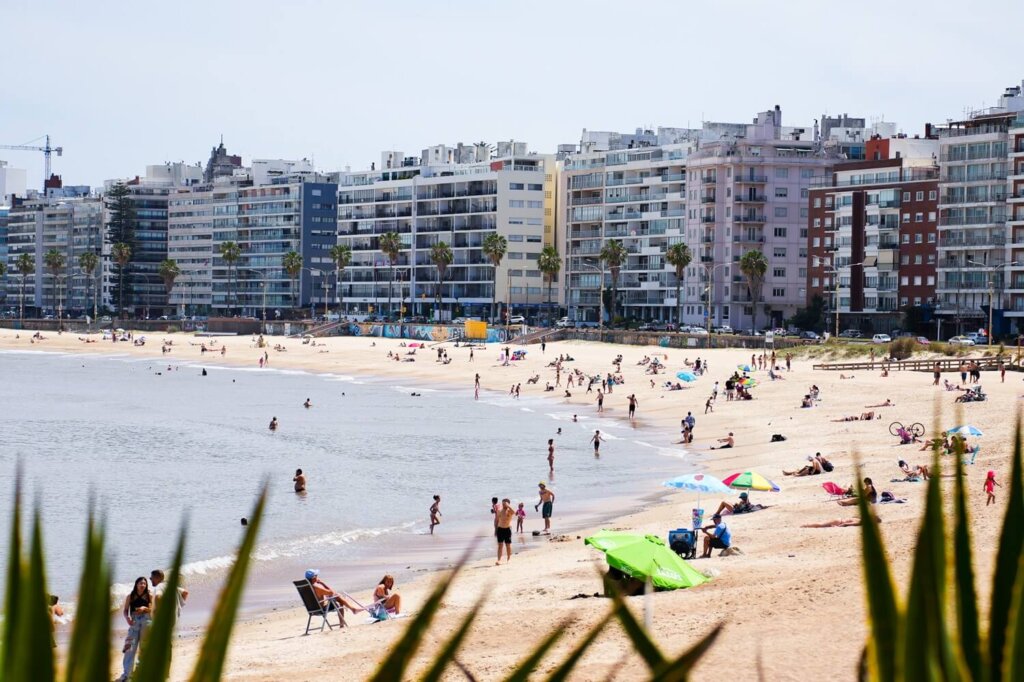
The Uruguayan capital is actually home to some lovely sandy beaches, offering a good combination for city break and beach vacation lovers. Ciudad Vieja is close to two popular beaches: Playa de Los Pocitos and Playa Ramirez. Both of them are great if you want to enjoy a relaxing afternoon under the sun.
Of course, there’s also plenty to do along La Rambla, so either take a long stroll or rent a bike to cover a greater distance. La Rambla is also the beating heart of Montevideo, which you probably would’ve noticed if you came down to the waterfront on your first evening. It was definitely our go-to place for an evening stroll.


Day 4: Full Day in Montevideo
Morning: Feria de Tristan Narvaja (Flea Market)
If your visit to Montevideo falls on a Sunday, consider spending your morning at the Feria de Tristan Narvaja, which is a massive flea market in the Cordon neighbourhood. From early morning until about mid-afternoon Tristan Narvaja street is filled with vendors and countless products waiting to be sold.
Vendors sell everything from local produce to household items, jewellery, clothing, shoes, plenty of antique items and books. Even as a tourist you’ll enjoy the flea market, as they also sell some souvenirs like mate kits. We spent quite a few hours wandering through the endless stalls.
You can easily reach the flea market from Ciudad Vieja with a local bus. The bulk of it runs along the Tristán Narvaja street, although some of it spills over to the side streets too.


Afternoon: Museums & Gardens
If you made it to the flea market, we suggest spending the afternoon visiting a few museums, iconic buildings and green spaces. (It’s worth noting that most museums are closed on Mondays).
The Contemporary Art Space (Espacio de Arte Contemporaneo) is a very unique art gallery because it’s set inside an old jail. The museum is located just north of the flea market. It is open from Wednesday to Sunday from 1 PM, so is perfect for combining the two activities.
Just north of the museum is the Legislative Palace of Uruguay (Palacio Legislativo), one of the most impressive buildings in Montevideo. It is the seat of the Uruguayan state’s legislative branch. If you want to head there just to admire the building, then it’s great as a Sunday afternoon activity. However, you can only take a tour inside from Monday to Friday.
For the rest of the day we suggest heading even further north to Parque Prado. Covering an area of 106 hectares, it’s the largest public park in Montevideo. The two best features of this park are the Rose Garden (Rosedal del Prado) and the Montevideo Botanical Garden.
If you fancy visiting another fine art museum, then Museo de Bellas Artes Juan Manuel Blanes is located near Parque Prado. It’s housed in a stately 1870 villa and displays Uruguayan art including the works of Juan Manuel Blanes. There’s also a Japanese Garden just behind the museum.
Read Next: Things to do in Montevideo

Day 5: Punta del Este
Morning: Travel to Punta del Este
It’s time to leave the capital behind and head to Punta del Este, Uruguay’s most popular resort town. Head to the Tres Cruces Terminal in Montevideo, from where you can get a COT bus to Punta from. The journey takes about 2 hours, so if you leave early you could be laying on the beach by lunchtime.
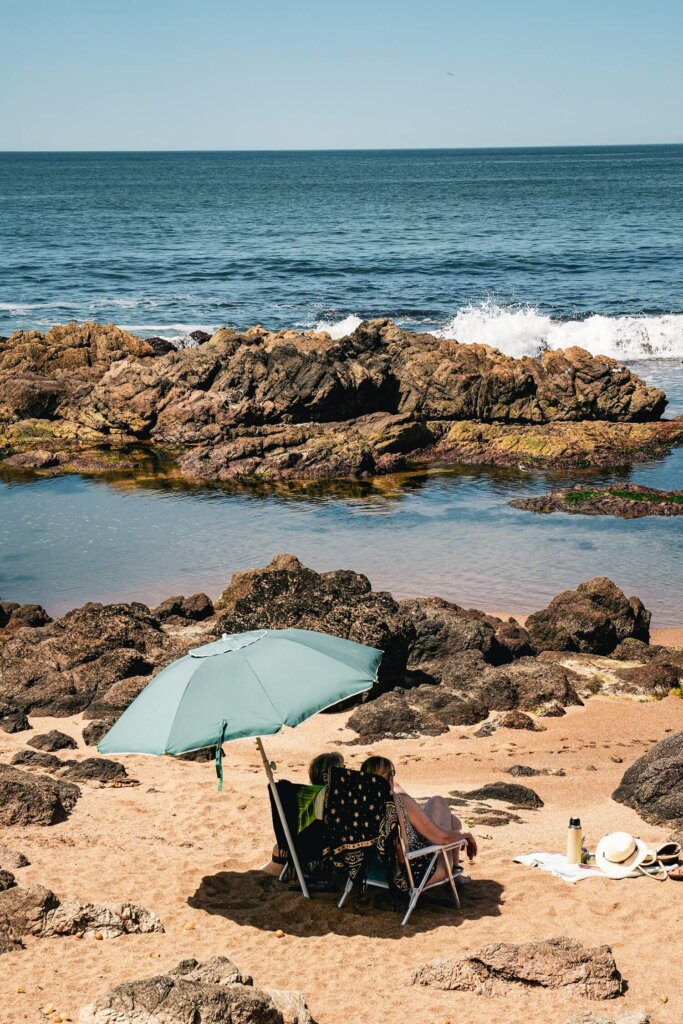
Once you’ve arrived in Punta and dropped your bags off, you have a few options depending on how much energy you have left. If you just want to relax, then after grabbing some lunch you can head to the beach to cool down in the water. Punta is located on a small peninsula where the Rio de la Plata and the Atlantic Ocean meet, which means it has long stretches of waterfront.
The beach along Rio de la Plata is called Playa Mansa and is a bit calmer. However, the beach on the Atlantic side (Playa Brava) has a more upbeat, surfing vibe. Regardless of which beach you prefer to lie on, make sure not to miss seeing the “La Mano” (the Fingers of Punta del Este) sculpture. It’s Punta’s most iconic landmark.

Afternoon / Evening: A Stroll Along La Rambla
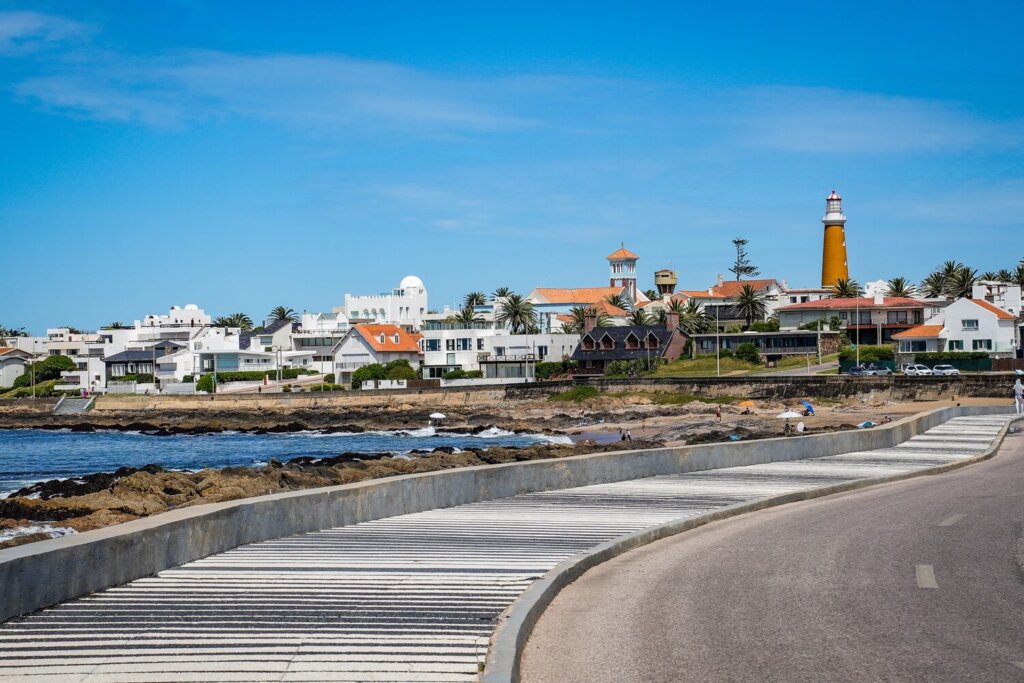
Once the temperatures have cooled down a little, it’s time to get some steps in by going on a stroll along La Rambla. Enjoy the views back towards the resort town when seen from Ermita Virgen de la Candelaria, just next to the small Playa El Emir beach.
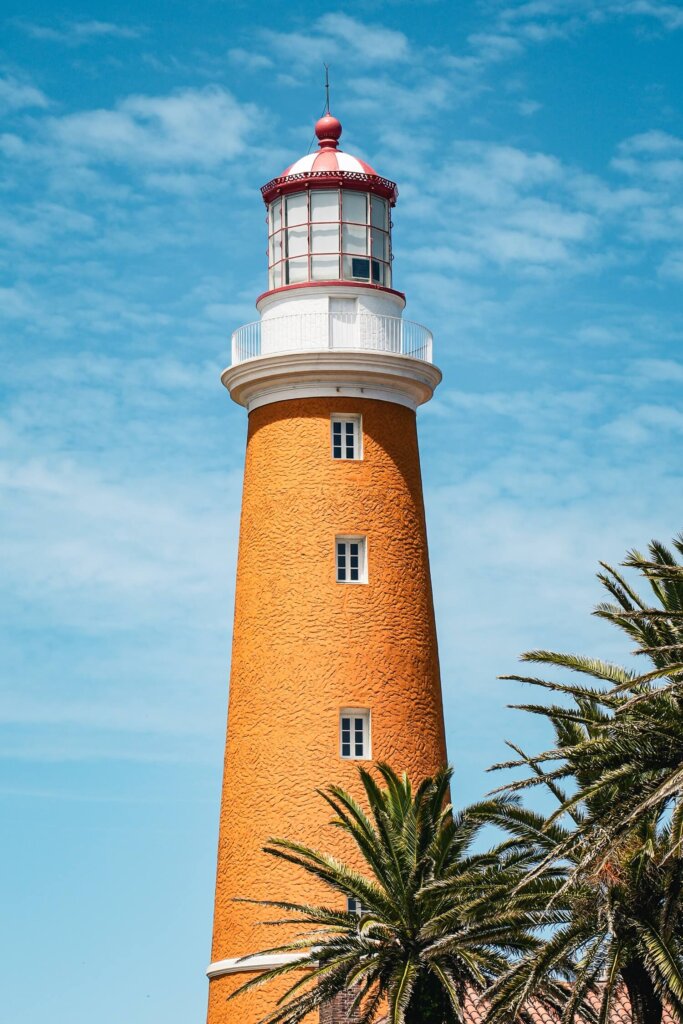
Following the Rambla around the peninsula, you’ll eventually hit Punta de las Salinas, which marks the southernmost point of mainland Uruguay. Further inland, we suggest stopping at Plaza del Faro. It’s a tiny square where the Faro de Punta del Este lighthouse and the blue Nuestra Señora de la Candeleria church are located.
Just before sunset, grab some snacks and your mate kit, and find a spot to watch the sun go down.

Day 6: Full Day in Punta del Este
Morning / Afternoon: Boat Trip to Isla Gorriti and / or Isla de Lobos
Just off the shores of Punta del Este are two islands you can take a boat out to.
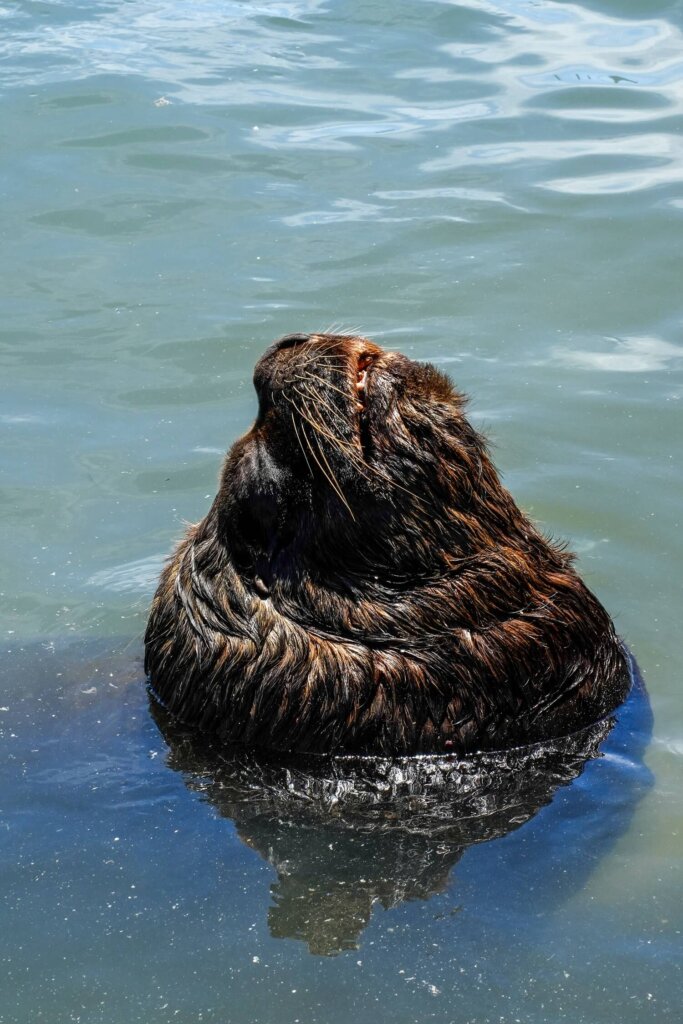
One of them is called Isla de Lobos, which is home to the largest colony of sea lions in South America. Whilst you can’t actually set foot on the island, the tour will circle around the island making sure you can enjoy the incredible wildlife and scenery.
Isla Gorriti is the other island, which you can actually disembark on. Whilst it’s small, you can bring a picnic, check out the old military fort, go for a nature walk, and enjoy its sandy beaches before you return to Punta.
Boats to both islands depart from the harbour of Punta del Este, which we recommend checking out briefly before your trip. There are many luxury boats and yachts docked here, and there’s also a fresh fish market which attracts some hungry sea lions, who enjoy the free scraps the vendors throw them.

Morning / Afternoon (Alternative): Day Trip to La Barra
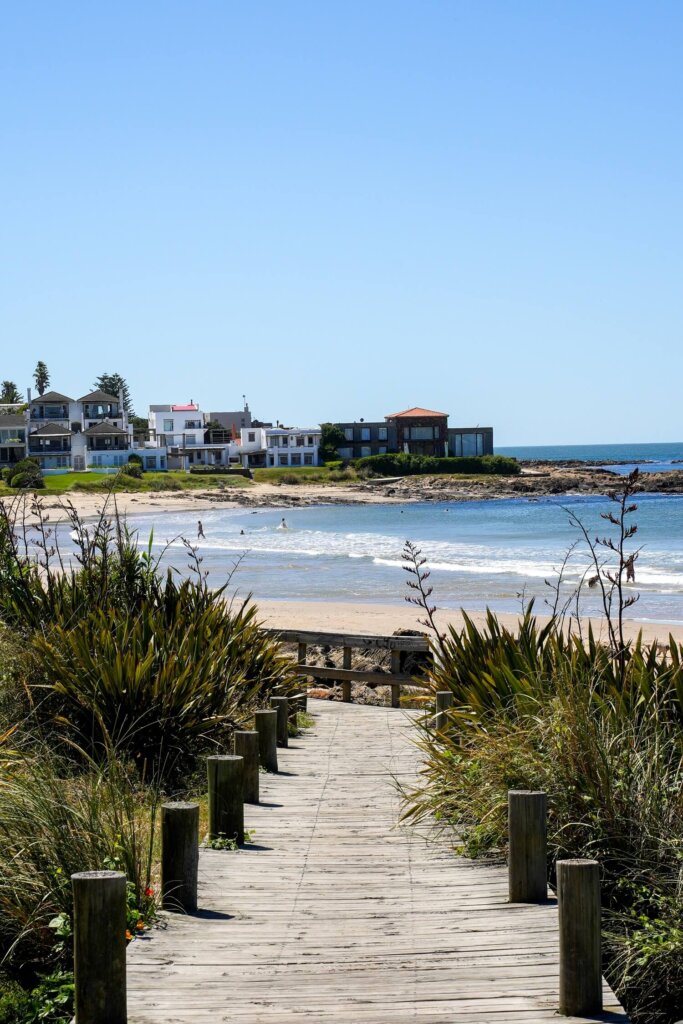
If you don’t want to take a boat trip to either of the islands, you can take a local bus to La Barra instead. La Barra has more of a surf town vibe, which attracts a slightly different crowd or those who want a change of scenery from Punta. You can enjoy either Playa La Barra or the even livelier Playa Bikini.
La Barra is also home to some art galleries and many cool eateries, so it’s the perfect place to spend a day in before returning to Punta.
Day 7: Punta del Este / Leave Uruguay
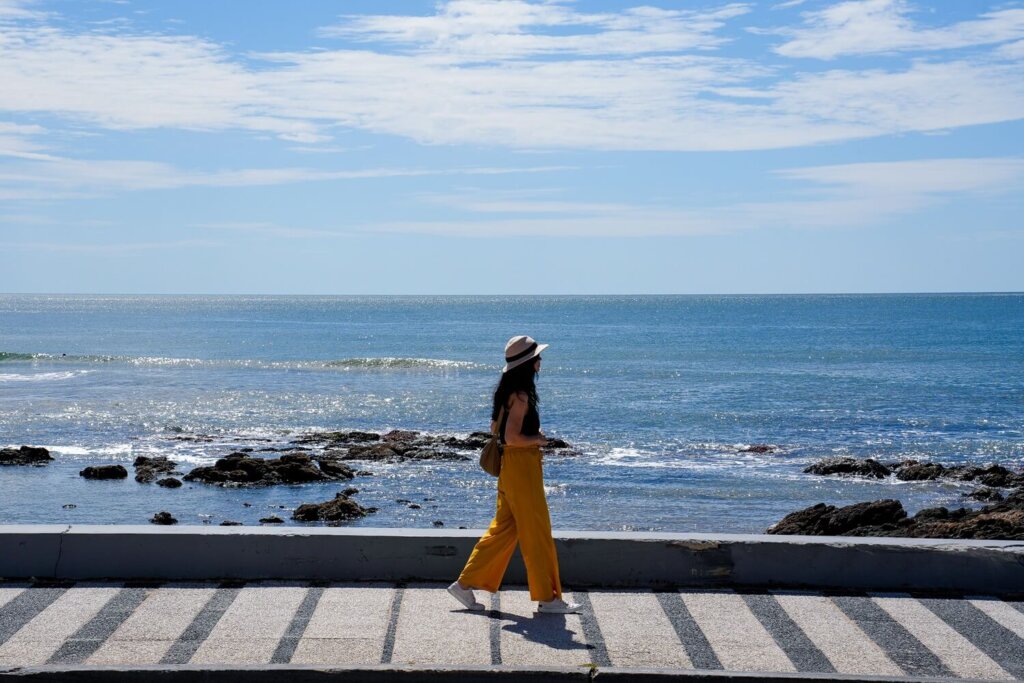
Then it’s time to leave Uruguay. Depending on where you’re headed next, you can take a bus to Montevideo Airport, or book a bus + ferry combo ticket to Buenos Aires. The latter will be the most convenient way to make your ferry connection, as both Buquebus and Colonia Express will have dedicated buses operating between Punta and Colonia, so you won’t have to worry about missing your ferry.
Top Tip. If you’ll be spending some time in Argentina, then don’t forget to get some crisp $100USD bills out of the ATM’s in Uruguay. You can then easily exchange those for some Argentine Pesos. We written a dedicated guide on how to handle money in Argentina.
Read Next: How to Spend 3 Days in Buenos Aires

Best Time to Visit Uruguay
The best time to visit Uruguay is between November and April. This is essentially late spring, summer and early autumn in the Southern Hemisphere. However, it’s late autumn, winter and early spring for those who live in the Northern Hemisphere.
December, January and February are the warmest and driest months, which is also the peak tourist season in Uruguay. Whilst you’re not going to see massive tourist crowds, like in Buenos Aires for example, you can still expect these three places to be much busier. Colonia attracts a lot of day-trippers from Buenos Aires, Montevideo is also a popular cruise port, and of course Punta is a favoured beach resort for Argentine and Brazilian holidaymakers.
For this reason, March and April are going to be quieter but the weather is still going to be nice and warm. The only thing to be mindful about is that many seasonal places will start to close down for the winter.
We visited Uruguay at the start of November which is, in our opinion, a fantastic time to visit for many reasons. The weather is going to be warming up again after winter, and shops and restaurants will be fully open for the season. In addition, the Jacaranda trees will be blooming in November and will be painting the streets in different shades of purple.

Final Thoughts on One Week in Uruguay
Whilst Uruguay isn’t a huge bucket list country in South America when you compare it to its neighbours, it’s definitely still worth a short visit. We really loved the much more relaxed atmosphere, and for the first time we felt like we were on a holiday too. Not having an endless list of landmarks, museums and other attractions to visit was actually a welcome relief, as it allowed us to just enjoy the place rather than rushing around as we usually do in big cities.
Have you ever been to Uruguay before? If so, where did you visit and what was your favourite place? If not, would you consider adding a short visit to Uruguay to your South America itinerary? Let us know in the comments below.
Now, let your adventure begin,

Remember…It all starts with a Pin…


What a vibrant and well-paced itinerary — I especially appreciate how you balance colonial towns like Colonia del Sacramento, city culture in Montevideo, and beach time in Punta del Este, making a week in Uruguay feel rich and varied. Your practical tips on when to visit and transport options will surely come in handy as well while planning our visit here.
Thank you for your positive feedback on my Uruguay itinerary. I’m happy that you enjoyed the varied activities.
Very interesting article! I’ve never thought about visiting Uruguay but your words inspired me to put it into the list of places I want to go to. And your photos are very beautiful!
Thank you so much! Uruguay wasn’t planned either, but so glad that we squeezed in a short visit.
Gorgeous photos and such a super detailed itinerary! Definitely making me consider a trip to Uruguay in the near future…
Thank you so much!
Uruguay looks so interesting! I’m interested in travelling to Argentina but I’m worried it’s too touristy. This looks like such a better balance for me personally.
We loved Argentina, but of course it’ll always be way more touristy than Uruguay. I hope you can visit both countries soon.
What a wonderful glimpse into Uruguay! This country has been popping up on my socials and reads recently; definitely gonna take it as a sign to start looking at this country seriously! 😆
Uruguay sounds like such an interesting place! Thanks for this awesome itinerary!
Thank you, hope you can visit in the near future.
It looks so interesting! I’d love to visit it and follow your itinerary one day!
Loved this. We have been discussing Uruguay for a longer winter stay. I know many North Americans head there in the winter. This guide is really well done and I am saving. thank you.
Absolutely dying to visit after looking at all these gorgeous photos. Definitely adding to my next South American trip.