

How to Get Around Mexico City

If you’re heading to Mexico City for the first time, you’d be forgiven for feeling a little overwhelmed by the size of the place. You’re probably thinking about the best areas to stay, where to eat, what to do in the Historic Centre and whether to go on a day trip or two. In this guide, we’ll focus on another major question that people often overlook: how do I get around Mexico City? As someone who also works as a transport planner, trying out a city’s public transport system is one of my favourite things to do in a new place.
Navigating around Mexico City was actually way easier than we initially anticipated. First of all, there are many different modes of transport available in the capital. During our one month stay in Mexico City, we used many of these transport systems. In this article, we’ll list all the possible options, whether private or public, and what the pros and cons are for using each one. Don’t worry, we’ve also included many practical and safety tips.
If you’d like to see everything we did in Mexico City, make sure to watch our YouTube playlist by clicking here. You can also check out our Mexico Playlist for more adventures across the country.
Disclosure: This post may contain affiliate links, which means we may receive a small commission if you click a link and purchase something. Clicking these links won’t cost you anything, but it will help us to keep this site up and running! Learn more about our affiliate policy.
Public Transport Options in Mexico City
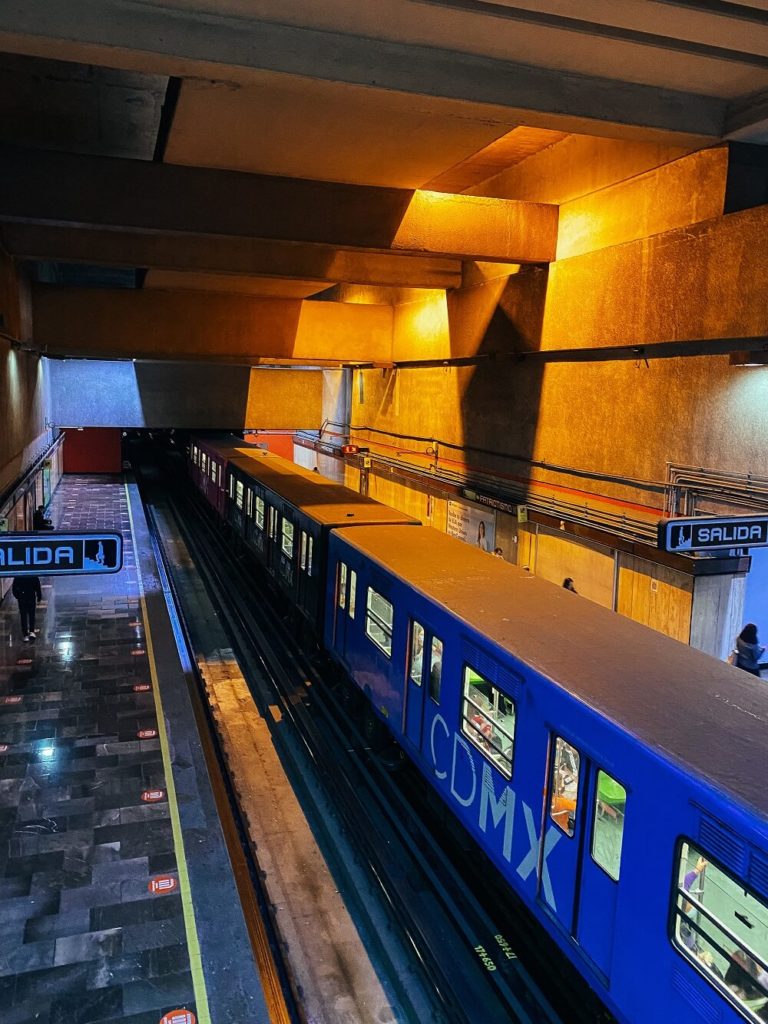
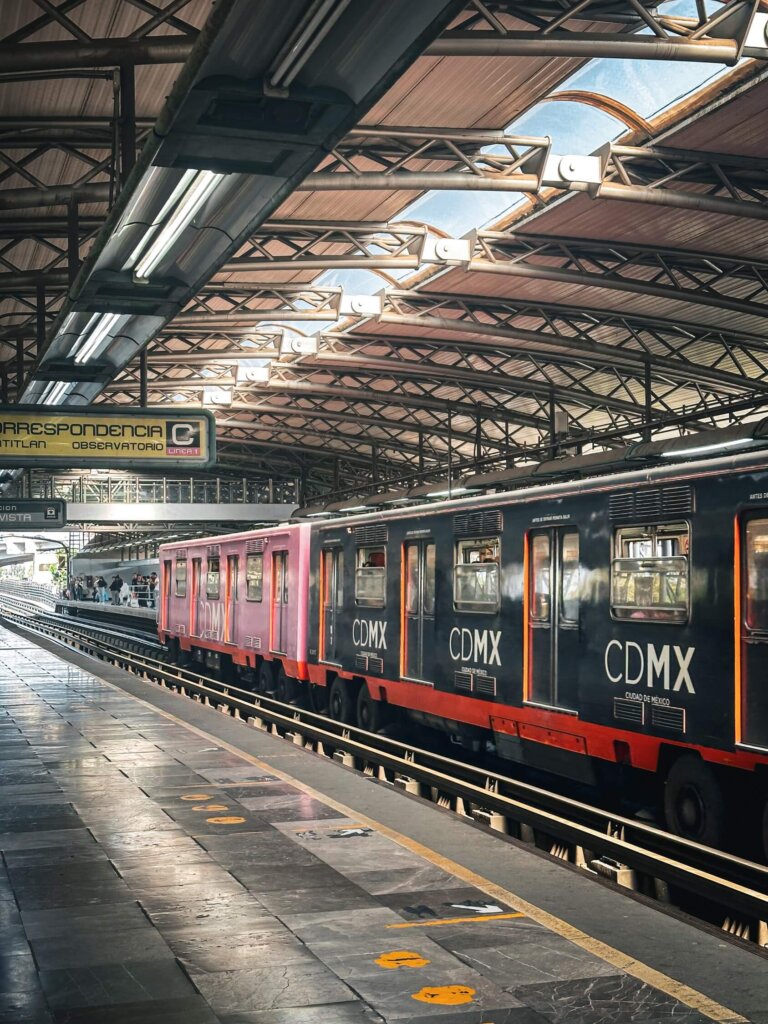
Mexico City is well-served by a variety of public transport systems including Metro, Metrobus, Light Rail, Trolleybus, Cablebus, Tren Suburbano and the RTP buses. During our stay, we mainly used the Metro and the Metrobus, and took a ride on the Light Rail and the RTP bus on one occasion. Therefore, below we’ll only discuss the most used methods with tourists.
Public transport in Mexico City is a cheaper, faster, and much more environmentally friendly method of getting around than private transport. Probably the only downside we experienced is that the popular lines can get incredibly crowded during peak times.
It’s also worth noting that although there are night bus services, most public transport doesn’t run during the night. Therefore, if you have to make a journey during unsociable hours, we recommend calling an Uber or an official taxi. We’ll discuss these methods further down too.
Metro
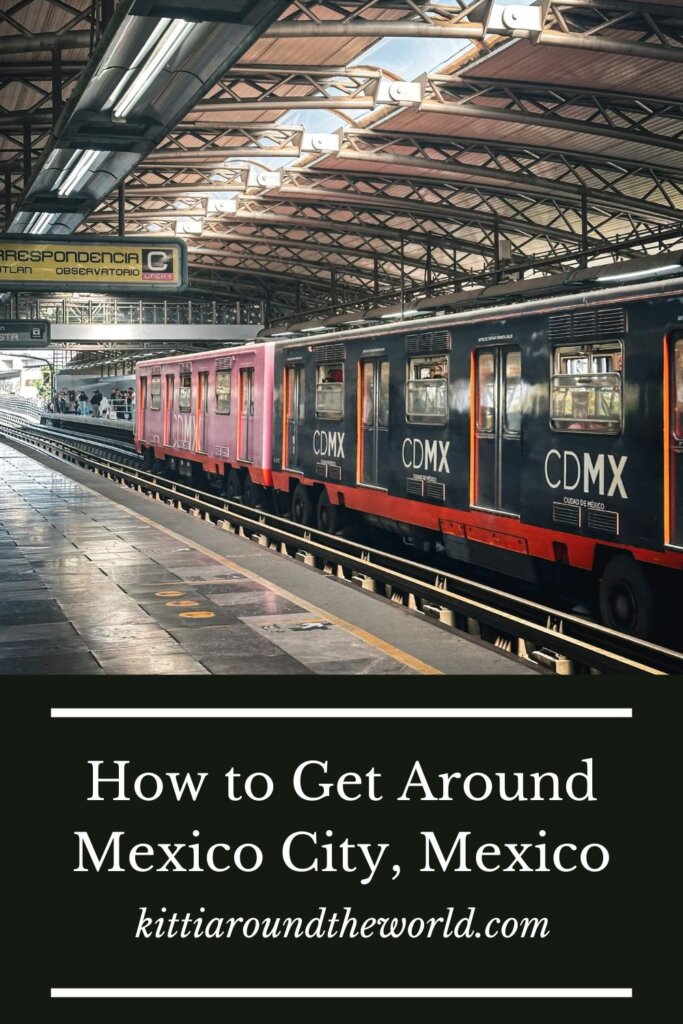
There are currently 12 different metro lines connecting the capital, operated by Sistema de Transporte Colectivo (STC). It’s the cheapest, easiest, and fastest way to get around Mexico City.
The metro was our most used method of transport, as it took us to most places within the Centro Historico and the popular neighbourhoods, as well as to all the bus stations and even the airport. (We’ll detail which lines to take to key places at the end of this guide).


Did You Know?
There are many cities around the world that are known for their quirky metro stations. Mexico City’s underground stations are no exception, which makes visiting them a fun thing to do in the city.
During our time there we came across some interesting themes, including a jungle and a space tunnel. Auditorio Metro Station was particularly special because the whole station is dedicated to the United Kingdom. They even have the iconic ‘Underground’ sign, red telephone boxes and other British memorabilia.
If you want to do something different than just the top attractions in Mexico City, then make sure to use the metro as often as possible.
Metrobus
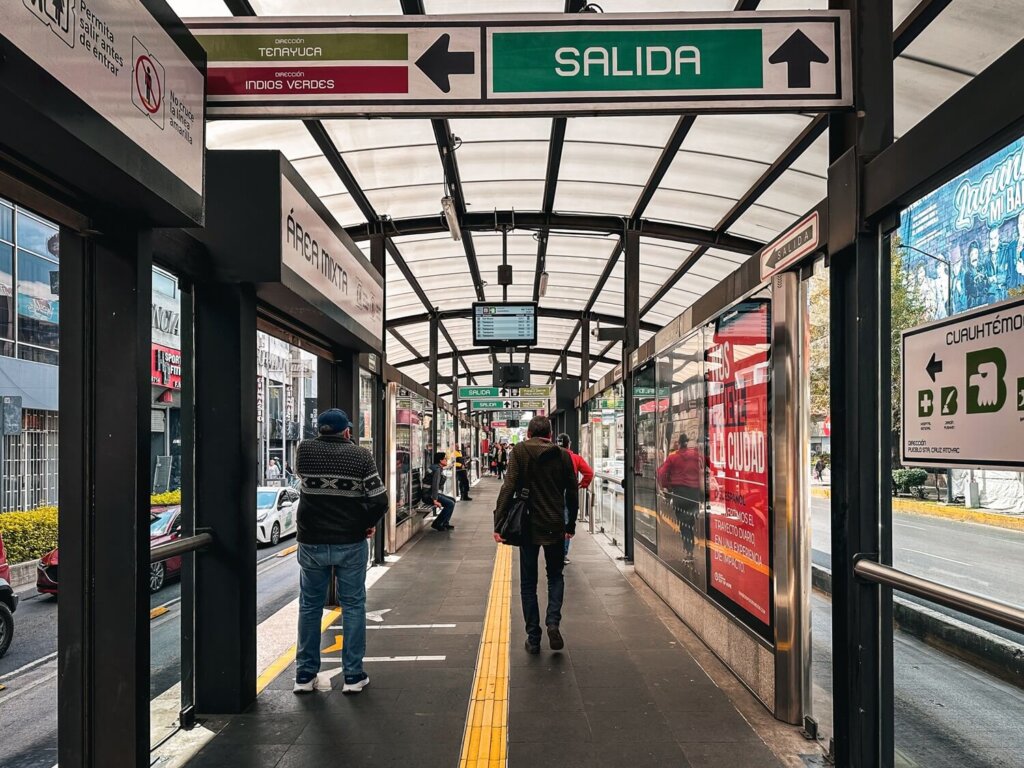
Sometimes the metro didn’t take us to our exact destination. In those cases, we used the Metrobus instead. This is Mexico City’s Bus Rapid Transit (BRT) system, which means that you won’t be sitting in heavy traffic like you would in a private car. Plus, from a window seat you can enjoy the views as you ride across the city, which you can’t when underground.
There are currently 7 Metrobus lines which are also connected to many metro stops. This makes it super easy to transfer between the two, if necessary. What you have to bear in mind though is that you’ll have to tap your Metro Card again in order to access the Metrobus, even if you’re transferring lines.
The Metrobus was our second most used mode of public transport during our time in Mexico City. If you’re only in the capital for a few days, then the Metro and Metrobus combined should get you to pretty much all the most popular places.
Tren Ligero (Light Rail)
Tren Ligero is Mexico City’s light rail. The capital used to have more tram lines but they were abandoned between the 1960s and 1970s.
Today, there’s only 1 Tren Ligero line which operates between Tasqueña metro stop at the end of Metro Line 2 and Xochimilco in the south of Mexico City. Using a combination of the metro and light rail is a popular way to reach the Xochimilco Canals.
RTP Buses
The Red de Transporte de Pasajeros de la Ciudad de México (RTP) is a bus service provider that serves the Mexico City area. There are over 100 different bus lines, most of which are connected to the metro stops.
During our stay we only used an RTP bus once, when we took a day trip to Desierto de Los Leones National Park.

How to Use Public Transport in Mexico City
Buying a Mexico City Metro Card
Before your first public transport ride you’ll have to purchase a travel card called an ‘Integrated Mobility Card’. You can use this card on all modes of public transport within Mexico City including the Metro, Metrobus, Trolleybus, Tren Ligero, Cablebus and the RTP buses.
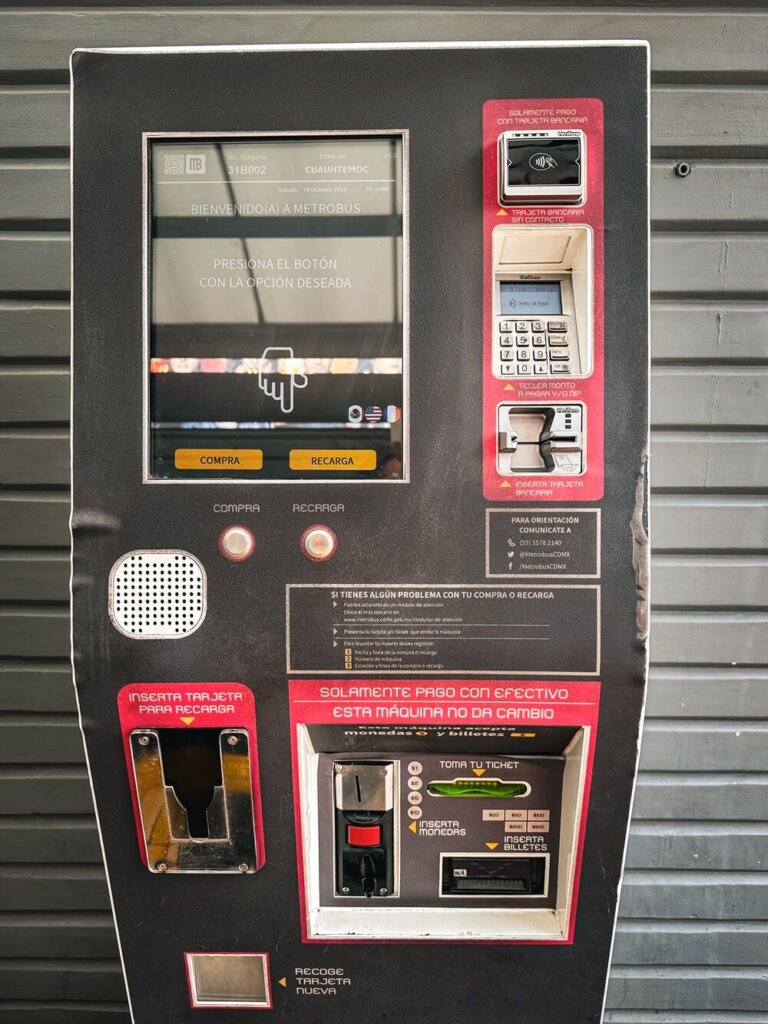
The travel card costs 15 MXN pesos. You can buy it from a ticket office (taquilla) or from a machine at the metro stations, or at the metrobus stations. Some machines only accept cash, some only accept card, and some have the option for both payment methods.
We prefer to pay in local currency and for that we always use our Wise card. We can easily withdraw money from an ATM and pay with it in most places that accept card payments.
Once you have the card, you’ll need to load it with money. If purchasing from a ticket booth, they usually load your card straight away with the amount you want. For example, if you give them 50MXN pesos, you’ll have 35MXN pesos balance on your card. On a machine though, just choose the option ‘Compra’ to buy the card, then insert it again and press ‘Recarga’ to add credit. When you have sufficient balance, just tap it at the styles to enter the station. You don’t have to tap out when you leave.
Top Tip. There’s no need to buy more than one travel card when travelling together. We only bought one and it was perfectly fine to pass it between the two of us.
Contactless Payment on Mexico City’s Metro
Recently, the Metro and Metrobus systems have been undergoing some modernisations. This means that you now also have the option to pay contactless, instead of only with a Metro Card. So, whenever you see the contactless payment sign you can just use your credit card, as long as it has a contactless feature.
We personally still preferred to use a dedicated travel card, mainly for safety purposes. Getting our Wise card in and out whilst navigating the maze of the underground and the masses of people would’ve made us a little bit more stressed about being clumsy and misplacing our card. Plus, collecting Travel Cards instead of postcards from around the world has become a fun and unique hobby of ours!
Cost of Public Transport in Mexico City
- Metro: 5 MXN pesos per ride. The cost of one ride makes Mexico City’s metro system one of the cheapest in the world.
- Metrobus: 6MXN pesos per ride.
- Tren Ligero: 3MXN pesos per ride.
- Cablebus: 7MXN pesos per ride.
You don’t have to pay when connecting between two metro lines. However, you’ll have to tap your card again if you transfer from the metro to the metrobus, for example.
Checking Your Balance & Topping Up Your Mexico City Metro Card
Checking and adding to your Metro Card balance is super easy. Every time you tap your card, it should show the remaining balance on the screen. Of course, we often forgot to check this, so you can always just use the ticket machines to see your balance.
When you need to add more credit, you can either do it at the ticket machine by pressing ‘Recarga’, or go to the ticket office if available.

Safety Tips for Using Public Transport in Mexico City
We never felt unsafe using any of the above modes of public transportation in Mexico City. However, we would like to provide you with a few personal safety tips.
Try to avoid using public transportation during rush hours. Everything will be super crowded and you’re more likely to get pickpocketed. We mistimed our travel a few times and it was just very uncomfortable to be pushed through the never-ending current of commuters.
We usually used Uber or official taxis when travelling to / from bus terminals or the airport during unsociable hours.
It’s common sense, but always put your valuables away when using public transportation. You’ll see many people on their phones just like everywhere in the world, but the less you use it the better.
We quickly noticed that many people wear their backpacks on their front on public transport. Do as the residents do, as it’s easier to keep an eye on your belongings.
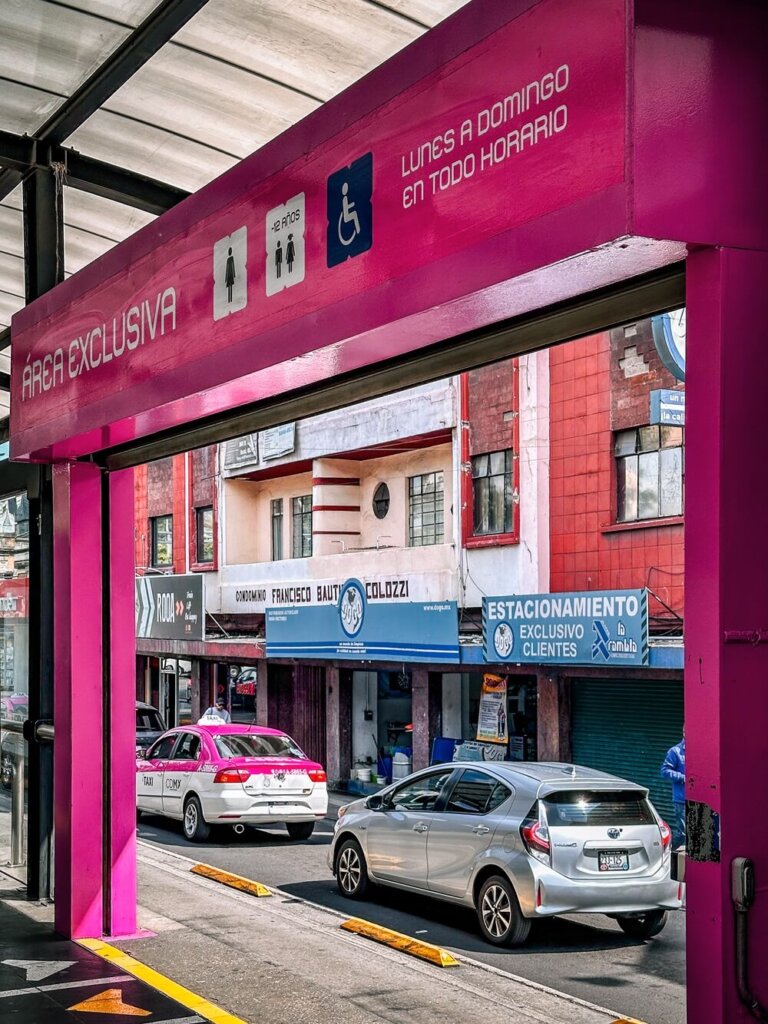
Metro and Metrobuses usually have a ‘Women and Children Only’ section painted in the colour pink. These are exclusively used by women and children under the age of 12, which is great if you’re a solo female traveller.
We recommend buying a Mexican SIM Card or eSIM, so you have data that you can use to plan your travel route on the go. We use Holafly eSIM’s which offer unlimited data. This comes in useful for things such as following your location, or tracking your taxi or Uber ride. Get 5% off by using our code ‘KITTIAROUNDTHEWORLD’.
Lastly, you should never travel without travel insurance. There are many different companies out there offering different levels of coverage depending on your needs. We personally use SafetyWing which offers coverage for digital nomads at an affordable price. You can also check out World Nomads which is good for backpackers or those on shorter trips.

How to Get Around Mexico City with Private Vehicles
Uber
Uber is probably the most common private transport method for getting around Mexico City. It’s easier to use than taxis, especially if you don’t speak Spanish. You can see how much your ride will cost before you book it and can follow your route for ease of mind. We suggest using Uber if you’re traveling during unsociable hours, or traveling solo and haven’t yet familiarised yourself with the public transport system.
Uber rides can be pretty affordable, but it all depends on how far you’re travelling and the time of day. For example, we noticed that whenever we wanted to do a longer trip across the city, drivers often cancelled the trip. This was especially common during peak hours, so be prepared to wait a little longer for a driver sometimes. If you end up sitting in traffic for too long, you might have to pay extra as well.
Top Tip. If you can download the Didi app, we recommend using that instead of Uber. Apparently it’s cheaper than Uber but works the same way. Unfortunately, we were unable to download the app, but you might get lucky.
Official Licensed Taxi
Other than Uber, there are also plenty of taxis you can use in Mexico City. We would only use a taxi if our Uber ride kept getting cancelled, or we were traveling to/from the bus terminal during unsociable hours with all our belongings. Official taxis are also available at the airport, which we used when we landed in the country for the very first time.
Based on our experience it is generally safe to use licensed taxis. If you’re unsure about flagging one down, ask your hotel / hostel reception to call one for you. We would always ask how much the journey would cost before we got into a taxi. Checking the average Uber price is a good comparison to see if you’re overpaying for a ride or not. However, don’t be surprised if they ask for a little extra at the end if you got stuck in traffic.
Travelling to Key Locations in Mexico City
In this section we’ll quickly run through how to get to a few important locations you may wish to travel to during your stay.
It’s worth highlighting that Mexico City has 4 main bus terminals, one at each point of the compass: north, south, east, and west. They are quite far from each other, so always make sure that you’re heading to the right one. You’ll use one of these bus terminals if you’re planning either a day trip from Mexico City, or wanting to take a long-haul bus to a different state in Mexico.
How to Get from Mexico City International Airport to the Historic Centre
The two main ways to travel from the airport to the city centre are either with an official taxi that you book at the terminal, or by public transport. If it’s your very first time in the city, or you’ve arrived in the early or late hours of the day, and have a ton of luggage with you, then we suggest paying for a taxi to take you to your accommodation.
However, if you’re a bit more adventurous then you can save some pennies by taking public transport from the airport. From Benito Juarez International Airport you can either take the metrobus or the metro, depending on where you’re staying.
Metrobus Line 4 connects the Airport with the Historic Center. You can board outside of either Terminal 1 or Terminal 2. In addition, you can also get on Metro Line 5 at the Terminal Aérea stop, a short walk from Terminal 1. Metro Line 5 runs between Pantitlán and Politécnico but you can transfer onto a different line depending on where your accommodation is. You can always plan your journey in Google Maps.
How to Get to Terminal del Norte (North) in Mexico City
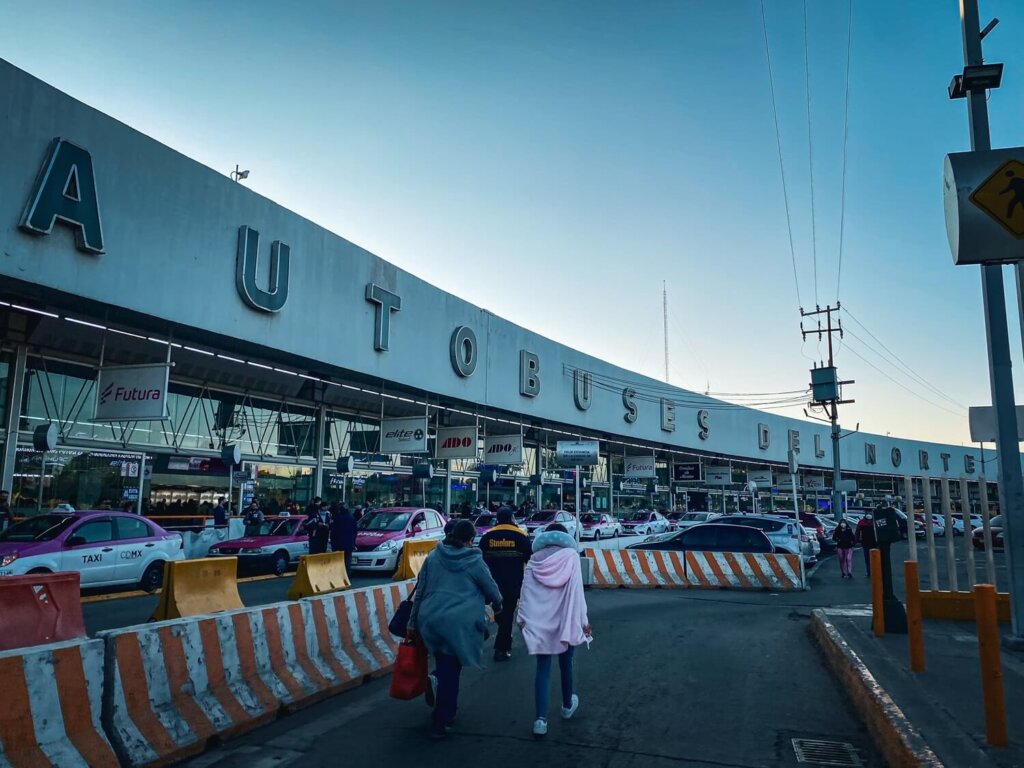
Terminal de Autobuses del Norte is about 6km (3.7 miles) to the north of the historic centre of the city. It is a huge station served by many bus operators that offer bus services to the northern states of the country.
Terminal del Norte is easily accessible by metro. Just take Metro Line 5 to the Autobuses del Norte stop. Line 5 runs between Politécnico and Pantitlán, so depending on where you’re staying you may have to change once or twice to get on it.
We used this bus terminal when we took a day trip to the Teotihuacan Pyramids, travelled to San Luis Potosi to visit the Huasteca Potosina Region, and to get to Guadalajara, one of our favourite cities in Mexico.

How to Get to TAPO in Mexico City
Terminal de Autobuses de Pasajeros Oriente (TAPO) is about 4km (2.5 miles) to the east of the historic centre. It’s another pretty huge bus station that is mainly served by the popular ADO bus company, who operate buses in the southeastern states of Mexico.
TAPO is also easily accessible by Metro or Metrobus. Take either Metro Line 1, Line B or Metrobus Line 4 and get off at the San Lazaro stop. Metro Line 1 runs between Observatorio, the main west bus terminal, and Pantitlán. Metro Line B runs between Buenavista and Ciudad Azteca. Depending on where you’re staying you might need to change lines to get on either one. In addition, Metrobus Line 4 runs between Buenavista and Terminal 1 and 2 at the Airport.
We used this bus terminal to take a day trip to Izta-Popo National Park and to travel to Puebla. However, from this bus stop you can also get a direct bus to the colourful city of Oaxaca, or San Cristobal de las Casas in Chiapas state.
How to Get to Central del Sur (South, or Taxqueña) in Mexico City
Central del Sur, or Taxqueña, is about 11km (6.8 miles) to the south of the Centro Historico. It is the smallest bus terminal in Mexico City, and is served by a few different bus operators covering some of the southern states.
Central del Sur can once again be directly accessed by metro. Take Metro Line 2 and ride it all the way to the Taxqueña stop. You may need to change lines to get on it, depending on your origin point.
We used the Taxqueña bus station when taking an overnight bus to spend a week in Puerto Escondido.
How to Get to Terminal de Autobuses del Poniente (Observatorio) in Mexico City
Terminal de Autobuses del Poniente (Observatorio) is the west bus terminal of Mexico City, just south of Chapultepec Park, a must visit place in Mexico City. Bus operators offer services to some of the western states of Mexico from this stop.
You can get to this bus stop by riding the metro to the Observatorio station, which is the last stop on Metro Line 1. This line runs between Observatorio and Pantitlán and you might need to change lines to get on it depending on your original destination.
Final Thoughts on Getting Around Mexico City
We used all the transport options mentioned above during our 1 month in Mexico City. Needless to say that our preferred way to get around was public transport. Apart from it being more affordable, it also felt the most authentic way to get to know the city. We never felt unsafe, even when we ended up in commuter traffic. Of course, we also appreciate that taking a taxi or Uber can sometimes be the right choice in certain situations.
We hope that this post gave you a good insight and understanding of the different transport options Mexico City has to offer. If you did use our guide during your trip, please tell us about your experience in the comment section below. Don’t forget to mention anything that may have changed since our visit, so we can keep this article up-to-date.
Now, let your adventure begin,

Remember…It all starts with a Pin…




This is incredible and so helpful. Definitely saving for later. Can’t wait to see more.
Thank you!
Wow! This article is great to save for a later trip! You are very thorough in your writing! Thank you for the helpful information!
Thank you so much!
This is incredibly helpful. I may be visiting Mexico City in 2026 and I felt scared about using the metro. I heard scary stories about pickpocketing. It is good to know that there is a Women and Children Only’ section painted in the colour pink. Thanks!
Thank you! You always have to be careful when using public transport, but most likely you won’t have any issues. The ‘women and children only’ section is great for solo female travellers for sure.
Nice breakdown of getting around Mexico City. Definitely helps to know the metro, buses, and bikes before visiting.
Thank you so much!
I second the use of WISE for your foreign travel financial needs.
I’m happy to hear that you also love using WISE for travel!
This is such a thorough guide. I wish I had these tips when I went to Mexico City 🙂
Thank you! Hopefully you can use this guide if you ever return to Mexico City.
I love that there are many different ways to get around Mexico City! I do speak Spanish so I´d probably use public transport but it´s good to know that uber it’s also available!
If you speak Spanish, then it’ll be even easier for you to use public transport. Uber is also great during the early or late hours of the day!