

How to Celebrate Day of the Dead (Dia de los Muertos) in Mexico

Celebrating the Day of the Dead in Mexico had been on our bucket list for a long time. In fact, we were quite sad when we first visited Mexico back in 2021, as we arrived about a week and a half after Dia de los Muertos. During that same visit, we also had to skip over the Yucatan Peninsula due to illness. Therefore, we knew that we had to return to the country sooner rather than later to finish what we’d started.
In September 2024 we came back to Mexico and planned a month and a half long itinerary filled with adventures and reunions, with the intention of (finally) experiencing the Day of the Dead as well. In this guide, we’ve summarised some key facts about Dia de los Muertos and how you can best participate as a tourist, as well as some of the best locations in the country to consider celebrating it in.
If you’re interested in more Mexico content, check out the Mexico Playlist on our YouTube Channel.
Disclosure: This post may contain affiliate links, which means we may receive a small commission if you click a link and purchase something. Clicking these links won’t cost you anything, but it will help us to keep this site up and running! Learn more about our affiliate policy.

Learn About the Day of the Dead (Dia de los Muertos) in Mexico
What is the Day of the Dead in Mexico?
Before we discuss what the Day of the Dead is, let’s quickly clarify what it is not. The Day of the Dead is NOT Mexico’s version of Halloween. We repeat: Dia de los Muertos is NOT Halloween.
Okay, so what is it?
Dia de los Muertos is one of Mexico’s most iconic holidays, so much so, that in 2003 it was officially declared a national holiday. Since 2008, the Day of the Dead has also been recognized by UNESCO as an Intangible Cultural Heritage of Humanity.
Unlike Halloween, the Day of the Dead dates back thousands of years to the Aztecs, way before the Spanish conquest. Although, Dia de los Muertos was influenced by the Spanish from the 16th Century. Over time it has evolved into a fusion of pre-Hispanic and Catholic traditions that include vibrant and colourful celebrations.
Whilst Halloween portrays spirits as scary, the Day of the Dead honours and remembers loved ones who have passed away. However, as you’ll see later on, it’s not a sad and somber event, but rather a bright and colorful celebration.
When is the Day of the Dead in Mexico?
Originally the Aztecs dedicated an entire month to Dia de los Muertos. Today, the Day of the Dead takes place over two days each year: the 1st November and 2nd November.
November 1st is also known as Dia de los Angelitos (Day of the Little Angels) and is dedicated to deceased children. Then, November 2nd is known as Dia de los Muertos (Day of the Dead) and honours deceased adults.
However, preparations and events throughout the country can start from as early as the 23rd October. For this reason, we suggest arriving in the country at least a few days before the 1st November, so you’ll have enough time to really get into the celebrations.

Short History of Dia de los Muertos
The origins of Dia de los Muertos can be traced back to ancient Mesoamerican cultures, especially the Aztecs. For this ancient civilisation, death didn’t mean the end but rather the continuation of life in a different realm. The Aztecs held different rituals and ceremonies commemorating their deceased. It was believed that the souls journeyed to the underworld, or Mictlan, after death. The queen of of Mictlan was Mictecacihuatl, or the Lady of the Dead. She was responsible for watching over the bones of the deceased and overseeing the ancient festivals of the dead.
When the Spanish arrived in the 16th century they started to impose their own beliefs on the indigenous people. For example, they moved the festival dates to coincide with the Catholic holidays of All Saints’ Day and All Souls’ Day. Over the years Mictecacihuatl was replaced with La Calavera Catrina, who is still the main symbol of the Day of the Dead today. La Catrina is a tall female skeleton wearing a huge hat with flowers and feathers. Mexican artist Jose Guadalupe Posada drew her first to remind people that they would all end up skeletons, regardless of social status. Later, La Catrina was immortalised by Diego Rivera in one of his murals.
Read Next: Best Maya Ruins to Visit in Central America
How Mexicans Celebrate Dia de los Muertos?
In ancient times, the Aztecs would celebrate with different rituals and offerings including food, beverages and copal, or incense, placed on altars known as ‘ofrendas’. Some of the rituals often included human or animal sacrifice. From the 16th century, other Catholic elements have also been incorporated into the celebrations, such as praying and visiting cemeteries, as well as placing sugar skulls on the altars.
Today, many families across the country still honour and celebrate their deceased loved ones. People create altars (ofrendas) at home and adorn them with various items such as photographs, the deceased’s favourite foods and drinks, candles, incense, sugar skulls and, of course, the colourful marigold flower (cempasuchil).
However, just like with every tradition around the world, not everyone in Mexico celebrates the Day of the Dead equally. For example, some of our close friends don’t do anything special at all, whereas some have put up family altars and others just enjoy the festivals. Mexico is a huge country and so naturally every state and region will have some slight variations in their traditions.
Our Top Travel Resources to Celebrate the Day of the Dead in Mexico
- 🏨Find your accommodations with Booking.com
- 🚌Book your transportation with Busbud
- 🎫Book an organised tour with GetYourGuide or Viator
- 🛜Stay connected with Holafly eSIM. (5% off with code ‘KITTIAROUNDTHEWORLD’)
- ⚕️Don’t forget to buy travel insurance via SafetyWing
How Can You Celebrate the Day of the Dead in Mexico as a Tourist?
Now, you might be wondering about how you, as a tourist, can enjoy the Day of the Dead holiday during your visit to Mexico. Whilst many families honour their departed loved ones in their own homes, there are plenty of decorations, parades and public events where you can experience Dia de los Muertos.
Of course, it’s also good to remember that even though the Day of the Dead attracts many foreign visitors to the country, it’s not a show for tourists! Therefore, please always be respectful. As much as it’s a celebration, it’s also a difficult time for many who have lost their loved ones.
Watch the Movie Coco (Preferably in Spanish)
Before you travel to Mexico, or whilst you’re in the country, we highly recommend watching the popular movie Coco. This Pixar animated movie came out in 2017 and won a Golden Globe and many other awards too. It’s a fantastic way to learn about the Day of the Dead and what to expect.
Top Tip. If you want to make it even more authentic, we recommend watching the movie in Spanish. It’ll be a great way to learn a few words before your trip. (Since it’s aimed at kids it’s really not that difficult to understand). We actually watch Coco every year around Dia de los Muertos.

See the Day of the Dead Ofrendas (Altars)
From about mid-October Mexicans set up ofrendas (altars) in their homes and businesses. Whilst we didn’t see people’s personal altars in their homes (apart from a few photos shared by some of our friends on social media), we saw many ofrendas as we walked along the streets of Mexico City, Guadalajara and Tlaquepaque.
Whether these altars were simple or elaborate, they all shared similar elements such as photos of those who’d passed away, foods, drinks and other items that they enjoyed in life, as well as some marigold flowers and candles.
There are usually many ofrendas on display around the main streets and Zocalos (main squares) of cities and small towns, so you won’t have an issue imagining what they would look like in people’s homes.


Enjoy the Streets and Buildings Adorned with Marigold
The official flower of the dead (flor de muerto) in Mexico is the marigold (cempasuchil). This bright orange flower is native to the central area of Mexico and has been used during the celebrations since the Aztecs.
Apart from the fact that it’s in season during Dia de los Muertos, it became an important symbol of the holidays for other reasons too. The Aztecs believed that the flower’s vivid colour and musky scent helped their ancestors find their way back to their homes. Even to this day, the Day of the Dead would not be the same without marigolds.
It was crazy to see just how different the same streets looked a mere week before Dia de los Muertos, compared to a week or so after when we visited back in 2021. Marigold adorned public buildings, zocalos, parks, shop interiors, restaurants, cafes; literally everywhere we looked.
Many shops and vendors actually sell marigold hair accessories, which could be a great item to wear during the celebrations. You can buy one made out of real flowers, but if you want to have a keepsake, there are plenty of fake versions too.


Eat Some Typical Day of the Dead Foods
We all know that food is a very important part of Mexican culture. After all, Mexico’s cuisine is recognized by UNESCO as an Intangible Cultural Heritage of Humanity. Whilst you can eat tacos all-year round, there are certain foods that are only available during Dia de los Muertos.
Pan de Muerto is probably the most popular Day of the Dead food. It’s a sweet bread that you’ll find in every bakery(panaderia) across Mexico. The shape of the bread represents a skull and bones. We definitely indulged in more than we’d like to admit during our stay.
Sugar Skulls, or Calaveras de Azucar, are another typical treat during Dia de los Muertos. They were introduced in the 16th century, but are still an important part of the celebrations today. You’ll find them all over the shops. They can be eaten but are often only used as offerings, so make sure to double check. We saw many chocolate versions of these skulls too.
There are also typical regional foods as well. For example, in Oaxaca people eat chicken or pork prepared in yellow mole sauce, whereas in the Yucatan they eat a traditional Maya dish called pib.

Get Your Face Painted by a Local Artist
It’s also common for people to paint their faces to resemble a skull for Dia de los Muertos. Face painting can be traced back to ancient times, as the Aztecs used to paint their faces for different ceremonies. Of course, it has evolved over time to the popular skull designs you’ll see today. The skull serves as a reminder of mortality, but combined with vibrant colors it also symbolises the joy of life and the celebration of those who’ve passed away.
So, if you want to, you can totally get your face painted for the Day of the Dead, as you won’t stand out like a sore gringo. It’s not just for kids either because we saw just as many adults walking around with their faces painted.
There are often many local artists around the main squares, usually with sizeable queues. This is where you can pick a design you like and get your face painted.


Visit a Cemetery
Days before the Day of the Dead, families start to prepare the graves of their departed. This includes both cleaning and decorating them, similar to what they do with their altars. During Dia de los Muertos, the cemeteries will be completely transformed and will look very different at night with all the candles lit.
Families come together and spend some time at the cemetery, even sharing a meal together and telling stories about their loved ones. The celebrations actually go on all day and night, and Mariachi bands are also often present to play songs.
Depending on where you’re celebrating, you might be able to visit the local cemetery. We totally appreciate that it can be a bit intimidating, so you can always join a guided tour if you wish.
Please, if you do visit a cemetery, be respectful and don’t treat it like a tourist attraction.

Take Part in a Special Dia de los Muertos Event
No matter where you are in Mexico during the Day of the Dead, there’s going to be some special event taking place. Joining these will be one of the easiest ways to take part in the celebrations.
There are usually parades in most big cities, such as the popular Grand Parade in Mexico City. However, it’s good to be in the country earlier so you can attend other events such as the Desfile de Alebrijes (Parade of Spirit Guides) that takes places in the capital a week or so before the Day of the Dead.
However, if you want to have a more intimate Day of the Dead experience, we suggest travelling to a smaller city or town.
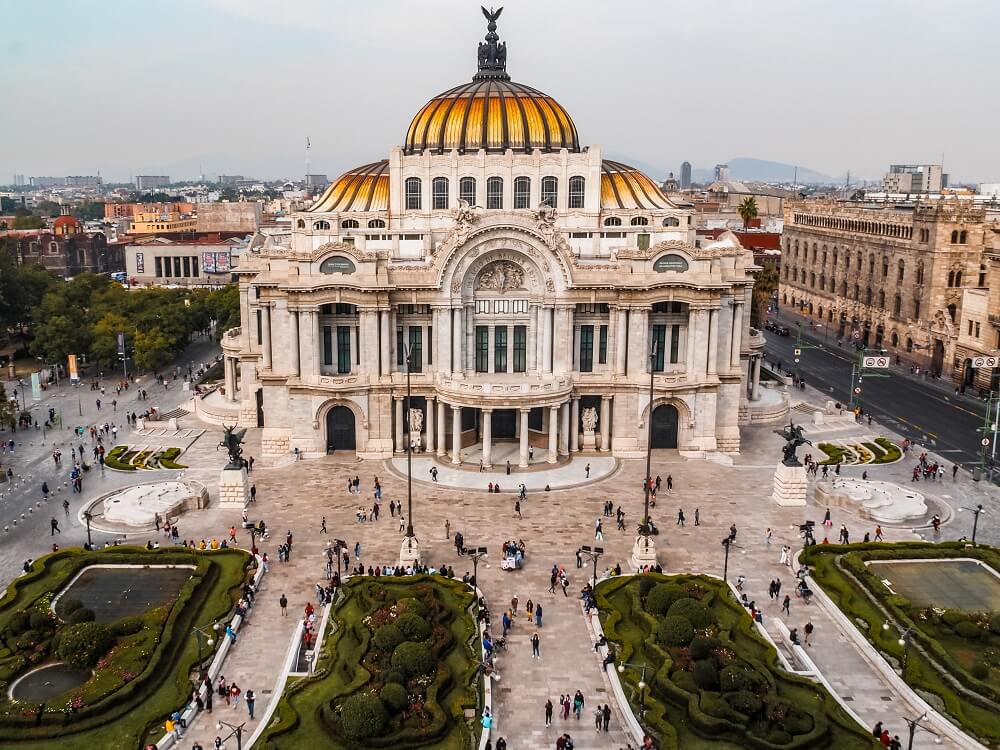
Best Places to Celebrate the Day of the Dead in Mexico
1. Mexico City
If you want to experience the biggest and grandest celebration, then Mexico City will be an ideal place to celebrate the Day of Dead in Mexico. There are going to be huge altars (ofrendas) erected at many locations in the city, but especially in the Zocalo, or main square. The main buildings, museums and parks will also be decorated and shops will be selling everything related to Day of the Dead.
Day of the Dead Events in Mexico City
There are going to be many events taking place across the city starting from about mid-October.
- On the weekends you can head out to Xochimilco, one of the best day trips from Mexico City, to see the La Llorona musical show.
- There’s also the Desfile de Alebrijes (Parade of Spirit Guides) that starts at the Zocalo and winds through the streets of the Historic Centre. Alebrijes are large mystical, colourful looking creatures. An Alebrije combines elements of various animals – real or imaginary – and is painted in vibrant colours. We saw all the parade sculptures lined up along the Paseo de la Reforma Avenue next to Chapultepec Park for days after the parade.
- Mega Procesion De Las Catrinas is another separate event that takes place before the Day of the Dead.
- The Grand Parade will take place on Dia de los Muertos, where you’ll be able to see many Catrinas, skulls and alebrijes. It’s a very crowded event, so don’t forget to read our safety tips further below.
Obviously, this is just a few of the many events, ofrendas and other celebrations that happen all over the city. No matter where you’ll be, we guarantee that there will be something interesting to see.


Day of the Dead Tours in Mexico City
You can always book an organised tour in advance, if you don’t want to plan and organise everything yourself.
- 6 Days Day of the Dead Tour in Mexico City by G Adventures. This is a fantastic way to experience everything around Mexico City without having to figure out all the dates, times, locations and logistics of getting between places.
- This Day of the Dead Tour will not only take you around the city, but will also visit a cemetery and the Xochimilco Canals.
- Day of the Dead Tour in Mixquic from Mexico City. If you also want a more authentic experience, then this tour takes you to the town of Mixquic to see some local traditions.
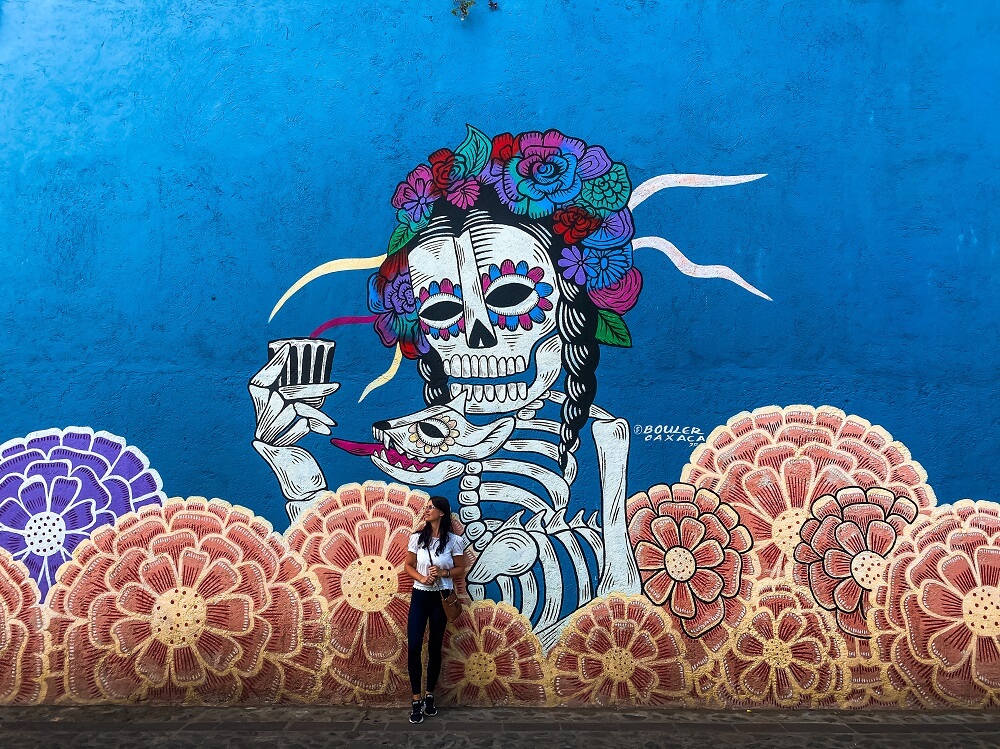
2. Oaxaca City, Oaxaca
If Mexico City’s Day of the Dead celebration sounds overwhelming, then we highly recommend travelling to Oaxaca City in Oaxaca State instead. You won’t only have a smaller scale celebration to get your head around, but a more intimate and traditional one as well.
We visited the city back in 2022 and can confirm that there are many things to do in Oaxaca, including sampling the unique cuisine which you won’t find anywhere else in the country. We only spent 3 days in Oaxaca City and took day trips to the Monte Alban Archeological Site and Hierve el Agua, one of two famous petrified waterfalls in the world. (If you’re curious, the other one is Pamukkale in Turkiye).
Day of the Dead Events in Oaxaca City
Although nowhere near as grand and elaborate as the events in Mexico City, there are still going to be plenty of events in Oaxaca City.
- Magna Comparsa (Grand Parade) is the first official parade to open the Day of the Dead holiday in Oaxaca’s Centro Historico.
- See the mega ofrendas (huge altars) in the Zocalo.
- See the Sand Tapestries at Plaza de la Danza.
- Visit the marigold (cempasuchil) fields around Oaxaca, such as Cultivos del Viejo farm in Zimatlán del Alvarez.
- Attend the festivals in Oaxaca City’s neighbourhoods of Jalatlaco and Xochimilco.
- Visit local cemeteries such as Panteon General Oaxaca, the main cemetery in Jalatlaco neighbourhood, Xochimilco cemetery in Xochimilco and the Panteon Viejo Xoxocotlan.
Day of the Dead Tours in Oaxaca City
Make sure to book a tour early enough if you want to learn more about the Day of the Dead.
- 7 Days Day of the Dead Tour in Oaxaca by G Adventures. A great way to experience Dia de los Muertos in Oaxaca.
- Day of The Dead Evening Walking Tour in Oaxaca. This tour takes you on a 5-hour guided walk around Oaxaca.

3. Merida, Yucatan
If you’re planning to visit the Yucatan Peninsula, then head to Merida to celebrate Dia de los Muertos. There aren’t just plenty of things to do in Merida itself, but it’s also very close to Chichen Itza, one of the New Seven Wonders of the World.
What’s unique about Merida is that you can experience Dia de los Muertos and Hanal Pixan at the same time. Hanal Pixan means “food for the souls” in the Maya language and is only celebrated in the Yucatan region.
The Maya believed that the soul is immortal and that there’s a link between the living and the dead. So, Hanal Pixan is very similar to the Day of the Dead, as people still set up altars, but the main focus of this celebration is the preparation and offering of food to the souls of the departed.
Don’t worry, you’ll still find typical Day of the Dead elements, such as the huge ofrendas, displayed throughout the Centro Historico.
The main parade in Merida is called Paseo de las Animas (Procession of the Souls) which is held on the 31st October. The parade starts from the main cemetery and ends in the town centre. People will be wearing their traditional dress and will also have their faces painted as skeletons.

4. Guadalajara, Jalisco
Not many guides that we read mentioned Guadalajara as a place to celebrate the Day of the Dead in Mexico. Guadalajara is in Jalisco state and is the second most densely populated city in Mexico after the capital. There are plenty of things to do within Guadalajara’s historic centre and surrounding areas, such as visiting the town of Tequila, the birthplace of Tequila.
We actually spent Dia de los Muertos in Guadalajara for two reasons. Most of our close friends live in this city, so it gave us a chance to visit them again. The second reason was that it has the ONLY Day of the Dead theme park in Mexico, called Calaverandia. This theme park is a fun way to participate in Dia de los Muertos, as it has many interactive areas and shows. We also found it to be a pretty safe environment, especially if you’re not keen on being swallowed by a sea of people like you would be in Mexico City.
Of course, the theme park alone won’t be the most authentic way to experience Dia de los Muertos. If you’re after a more intimate experience, then definitely go to Oaxaca or some of the smaller towns.
There’s also a parade in the city centre which was good to attend, although there was nowhere near as many ofrendas as we would’ve liked. You can also tour the Museo Panteon de Belen, the city’s oldest cemetery, at night.

5. Tlaquepaque, Jalisco
Guadalajara is a great place to celebrate the Day of the Dead because as well as the theme park you can also get a more authentic experience in the local town of Tlaquepaque. Tlaquepaque is a Pueblo Magico, located only a few kilometres to the south of the city centre. It’s one of the best day trips from Guadalajara.
You can attend the Festival de Muertos, when Calle Independencia will be filled with huge ofrendas adorned with marigolds, candles, photos and other offerings. There will also be Mariachi music playing and traditional foods to sample.
Fun Fact. In 2024 (when we were there) Tlaquepaque’s Day of the Dead ofrenda covered an impressive area of 1,811.49 m2. Just to put that into context, the world record in 2024 was 2,261.48 m2 in San Andrés Mixquic, CDMX.

6. La Huasteca Potosina Region, San Luis Potosi
Lastly, a lesser visited place to celebrate Dia de los Muertos in Mexico is the La Huasteca Potosina Region in San Luis Potosi. It’s part of the much bigger ‘La Huasteca’ area. La Huasteca is essentially where the Huastec people once lived, and today spans seven states, such as Puebla and Veracruz.
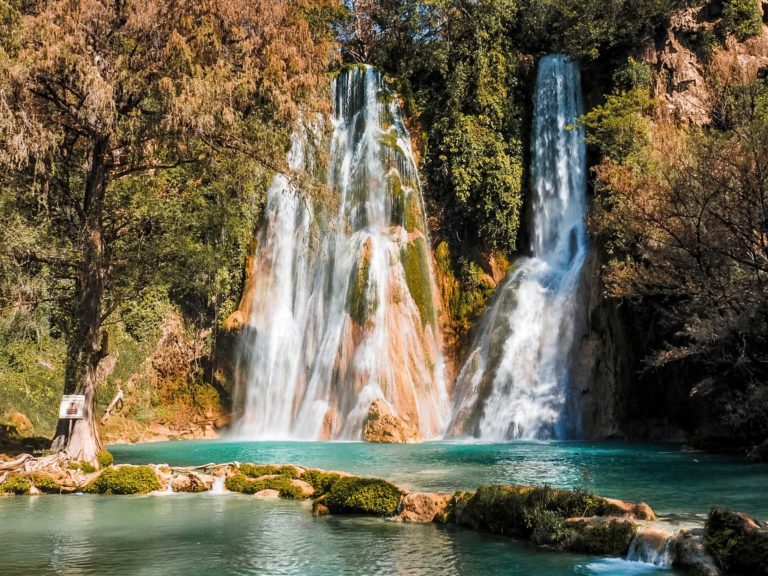
Here you’ll find waterfalls, turquoise blue waters, natural pools, canyons and caves, so you can have an adventure filled itinerary whilst also experiencing the Day of the Dead celebration.
The region’s indigenous communities have their own unique way of celebrating the Day of the Dead. They call the festival Xantolo, which still incorporates all the classic Day of the Dead elements such as elaborate ofrendas, marigolds and sugar skulls. However, you can also experience day-long parties in the zocalos with music, dancing and traditional foods. Another unique aspect of Dia de los Muertos in the La Huasteca Potosina region is that locals often create “welcome arches”. They are adorned with colourful decorations such as marigolds, as well as other offerings.
You’ll be able to experience Xantolo in different cities across the region such as Aquismon, Xilitla and Ahuacatitla in San Luis Potosi, as well as Atlapexco in Hidalgo.

General Safety Tips During the Day of the Dead in Mexico
Crowds. More and more foreigners are visiting Mexico for the Day of the Dead celebrations. Even without foreign visitors, these events get many attendees anyway, which means that you can expect some insane crowds, especially in places like Mexico City.
Stay Vigilant. We don’t recommend taking a lot with you apart from the absolute necessities. Make sure to keep an eye on your belongings to avoid getting pickpocketed.
Transportation. Buses during the holidays may not run as regularly and they can be quite busy on services travelling to popular Day of the Dead destinations. For this reason, consider arriving to the country a few days earlier. Read our complete Mexico bus travel guide.
Travel Insurance. You should never travel without travel insurance. There are many different companies out there offering different levels of coverage depending on your needs. We personally use SafetyWing which offers coverage for digital nomads at an affordable price. You can also check out World Nomads which is good for backpackers or those on shorter trips.
Local Currency. Try to have as much change on you as possible! Having cash is a life saver in Mexico, but having small change is just as important. We prefer to pay in local currency and for that we always use our Wise card. We can easily withdraw money from an ATM and pay with it in most places that accept card payments.
eSIM. To stay connected when you’re out and about, get a Mexican SIM Card or eSIM. We use Holafly eSIM which offers unlimited data that can be useful for things such as following your location, organising day trips, tracking your taxi or Uber ride and more. Get 5% off by using our code ‘KITTIAROUNDTHEWORLD’.

Final Thoughts on Celebrating the Day of the Dead in Mexico
We really enjoyed learning more about the history and significance of the Day of the Dead. Being there in person was also a fantastic experience, especially sharing the day with our friends in Talquepaque and Guadalajara. We also enjoyed visiting the Calaverandia theme park, even if it probably wasn’t the most authentic experience. Overall, we would absolutely love to return in the future to seek out a much more intimate experience, probably somewhere like Oaxaca City.
Have you ever been to Mexico during the Day of the Dead? If so, where did you go and what did you experience? If not, let us know if it’s something that’s been on your bucket list too. As usual, if you know about a certain event, place or tradition, leave a comment so we can keep this post up-to-date and accurate.
Now, let your adventure begin,

Remember…It all starts with a Pin…




That’s a great breakdown! I have to admit, I always thought Dia de los Muertos and Halloween were kind of in the same family—costumes, skeletons, spooky vibe. But learning from this that the Day of the Dead is not Halloween really changed my perspective. Thanks for sharing!
I think since Halloween and Dia de los Muertos are so close to each other many people think that they’re the same or that it’s the “Mexican Halloween”. I’m glad that you enjoyed reading our post and learning more about the Day of the Dead. Hope you can go to Mexico and celebrate it one day too.
One of my travel dreams would be to be in Mexico during Dia de los Muertos. Wonderl article, I am saving this in the hope of visiting some day .
It’s such a wonderful experience to be in the country during the Day of the Dead. I hope you can experience it too in the near future.
Love how in-depth this post is! I was in Oaxaca for Dia de lose Muertos in 2017 and it was incredible! I stayed for two weeks and it was amazing how the crowds came just for the festival – my hostel went from empty (I was the only guest) to full, then empty again! Interesting that more places in Mexico are holding events for the festival now – makes sense. Loved Merida, Guadalajara, and Mexico City too. Can’t wait to go back soon!
It must’ve been amazing to experience Dia de los Muertos in Oaxaca! It was crazy to see the build-up to it in Mexico City just before we went to Guadalajara for the actual Day of the Dead, so I can imagine how it must’ve been in Oaxaca too. Hopefully we can go back too in the near future.
Such an insightful guide! I really appreciate how you explained the deep cultural meaning of Dia de los Muertos beyond the surface-level celebrations — it makes me want to experience it in Mexico even more.
Thank you so much Georgina, I’m glad you enjoyed reading about Dia de los Muertos!
Such an informative and interesting blog about the history and many different celebrations around the festival of the Day of the Dead. I love the idea of celebrating the lives of those we have lost. Great photo’s too! Thanks for sharing. 😍
Thank you for the positive feedback Karan. We really enjoyed experiencing a different way of remembering our loved ones.
Great post! I gained so much more insight on celebrating the Day of the Dead. Cool pictures. Thanks for sharing!
Thank you so much for the positive feedback!
Day of the Dead in Mexico is on my bucket list too! I have been to Mexico so many times but never then!
It was so great to experience it after we missed it the first time by a week or so. I hope you can visit Mexico during the Day of the Dead soon!
Honestly I never thought about visiting Mexico during the Day of the dead festivities, but i can see why it would be great. Great blog and I learned alot. I love marigolds and didn’t realize they were the flower most used during festivities or even that it is native to Central Mexico.
Thank you so much Angela, I’m so happy to hear that after reading my post you would consider visiting Mexico during the Day of the Dead.
I’m really fascinated by Día de los Muertos. After watching Coco, I loved how it showed the colorful traditions and the importance of remembering loved ones. This post makes me want to experience the celebration in Mexico someday!
Thank you so much! The movie Coco is such a good one to watch. I hope you can visit Mexico during Dia de los Muertos one day also.
Great list! I love your cultural sensitivity comments. So important to take into consideration.
Thank you so much. Yes, it’s important to remember that Dia de los Muertos is not created for tourists!
What a great experience, makes me want to book that trip right now! Beautiful photos and so many ways to celebrate this special holiday! Thanks for sharing!
Thank you so much for the lovely feedback Meghan! I hope you can visit Mexico during Dia de los Muertos in the near future.