
Best Free Attractions in Merida, Mexico

In this Merida, Mexico travel guide we’ll detail some of the best free attractions that you shouldn’t miss when visiting the city. As the capital of the Yucatan state, Merida is a popular destination amongst tourists and is also a favoured place to be based for digital nomads and expats. The city is beautiful, with colourful buildings, museums, local markets and fantastic restaurants and bars, and is considered one of the safest cities in Mexico. Merida’s location within the peninsula is also ideal, as it’s a short distance away from many cenotes, beaches, ancient Maya ruins such as Chichen Itza, and many Pueblo Magicos, or Magic Towns, such as Valladolid, Izamal and Tulum.
If you’d like to see what we got up to in the city, then make sure to watch our dedicated Merida video. If you’re interested in more Mexico content, check out the Mexico Playlist on our YouTube Channel.
Disclosure: This post may contain affiliate links, which means we may receive a small commission if you click a link and purchase something. Clicking these links won’t cost you anything, but it will help us to keep this site up and running! Learn more about our affiliate policy.

Best Free Attractions in Merida, Mexico
Merida was founded in the 16th century by the Spanish conquistadors on the site of the Maya city of Ichcaanzihó, also known as Thó. It shares the same name with the Andalusian city in Spain.
There have been many significant events in Merida’s history, such as the Yucatan Caste War, and it also played an important role in Mexican independence from Spain.
In the 19th century, the henequen boom attracted foreign investment and migration, which resulted in significant urban development as well as the establishment of educational institutions and cultural organizations.
From the mid-20th century, Merida’s focus shifted towards tourism and services as the henequen industry began to decline. Today, the city attracts visitors, digital nomads and expats from all over the world.

1. Plaza Grande (Main Square)
The beating heart of Merida is Plaza Grande. Every city in Mexico has a main square (often called a Zocalo, Parque Principal, Plaza de Armas or Plaza Mayor) where most residents and tourists meet and socialise during the day and at night. We always start our city trips with a visit to the main plaza. It’s a free activity that allows us to learn about the city’s dynamic and the little things that make that particular place unique.
This tree-lined square in Merida is quite interesting, as it follows a similar pattern to the streets of the city itself. As you can imagine, many historical events took place in the plaza and it has also had its name changed multiple times over the decades.
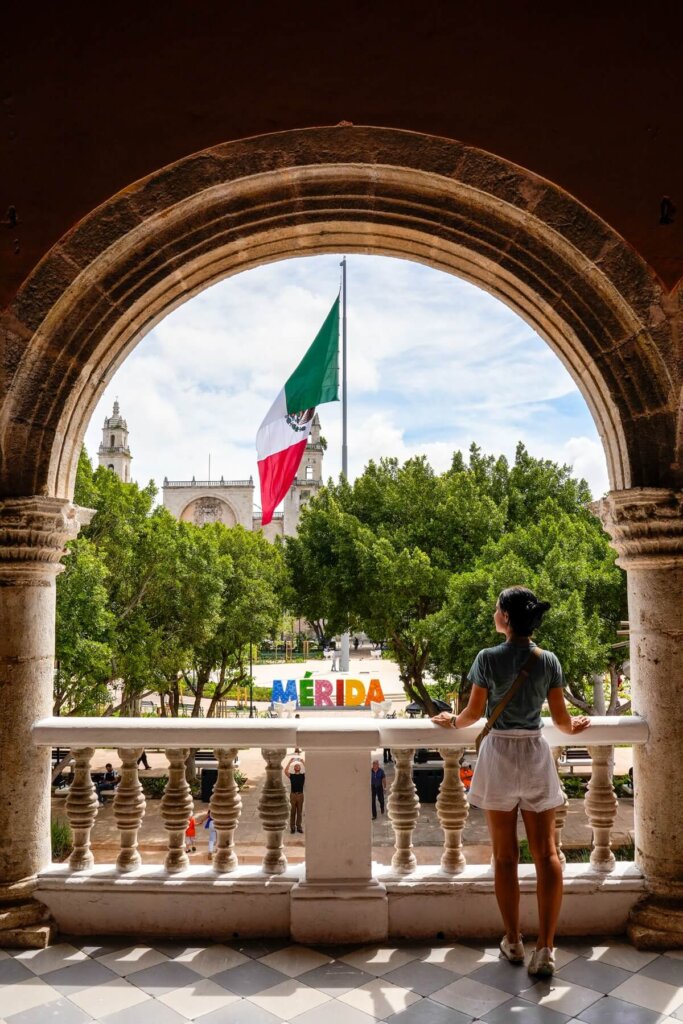
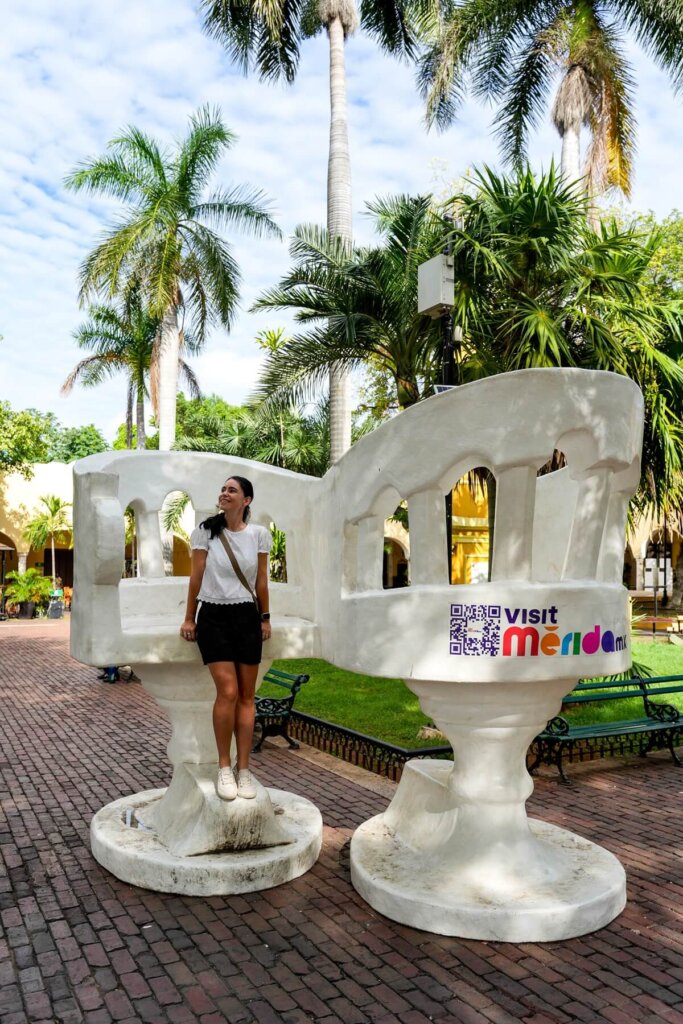
Since our accommodation was just around the corner from Plaza Grande, we spent quite some time there enjoying either the morning calm or the evening hustle and bustle. The square is also where the giant Merida letters are located, with the Cathedral in the background, as well as many historical buildings. So there’s no reason not to come here during your stay.

2. Government Buildings at Plaza Grande
Whilst we were in Plaza Grande we decided to check out the two government buildings around the square. They are both impressive from the outside, but what’s even better is that we could also go inside them for free. All we had to do was sign in with our name and nationality at security.
Palacio Municipal / Merida City Hall (Red Building)
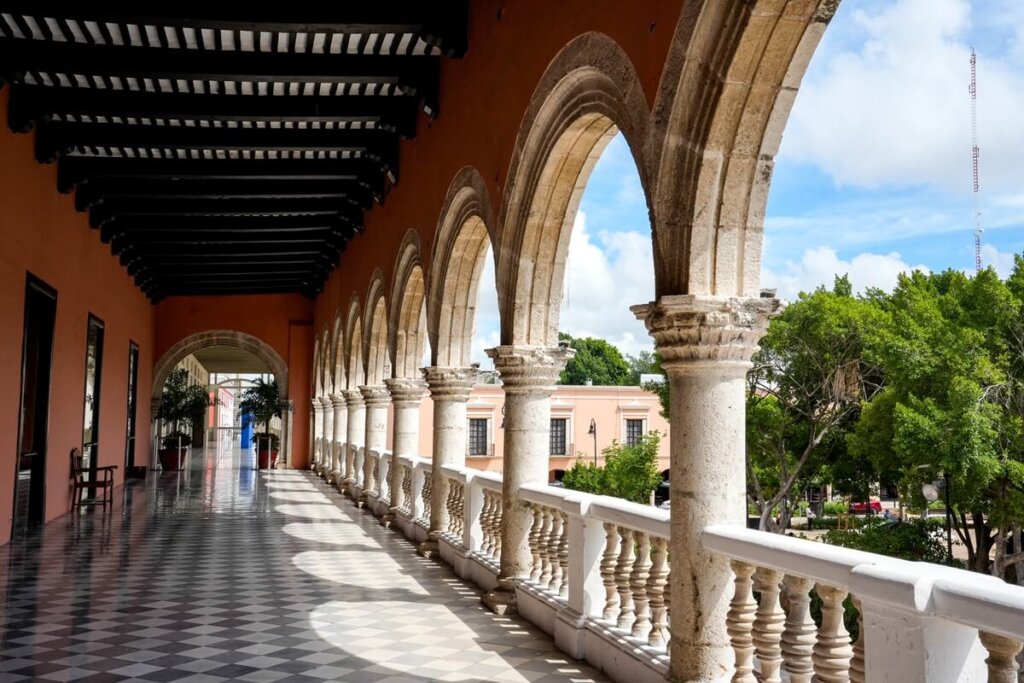
The City Hall is the beautiful red building located on the western side of Plaza Grande. Originally, it was a single-story building that was also used as a grain exchange and jail. Over the years the facade was remodelled and the iconic clock tower was also added.
We loved the balcony where we could enjoy the views of the main square and the Merida letters. Unfortunately, from this vantage point the cathedral was covered a bit.
Palacio de Gobierno / Local Government Office (Green Building)
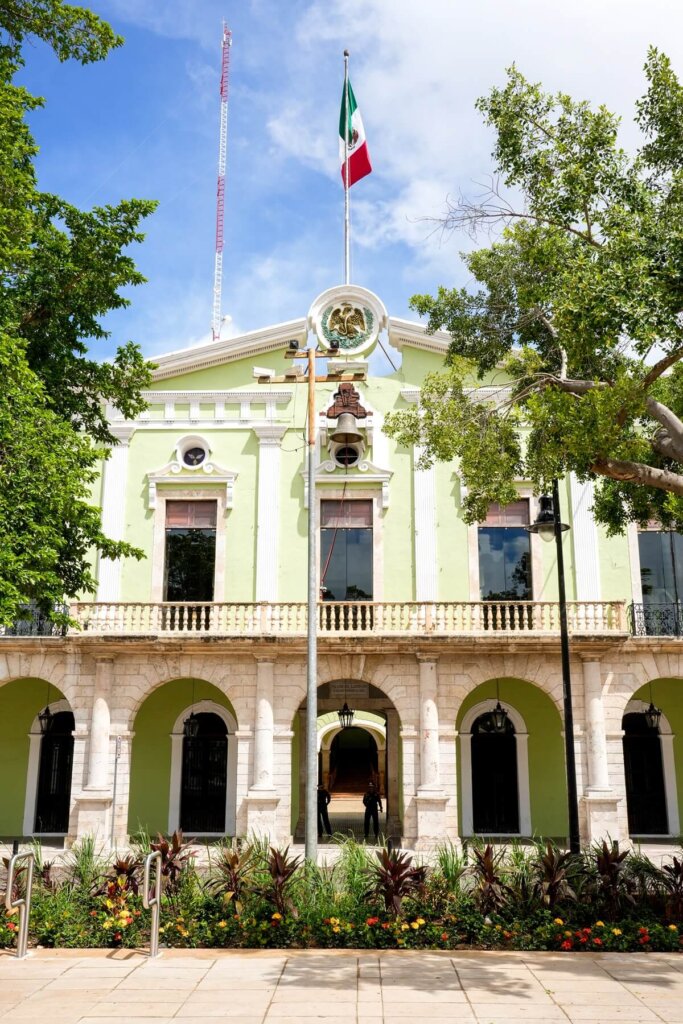
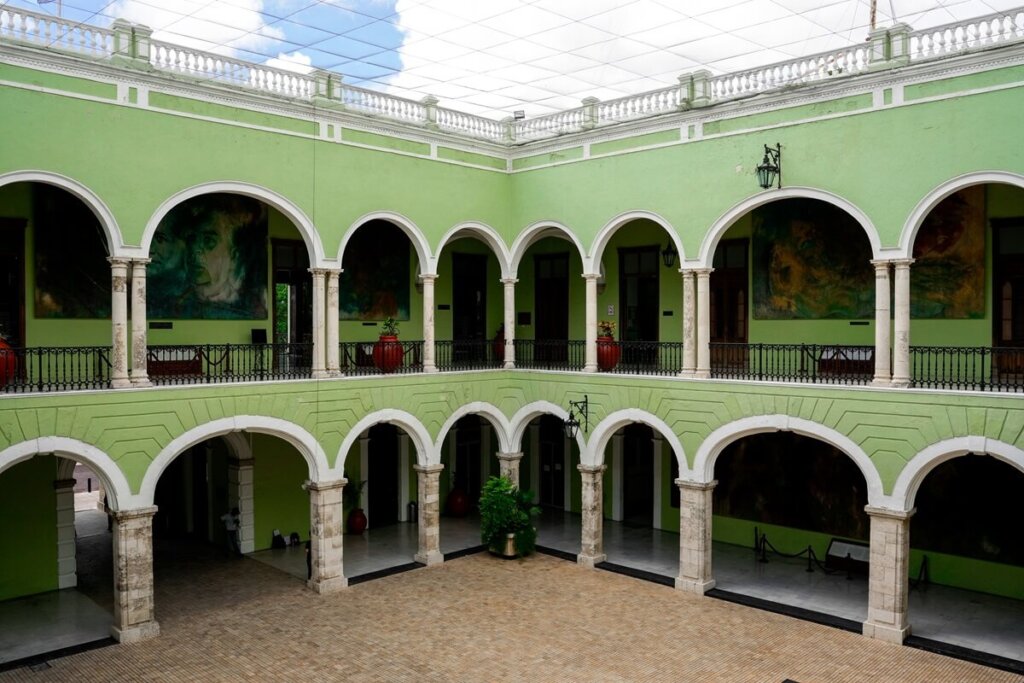
The other government building is located along the northern side of Plaza Grande. It’s painted green and whilst in our opinion the exterior isn’t as impressive as the City Hall’s, we actually loved the interior of this one more.
Palacio de Gobierno was built in 1892 and houses the state of Yucatan’s government offices.
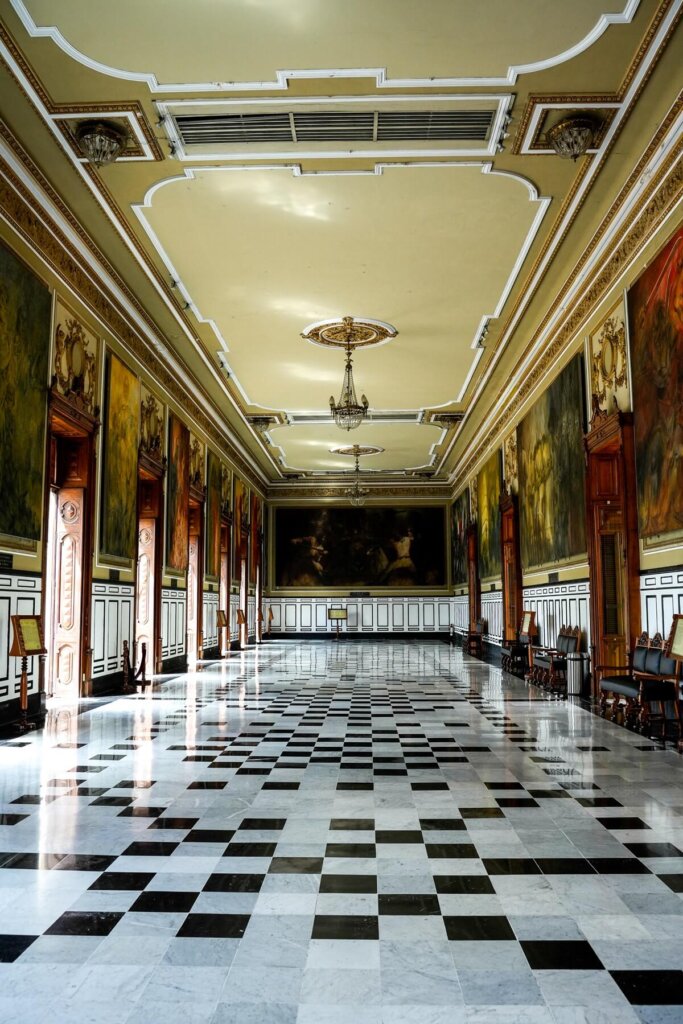
Once inside, we could walk around the beautiful courtyard where the walls were adorned with massive murals and paintings. They also had a room upstairs that reminded us of the one in Chapultepec Castle in Mexico City. From the windows we could also see the cathedral, although we couldn’t access the balcony to take photos without the window’s reflection.
3. Museo Casa Montejo (Montejo House Museum)
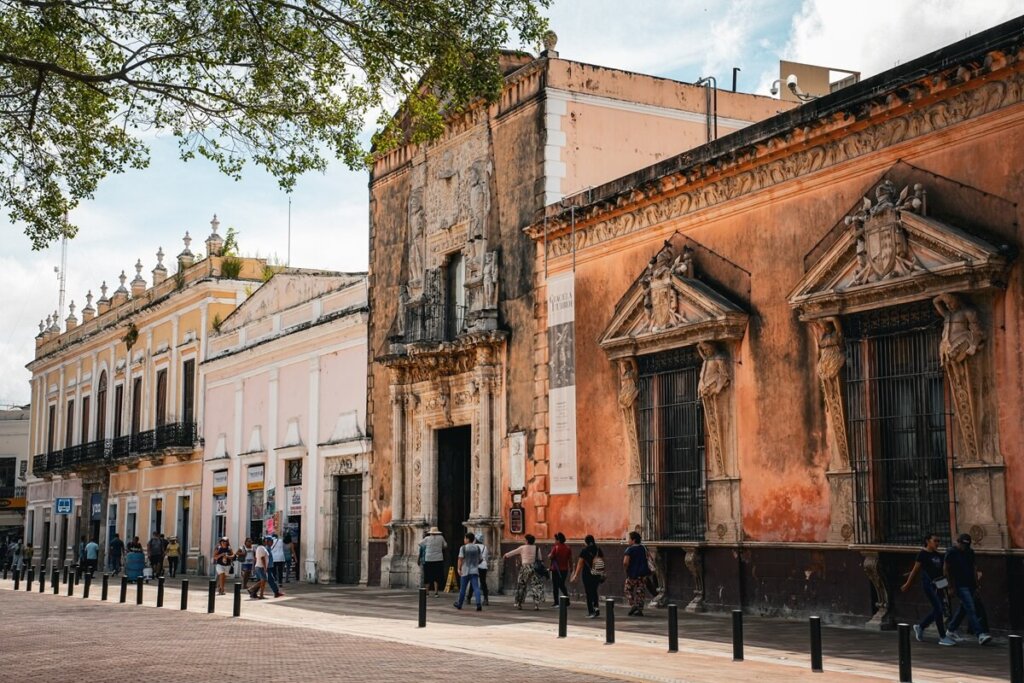
Occupying the southern part of Plaza Grande is the Montejo House Museum. It was built in the 16th century as a residence for the Montejo family. The building is actually the only example of a Renaissance-style civil house in the country. Similar to other historical buildings, it has undergone numerous modifications over the years.
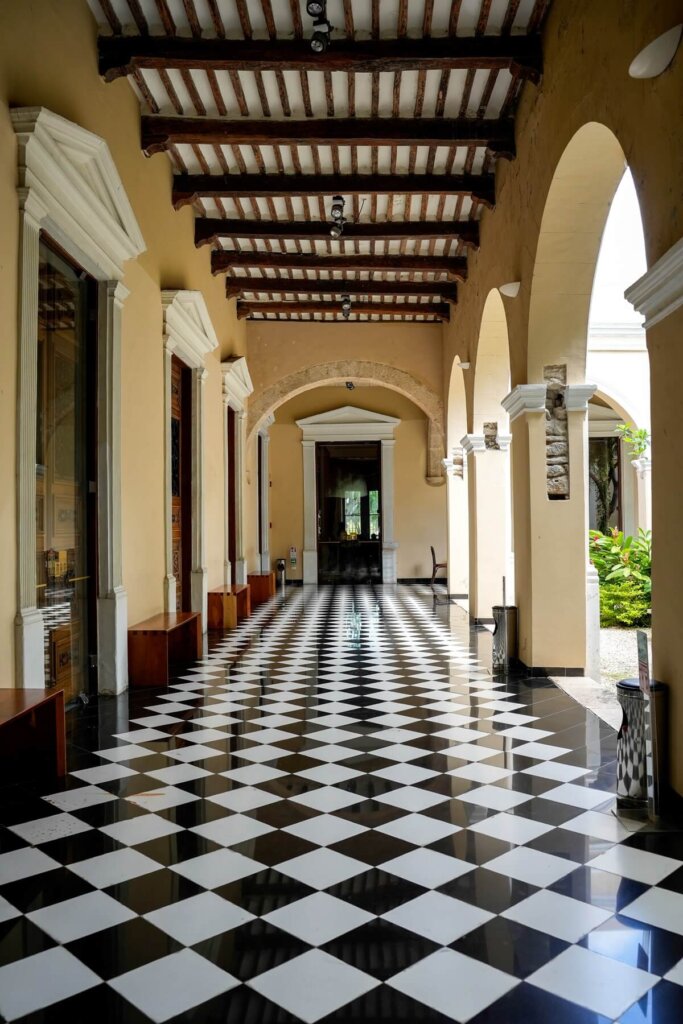
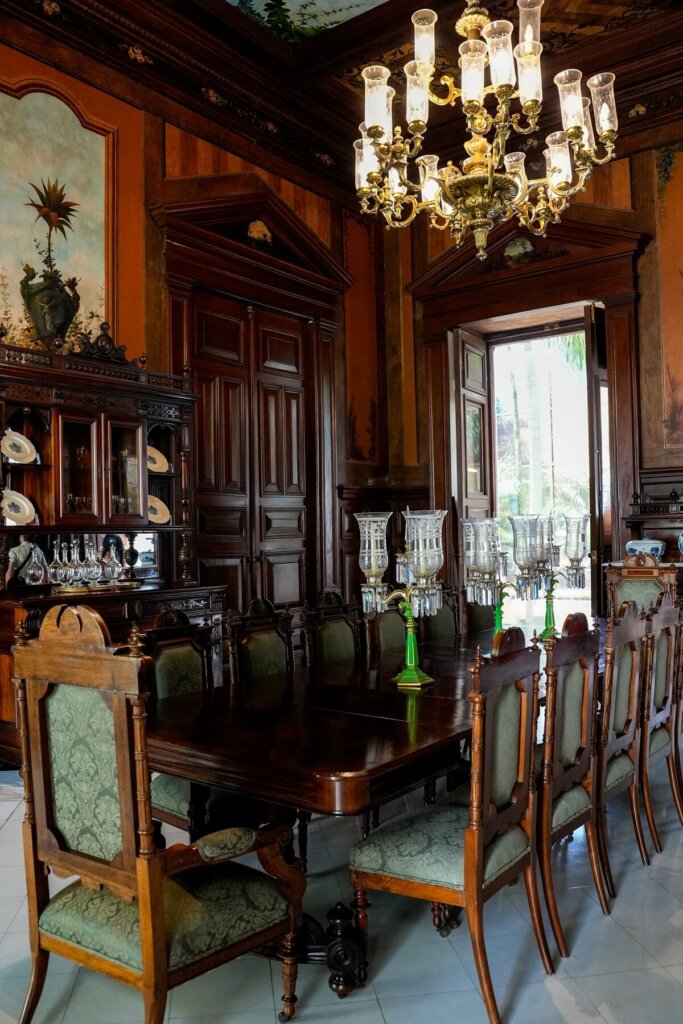
It’s worth stopping for a minute to admire the exterior of this old building before heading inside, as the details are stunning. In the house you can walk through different rooms and get an insight into how a wealthy family used to live back in the day. The museum also displays colonial art and has rotating exhibits.
Whilst most museums have an entry fee in Merida, Museo Casa Montejo is free to enter, which makes it a great attraction to add to your itinerary. It’s worth noting that it’s closed on Mondays though. Unfortunately, at the time of our visit there was a school group in some of the rooms, so we could only see one room.
4. Catedral de San Ildefonso (Cathedral of Merida)
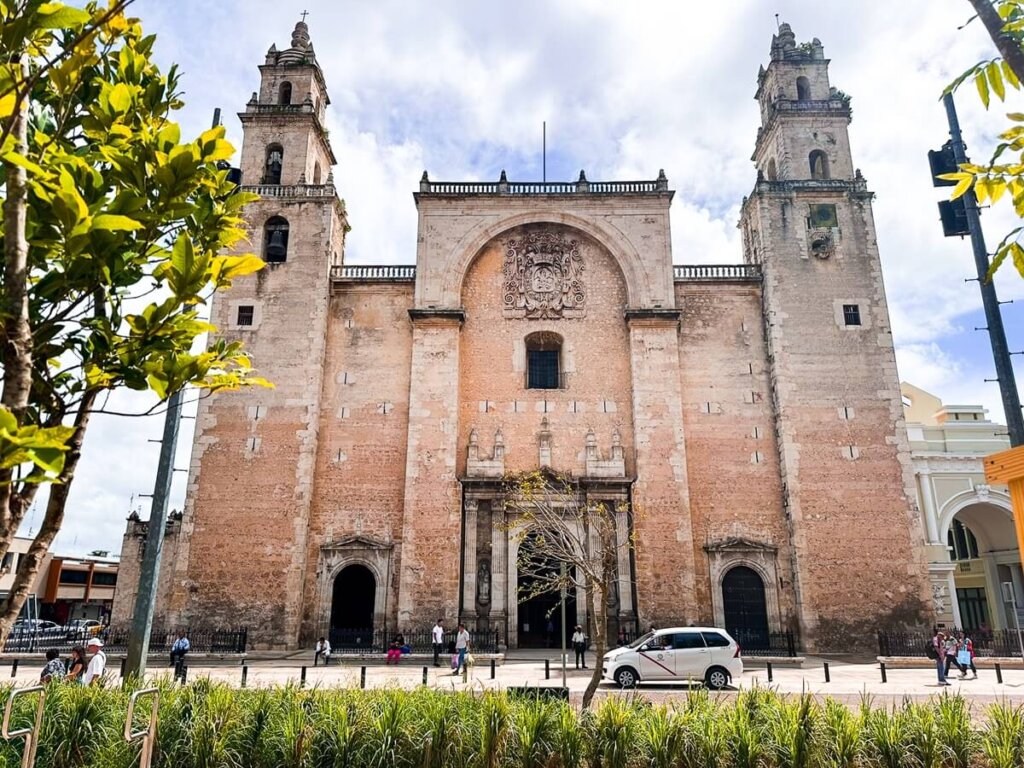
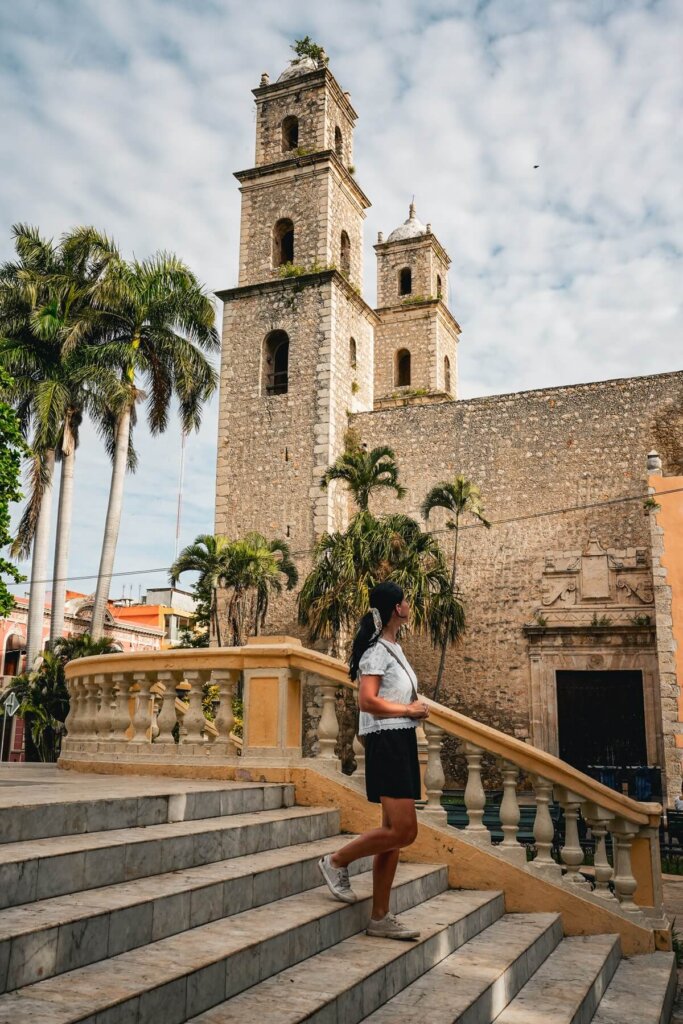
The east of Plaza Grande is where the Merida Cathedral is located. It isn’t simply an impressive religious building, but is one of the oldest cathedrals in the Americas. Construction of Catedral de San Ildefonso started in 1561, and the cathedral was completed in 1598.
It probably won’t come as a surprise when we say that the cathedral was built on top of a former Maya temple. In addition, some of the stones of the Maya temple were used in its construction.
As usual, you can visit inside the cathedral for free. Although the interior is nowhere near as impressive as some churches in Europe.
5. Merida’s City Parks
Even though Plaza Grande is the most well-known and busiest park in Merida, the city has many other parks that are totally worth a visit too. If you’re heading towards Paseo de Montejo (see more below), then why not stop at the following city parks en-route.
- Parque de los Hidalgos,
- Parque de la Madre,
- Parque de Santa Lucia,
- Parque de Santa Ana,
- Parque de San Juan. (This city park is located to the south of Plaza Grande).
They are all completely free activities in Merida, and there are some beautiful landmarks that are worth checking out around them, which we’ve summarised in our dedicated Merida city parks article.
6. Paseo de Montejo (Montejo Walkway)
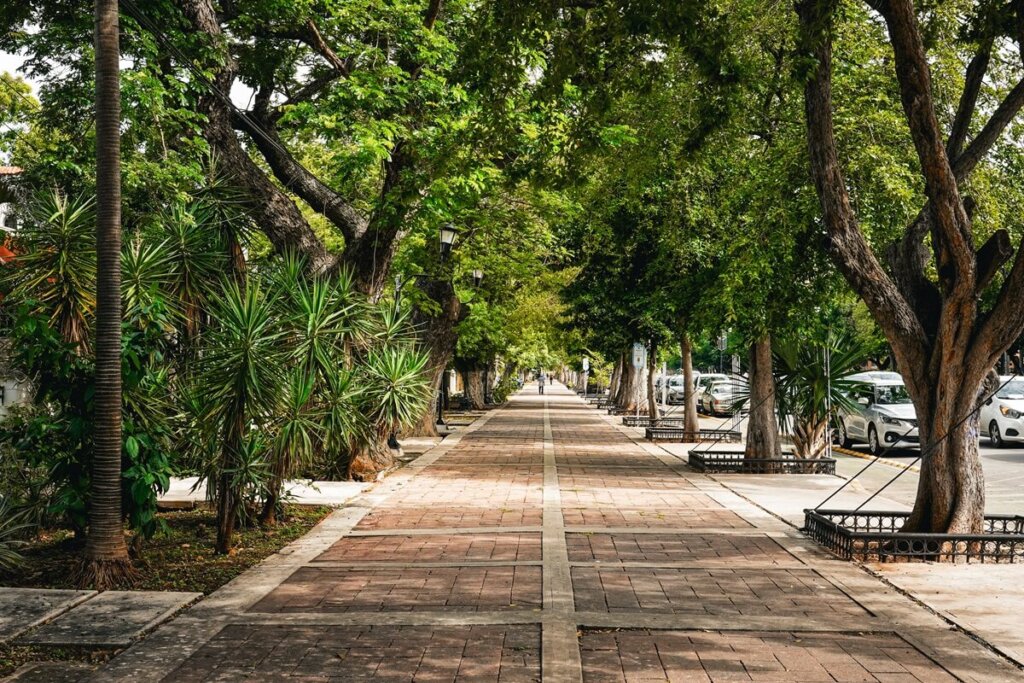
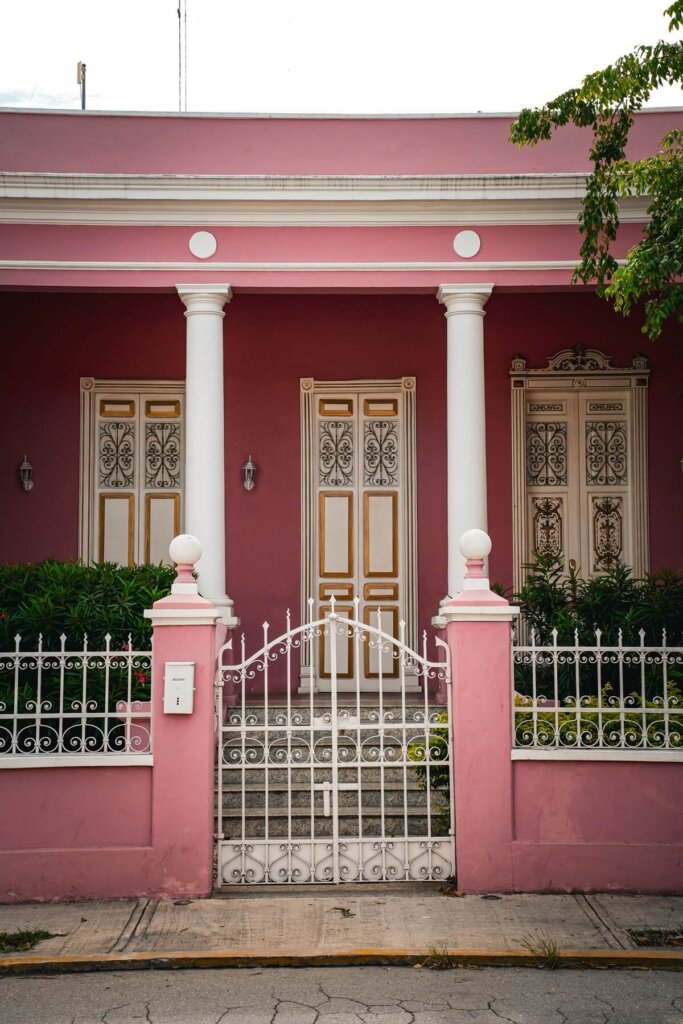
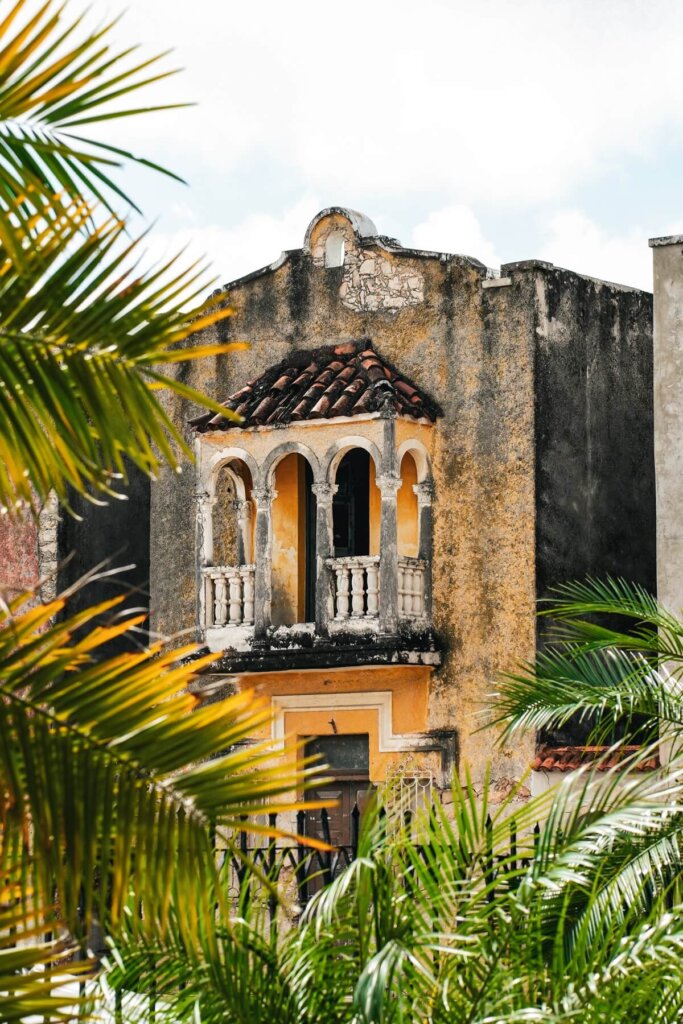
Paseo de Montejo is a 1.7km long avenue that runs between the northern end of Merida Centro (Santa Ana Park) and the impressive Monumento a La Patria. It was built between 1888 and 1904 and is named after Francisco de Montejo, who founded Merida.
The tree-lined boulevard is also lined with massive mansions built in the 19th and early 20th centuries. A few notable ones from south to north are:
- Casas Gemelas (Twin Houses)
- Palacio Canton (home to the Museo Regional de Antropologia)
- El Minaret (Yerba Santa)
- Quinta Montes Molina
Their architecture was influenced by European styles such as French, Spanish and Italian. Some of them are now used as museums, banks, boutique shops or restaurants.
The wide avenue actually carries on from Monumento a La Patria for another 5 km’s before it merges into Highway 261 at Gran Plaza Merida shopping centre, just south of the Gran Museo del Mundo Maya (Mayan World Museum of Merida). This section is called Prolongacion Montejo.
Top Tip. Every Sunday morning the avenue is closed for traffic, so people can use the road for bike rides, running or dog walking. We joined in at many of these initiatives across Latin America on Sundays.
7. Monumento a La Patria (Monument to the Homeland)
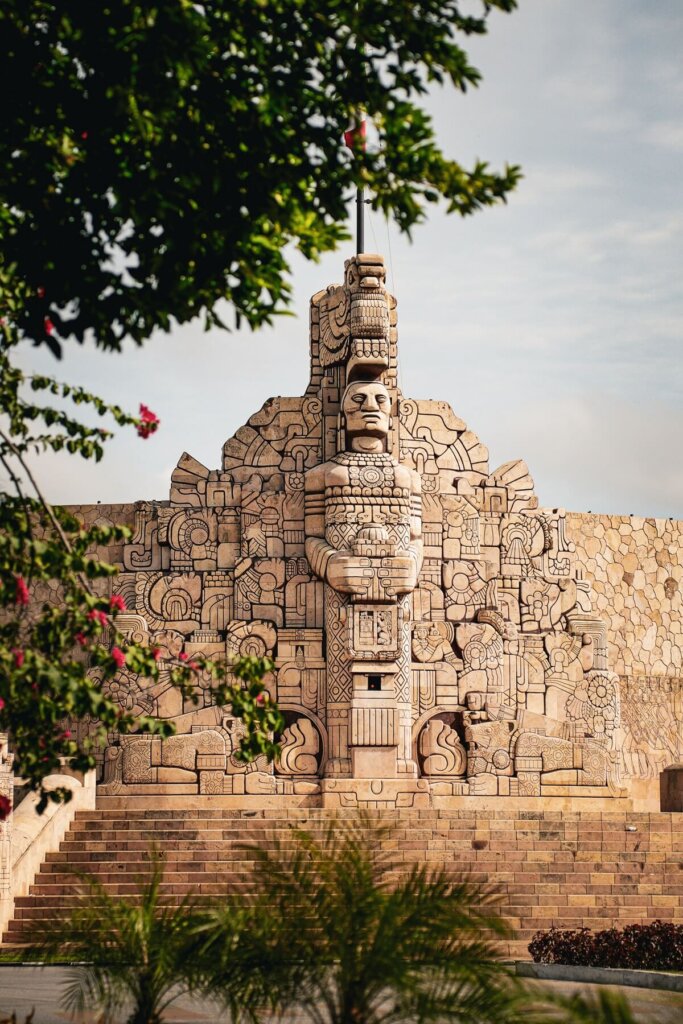
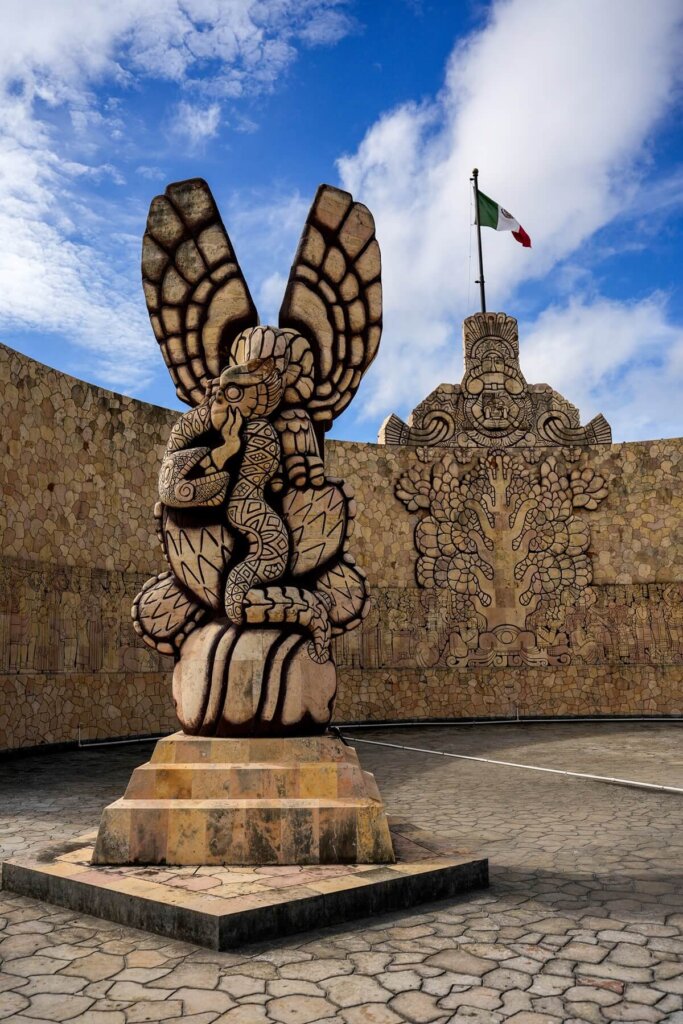
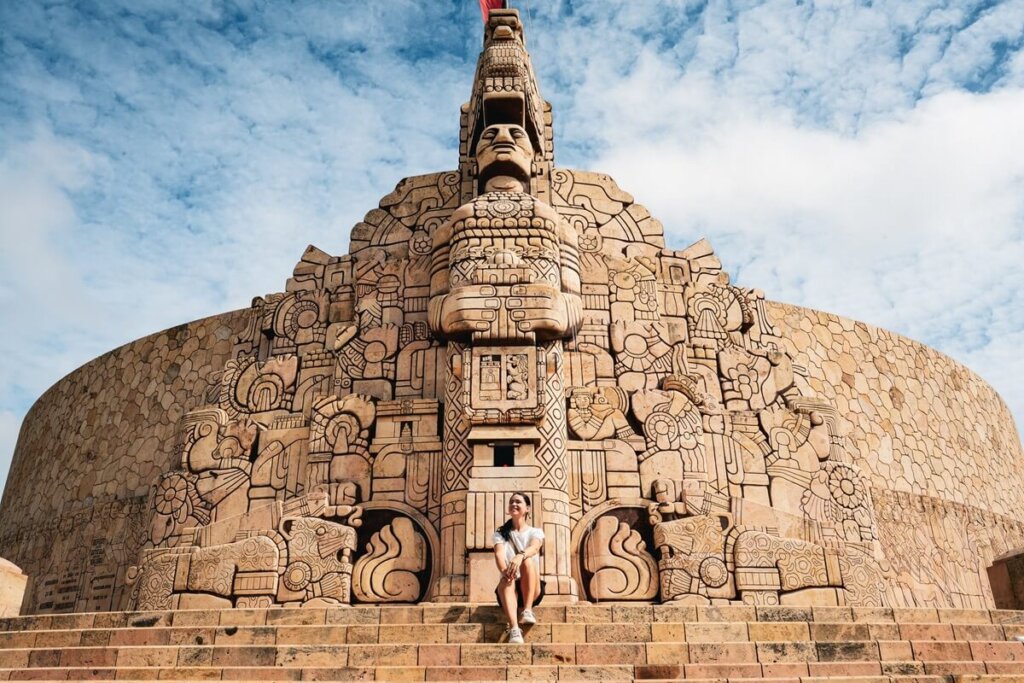
One of the most impressive attractions we visited in Merida for free was the Monumento a La Patria. It was made by the Colombian sculptor Romulo Rozo. Apparently, it took him over a decade to finish this incredible masterpiece. This isn’t surprising, as the monument is comprised of over 300 figures that are all hand-carved. The figures represent Mexico’s history, but also symbols that make up both Mexican and Yucatecan culture.
Now, it’s pretty impressive from the front, but don’t forget to also walk around the back, as the monument is just as interesting from there, with different symbols, such as the Ceiba tree, visible.
We saw plenty of photos of it before visiting, but the scale of this monument still surprised us when we got there. Luckily, we could walk right up to it, so we could really appreciate just how detailed it was. Although we didn’t see it, at night the monument is illuminated.
8. Parque La Plancha (La Plancha Park)
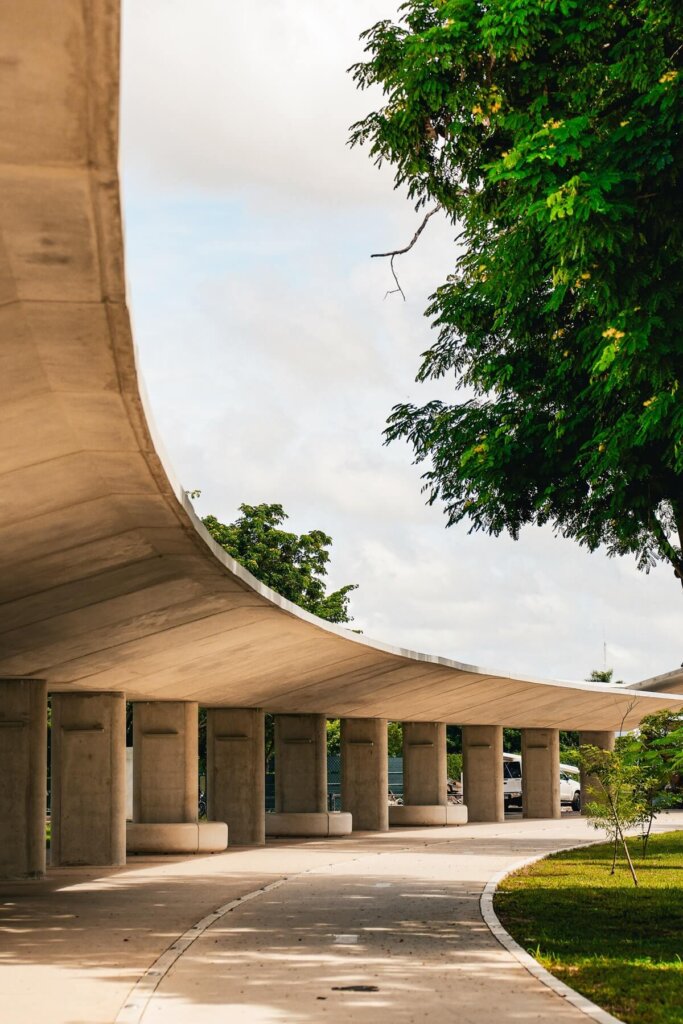
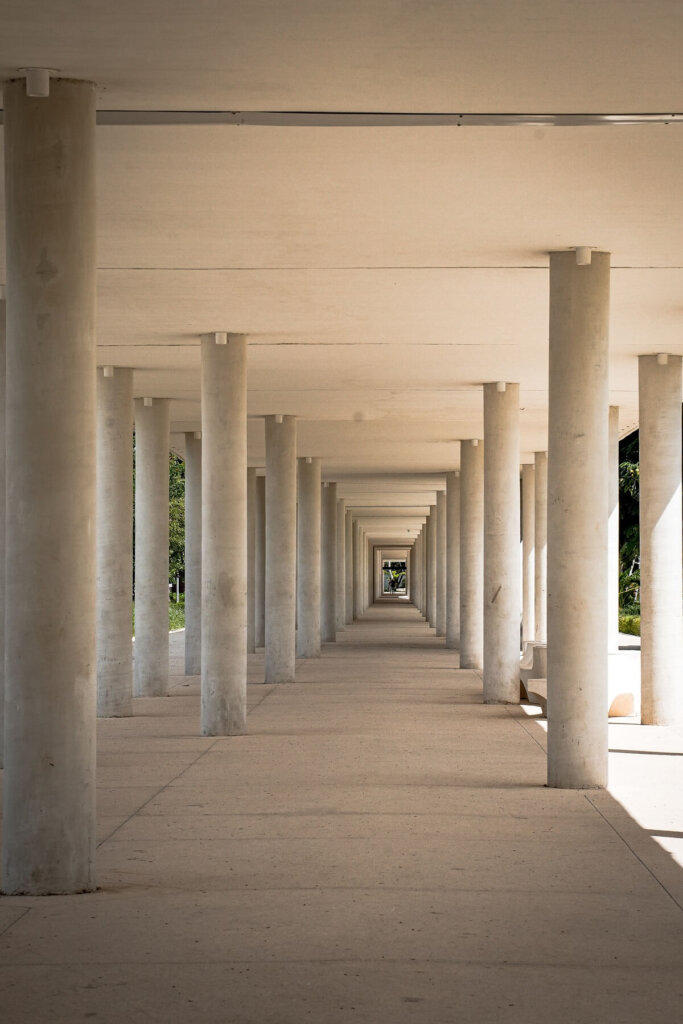
Another city park that’s worth having its own section is Parque La Plancha. This is way bigger than the other smaller squares within Merida Centro, and has some more interesting features. Since it’s only a few blocks east of Monumento a La Patria, after taking way too many photos of the monument, we decided to walk back to Merida Centro via this urban park.
It’s a relatively new outdoor space, as it was still under construction the last time we were in Merida in 2022. Luckily, they opened the park in 2023, so we could visit it during our trip in 2024. Today, many refer to La Plancha as Merida’s “Central Park” and we can see why.
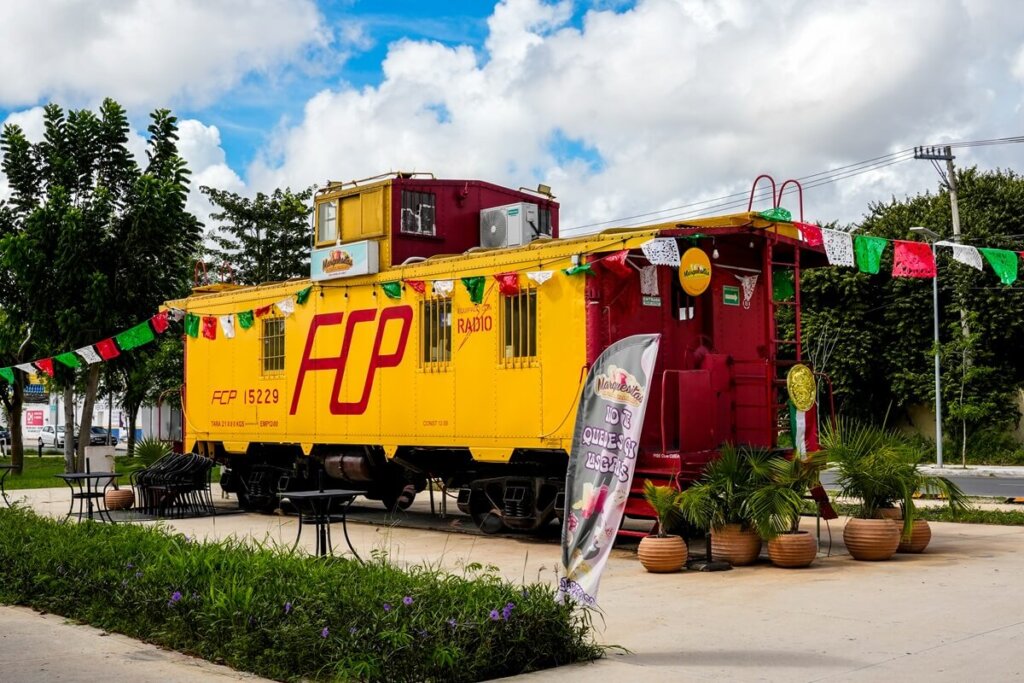
La Plancha Park is actually built on Merida’s former main train station. There are still a few wagons scattered around the park, turning the whole place into an open-air museum. We also saw pools, playgrounds, a dog park and even a huge lake as we walked through it. In addition, there are museums, restaurants, cafes and even a massive amphitheater. Given a few more years for the newly planted trees to grow, and this park will be even greener.
We were there earlier in the day, so it wasn’t very lively yet, but we imagine that this place gets quite busy with locals in the evenings and on weekends.
9. The Three Historic Arches of Merida
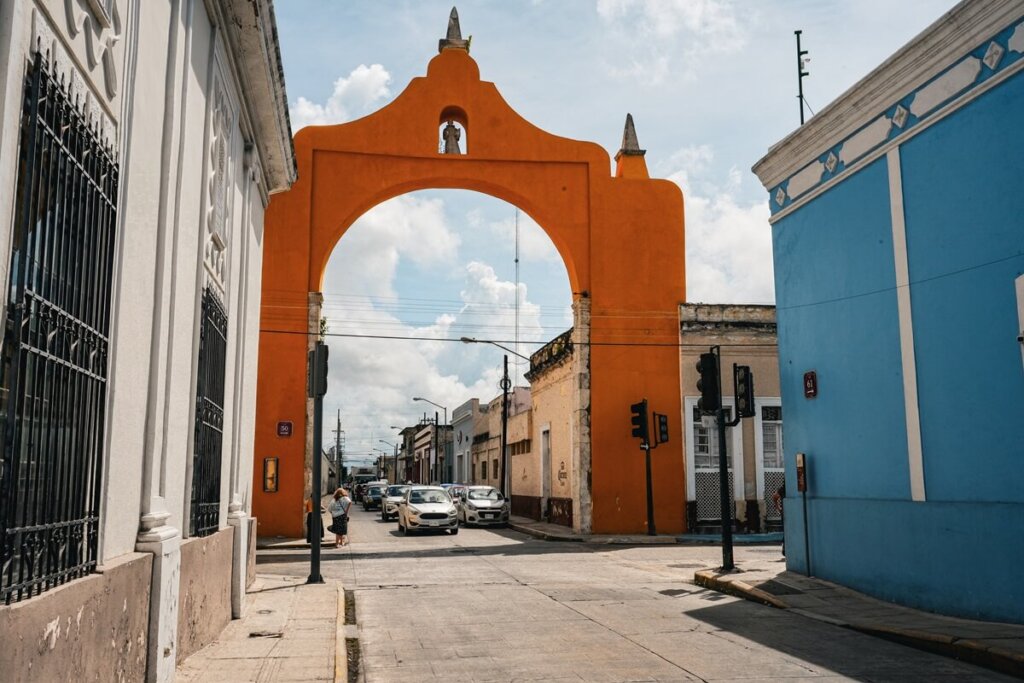
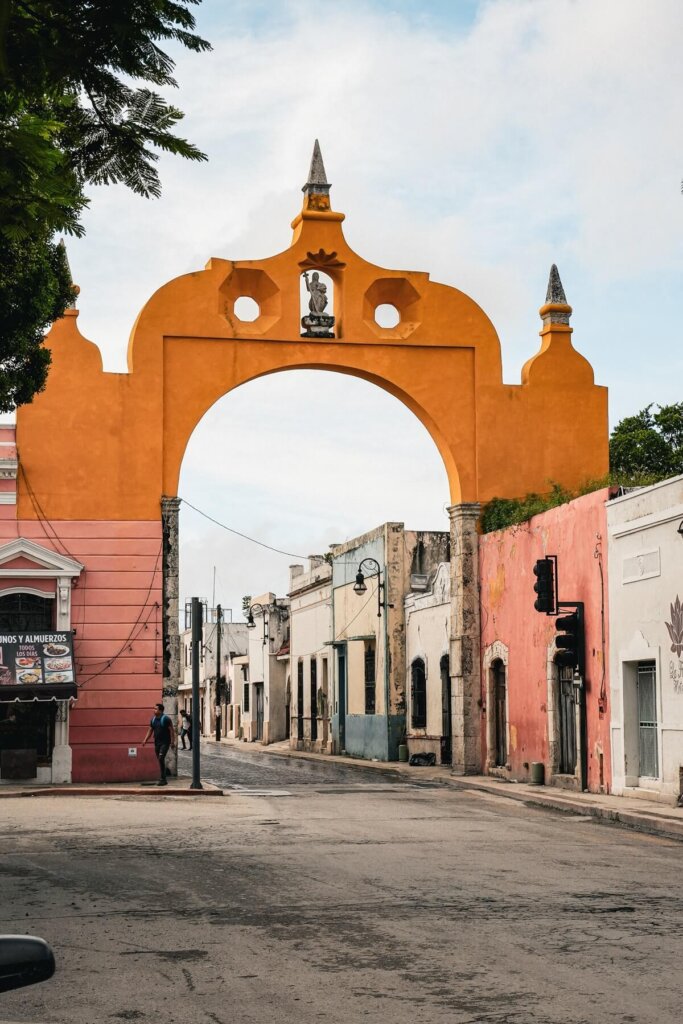
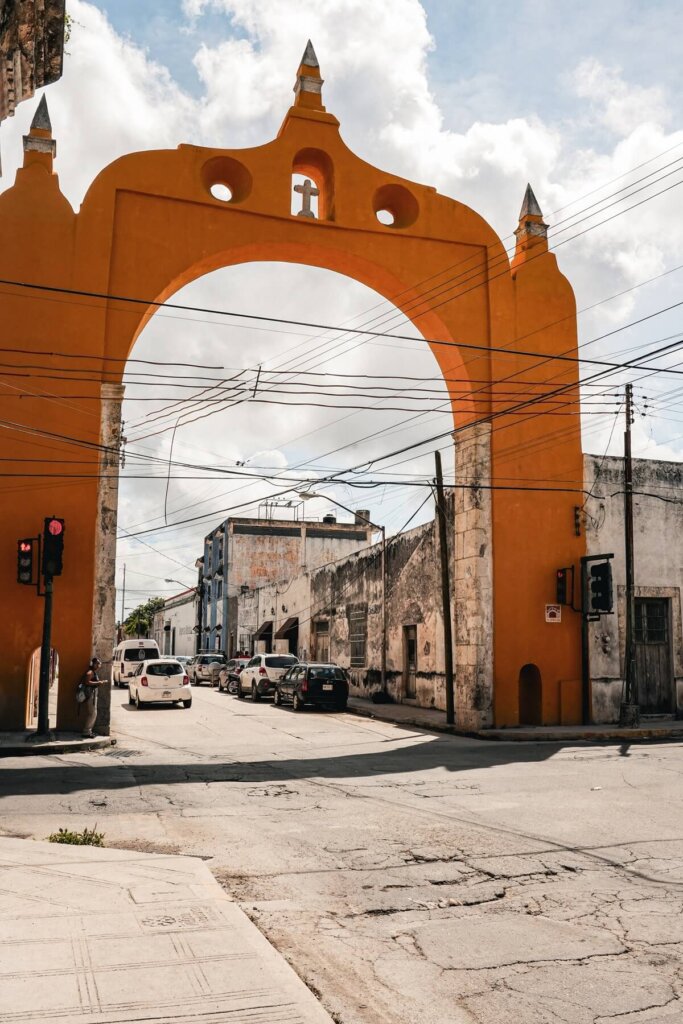
There are three historical arches in Merida Centro that you should visit: San Juan Arch, “Del Puente” Arch and “Dragones” Arch. “Del Puente” and “Dragones” are in close proximity to one another along Calle 50, whereas San Juan is located a little further away at San Juan Park.
The arches were the main entry/exit points to the city when they decided to build a city wall. Originally, 8 arches were erected but only these three survive today.
Photo Tip. It’s incredibly hard to take photos of the arches without any traffic during the day. We recommend walking to them early in the morning and, as always, be patient and you should eventually get a moment’s break from the constant stream of cars.
How to Get to Merida in Mexico
Merida is about 300 km west of Cancun and 260 km west of Tulum. There are multiple ways you can get to Merida, depending on your budget and where you’re coming from.
By Plane. If you’re just arriving to Mexico, then you may be able to fly direct to the city via Merida International Airport (MID). You can check out all the places you can fly direct from here. From the airport, you can get a hire car, taxi or airport shuttle to Merida.
If there’s no direct flight available to Merida then the next closest airport is Cancun International Airport (CUN). You can check out all the places you can fly direct from here. From the airport, you can hire a car, take an airport shuttle or go via ADO bus to Merida.
By Bus. Our favourite method of getting around Mexico is by bus. Buses are affordable, comfortable, and you can get to most places by using them. The ADO bus company operates in the southern states of Mexico, so if you’re here to travel around the Yucatan Peninsula, ADO will be your go-to company. You can travel to Merida from popular places like Cancun, Valladolid, Tulum and more.
By Hire Car. If you’re planning a road-trip around Mexico’s Yucatan Peninsula, then hiring a car from the airport might be the best way to get to Merida. However, if you’re on a tight budget, or if you’re not planning on visiting places further afield, then renting a car won’t be worth the money in our opinion.
Final Thoughts on the Best Free Attractions in Merida, Mexico
We enjoyed our time in Merida and loved that we could do so much in the city for free. The centre is really walkable and everywhere we looked there was something impressive to admire, whether it was a church or a colonial building.
After spending a few days there, we could clearly see why many digital nomads and expats choose Merida as their base. If we ever head back to the Yucatan, we would also most likely spend a little bit longer in the city.
Let us know if you’ve ever been to Merida and feel free to add any extra free activities we may have missed in the comments.
Now, let your adventure begin,

Remember…It all starts with a Pin…