

Iguazu Falls Argentina Side – A Complete Guide

Visiting Iguazu Falls should be on everyone’s itinerary when they visit Argentina. It is one of the most majestic waterfalls in the world and even Eleanor Roosevelt said “My poor Niagara” upon visiting Iguazu Falls. This post will focus solely on visiting the Argentina side of Iguazu Falls. The guide details how to get to Puerto Iguazu, the closest city to Iguazu Falls, entry fees, best times to visit and, most importantly, the best trails and activities to do for an unforgettable day out.
However, we’ve also summarised our experience visiting the Brazil side of Iguazu Falls in a separate post. In addition, we’ve written a guide where we compare the Brazil and Argentina sides of Iguazu Falls.
If you’d like to see our crazy experience visiting these majestic waterfalls, make sure to watch our Iguazu Falls video, which we shared on our YouTube channel Kitti and Jon. For more videos from the country, check out our Argentina playlist.
Disclosure: This post may contain affiliate links, which means we may receive a small commission if you click a link and purchase something. Clicking these links won’t cost you anything, but it will help us to keep this site up and running! Learn more about our affiliate policy.

Where are Iguazu Falls?
Iguazu Falls are located on the border between Argentina and Brazil. 80% of Iguazu Falls are in Argentina, whilst only 20% of it is in Brazil. The waterfall sits within Iguazu Falls National Park and has been a UNESCO World Heritage Site since 1984.
In Argentina, the closest city to Iguazu Falls is Puerto Iguazu, and in Brazil it’s Foz do Iguacu.

How to Get to Puerto Iguazu in Argentina
The city of Puerto Iguazu is accessible from several places in Argentina. Flying is only an option from Buenos Aires, however you can take long-haul buses from other major cities such as Cordoba. In addition, the border city is also accessible from Foz do Iguacu in Brazil and Ciudad del Este in Paraguay.
Buenos Aires to Puerto Iguazu
Buenos Aires is a popular place to reach Iguazu Falls from and the quickest way is by flying. The main airlines offering flights to Puerto Iguazu are Aerolinas Argentinas, JetSmart and Flybondi. Flights usually depart from Aeroparque Jorge Newbery (AEP), the domestic airport located in the Palermo neighbourhood of Buenos Aires. Read our article if you need guidance on how to get around Buenos Aires.
However, sometimes they may change the arrival or departure airport to Ezeiza International Airport (EZE), which is what happened to us on our way back to BA. The flight time is less than 2 hours. Once you’ve landed in the border city, either take a taxi straight to your accommodation or a local bus to the main bus station in the town centre.
Find Flights to Puerto Iguazu✈️
If you have time to spare, there are also long-haul buses running between the capital and Puerto Iguazu. Popular bus companies offering services between the two locations are Rio Uruguay, Via TAC, Via Bariloche and Expresso Singer. We used many of these companies whilst travelling across Argentina by bus. Most buses depart from the Retiro Bus Terminal in Barrio Retiro.
The main downside of taking the bus is actually the time it takes, which is about 20 hours. This is actually a pretty average long-haul bus travel time in Argentina, due to its size. In terms of cost, if you want the most comfortable seats then they will be more expensive. In the end, a flight ticket is going to cost roughly the same as a bus ticket, but you get to your destination much faster.
Foz do Iguacu (Brazil) to Puerto Iguazu
If you want to visit the Argentine side of Iguazu Falls from Brazil, then you’ll have to travel to Foz do Iguacu first. The quickest way is to fly there, which you can do from multiple major cities in Brazil, such as Rio de Janeiro and Sao Paolo. Although there are also long-haul buses available just like in Argentina.
From Foz do Iguacu, you can use the Rio Uruguay bus company to make the border crossing to Puerto Iguazu. The buses depart from Terminal de Transporte Urbano. When you buy your ticket, make sure to get a receipt and tell the driver to stop at Brazilian immigration. You’ll need to get an exit stamp from Brazil. The bus probably won’t wait for you, which is why you should have a ticket which you can board the next bus with. Then, you’ll need to go through Argentine immigration before continuing the short journey to Puerto Iguazu. To make the border crossing smoother, make sure to read our complete Argentina border crossing guide.

How to Get to Iguazu Falls from Puerto Iguazu
Iguazu Falls is still nearly 20 km to the east of Puerto Iguazu. Although you can book an organised tour or take a taxi, a simple and affordable way to get there is with a public bus.
Buses to Iguazu Falls depart from Terminal de Buses De Puerto Iguazu, aka the main bus station. The first bus leaves at 7AM and then every 15 minutes after that. We suggest getting one of the first buses so you can get there for opening time and beat the crowds. Look for the bus company Rio Uruguay and purchase your return ticket from them. The bus itself will say “Cataratas” on it and the journey time is between 20 to 25 minutes.
You’ll be able to catch the bus back to Puerto Iguazu from where it dropped you off.
Practical Information on Visiting the Argentina Side of Iguazu Falls
Iguazu Falls Opening Times and Admission Fees
Iguazu National Park is open every day between 8AM and 6PM. The last entry is at 4:30PM.
Admission fee for foreign visitors is currently $45,000 ARS per person. You can buy your Iguazu Falls ticket online or at the entrance. There’s no need to book a timed entry like you do on the Brazilian side. At the entrance, you can pay either cash or card.
If you book your ticket online, you can skip the ticket office line and go straight to the gates. However, make sure to download and save your ticket on your phone before you get to the national park. Although they had free WI-FI, the signal was very weak and you may not be able to load the ticket. A post we read before our visit said that they had to purchase another ticket at the entrance because their ticket didn’t load. Better to be safe than to pay double.
The entry ticket also includes a train ticket, which we’ll talk more about later. Although, you’ll still need to ask for a physical ticket for this train at a counter after you’ve entered the site.
Useful Tip. The website said to bring our passports. We actually didn’t need to show them, but if you do bring them, make sure to have them in a zip-lock bag or dry bag to keep them dry!

Best Time to Visit Iguazu Falls
There are a few factors to bear in mind when it comes to the best time to visit Iguazu Falls. These are the amount of rainfall, the temperatures, the humidity and the crowds. The area has a tropical climate so it’ll be hot and humid all year round, but there will still be better and worse times to visit, especially when it comes to rainfall and crowds.
Temperatures and Humidity. April and May mark the start of the dry season, which means that the temperatures will be lower and it’ll be less humid. There will be higher chances for clear blue skies too. Temperatures and humidity will stay low for June, July and August, although expect larger crowds. September and October will also be less hot and humid, although there’ll be less rainfall too at the end of the dry season. In the wet season (November to March), the temperatures and humidity levels will be higher.
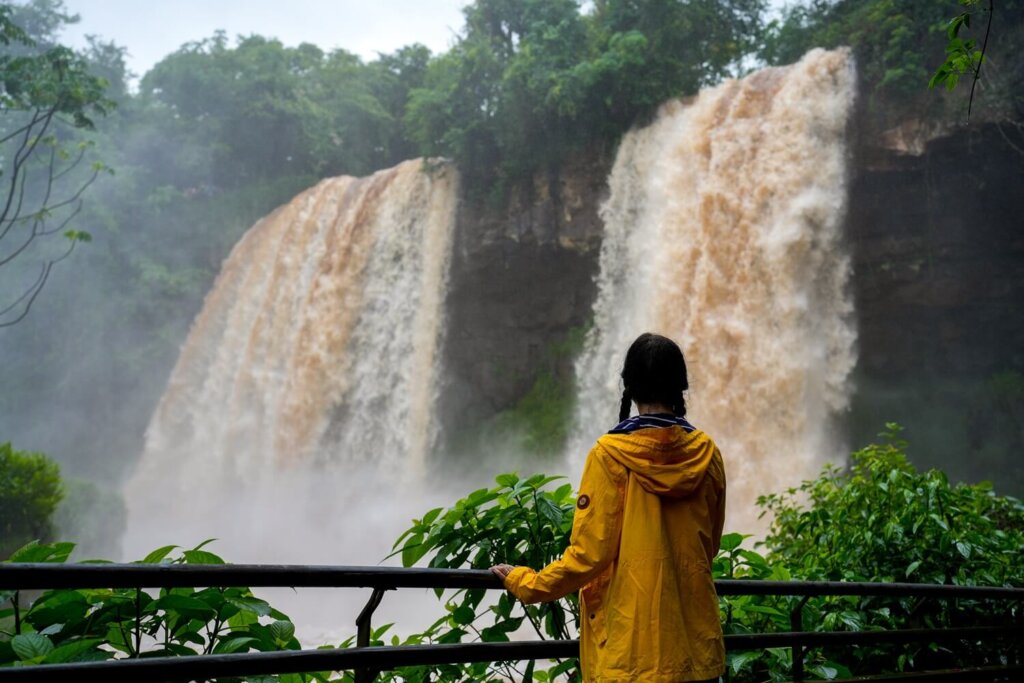
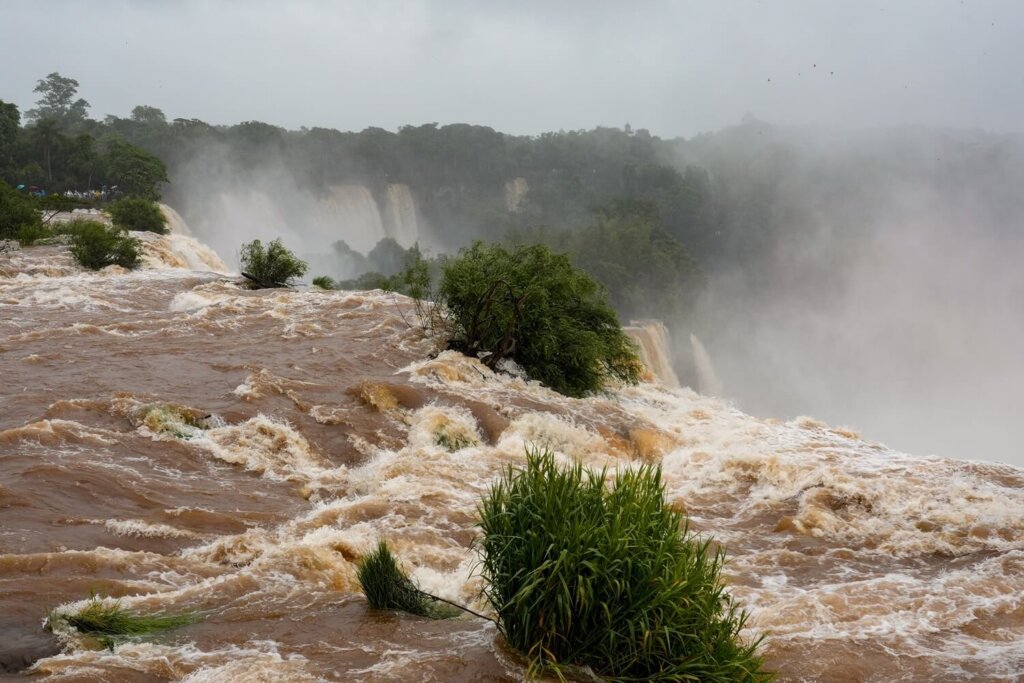
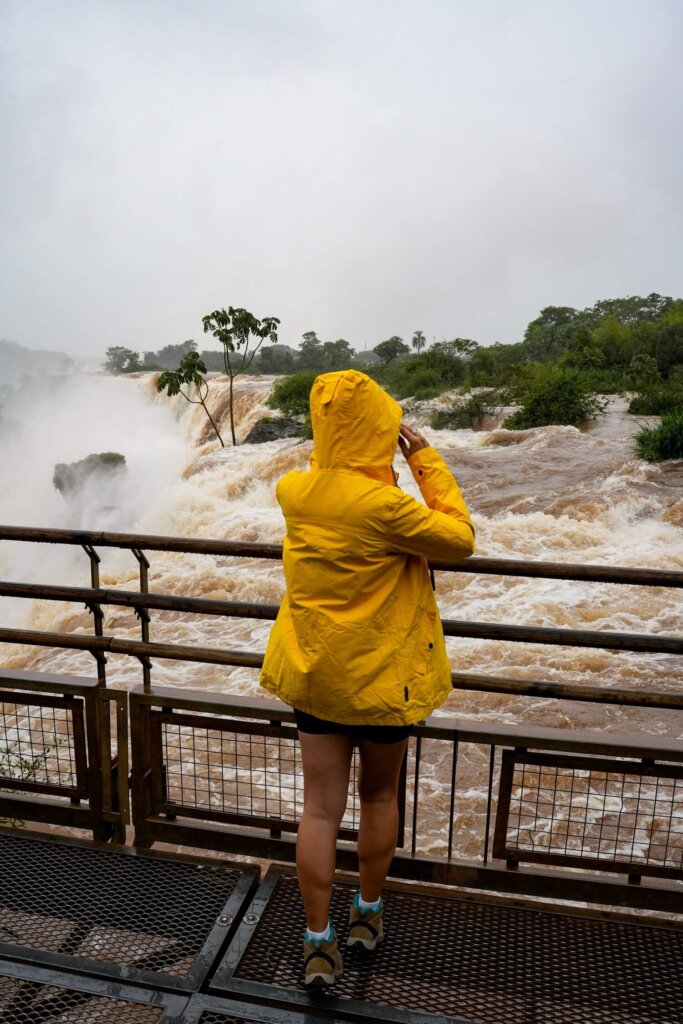
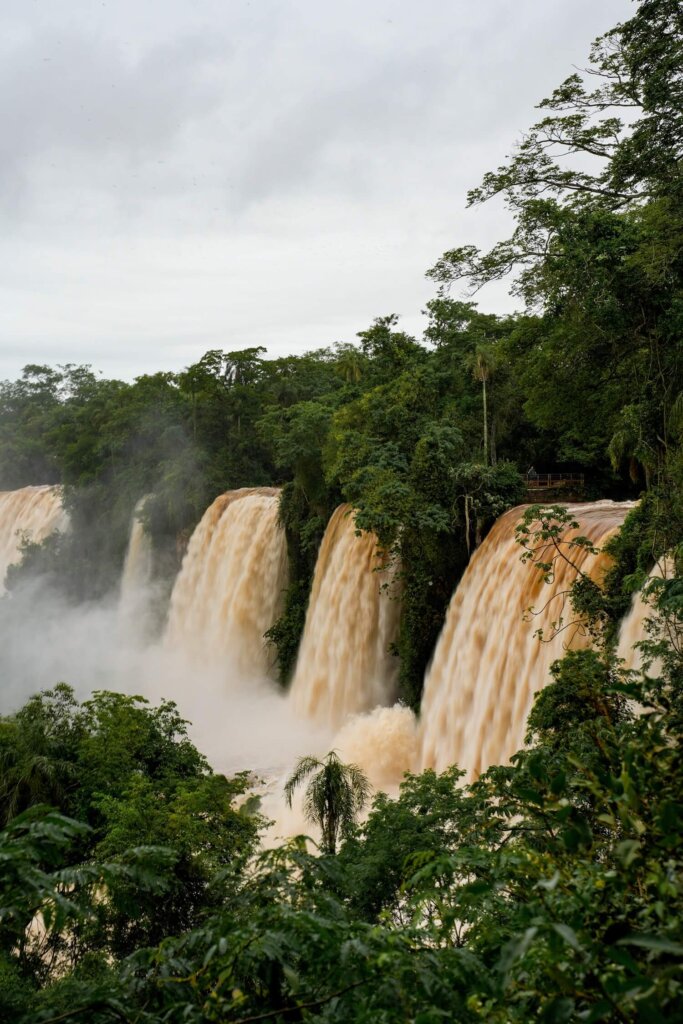
Rainfall. The highest rainfall will be in November and December. We visited around the second week of December and, after an extremely heavy period of rain, the waterfall was incredibly full. Although it was absolutely insane to see just how powerful nature can be, the Devil’s Throat Trail was closed due to water damage. The weather conditions weren’t ideal either. It was incredibly misty with grey skies, so of course we didn’t see any rainbows. However, after our friends showed us their pictures of Iguazu in the dry season, we were still glad that we visited in the rainy season.
Crowds. Expect higher crowds during the Easter holidays in April and the Argentine winter holidays, which are in July and August. The Argentine summer holidays also bring more people in December, January and February, which are also popular months for foreign tourists visiting Patagonia.

Facilities at the Argentina Side of Iguazu Falls
Toilet facilities. There are toilets at the entrance, and around the train stations and eateries.
Picnic areas and cafes. The site has a few places to eat, such as the La Selva and Fortin restaurants, and a Fast Food place near the start of the Lower Circuit. Prices are inflated as expected, so if you want to save some money, bring your own lunch and snacks with you.
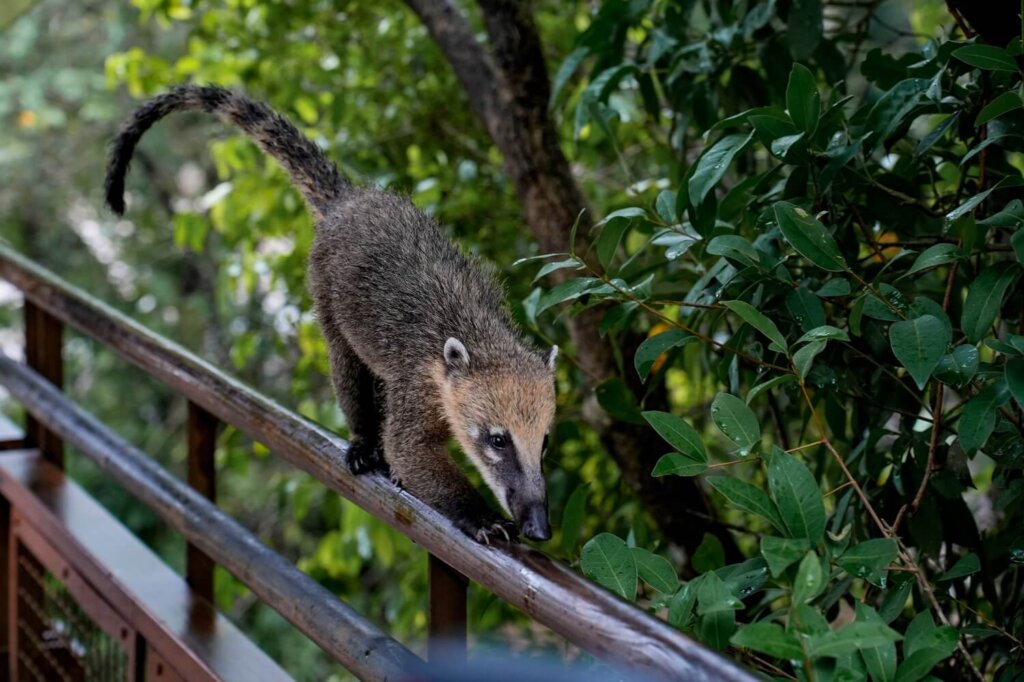
There are also designated picnic areas with tables and benches. We suggest eating there because of the coatis, who can be quite aggressive around food. They’ve caged the picnic areas so the coatis can’t get in, so you can eat in peace without worrying about a coati stealing your food.
Gift shop. As you can imagine, there’s also a gift shop where you can buy a variety of Iguazu Falls themed souvenirs.
What to Wear and Bring With You to Iguazu Falls
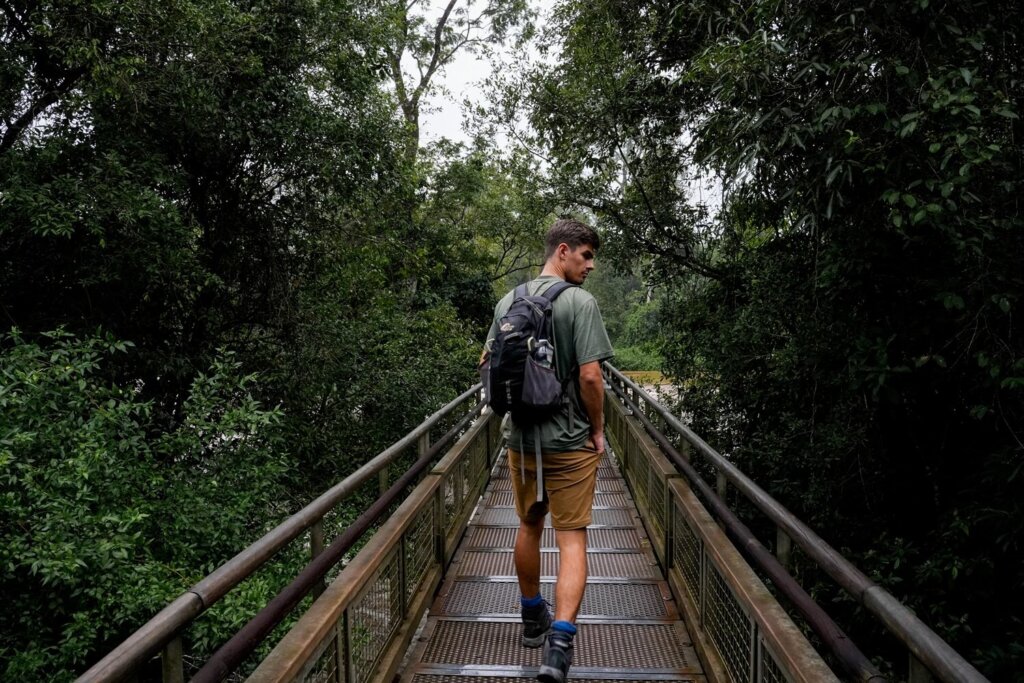
One thing is pretty much guaranteed when visiting Iguazu Falls: you’re going to get wet. The climate is also pretty humid, so we recommend wearing something that’s lightweight and made of quick-dry materials. You can bring a poncho or rain jacket too, to keep yourself as dry as possible. We saw some people with umbrellas, although we never find those very convenient to carry around.
We also suggest wearing shoes that aren’t just comfortable to walk around in, but also have good grip. The walkways were pretty slippery and we struggled even with our hiking boots on!
We also suggest having a waterproof cover for your backpack to keep your belongings dry. It’s even better if you have a dry-bag to keep any of your electronics, such as your camera gear and phone, as well as other important things like your wallet, dry. Zip-lock bags can also do the trick if you don’t have a dry bag. This is especially important if you also want to do the boat ride, where you’re guaranteed to get absolutely soaked.
We mentioned the hot and humid weather already, so don’t forget to bring sun protection, such as sun-cream, a hat and sunglasses. It’s also important to stay hydrated, so bring enough water with you.
Other Things to Know When Visiting Iguazu Falls
Don’t feed or touch the coatis. The first thing we saw after entering the site were scary pictures showing some nasty scratches caused by coatis. They may look cute, but they can be pretty vicious around food, hence the caged picnic areas. Actually, we only ever saw a couple walking along the rails of the walkways. A few of them got a bit curious with some people, probably smelling food in their backpacks.
Leave No Trace. As always, it’s important that whatever you bring with you, you take it back or dispose of it in the bins provided across the site.
Best Trails and Viewpoints on the Argentina Side of Iguazu Falls
Most people prefer the Argentina side of Iguazu Falls because of the number of trails that take you above and up close to the waterfalls. There are three main trails: the Devil’s Throat, Upper and Lower Circuits. However, there is another trail (Macuco Trail) that allows you to hike through the jungle. This one isn’t as popular because you won’t really get to see Iguazu Falls from there.
In addition, there’s also the Ecological Jungle Train and of course plenty of boat ride options, including more relaxed or more adventurous ones.
1. The Devil’s Throat Trail (Garganta del Diablo)
Iguazu Falls is made up of around 275 individual waterfalls and the Devil’s Throat is the largest and most famous one. Thousands of gallons of water plummet down a U-shaped chasm at the Devil’s Throat, so it’s no surprise that people want to experience standing as close as they can to something so incredibly powerful.
However, seeing the Devil’s Throat can be a bit hit and miss. As we overheard from some tour guides, the trail and viewing platform is closed more often than not for safety reasons. In fact, this particular guide was telling people that the Devil’s Throat had been closed for almost 9 months because the walkways were damaged in the rainy season. And since we were also visiting in December, after extremely heavy rainfall, the trail was obviously closed.
However, if you’re lucky enough to visit when the Devil’s Throat Trail is open, we suggest getting there first on the Jungle Train. When you get off the train, you’ll still have to walk along the 1.1 km long walkway out to the viewing platform.
2. Upper Circuit (Superior Circuit)
As the name suggests, the Upper Circuit takes you above Iguazu Falls and gives you some incredible views of the many iconic waterfalls. The whole loop is about 2.5 km if you take the Jungle Train and get off at the ‘Cataratas’ stop. However, if you want to complete this circuit first, you can just follow the Green Trail after entering the site, which will eventually join up with the Upper Trail. This will make the whole route about 3.7 km long.
This trail is pretty flat and accessible. It’s a one-way system, so the first point of interest was the Salto Dos Hermanas, although we got a better view of these particular falls from the Lower Circuit. It was followed by a viewing area, which offered one of the most iconic views on the Argentina side of Iguazu Falls. Then, as we carried on along the rim of the waterfall, there were more dedicated viewpoints for other notable falls, such as Salto Chico, Salto Bosetti, Salto Eva and Adan, Salto Bernabe Mendez, Salto Mbigua and Salto San Martin. Then, the path took us back through a more jungle dense area a little back from the falls.

3. Lower Circuit (Inferior Circuit)
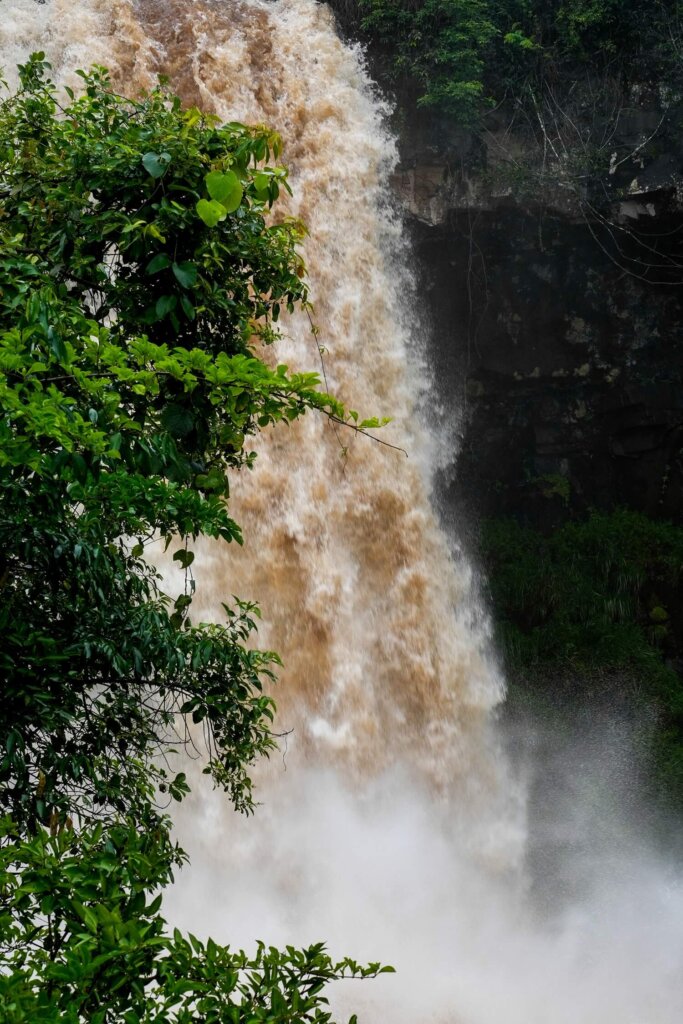
The Lower Trail is a similar path to the Upper one, although this one will take you along the bottom of the waterfalls. It also has more stairs, therefore may not be as accessible for everyone. Whilst overall it has less dedicated viewpoints, they actually gave us an overall better view of some of the individual waterfalls. Again, we had to follow a one-way system, so the first waterfall was Salto Lanusse, followed by the Circuito Inferior viewpoint. Then we got a closer look at Salto Bosetti and Chico before ending up at the bottom of Salto dos Hermanas.
Since you’re not above the waterfalls, on the Lower Circuit you’ll be walking through more spray from the cascading falls.


4. Take a Boat Ride
A very popular thing to do when visiting the Argentina side of Iguazu Falls is to take a boat ride. Boat rides come at an additional cost and you can book them on site. There were three types of boat tours advertised: Gran Aventura, Travesia Iguazu and Paseo Ecologico.
As the name suggests, Gran Aventura is going to be the one to take if you want to get up close and personal to the majestic Iguazu Falls. It’s also the most expensive boat tour. This boat ride is not for everyone though, so check out their warnings or consult with them before you book it.
Paseo Ecologico, on the other hand, will take you on a more relaxing boat ride above the waterfalls, running roughly parallel to the Jungle Train route. Lastly, Travesia Iguazu will take you down Iguazu River, out to the confluence with the Parana River, and then drops you off back in Puerto Iguazu.
You can find more information on these three boat rides on the Iguazu Jungle website.
5. Additional Trails and Experiences on the Argentina Side of Iguazu Falls
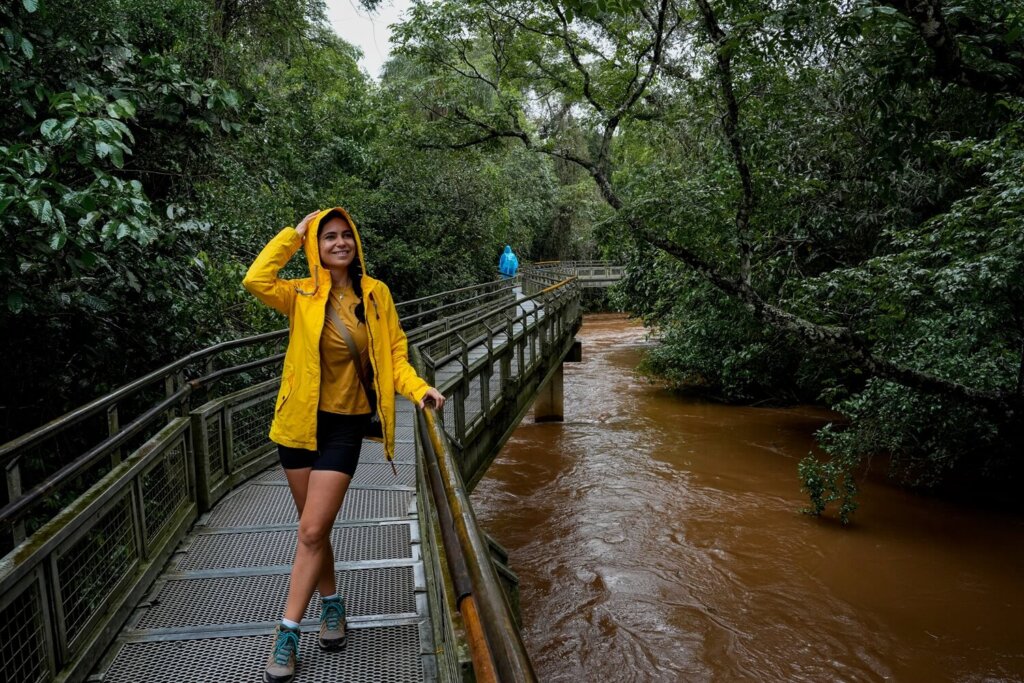
As mentioned, there is also the Macuco Trail that you can complete. At 7.6 km this is the longest out-and-back trail within the site. The path takes you through the jungle, where you have the chance to see some wildlife including birds and coatis. At the end of the trail, you’ll see the 23m tall Arrechea Waterfall.
There are also other ways to experience Iguazu Falls. One is the dedicated Sunset Walk that allows you to access the Devil’s Throat during the golden hour, once the park is closed to day visitors. If you’re visiting during a full moon, you can also sign up for a Full Moon Walk, which will be more of a sensory experience. We imagine that the walk would be somewhat similar to the night walks we did in the Amazon Jungle, which are still some of the most memorable experiences we’ve had to date. Hearing the roar of the waterfall at night would be quite special too.
Don’t Forget to Visit Hito Tres Fronteras in Puerto Iguazu
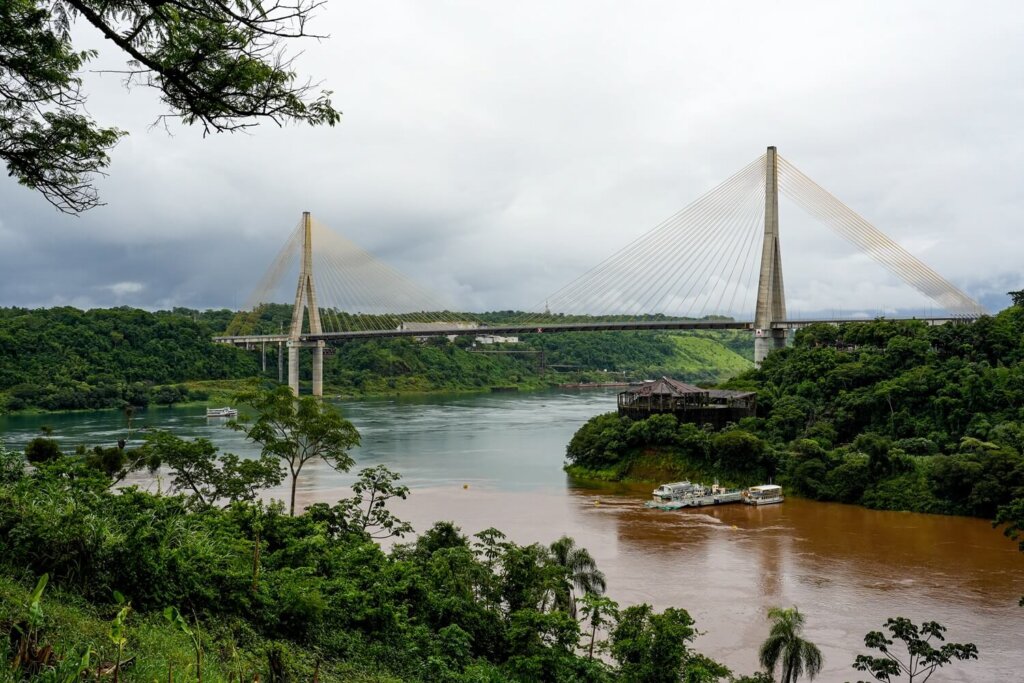
Although there’s not much else to do in Puerto Iguazu, there’s one place that you should visit: Hito Tres Fronteras.
The Three Fronteras Landmark is a panoramic spot where it’s possible to see three countries from: Brazil, Argentina and Paraguay. In addition, from this vantage point, you can see the confluence of the Iguazu and Parana rivers. The Parana River is actually the second longest river in South America after the Amazon River. The Parana River is also the only river delta that empties out into another river: the Rio de la Plata. We visited the Parana Delta on a day trip to Tigre from Buenos Aires.

Final Thoughts on Visiting the Argentina Side of Iguazu Falls
Despite the extreme weather conditions, which resulted in the Devil’s Throat being closed, we still had a fantastic time at Iguazu Falls. We loved that we had so many trails to explore (compared to on the Brazilian side). Being above the waterfalls, often so close to the edge, with so much water tumbling down just below us, was a great reminder of how powerful Mother Nature is. We also loved that we could get up close to the individual waterfalls on the Lower Trail.
Although we didn’t end up going on any of the boat rides, we don’t feel like we missed out on too much, especially with there being so much water and mist. Brazil is still a country we have to come back to visit, which gives us a great excuse to come back to Iguazu Falls and visit at the start of the dry season for some blue skies and rainbows.
Have you ever visited the Argentina side of Iguazu Falls? If so, which season did you go in and what was your experience like? If not, is a visit to Iguazu Falls on your bucket list? Let us know in the comments below.
Now, let your adventure begin,

Remember…It all starts with a Pin…


I’m totally with you Kitti, Iguazu Falls are a must see for everyone one. These falls are truly spectacular.
Thank you Marilyn!
So amazing in pictures. I bet it is even more amazing in person!
Thank you! It was absolutely insane in person.
Such a detailed article! And the pictures are incredible!
Thank you so much!
I have not heard of this before and that is a very very cool waterfall. I’d love to photograph it. I have added this to my list of places to visit.
It’s definitely a spectacular waterfall to photograph.
Wow, these photos are stunning, I can’t imagine the grandeur of seeing it in person!
Thank you, it was pretty incredible to see it in person.
WOW! This looks so incredible!! I bet it’s so amazing to see in person!!
Thank you, it was a truly amazing experience.