
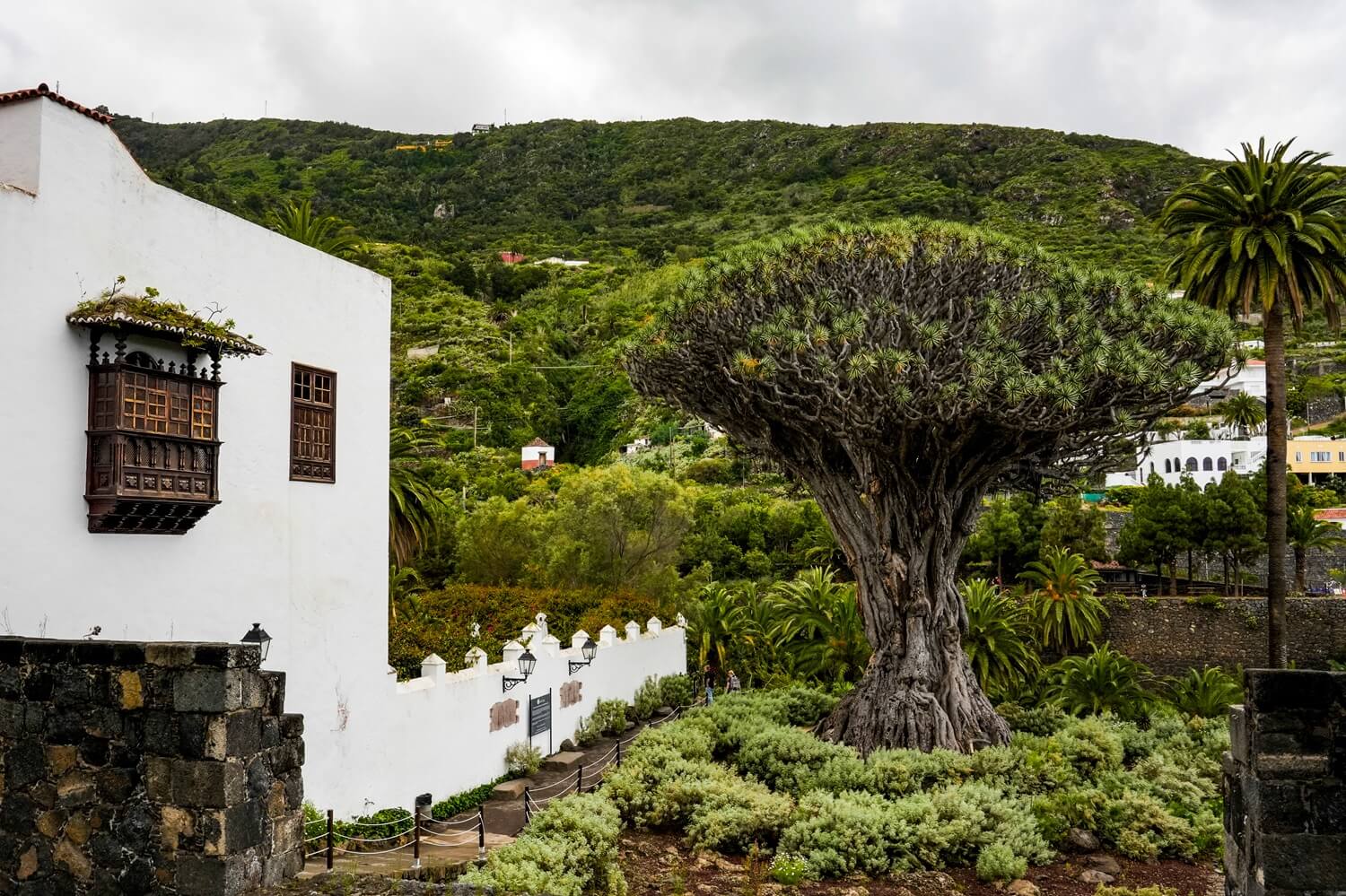
Things to Do in Icod de los Vinos, Tenerife (Apart from the Drago Tree)

Known for its ancient Dragon Tree (Drago Milenario), Icod de los Vinos is one of the most popular places to visit along the north coast of Tenerife. To our surprise, there was way more to do in this small town than we initially thought. So, in this guide, we’ll show you how to spend your time visiting Icod, including the different ways to get there, where to stay and what else to do nearby.
If you’d like to see what we got up to in Icod de los Vinos, make sure to watch our dedicated Tenerife video which we’ve shared on our YouTube channel Kitti and Jon.
Disclosure: This post may contain affiliate links, which means we may receive a small commission if you click a link and purchase something. Clicking these links won’t cost you anything, but it will help us to keep this site up and running! Learn more about our affiliate policy.

About Icod de los Vinos, Tenerife
Icod de los Vinos is located in north-west Tenerife, about 25km west of Puerto de la Cruz and 60km west of Santa Cruz de Tenerife.
Founded in 1501, the name ‘Icod’ has Guanche origins, whereas ‘Vinos’ (meaning wine in English) refers to the importance of wine production in this area. Thanks to the fertile conditions, agriculture played an important part in Icod’s history. They predominantly cultivated sugarcane, grapevines and bananas.
Today, Icod is better known for its ancient Drago tree (Drago Milenario), as well as its traditional mansions, churches and convents within its historic centre.

How to Get to Icod de los Vinos in Tenerife
Hire Car
The quickest way to visit Icod de los Vinos is with a hire car. Having our own vehicle meant that we could set off early and stay in town for as long as we liked. We were staying in Puerto de la Cruz, which meant that the driving time was only about 30 minutes, following TF-5. However, it’s a 50 minute drive from Santa Cruz de Tenerife or an hour from Costa Adeje.
Read next: Tips on driving in Tenerife
We parked at an underground car park, called Parking del Drago on Google Maps. It was a paid parking option, but the price was pretty reasonable and we were right around the corner from the main attracions.
We rented a car for the entire week we were in Tenerife and it was the best way to get around the island independently. If you want to do the same, we suggest hiring a car from Tenerife Airport using the Cicar car rental company. Their prices are great and we had a very positive experience with them.
Rent a Car in Tenerife
Hire your car using Discover Cars where you can find the best rates as they compare local, national and international companies.
Public Bus
If you wish to visit Icod de los Vinos independently, but don’t want to drive, then the best option is to get there by bus. Tenerife’s public bus company is called Transportes Interurbanos de Tenerife (TITSA). From Puerto de la Cruz you can take bus line 363 with a journey time of 1 hour. If you’re coming from further afield, then expect the journey time to be much longer.
Top Day Tours to Icod de los Vinos
Organised Tour
Icod de los Vinos is a popular place to visit along the north coast of Tenerife, so naturally there is a huge variety of organised tours available to book. Joining a tour won’t only get you to the town but the guides will also give you plenty of information about its history. Most tours will also have other stops on the itinerary, such as Teide National Park, Garachico or Masca.
🎫Below we’ve listed our top Icod de los Vinos tour choices:
- West Tenerife’s Coastline Day Tour. This is a great small-group tour that takes you to the most beautiful small towns including Icod de los Vinos, Garachico and Masca. You have the option to depart from either Puerto de la Cruz or Costa Adeje.
- Icod, Teide, Garachico and Masca Day Tour. We would book this day tour if we also wanted to visit the stunning Teide National Park, as well as other scenic small towns such as Garachico and Masca. They offer several pick-up locations both in the north and south of Tenerife.
- North Tenerife Day Tour. This is a good all-day tour option if you’re staying in Puerto de la Cruz. You’ll visit Teide National Park, Garachico and Los Gigantes in addition to Icod.
Things to Do in Icod de los Vinos, Tenerife
1. See the Oldest Drago Tree in Parque del Drago Milenario
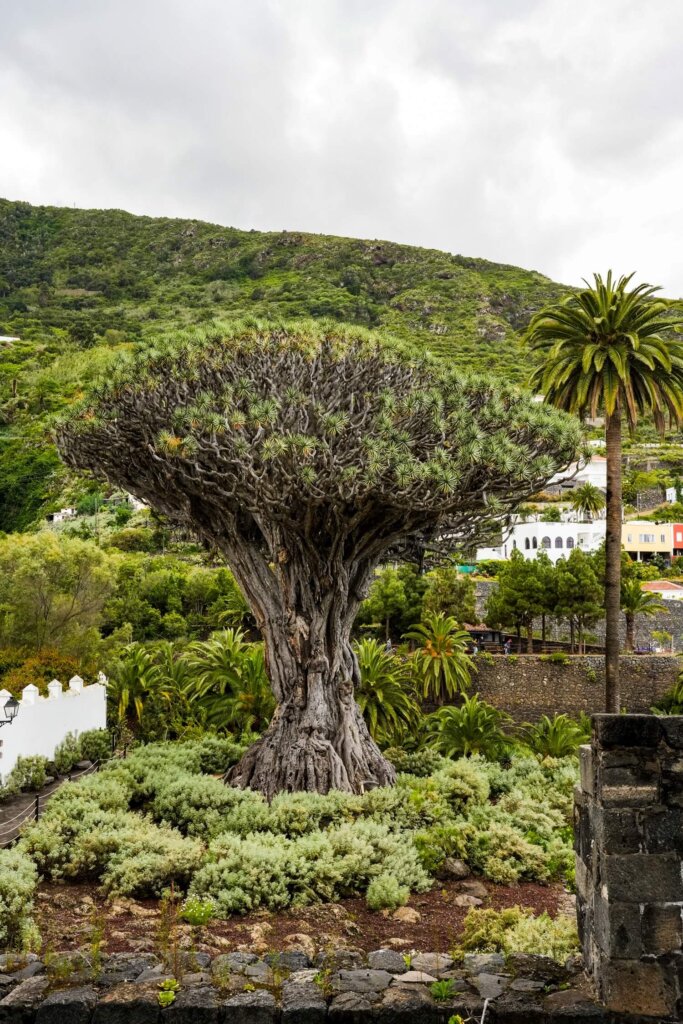
The main reason people come to Icod is to see the ancient Drago tree. Dracaena draco, or Dragon tree, is a subtropical tree native to the Macaronesia archipelago that includes the Canary Islands, Madeira, the Azores and Cape Verde.
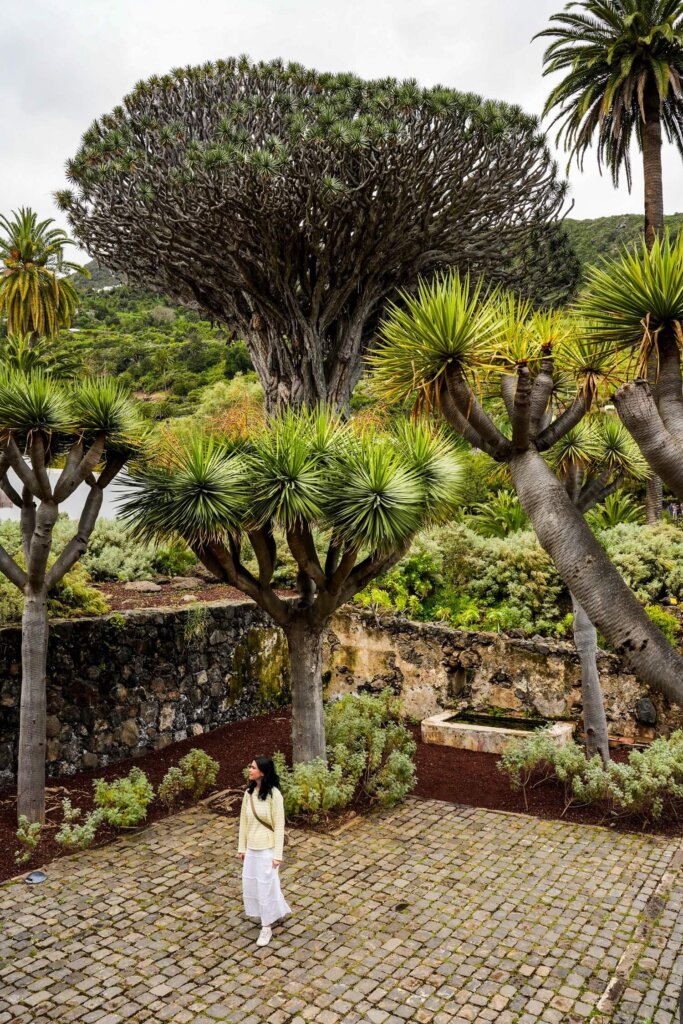
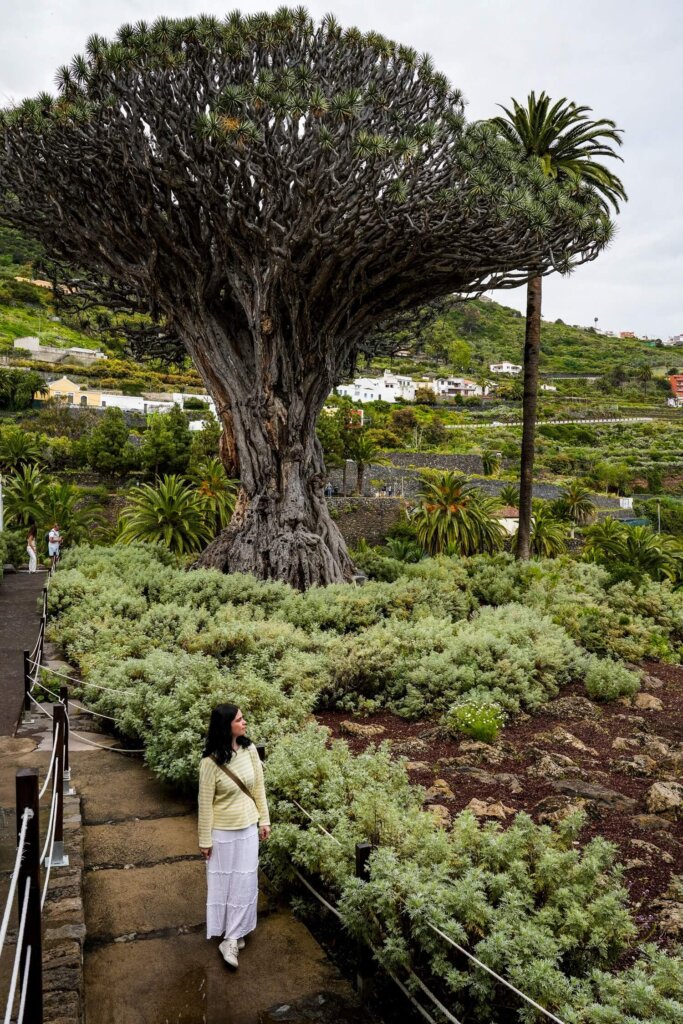
With an estimated age of around 800 years, Icod’s Drago tree is the oldest living specimen of Dracaena draco. You can find it inside Parque del Drago (or Drago Park), a lush botanic garden filled with endemic plants. The tree was declared a national monument in 1917.
Whilst the main attraction is the Drago tree, make sure to spend some time walking around the rest of the park. There are a number of paths circling the park, with different native plants such as cardons and tabaibas on display. As we made our way around we got to enjoy the Drago tree from various angles. They even had some curious chickens roaming around.
Opening times and entry fees. The park is open from 9AM to 8PM between April and September, and 10AM to 6PM from October to March. Entry fee is 5EUR for adults and 3EUR for children. Book your ticket in advance here.


2. Enjoy the View of the Drago Tree from Casa del Drago Café
After you walk around the park, we suggest checking out the Casa del Drago Café. It’s a very scenic café, with the Drago tree towering behind its walls.
They served many lovely looking drinks and the food also looked delicious, although we only had a cake and a coffee here. Since the umbrellas were up, we couldn’t get the full view of the tree whilst sat there though. However, it was still a lovely spot to hang out for a while and the staff were incredibly friendly.

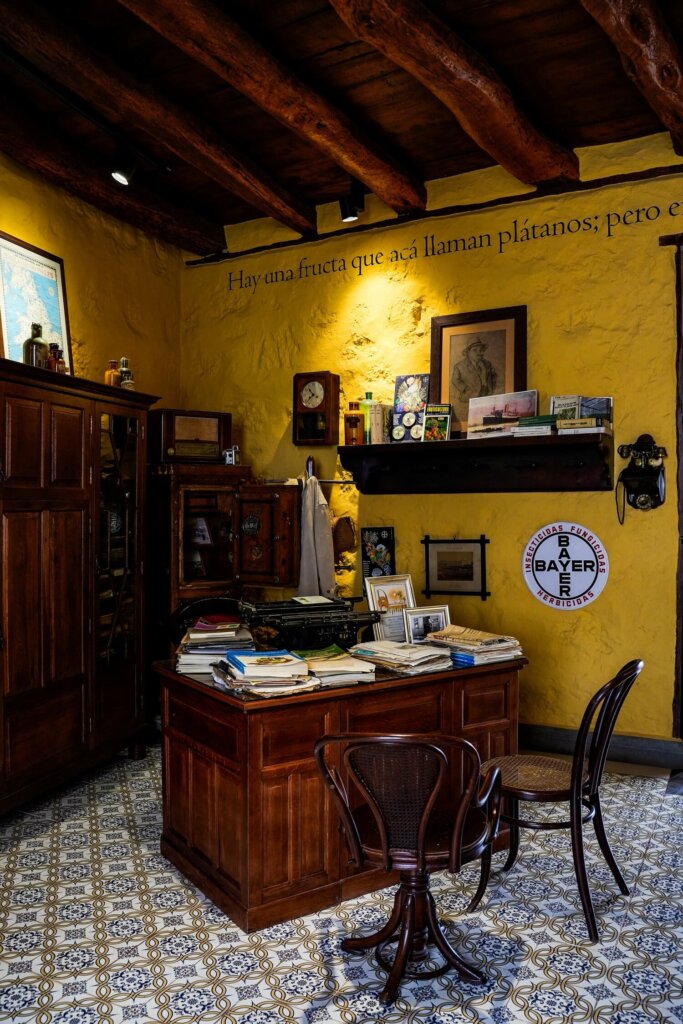
3. Learn About Banana Production at Casa del Plátano
Whilst the Drago tree is the top attraction in Icod de los Vinos, we also highly recommend visiting the Banana Museum.
Tenerife’s subtropical climate and fertile volcanic soil is perfect for growing bananas. In fact, banana cultivation has a long history and significant importance to the island’s economy. We saw a lot of banana trees as we were driving along the coast, so visiting the Banana Museum was a great way to expand our knowledge on bananas.
Casa del Plátano had a ton of information about the history of bananas on the Canary Islands, including their production and interesting facts about bananas in general. The museum also has its own banana plantation where we could walk amongst the trees. To our surprise, we each got a free banana with our entry ticket. With the majority of bananas sold in the UK coming from Costa Rica, Ecuador and Colombia, it was lovely to enjoy one from the Canary Islands. Eating fresh fruits from the country they’re grown in always taste way better!
If you didn’t know, the Canarian banana is the only one in Europe to have the PGI (Protected Geographical Indication) seal. Naturally, we tried to eat as many bananas as possible whilst we were in Tenerife.
The museum also had toilets and a small gift shop where we could sample some banana liquor or buy some banana-themed souvenirs.
Entry fee. Admission is 5EUR per person + a free delicious banana. Book your ticket in advance here.

4. See Blue Morpho at Mariposario del Drago Butterfly Park
Next to the Parque del Drago Milenario, you can visit Mariposario del Drago Butterfly Park. The garden is home to around 800 butterflies, with at least 150 different species from various tropical parts of the world. You can also observe other stages of a butterfly’s life cycle, such as eggs and caterpillars.
If you love butterflies and especially want to see the stunning Blue Morpho, then consider visiting. Bear in mind, you’ll need a lot of patience to snap the iconic photo of them because they tend to keep their wings closed. Since we’d seen many during our time in Ecuador, we didn’t feel the need to stop here.
Opening times and entry fees. The butterfly garden is open daily from 10AM to 7:30PM. Admission is 10 EUR per person.
5. Get Another View of the Drago Tree from Plaza Andrés de Lorenzo Cáceres
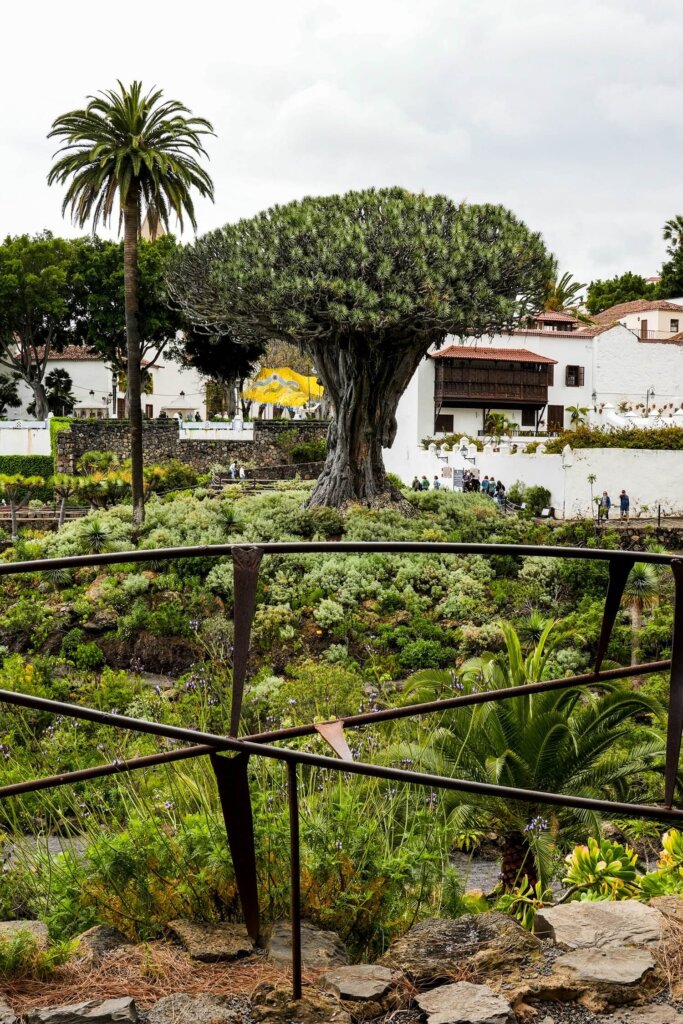
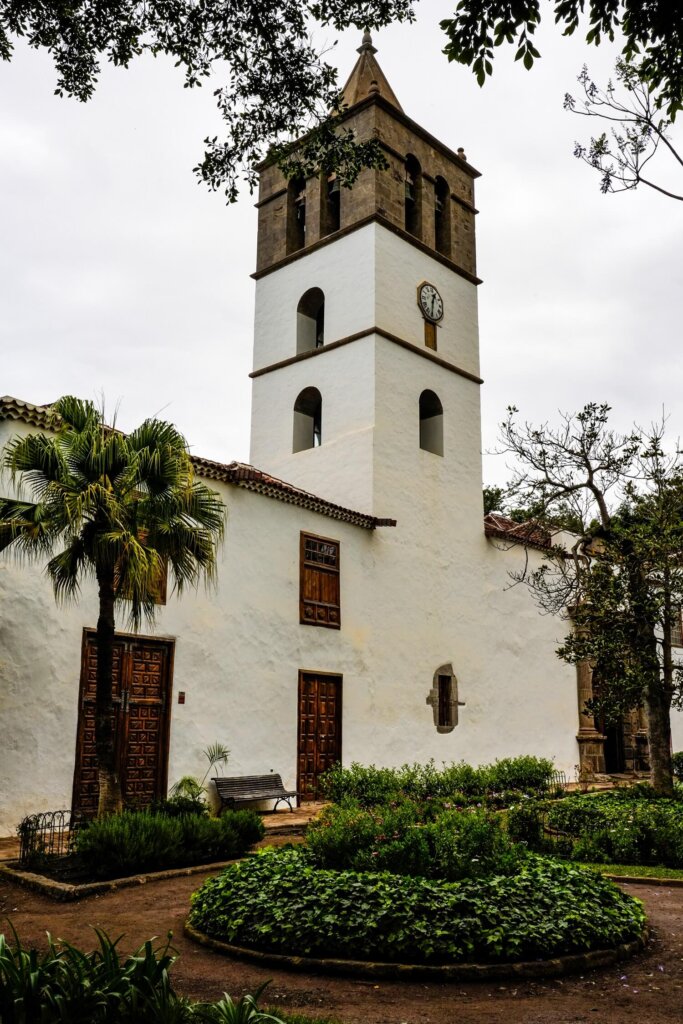
Right across from Casa del Drago Café is the main square of Icod, Plaza Andrés de Lorenzo Cáceres. Thanks to its elevated position, we got an undisturbed view of the Drago tree from there. They even mark it on Google Maps as a free viewpoint (Mirador Gratuito del Drago Milenario), so you cannot miss it.
The square itself is a lovely leafy spot to wander around with palm trees, Indian laurels and jacarandas. Dominating this 16-century plaza is Parroquia San Marcos, which was built on the site of a small chapel. Its exterior is beautiful but it’s also worth having a sneak-peek inside. There are different religious images and statues around the interior, including the Cristo Naciente, made from corn paste in Mexico.
There’s also a Sacred Museum (Museo Sacro) with ecclesiastic clothing and the 2m tall Cruz de Filigrana on display, which was made in Havana.
6. Stop by Plaza de la Pila (Plaza de la Constitución)
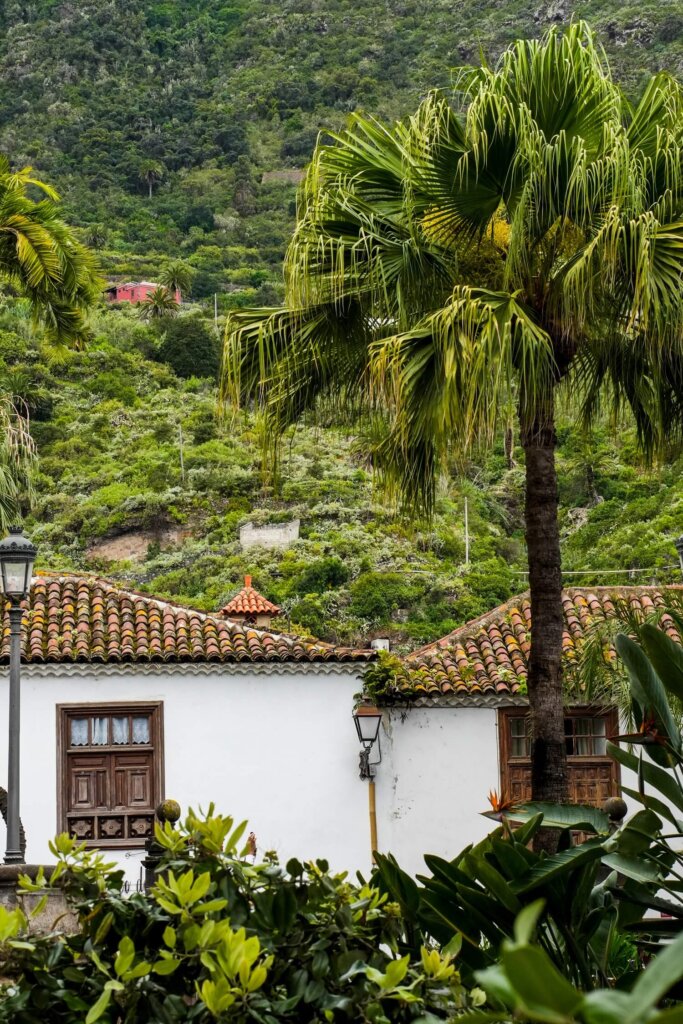
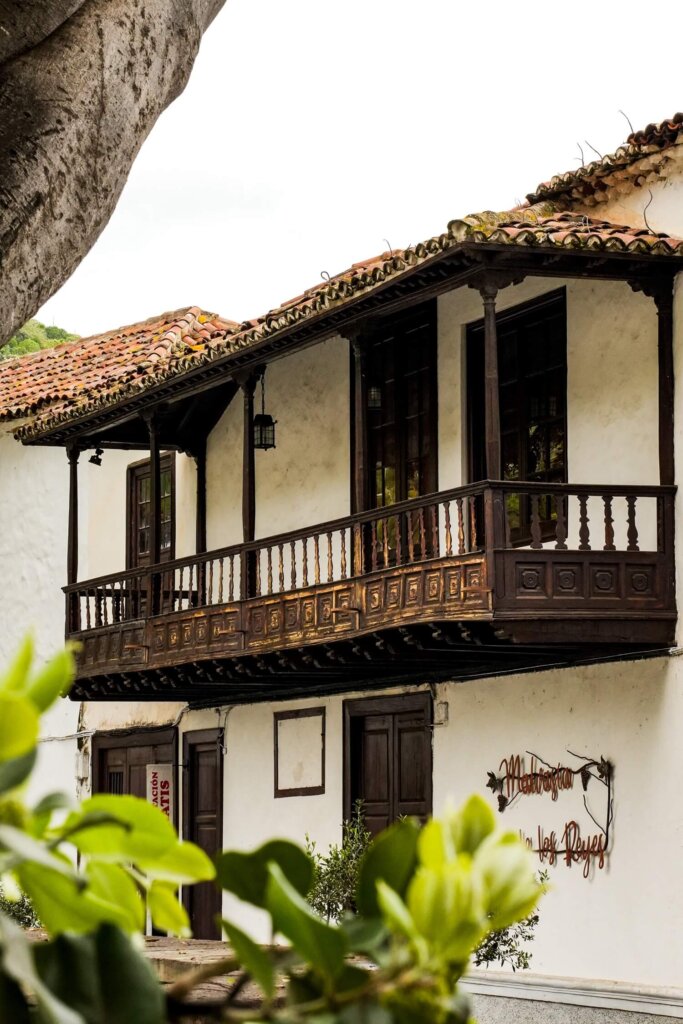
This is a much smaller square just behind Plaza Andrés de Lorenzo Cáceres, but is worth checking out briefly. Surrounding the leafy plaza are some Canarian-stye stately homes, dating back to the 16th and 17th centuries.
The most outstanding building is the yellow Casa de los Cáceres. Apparently, the house has a total of 365 windows and doors, although we didn’t count them. There’s also an 18th century fountain in the middle, which was installed to supply water to Icod.
Malvasía Museum (Bodega Museo de Malvasía) is opposite Casa de los Cáceres. It is a family-run museum where you can book a wine tasting experience to learn about the wine-making process. The museum is open from Tuesday to Saturday between 11AM and 6PM. You can check out their website here.
7. Take a Tour of Cueva del Viento
Cueva del Viento is one of the most impressive natural wonders you can visit in Tenerife. The lava tube was formed 27,000 years ago by Pico Viejo volcano, which is right next to Mount Teide.
Stretching for 18 kilometres, this volcanic formation is actually the longest lava tube in Europe and the 5th longest in the world after the ones in Hawaii. You can visit some sections with a guide, who will tell you more about the characteristics of the lava tube. The tour is in small groups and lasts about 2.5 hours. You’ll get helmets and headlamps, but you’ll need to wear closed-toe shoes and long layers because it’s cooler inside.
Opening times and entry fees. It’s open daily between 9AM and 4PM. The tour is 25 EUR per adult and 8.50 EUR per child. Unfortunately, all tickets were sold out for the entire week we were in Tenerife, so we couldn’t visit. It’s a popular activity with very limited availability, so we highly recommend booking the tour way in advance.

How Long Do You Need in Icod de los Vinos
We would allocate at least a few hours to see the best of Icod de los Vinos. This will allow you to visit the Dragon Tree Park, the Banana Museum and walk around the historic centre. If you manage to book a guided tour of Cueva del Viento, then add on another 3 hours just for that.
If you’re not in a rush, you could easily extend your time and spend an entire day in Icod de los Vinos by going on a wine tasting experience or just relaxing on Playa de San Marcos. You can even book a few nights stay in Icod. Below are our top hotel picks.
🛌Where to Stay in Icod de los Vinos – Best Hotels
- Hotel Emblemático San Agustin is located in a renovated 18th-century Canarian-style house with a lovely courtyard in the centre of Icod. Breakfast is included and guests get a complimentary glass of wine on arrival.
- Flor del Drago is a spacious two bedroom apartment that has all the amenities you need for a longer stay.
- Platanera Suites offers spacious apartments within a historic building, with kitchen facilities and large sleeping and living areas.

Other Places to Visit Near Icod de los Vinos, Tenerife
There are many charming small towns, bigger cities and natural areas to visit along the north coast of Tenerife. Most of them are no more than an hour’s drive from Icod.
- Garachico. Its landscape was shaped by a destructive volcano eruption, so Garachico is one of the most picturesque places you can visit along Tenerife’s north coast. Its historic centre is full of traditional Canarian houses with wooden balconies, historic buildings and landmarks.
- Teide National Park. Home to the mighty Teide Volcano, a visit to Teide National Park is a must if you’re in Tenerife. From cable car rides to scenic hikes and viewpoints, Teide offers a fantastic day out.
- Puerto de la Cruz. With quaint cobbled streets, historic buildings, street art, lush botanical gardens and black sandy beaches, a day trip to the city is definitely worth the 40-minute drive.
- La Orotava. If you made it to Puerto de la Cruz, then you can’t skip a visit to the small mountain town of La Orotava. It may be small, but it’s packed with interesting museums and picturesque historical buildings.
- Masca. This small village nestled in the mountains is often referred to as the Machu Picchu of the Canary Islands. The drive to Masca is an adventure on its own, with hairpin turns, steep drops and incredible scenery.
Read Next: Where to stay in Tenerife? – Best Areas and Hotels
Final Thoughts on Visiting Icod de los Vinos in Tenerife
In our opinion, Icod de los Vinos is definitely worth a visit. Although its main attraction is the Drago tree, there’s plenty more to do than just seeing the ancient tree. We especially loved our visit to the Banana Museum and also enjoyed walking around the historic centre. The trip would’ve been even better if we’d managed to book a guided tour of the lava tubes, but even without it we had a lovely time.
We hope this guide has given you a good overview on what to do in Icod de los Vinos. If you found this blog post useful and want to show your support, you can buy us a coffee here.
Now, let your adventure begin,

Remember…It all starts with a Pin…


this looks so gorgeous! the Canary Islands have been on my bucket list for a long time and this makes me think Tenerife definitely has to be part of that trip!
Loved this guide! Great photos also, looked like such a great spot to visit.
Very useful article! I’d love to see the Cueva del Viento and the Drago Tree. I have a thing for old, majestic trees!
This was a beautifully written article with gorgeous pictures and fantastic tips!
What a fantastic guide! The photos make Icod de los Vinos look absolutely charming, especially the Drago Milenario and the historic streets.
I didn’t know Tenerife has such a unique tree! It looks kind of like the dragon’s blood tree in Socotra. But that’s all the way in the Indian Ocean, it can’t be the same tree though, can it?