
Puebla, Mexico Travel Guide – Things to Do and See

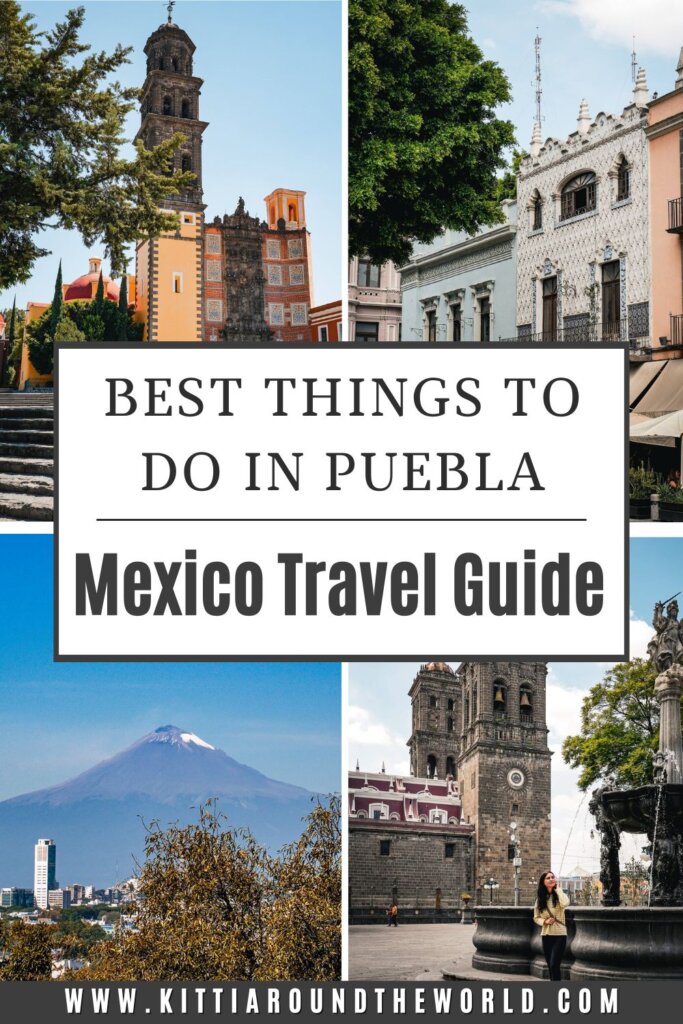
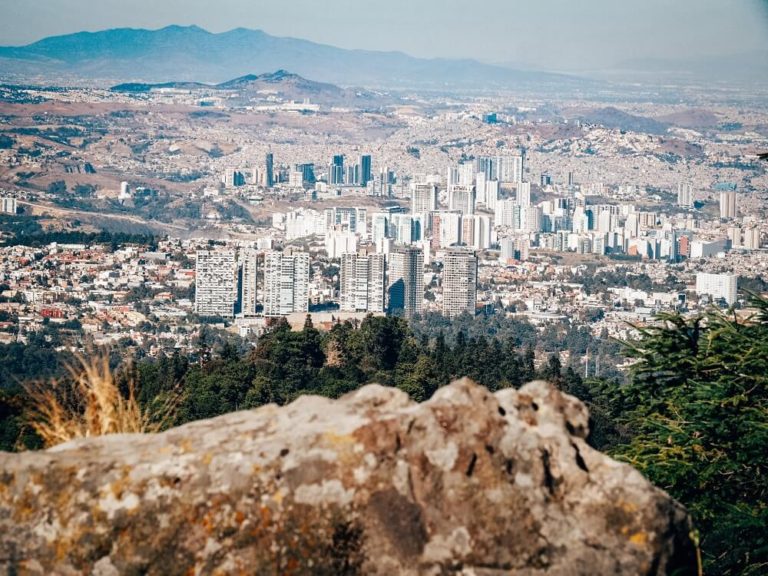
Volcano views, beautiful churches, colourful streets, interesting museums, amazing food and stunning architecture. Welcome to Puebla, the fifth largest city in Mexico. Although Puebla is a big city with plenty to do and see, it has a much more laid-back vibe compared to Mexico City. In this guide, we’ll dive into the many places and landmarks to visit in Puebla, including a few day trip options.
Puebla had been on our radar for some time, since some of our good friends live there. Whilst we didn’t make it to the city during our first trip to Mexico, we made sure to spend a few days there the second time around. As we pulled into the main bus terminal at sunrise and saw the golden light touching Popocatépetl and Iztaccíhuatl volcanoes in the distance, we knew that we’d made the right decision in stopping here.
If you’d like to see what we got up to in the city, make sure to watch our dedicated Puebla video. If you’re interested in more Mexico content, check out the Mexico Playlist on our YouTube Channel.
Disclosure: This post may contain affiliate links, which means we may receive a small commission if you click a link and purchase something. Clicking these links won’t cost you anything, but it will help us to keep this site up and running! Learn more about our affiliate policy.
Where is Puebla City in Mexico?
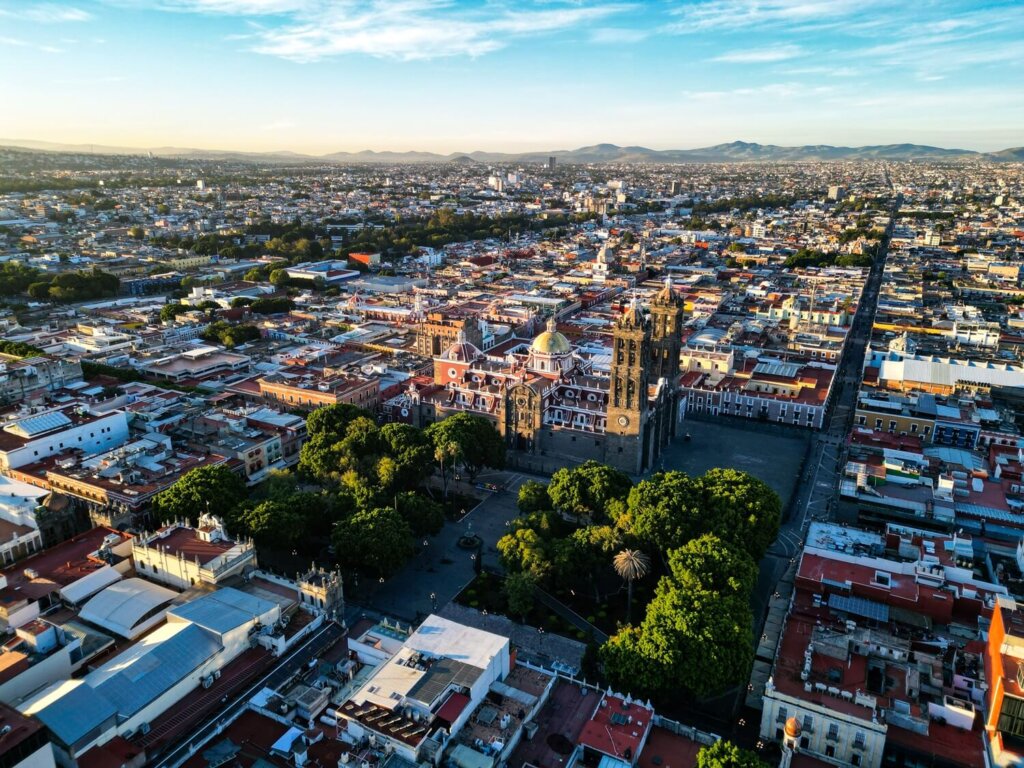
Puebla is located about 100km east of Mexico City, the country’s capital. The easiest way to get there is by public transport. Our step-by-step guide on getting to Puebla from Mexico City by bus should give you all the important details. You can also visit Puebla from other states by taking a long-haul bus. In that case, we suggest reading our Mexico bus travel guide that lists many potential bus companies you can use.
Puebla was founded in 1531 and at the time it was called Puebla de los Ángeles or “City of Angels”. Today, the city is officially called Puebla de Zaragoza, however most people just refer to it as Puebla. It’s the largest city in the state of Puebla (the city and the state share the same name) and the fifth largest in Mexico.
In 1987, Puebla’s Historic Centre was declared a UNESCO World Heritage site thanks to the preservation of its 16th and 17th-century historical buildings.
Things to Do and See in Puebla, Mexico
1. Get to Know Puebla with a Free Walking Tour
Puebla is a popular day trip from Mexico City, so if you only have a few hours we recommend joining a free walking tour to see the best of the city. It starts in the Zocalo, or main square, and will take you to some of the main points of interest in the Historic Centre.
Whilst the walking tour won’t actually take you inside any museums or churches, it’s a nice way to learn more about Puebla’s history, architecture and gastronomy. If you’re staying a night or so in Puebla, then you can return to some of the places we’re going to mention below on your own.
Please note that the walking tour is based around tips, so come prepared with some cash.


2. Relax at the Zocalo – The Main Square of Puebla
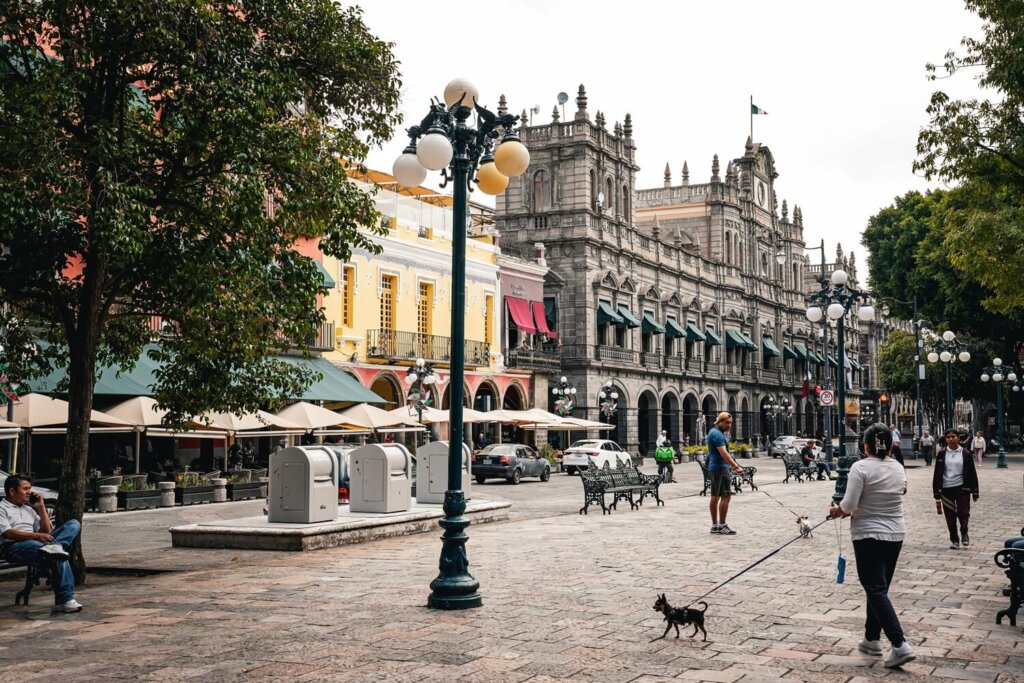
The first spot we visited in Puebla was the Zocalo. It has become somewhat of a tradition for us to visit a city’s main square at least twice (if not more) during our stay. Whilst the square is much smaller than Mexico City’s, we actually enjoyed it way more. First of all, it’s very leafy, with plenty of benches to rest on. The square is also surrounded by colourful colonial buildings, landmarks, shops and cafes. It just felt more intimate compared to the enormously large Zocalo in the Historic Centre of Mexico City.
We went to the plaza early in the morning to appreciate the peace and quiet, which is also a great time for urban landscape photography. Then, of course, we returned later to witness the Zocalo coming alive at night. By early evening the square is filled with people, both locals and tourists alike, as well as food vendors and street performers. Many people just sit in one of the restaurants or cafes and enjoy a meal or a drink whilst watching the world go by. After sunset, Puebla Cathedral is beautifully lit up, which would be a shame to miss.
3. See the Most Beautiful Churches in Puebla
We didn’t realise just how many churches the city of Puebla had. After a little online digging, it turns out that there are in fact hundreds of churches scattered across the city. Whilst you probably won’t want to solely visit churches whilst in Puebla, we recommend adding a few to your itinerary. Below we’ve listed some of our favourites.
Puebla Cathedral (Catedral de Puebla)
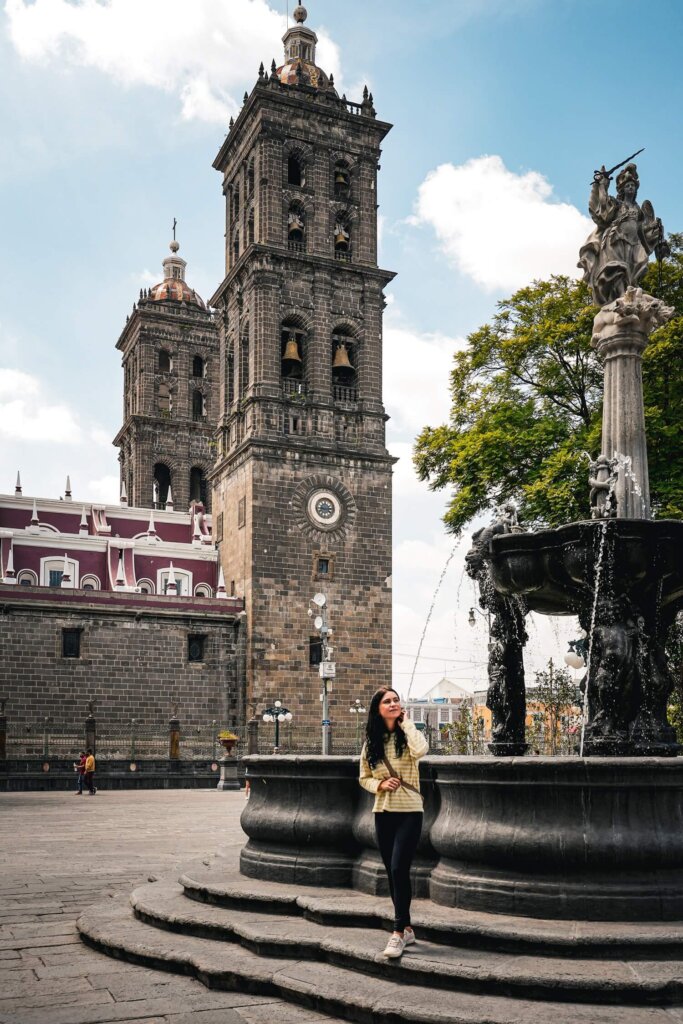
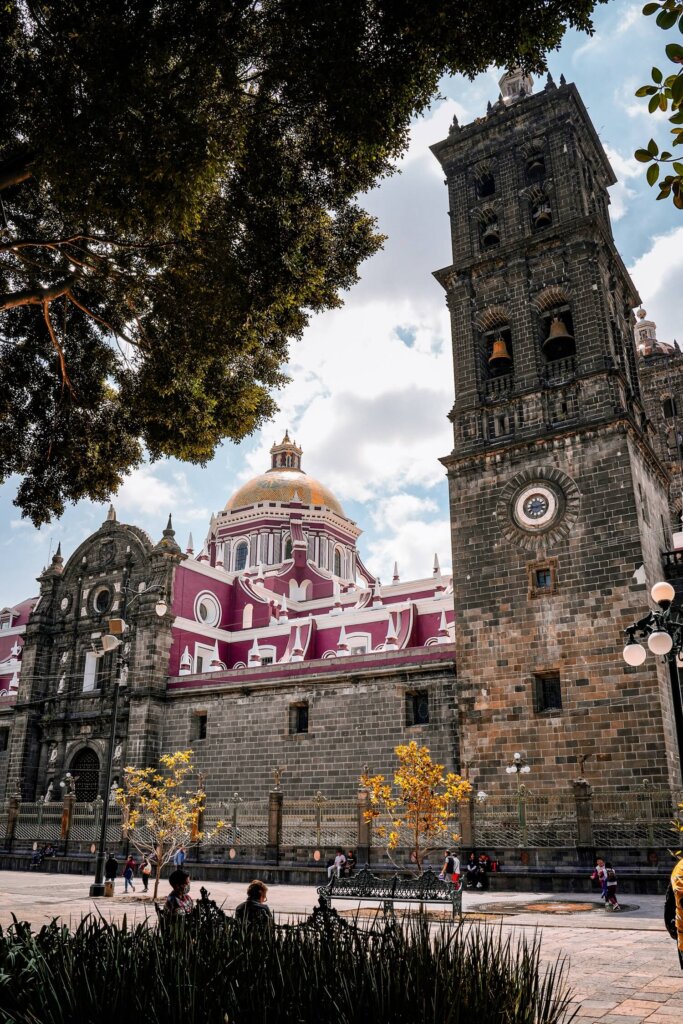
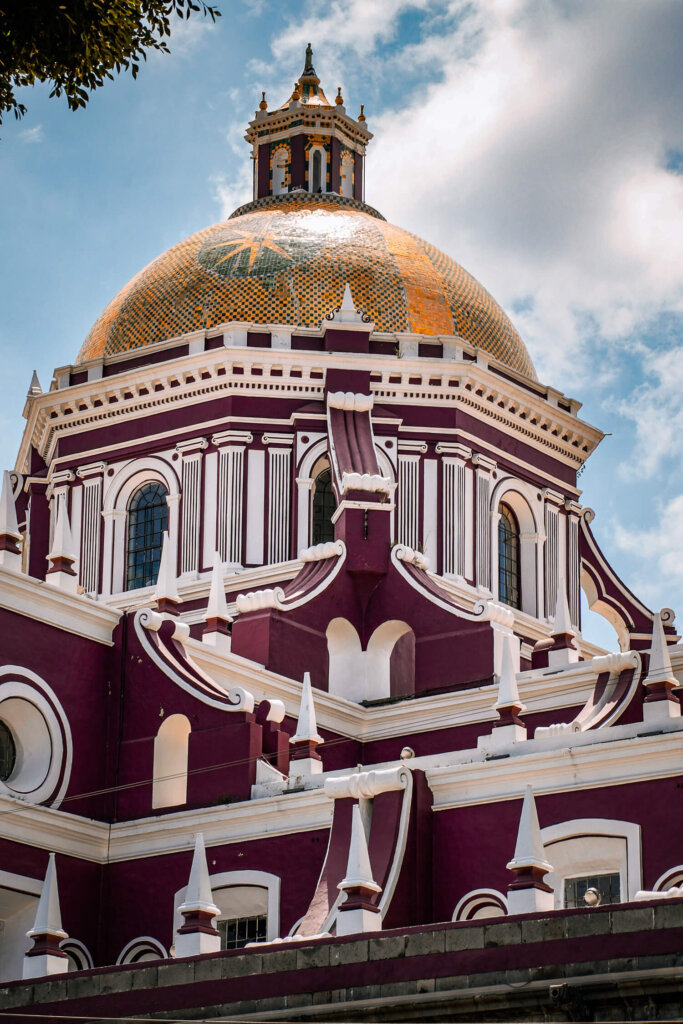
We simply couldn’t skip a visit to Puebla’s most important religious building: the Cathedral. It occupies the entire southern side of the Zocalo, although, unlike most cathedrals we visited, the building’s main doors don’t actually face the plaza.
Construction started on the Cathedral in 1575 and was completed over 70 years later, in 1649. The facade is a blend of Herrerian (Spanish Renaissance), Baroque and Neoclassical styles, which was finished in 1690. An interesting fact that we learnt is that the towers are actually the tallest in Mexico and only one of them has bells inside.
As it’s free to enter, we suggest looking inside the Cathedral. The interior is quite beautiful and contains many artefacts and paintings.


Santo Domingo Church and the Rosary Chapel (Templo de Santo Domingo / Capilla del Rosario)
If you only visit inside one church in Puebla, then it should be the Church of Santo Domingo. This catholic church is only two blocks north of the Zocalo and whilst it’s a lovely religious building to look at from the outside, your jaw will definitely drop when you walk inside.
It was built in the New Spanish Baroque architectural style between 1572 and 1608. The main feature of the church is the gold altar which houses numerous statues of saints and the Virgin Mary. If you find that altar impressive, just wait until you see the Rosary Chapel on the left side of the church. Also known as the “The Golden House”, this small chapel is covered in golden stucco and beautiful blue and white Talavera tiles. The chapel was built between 1650 and 1690 and has even been described as the “eighth wonder of the world”.
I believe the last time we were so blown away by a church’s interior was when we stepped inside St John’s Co-Cathedral in Valletta, Malta. Unfortunately, there was a service in the chapel when we visited, so we couldn’t get a closer look.
It’s free to visit inside the church and we were allowed to take photos, just without flash.
The Temple of the Holy Spirit (La Compañía – Templo Expiatorio del Espíritu Santo)
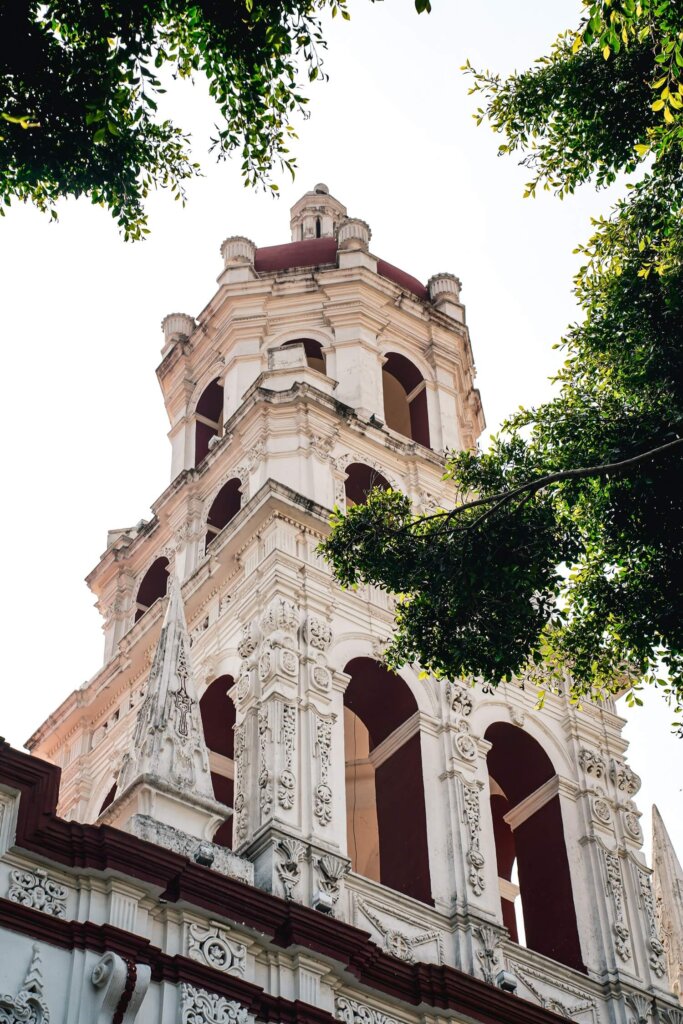
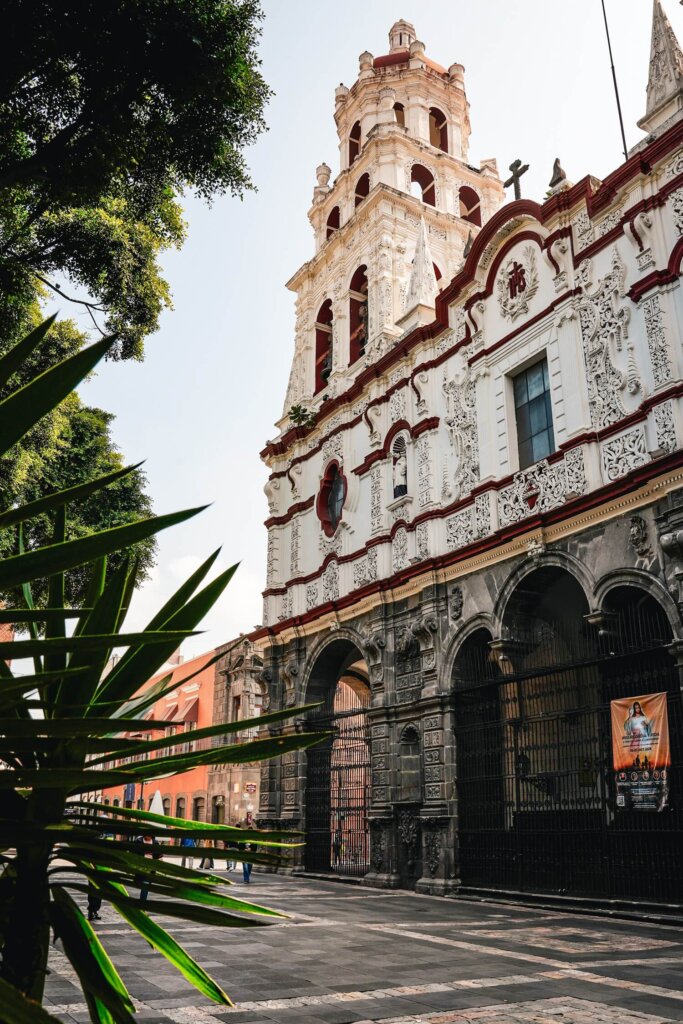
Another church located in close proximity to the Zocalo is the Temple of the Holy Spirit. It was founded by the Society of Jesus, so it’s also know as “La Compania”.
This church is best known for being the final resting place of Catarina de San Juan, also known as China Poblana. China Poblana is also the traditional dress of women in Puebla. We loved the church’s incredible white exterior sitting on top of a dark stone base.
San Francisco Church (Templo de San Francisco)
When we drove past this church early in the morning on route to our accommodation, just after getting off the overnight bus from Palenque, we knew that we had to check it out at some point.
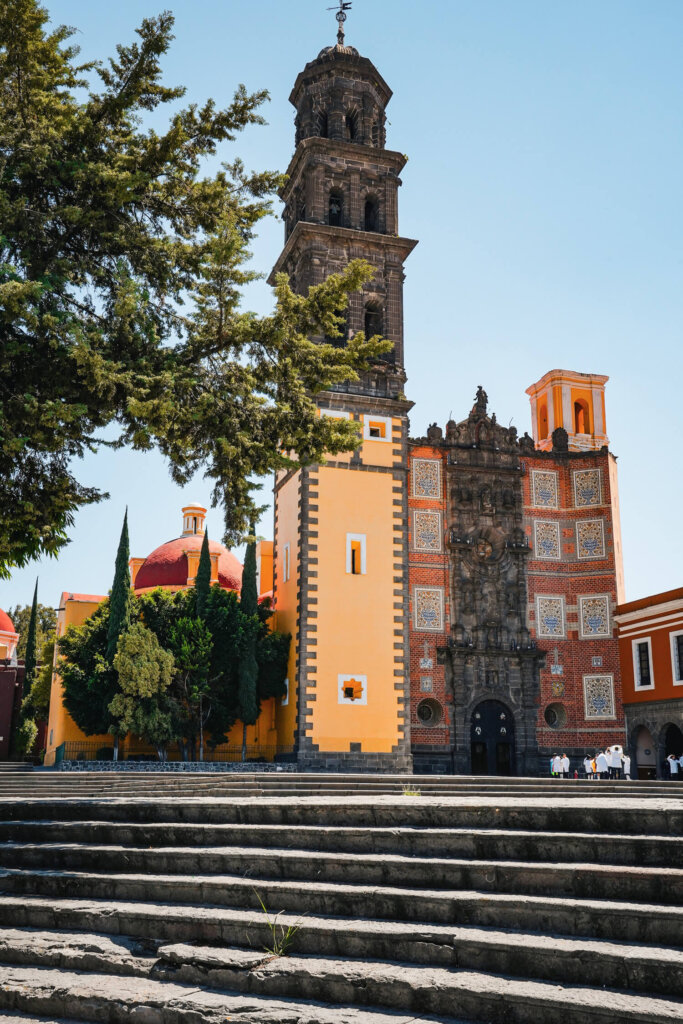
Luckily, the San Francisco Church was en-route back to the Centro Historico after we’d visited the Historic Zone of the Forts (more on that later). Unlike Santo Domingo Church, Templo de San Francisco’s exterior is what drew us to it in the first place.
Its 63m tall bell tower is impressive enough, but the most stunning feature of this church has to be the large Talavera panels that adorn the façade. After our visit, we learnt that it was actually the first convent established in Puebla.
Parish of San Jose (Parroquia de Nuestro Señor San José)
We walked past the Church of St Joseph on our way to the Historic Zone of the Forts and Pasaje Histórico 5 de Mayo.
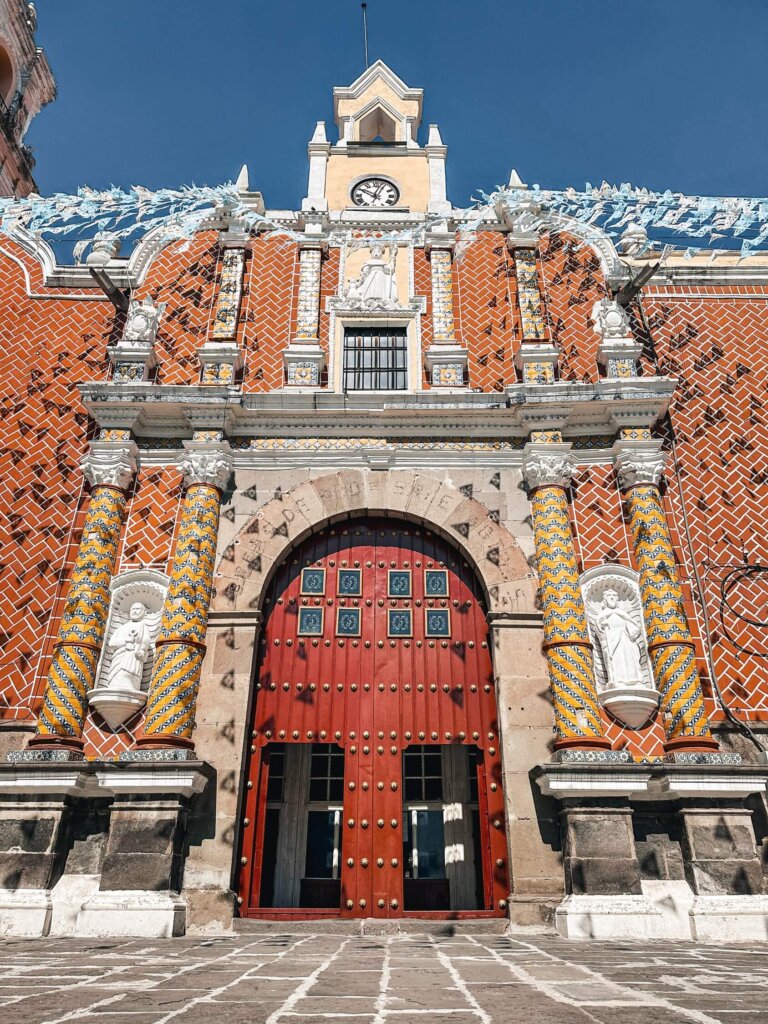
The main draw of this church has to be the beautiful brick façade with Talavera tiles. Inside, the main altar is built in the neoclassical style, although the altarpieces are decorated in Baroque and Churrigueresque styles.
4. Admire the Talavera Tiles (Azulejos) on the Buildings of Puebla
If you’ve been to Mexico City already, you’ve probably noticed that quite a few buildings are adorned with beautiful tiles, also known as azulejos, or Talavera. It is a type of majolica, a tin-glazed ceramic originally from Talavera de la Reina in Spain. Talavera pottery was introduced to Mexico in the 16th century.
As we walked around the Centro Historico of Puebla we noticed that even more buildings were adorned with them here than in Mexico City. This is because authentic Talavera tiles come from the large amount of high-quality natural clay found around Puebla. The whole process of turning that clay into tiles can actually take months from start to finish.
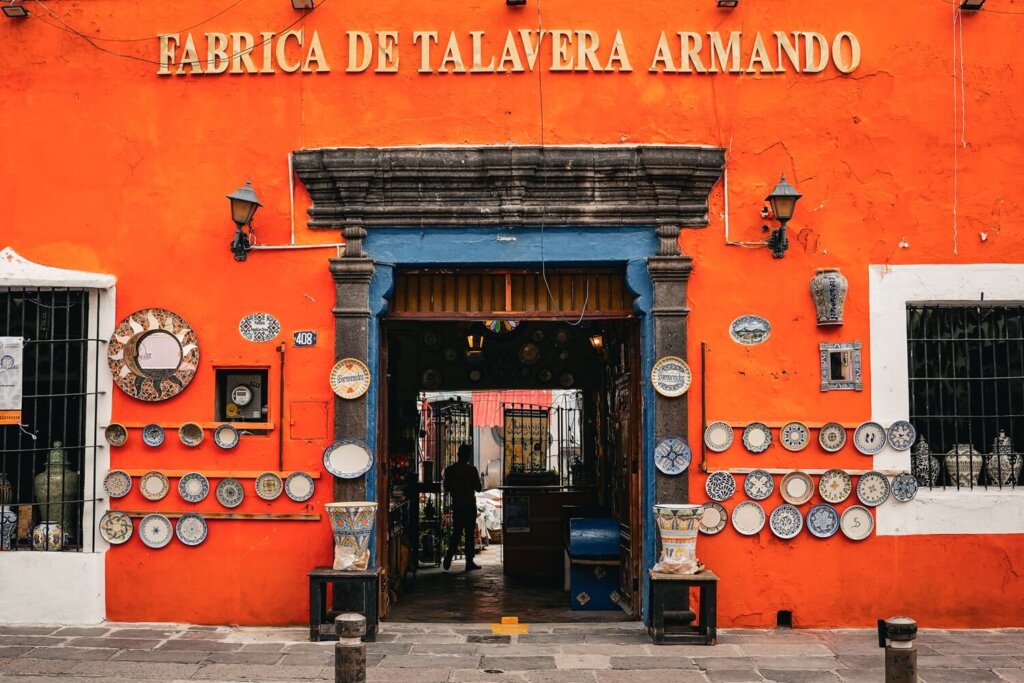
Apart from tiles, we also saw other products such as plates, bowls, vases and figurines being sold in souvenir shops.
Museum Armando Talavera Poblana, located around the Artist District, is a great spot to see many beautiful Talavera Pottery products. In addition, you can also visit Museo de Talavera Celia around the Historic Zone of the Forts park.

5. Visit Biblioteca Palafoxiana – the Oldest Public Library in the Americas
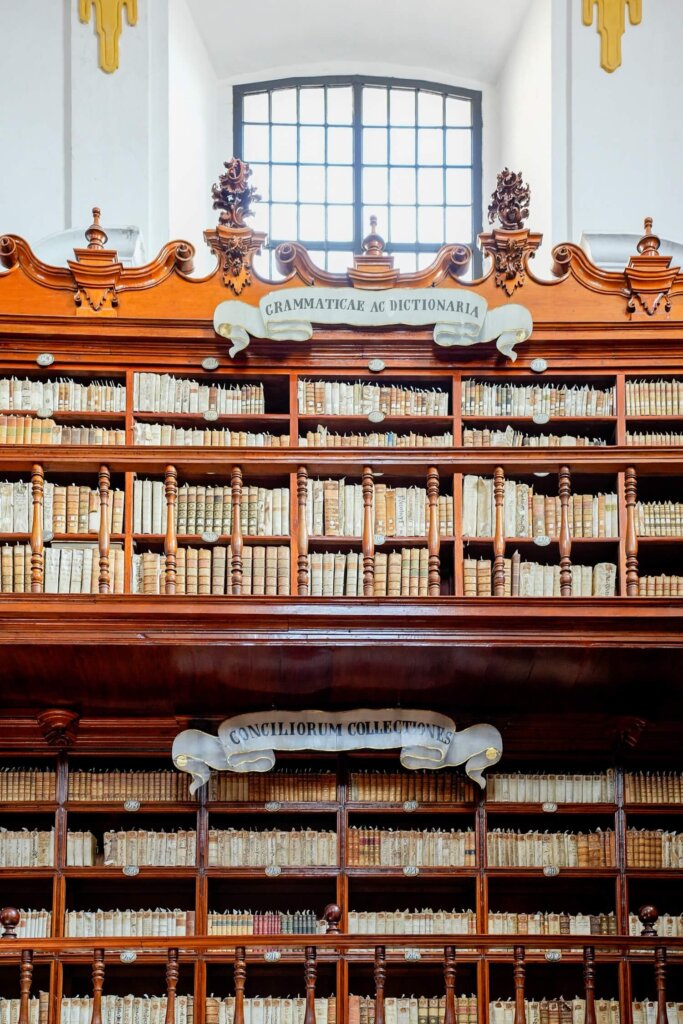
Possibly one of the most popular things to do in Puebla is to visit the Palafoxiana Library. The library is located inside the Casa de la Cultura (Cultural Center).
It was founded in 1646 when Bishop Juan de Palafox y Mendoza donated his personal library of 5,000 books. He wished for the books to be available to the general public. This condition turned it into the very first public library in the Americas, which was later recognised by UNESCO.
In the 18th century, Bishop Francisco Fabian y Fuero also donated his private collection before a third level was added to the library in the 19th century. Today, it houses about 45,000 volumes spread across multiple subjects.
It’s essentially just one huge room, so you can get a sneak peek of the library for free. However, if you want to go inside, you’ll have to pay 40MXN pesos. We think it’s worth going in to have a slightly closer look, although we couldn’t access the second and third levels.

6. Visit the Museums of Puebla
Puebla also has plenty of museums to visit, depending on your interests. Below we’ve listed a few to consider outside of the Historic Zone of the Forts Park, which we’ve dedicated a section to further below.
Tip. Even if you don’t have time to visit every museum, we still recommend at least admiring the buildings from the outside.


Museo Amparo – The Best Museum in Puebla
Our favourite museum in Puebla was Amparo Museum, only a few blocks south of the Zocalo.
The museum houses galleries from different time periods, including Pre-Hispanic and Contemporary art collections. As we wandered through the rooms we saw various artefacts, sculptures, paintings and ornaments showcasing the culture and history of Mexico. The interior courtyards were also very pretty.
However, what really completed our visit was the rooftop café terrace, from where we could enjoy views of the many domes and towers of Puebla’s important buildings.
Entry fee is 85MXN pesos per person, although on Sundays you can visit for free. Please note that it’s closed on Tuesdays. For up-to-date opening times and entry fees visit the museum’s official website.

Museo Regional De La Revolución Mexicana
Located next to Calle de los Dulces, just three blocks north of the Zocalo, is the Museum of the Mexican Revolution. It was the home of the Serdán family, key figures in the Mexican Revolution.
Even if you don’t want to go inside, it’s worth walking past as you’ll see the bullet holes covering the front of the building. However, if you enjoy history, definitely visit inside. The rooms in the museum will offer an insight into the daily life of the Serdán family and the events leading up to the Mexican Revolution.
Entry fee is 45MXN pesos per person. It’s closed on Mondays.
Casa de los Muñecos
The House of Dolls is a stunning three-story Baroque-style building right next to the Zocalo.
Even if you don’t visit inside, we suggest spending a few minutes looking at its facade. It’s adorned with intriguing human figures, which is where the museum’s name “muñecos”, or dolls, comes from. Of course, the walls also feature the iconic Talavera tiles.
Entry fee is 30MXN pesos per person. For up-to-date opening times and entry fees, check out the museum’s official website.

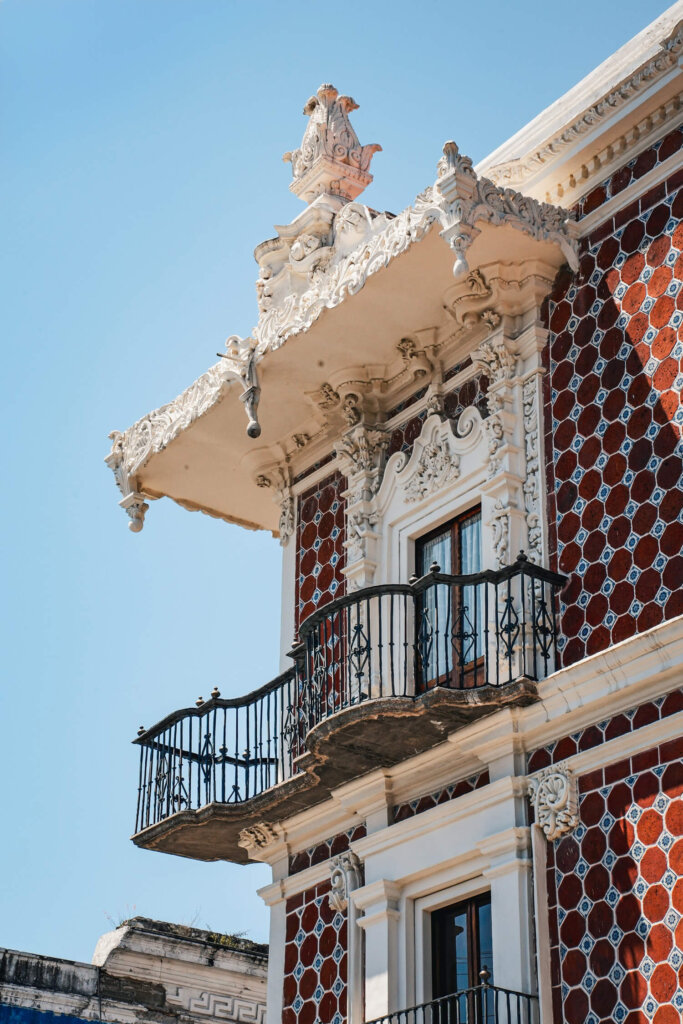
Museo Casa de Alfeñique
This museum is located in the vicinity of the Barrio del Artistas in the Historic Centre of Puebla.
The exterior itself is impressive enough, but if you’d like to see some China Poblana, the traditional women’s dress of Puebla, on display, as well as some Talavera Pottery, then definitely visit inside.
It also has a large collection of artifacts, paintings and furniture that gives you a glimpse of Puebla during the colonial era.
Entry fee is around 45MXN pesos per person. It’s closed on Mondays.
Museo Internacional del Barroco
Although we didn’t make it to the International Museum of the Baroque, we thought it was worth adding to our list. It’s located quite outside Puebla Centro, which was the main reason we didn’t have time to visit. However, if you enjoy architecture, music and art, consider adding it to your itinerary.
The exterior itself is a work of art, designed by Japanese architect Toyo Itō. It has many exhibition rooms dedicated to the Baroque period.
Entry fee is 80MXN pesos per person, although it’s free on Wednesdays and Sundays. It’s closed on Mondays.
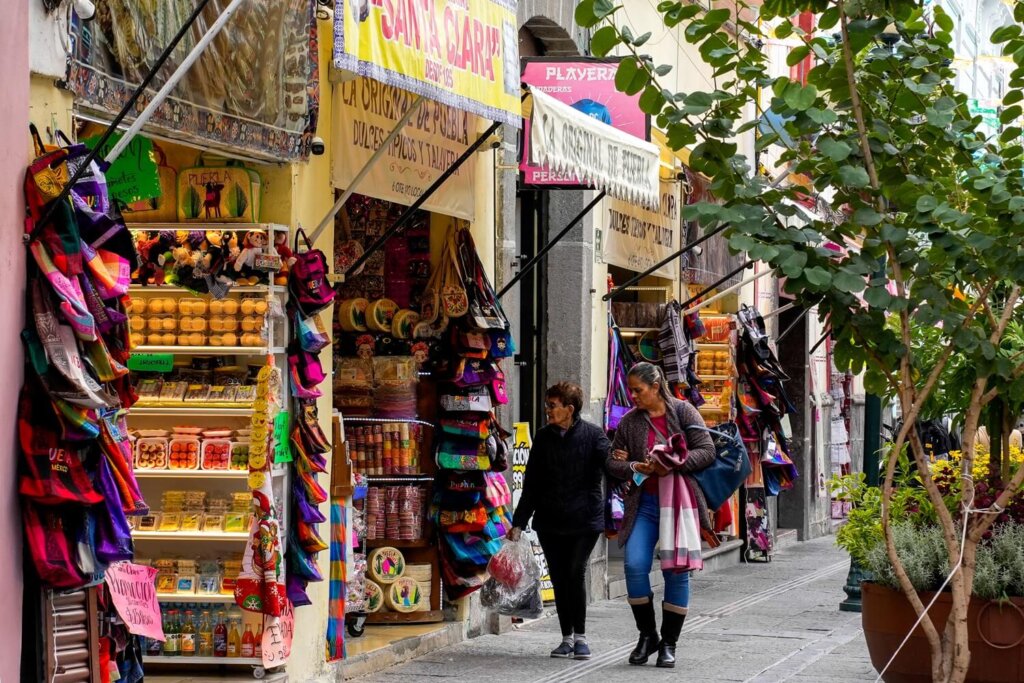
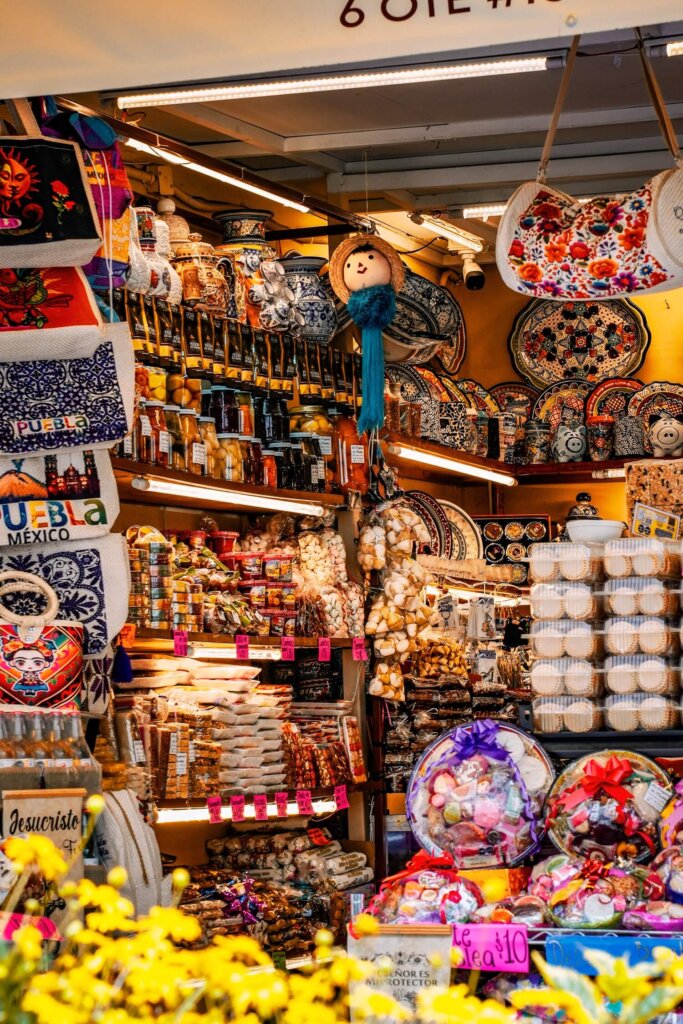
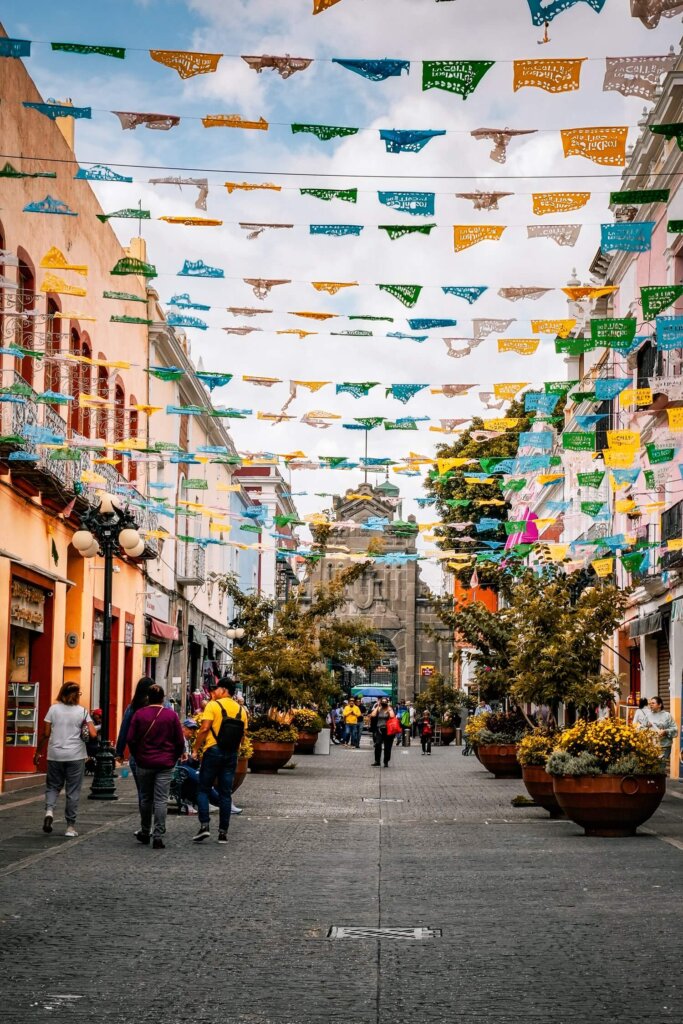
7. Buy Traditional Mexican Candies at Calle de los Dulces
Mexican sweets are like nothing we’ve tried before but it wasn’t hard to fall in love with them. The flavours can range from spicy to sweet and you never fully know what you’re going to get until you taste them. So, when we learnt that there was an entire street lined with sweet shops in Puebla, we couldn’t resist a visit.
The appropriately named Calle de los Dulces (Candy Street) is only a few blocks north of the Zocalo. Every store along this street sells a variety of affordable treats, so it would be a mistake not to indulge in buying some.
If you want to be adventurous, just buy a random selection that you can trial later, maybe when hanging out at the Zocalo in the evening. Whilst you may not be a fan of every single one, it’s definitely a fun activity to do in Puebla. Also, don’t forget to take note of the ones that you did like, so you can purchase more of them later. Our personal favourites are: De la Rosa Mazapan, Bolitas de Leche, Pulparindo, Dragonzitos and Pachicleta.


8. Browse the El Parian Market
One of the most visited spots in Puebla after the Zocalo has to be the El Parian Market. This handicraft market has over a hundred stalls that are decorated with brick and, you guessed it, Talavera tiles.
If you’re after some souvenirs, then you’ll find them at El Parian Market. Vendors sell all kinds of products such as traditional clothes, pottery, jewellery and other hand-made keepsakes. Our favourite ones were the alebrijes, which are small, colourful spirit animal sculptures. Nowadays, they’re incorporated into the Day of the Dead celebrations.
It can get quite busy, so after browsing for a while we decided to hang out in the Artist’s Quarter right next to the market.


9. Hang Out at the Barrio del Artistas
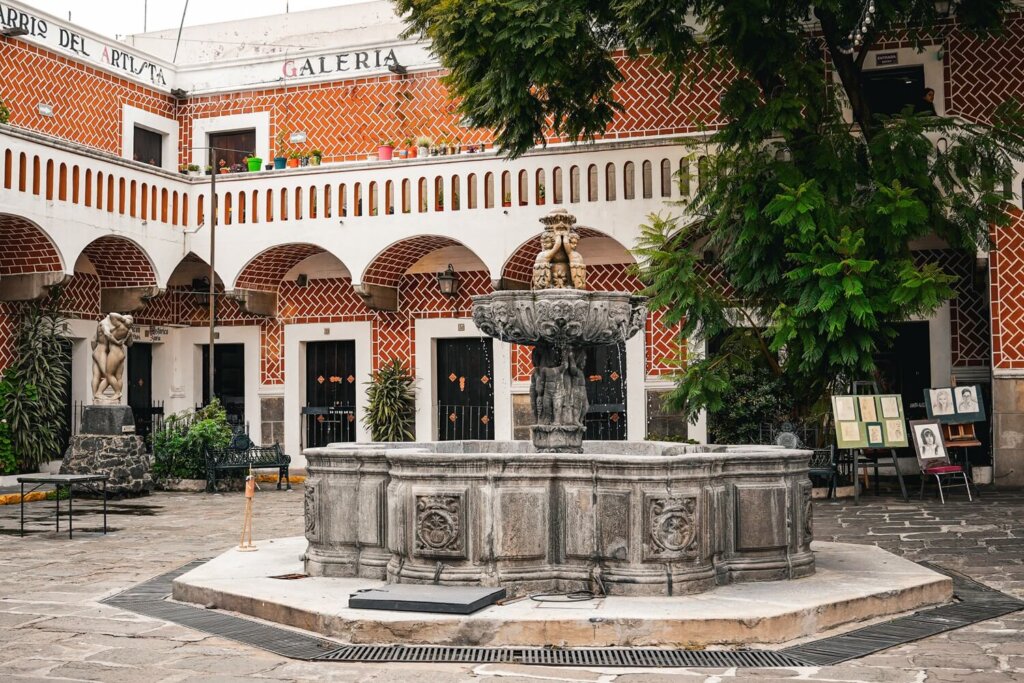
A popular district to visit in Puebla is the Barrio del Artistas, or Artist’s Quarter. As the name suggests, it’s a neighbourhood where artists work and display their art to anyone interested.
The barrio was formed in the 1940s by teachers of the former Academy of Fine Arts: José and Ángel Márquez Figueroa.
It’s quite a lively square with a few bars and restaurants, so you can enjoy a drink and some food, or just watch the artists develop their pieces right in front of you. Since the tree-lined quarter is right next to the El Parian Market, it was nice to come here to relax after browsing the stalls.


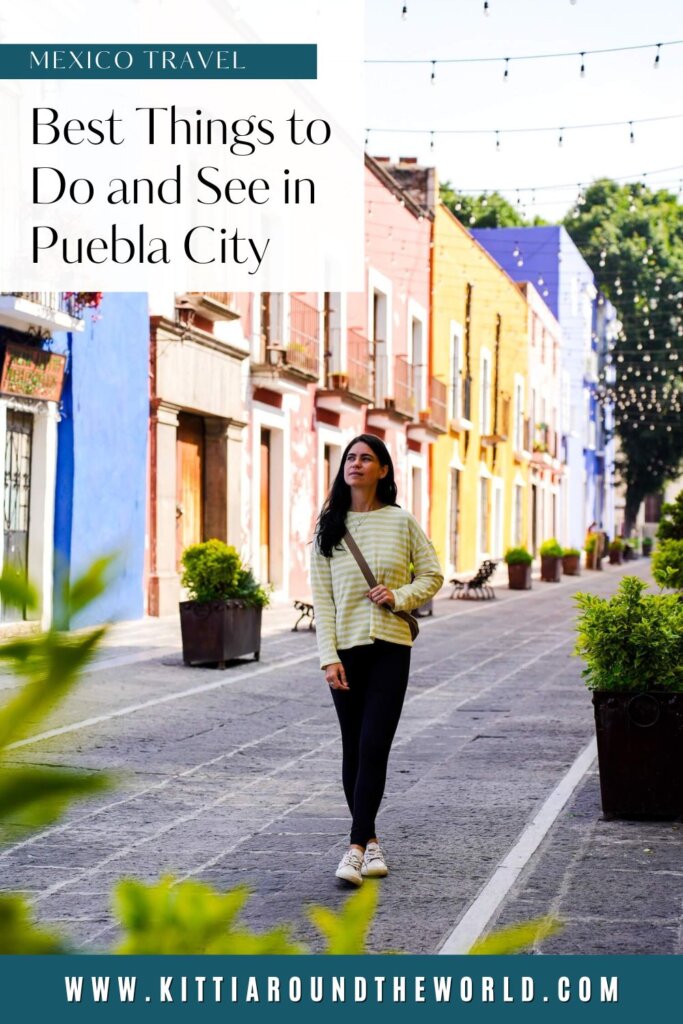
10. Stroll Down Callejon de los Sapos – Puebla’s Most Colourful Street
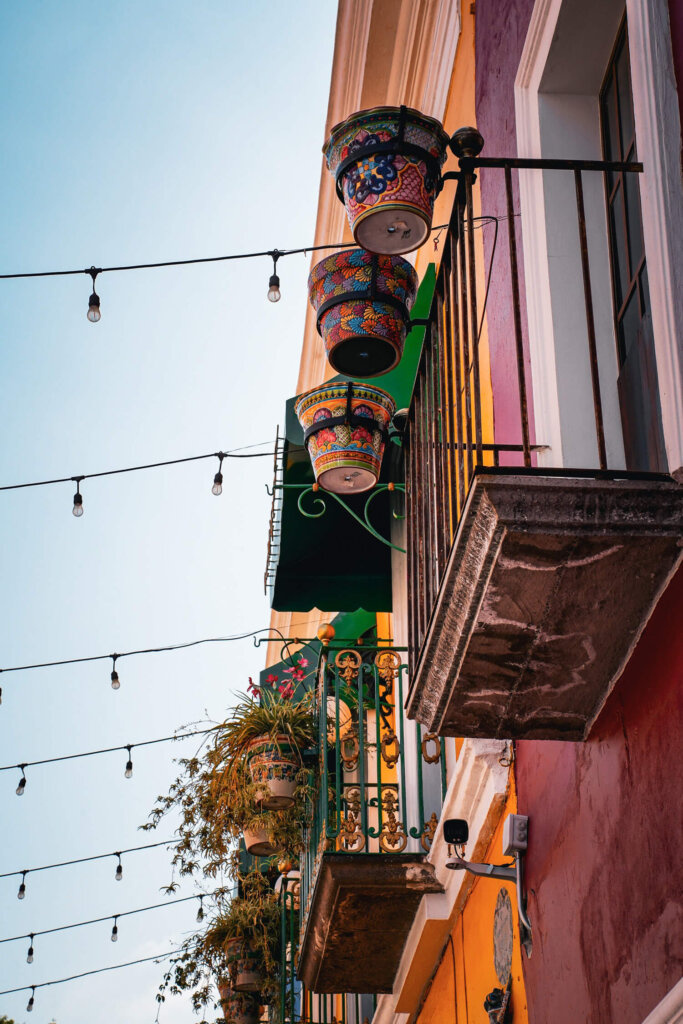
Another neighbourhood we really enjoyed visiting in Puebla was Los Sapos, which has the most iconic street in the entire city: the Alley of the Toads. It’s just south of the Artist Quarter, so it was easy to visit both on the same day.
The rather interesting name comes from the fact that back in the day the street used to flood, which attracted toads after heavy rainfall. Obviously, we didn’t see any hopping about, but we could enjoy one of the most colourful neighbourhoods in Puebla.
Whilst Callejon de los Sapos is the most photographed section, we suggest going on a little wander around the surrounding streets too. There are many small cafes, bars, restaurants and shops to stop in. There’s usually a big flea market here on weekends, which is a great place to find something unique.
11. Explore the Historic Zone of the Forts
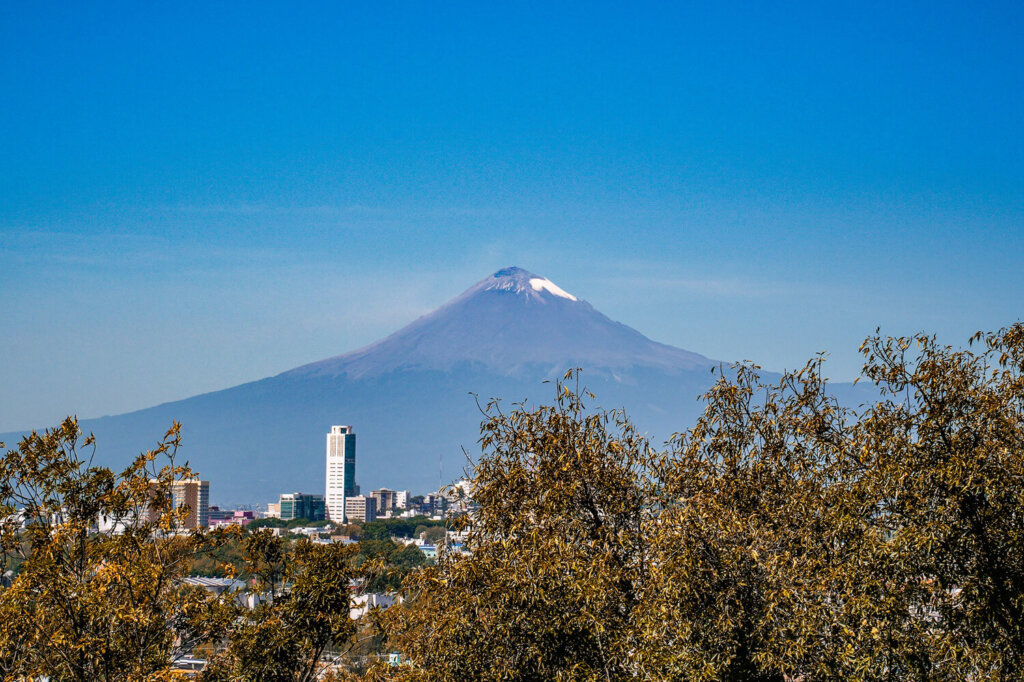
If you’re spending a few days in Puebla, then we highly recommend a visit to the Historic Zone of the Forts (Los Fuertes) on the Acueyametepec hill. The park is where the Battle of Puebla took place on the 5th May (Cinco de Mayo) in 1862. Today, Los Fuertes is a huge recreational park, as well as a historic landmark with many museums. The panoramic views you get of Puebla and the volcanos alone are worth the visit.
Below we’ve listed a few sites you may wish to visit within the Historic Zone of Forts. It’s worth noting that many of the museums are closed on Mondays.
Puebla Tunnels (Pasaje Histórico 5 de Mayo)
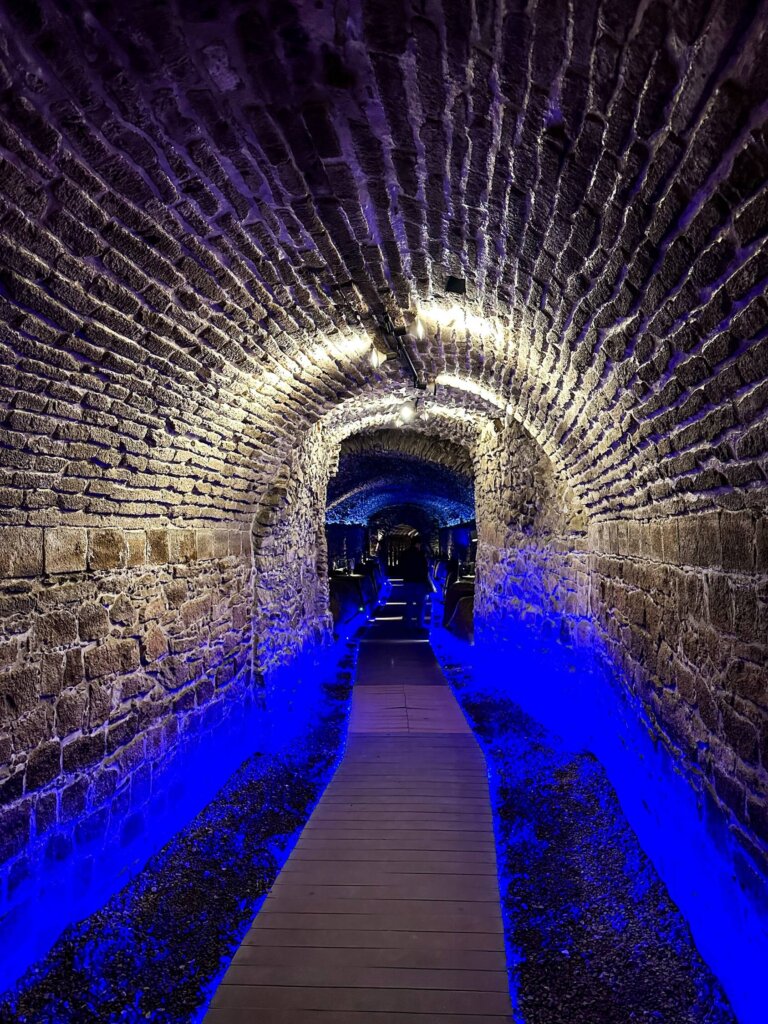
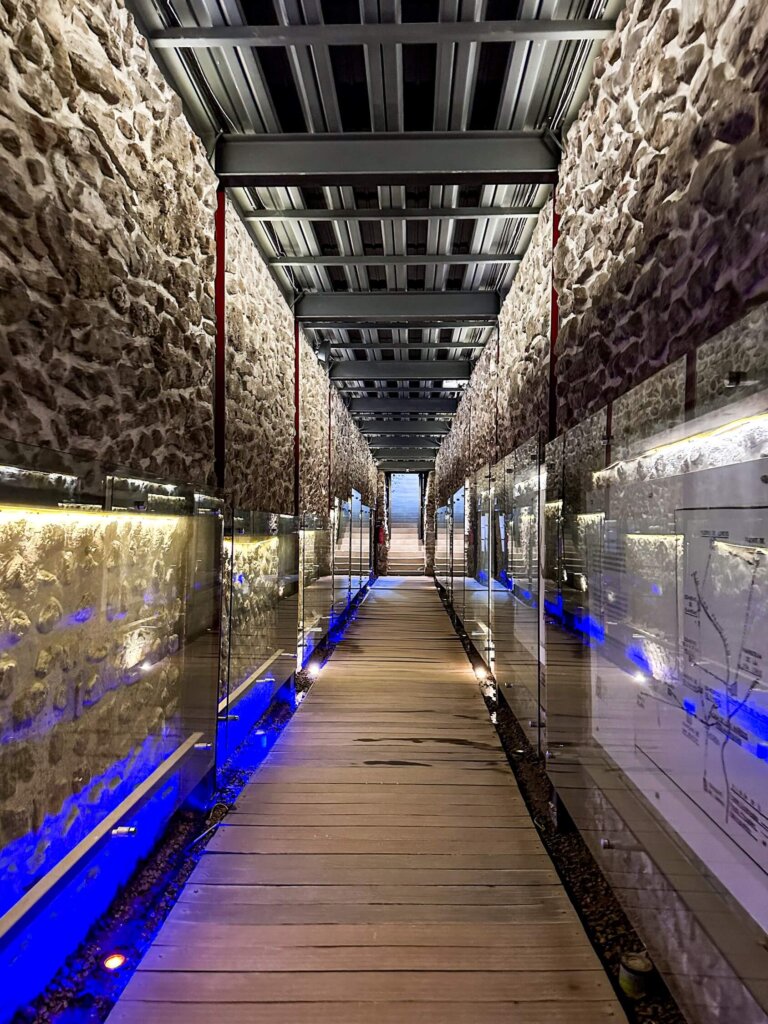
The best way to reach Los Fuertes is by visiting the Puebla Tunnels first. Pasaje Histórico 5 de Mayo is a roughly 477 m long underground tunnel that is estimated to be around 500 years old. It was only discovered in 2015.
The entrance to it doesn’t look much different to a tube station or some underground public toilet. However, the very average looking entrance shouldn’t discourage you. Unlike the underground cities we visited around Cappadocia in Turkiye, these tunnels were surprisingly spacious. Some research suggests that these passageways were built after Puebla was founded along with many of the religious buildings. It connects the Historic Centre with Loreto fort, and people most likely used it for traveling discreetly.
The objects that were found in the tunnel, including weapons and even kitchen accessories, are displayed along the walls.
Entry fee is 31MXN pesos per person.

Loreto Fort Museum (Museo del Fuerte de Loreto)
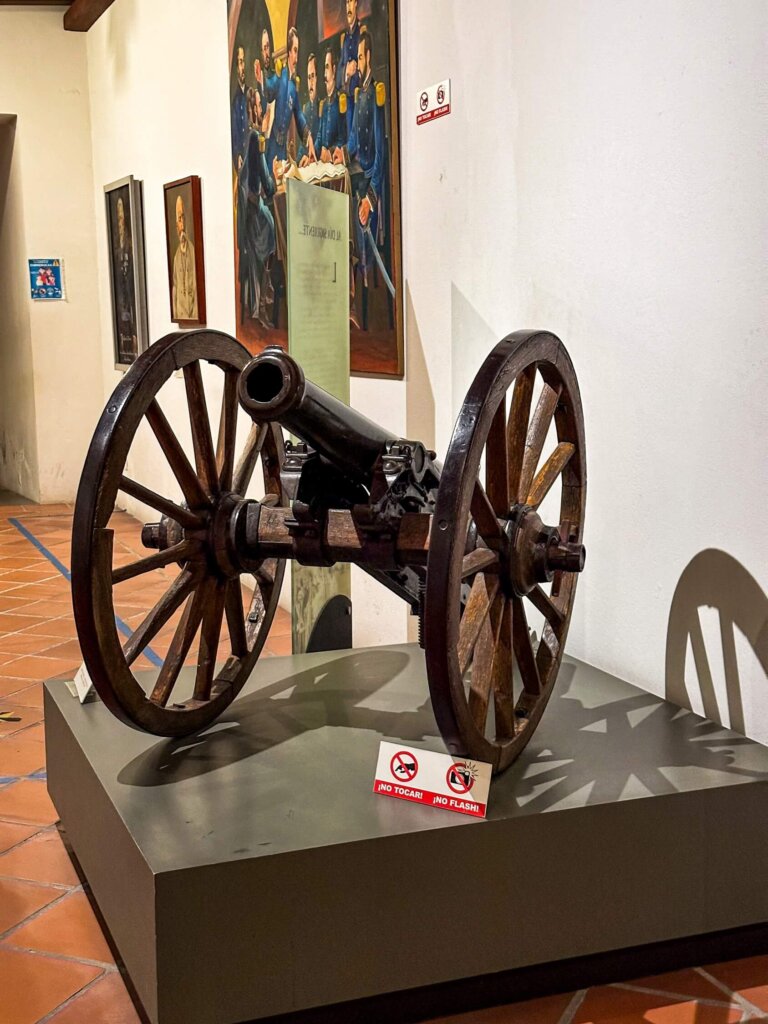
The park is home to two forts, Loreto and Guadalupe. They were originally chapels built on the hilltop, before being converted to military forts. If you wish to learn more about the Battle of Puebla, definitely visit Loreto Fort Museum.
It was quite interesting to walk around the beautifully decorated chapel. Inside the museum, we found a lot of information about the revolution and war.
Entry fee is 75MXN pesos per person.
Guadalupe Fort Museum (Museo Fuerte de Guadalupe)
The other fort museum within Los Fuertes is also located within a former church. Just like Loreto, it was converted into a military complex and played an important part in the Battle of Puebla. Compared to Loreto, Guadalupe has more of a modern look.
Inside there are some paintings and artefacts, as well as an outdoor model that features a scene from the battle. Before our visit, we read that Loreto Fort Museum had a better exhibition about the battle, including information boards in English, so we decided to visit that one instead of Guadalupe.
Entry fee is 75MXN pesos per person.
Regional Museum of Puebla (Museo Regional de Puebla)
This museum displays findings from the region, from prehistory to the modern day. There are four exhibition rooms, each focusing on something particular such as geography, archeology, history and ethnography.
Entry fee is 80MXN pesos per person.
Monument of the 5th May Victory (Monumento a la Victoria del 5 de Mayo)
For a nice view of the volcanoes it’s worth walking to Plaza De La Victoria Fuertes. This is also where the Monument of the 5th May Victory stands. Reaching 65 m, La Victoria is actually the largest sculpture in Mexico. Apparently, the bronze monument also honours the victims of the devastating earthquakes of September 2017.
12. Take a Day Trip to Cholula
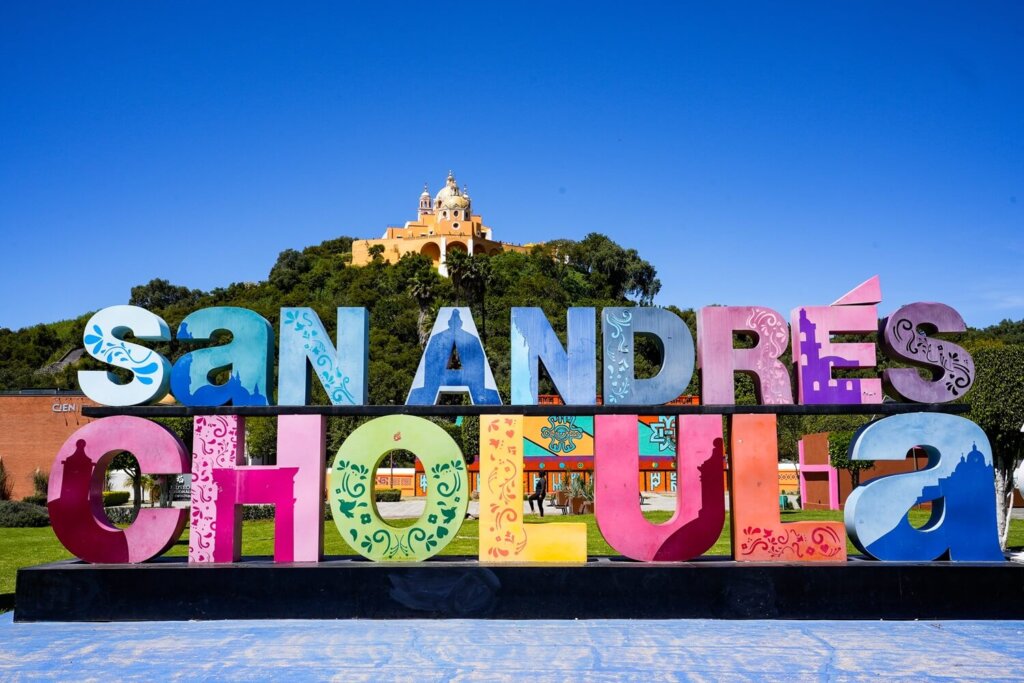
One of the most popular day trips from Puebla is to Cholula. It became one of the 12 Pueblo Magicos, or Magic Towns, in the state of Puebla in 2012.
Cholula is only a short bus ride from Puebla and you’ll be able to visit the largest pyramid in the world by volume there. Yes, you read that right! The Great Pyramid of Cholula was even larger, by volume, than the Great Pyramid of Giza in Egypt. There’s not much of it left, but there’s a beautiful yellow church, the Santuario de la Virgen de los Remedios, that now sits atop of the old temple. From this church, we could enjoy panoramic views of Cholula, the valley and of course our favourite volcanoes: Popocatépetl and Iztaccíhuatl.
Make sure to check out our detailed Cholula travel guide for more information on how to get there from Puebla and what else you can do in the Pueblo Magico.
13. Hike in the Izta – Popo National Park
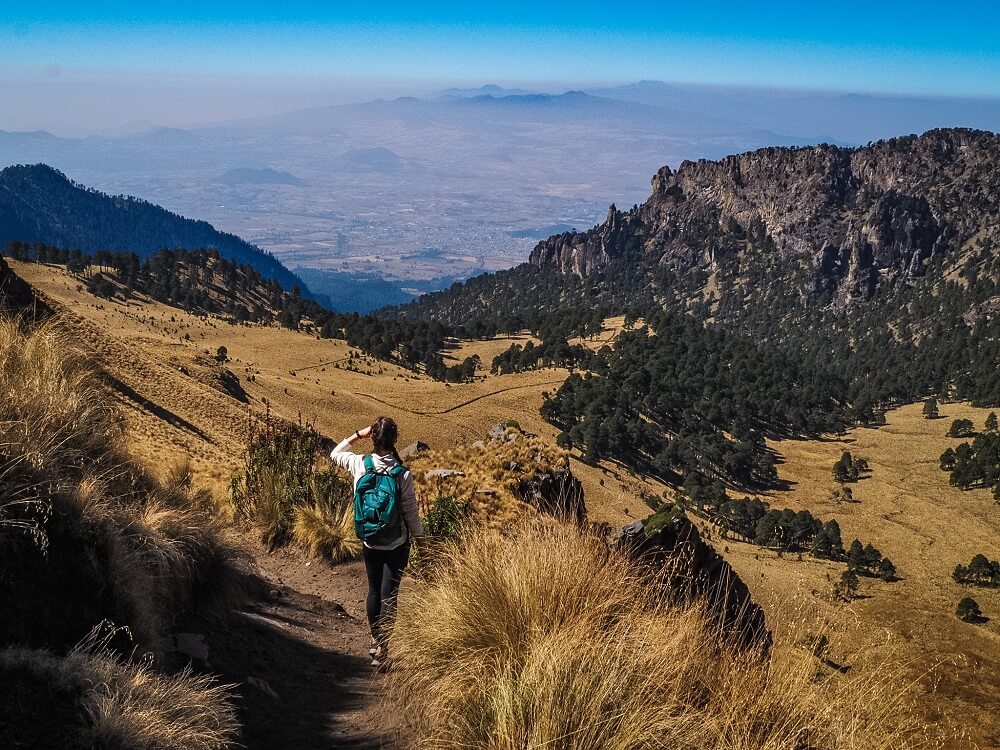
The favourite part of our Puebla stay was that we could enjoy the views of Popocatépetl and Iztaccíhuatl volcanoes from our balcony. Now, if you enjoy the outdoors as much as we do, then don’t just admire the volcanoes from a distance. Take a day trip to the national park to experience them up close and personal.
We actually took a day trip to Izta – Popo National Park from Mexico City during our first visit to the country back in 2021. However, getting to the park from Puebla is also possible.
Once there, you have the option to do a shorter trail, which allows you to be at a high altitude without the need for a guide. If you’re feeling more adventurous, you can even summit Volcan Iztaccíhuatl, which is the third highest peak in Mexico. Otherwise, you can just admire the smoking Popocatépetl, one of the most active volcanoes in the country. For obvious reasons, you won’t be able to summit Popo.
If you want to learn more about this day trip then read our detailed Izta – Popo National Park guide.

Final Thoughts on Things to Do in Puebla, Mexico
Having been recommended by our good friends over and over again, Puebla didn’t disappoint. After spending nearly a month travelling around the Yucatan Peninsula, it was refreshing to be over 2,000m above sea level, surrounded by volcanoes and breathing in crisp mountain air. Even though Puebla is one of the most populated cities in Mexico, it didn’t feel as crowded as Mexico City’s Historic Centre. In fact, it had a somewhat small-city, laid-back vibe which we very much enjoyed.
We hope this guide has given you some inspiration to perhaps book a few nights in Puebla, rather than just a quick day trip from the capital. We definitely would’ve loved to stay a bit longer. As always, if you used our guide to plan your visit, please help us by leaving a comment about your experience and mention anything that may have changed since our visit, so we can keep this article up-to-date.
Now, let your adventure begin,

Remember…It all starts with a Pin…