
How to Spend One Day in Izamal, Mexico’s Yellow City

Let us take you on a day trip to Mexico’s Yellow City: Izamal. We’d been planning to visit this colourful city for a long time because 1) my favourite colour is yellow, and 2) we wanted to visit as many Pueblo Magicos, or Magic Towns, in Mexico as possible. Izamal is located close to Merida in the Yucatan Peninsula, therefore it was an obvious day trip to add to our itinerary. In this guide, we’ll detail what you can do if you only have one day to spend in Izamal, including seeing many notable landmarks and some Maya ruins.
If you’d like to see our day trip to Izamal then make sure to watch our dedicated Merida video. If you’re interested in more Mexico content, check out the Mexico Playlist on our YouTube Channel.
Disclosure: This post may contain affiliate links, which means we may receive a small commission if you click a link and purchase something. Clicking these links won’t cost you anything, but it will help us to keep this site up and running! Learn more about our affiliate policy.
Where is Izamal and How to Get There?
Izamal is located 72 km (45 mi) east of the Yucatan state capital of Merida in southern Mexico. There are many ways you can get to Izamal from Merida depending on your time, budget and overall itinerary in the Yucatan Peninsula:
- Public bus.
- Colectivo (shared minivan).
- Hire car.
- Private taxi.
- Maya train (Tren Maya).
- Organised tour.
We discuss the above methods in a dedicated guide, including the pros and cons for each.
How to Spend One Day in Izamal, the Yellow City of Mexico
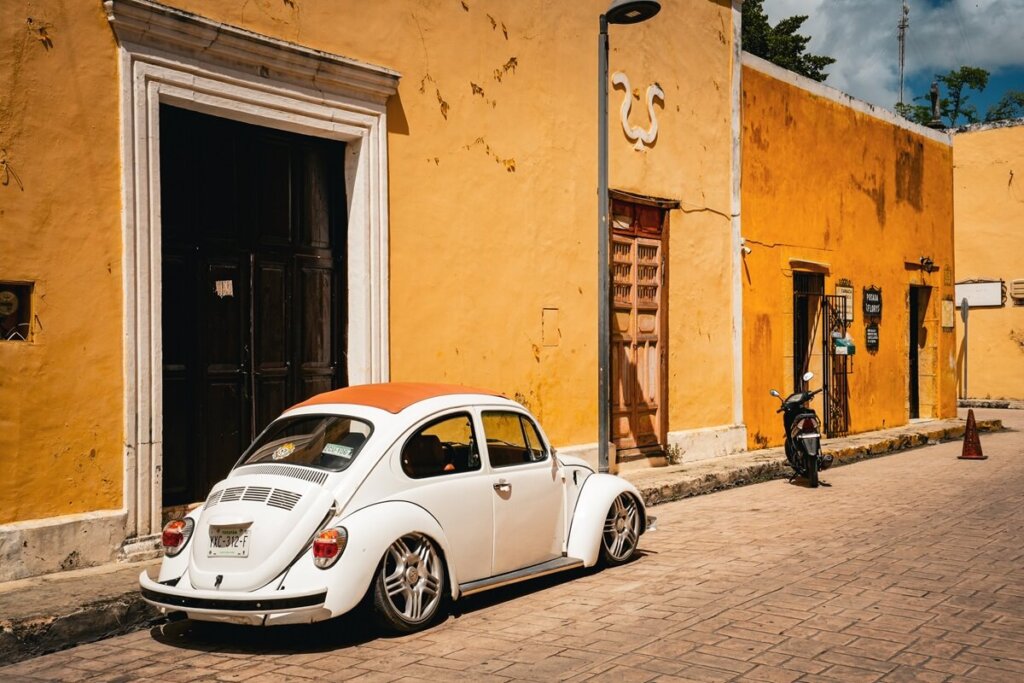
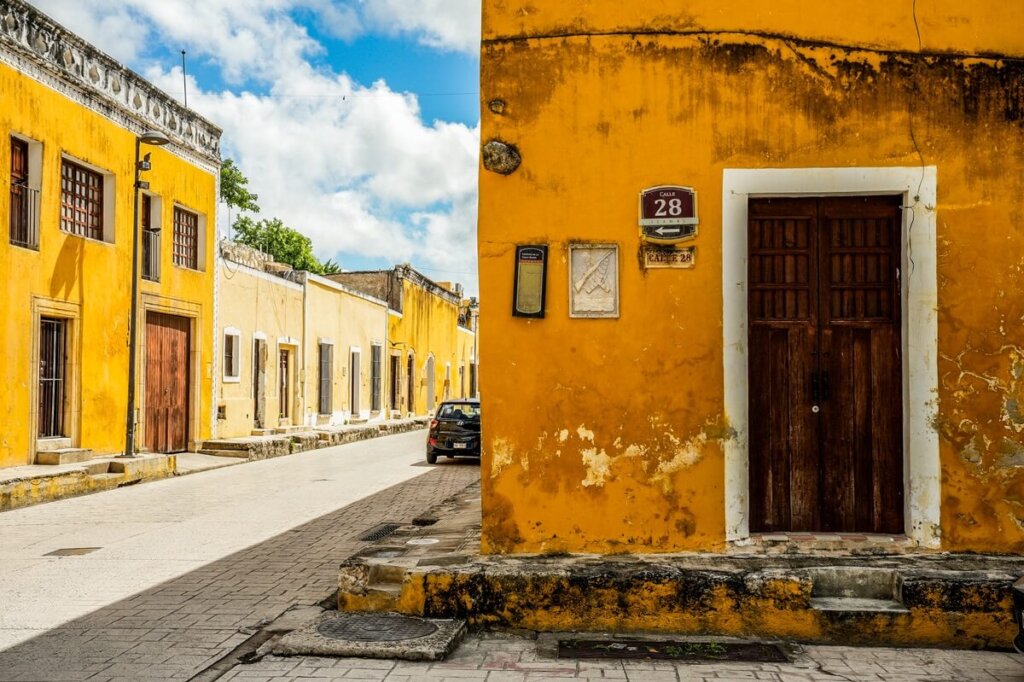
If you’re anything like us, you may also be wondering why most of the buildings in Izamal are painted yellow. Our little online search wasn’t the most successful, as nobody seems to have a definitive answer to the ‘why is Izamal yellow’ question. Of course, we found a few interesting theories including honouring the Maya Sun God, or the Pope’s visit in 1993. A more plausible one would be that the colour yellow acts as a large-scale mosquito repellent.
Although Izamal is most commonly known as the “Yellow City”, it’s also referred to as the “City of Hills”, or the “City of Three Cultures”. The “City of Hills” nickname comes from the abandoned Maya structures that became so overgrown that they looked like hills. Whereas the “City of Three Cultures” comes from the blend of Maya, Spanish Colonial and modern-day Mexican culture that you can find there.
Izamal became a Pueblo Magico (Magic Town) in 2002. It was the first Pueblo Magico in the Yucatan state and today it is one of seven, including the city of Valladolid.
Below we’ll share how you can spend a wonderful day in Mexico’s Yellow City.
Check out Parque 5 de Mayo
After getting off the bus at the terminal, we headed into the town centre towards Parque 5 de Mayo. This small square has a few seating areas and is surrounded by trees. Although it’s not necessarily a place where we suggest sitting for too long, as there isn’t much shade.
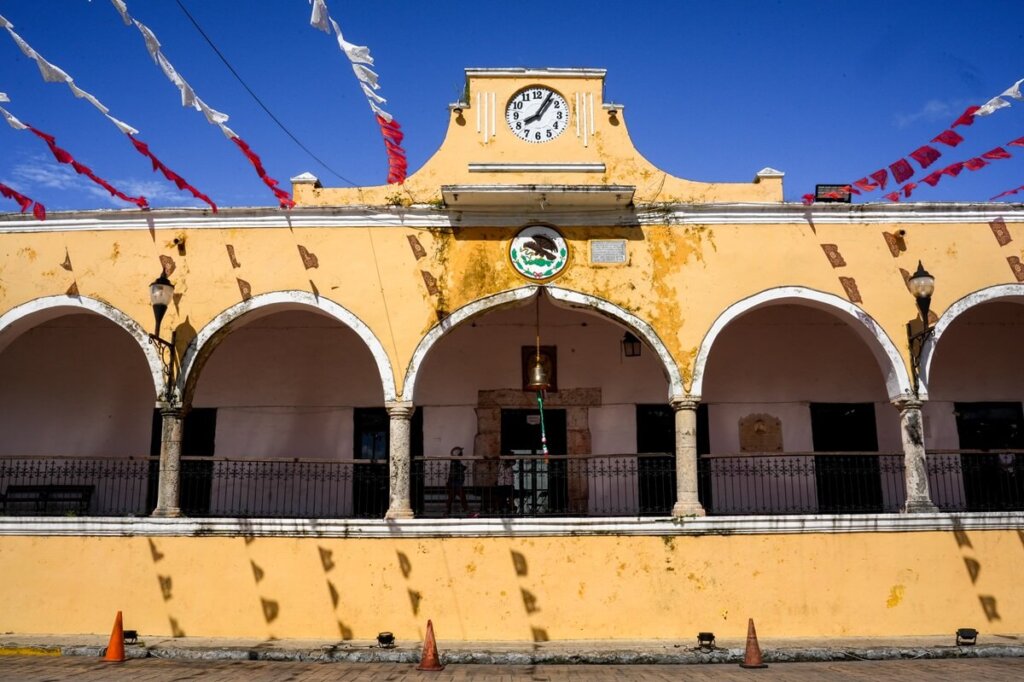
The main reason we spent some time here was to check out the buildings that surround the plaza. On the west side of Parque 5 de Mayo is Palacio Municipal Izamal, or the Town Hall. Unsurprisingly, the whole building is painted yellow. We spent a few minutes walking around the arcade and its small courtyard.
To the north of the plaza is the Centro Cultural y Artesanal Izamal, or the Izamal Cultural Center. For about 25MXN pesos per person you can visit inside this 16th century mansion, which now operates as a museum with many exhibition rooms.
Admire the Atrio del Convento: the Second Largest Open Atrium in the World
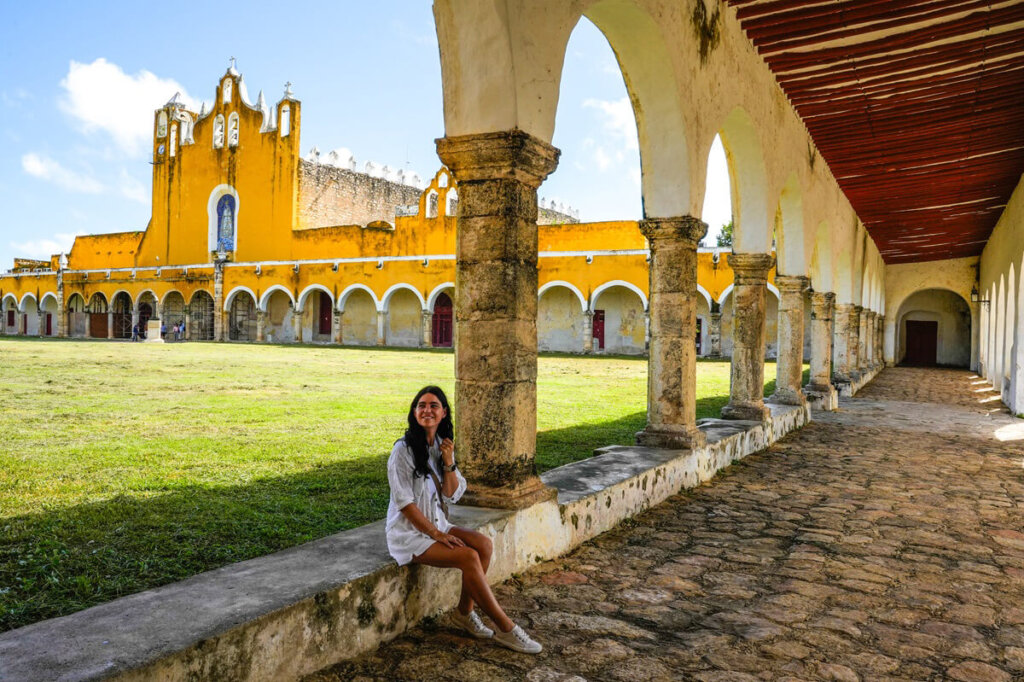
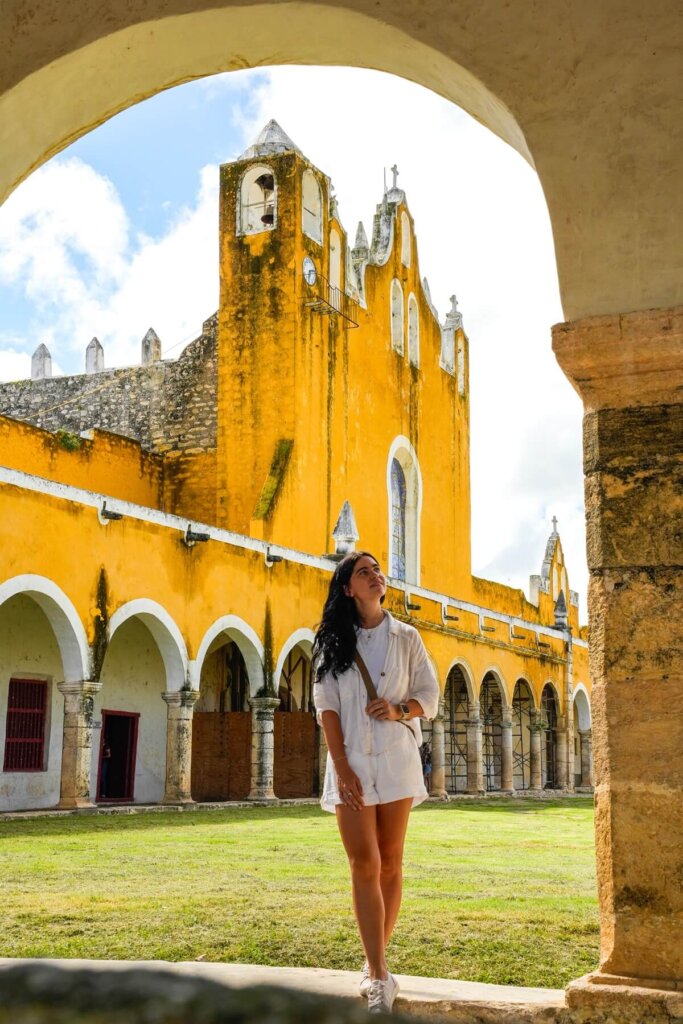
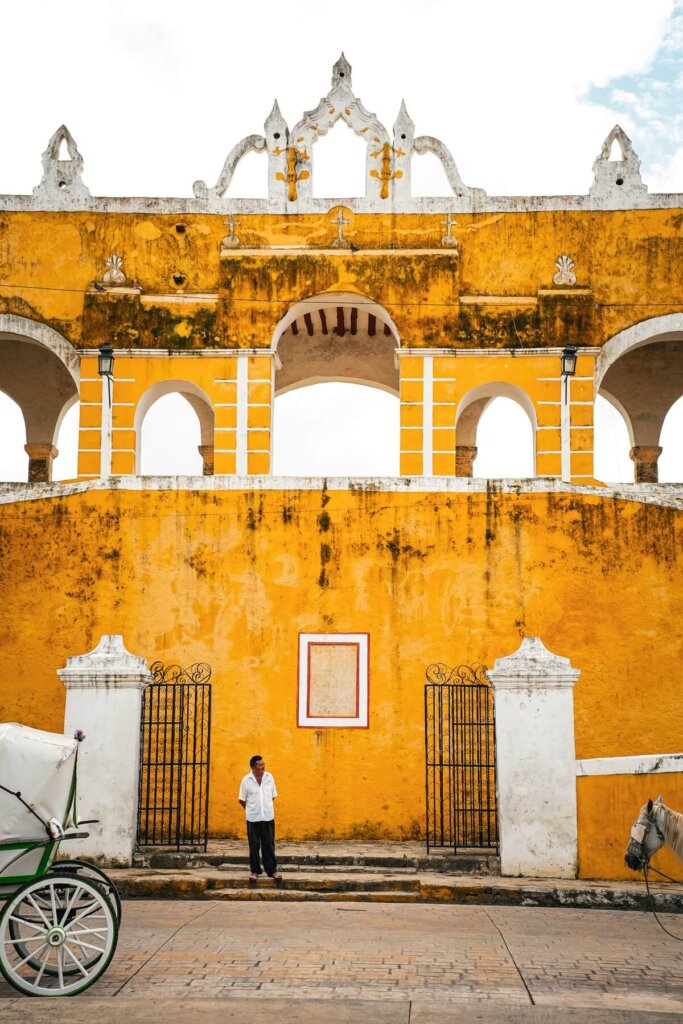
The east side of Parque 5 de Mayo is occupied by the Convento de San Antonio de Padua and the Atrio del Convento.
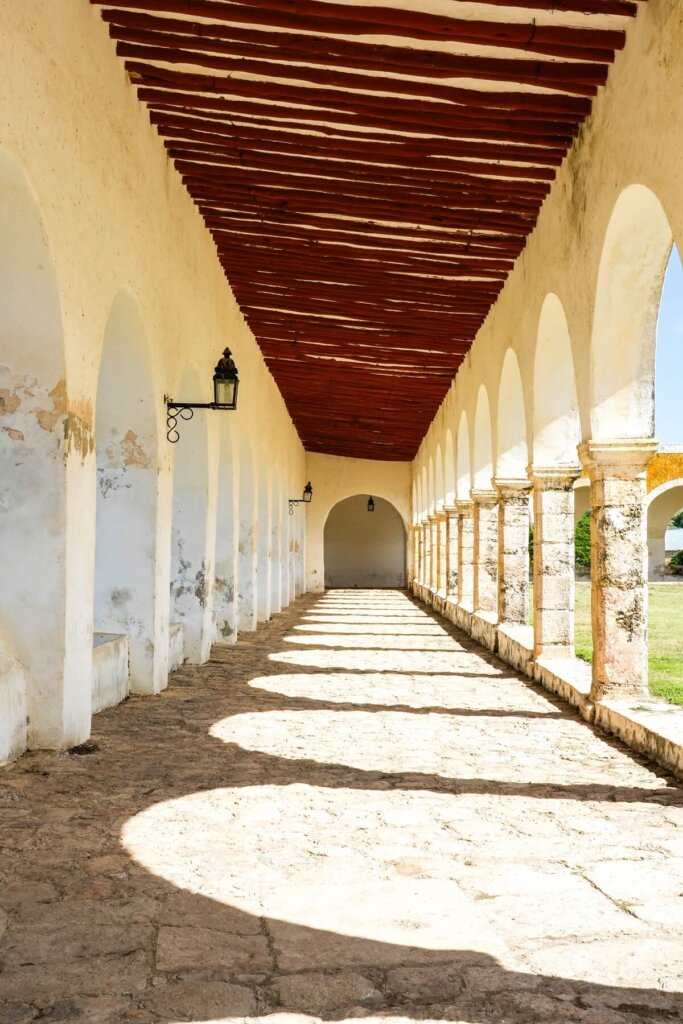
After walking up the stairs we were immediately impressed by the huge atrium. It’s actually the second largest atrium in the world after St Peter’s Square in Vatican City. There are no information boards, so doing a little reading about the site prior to our visit came in handy. We suggest walking around the arcade to get a different view of the convent and the town centre.

Visit the Convento de San Antonio de Padua
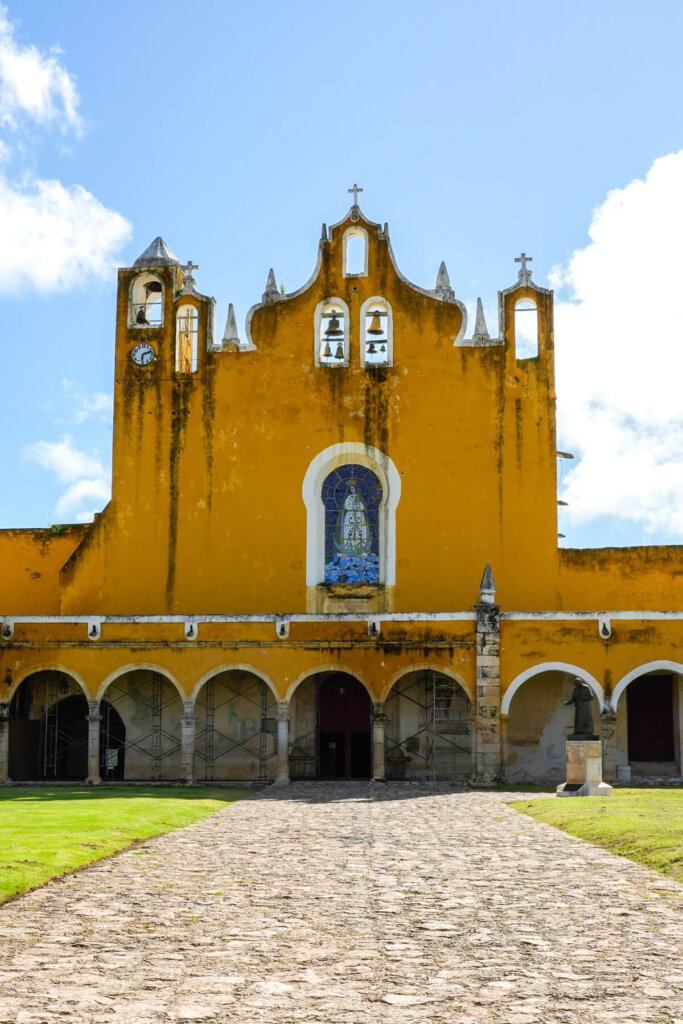
After getting your steps in walking around the Atrium, make sure to also visit inside the convent.
Construction of the building was begun in 1553 by Fray Diego de Landa and it was completed in 1561, which makes it one of the oldest monasteries in the Americas. After visiting many Maya Ruins in the area, it wasn’t a surprise to learn that the convent was constructed on top of a Maya temple, hence its elevated position.
In 1993, Pope John Paul II visited the monastery and blessed a statue of the Virgin Mary. Since then the church has been one of the most important pilgrimage sites in the Yucatan. There’s also a small museum that commemorates the Pope’s visit.
It was interesting to see that inside the convent the walls were dark pink. It was a nice contrast to the yellow walls everywhere else in Izamal.

Take a photo at the IZAMAL sign at Itzamna Park
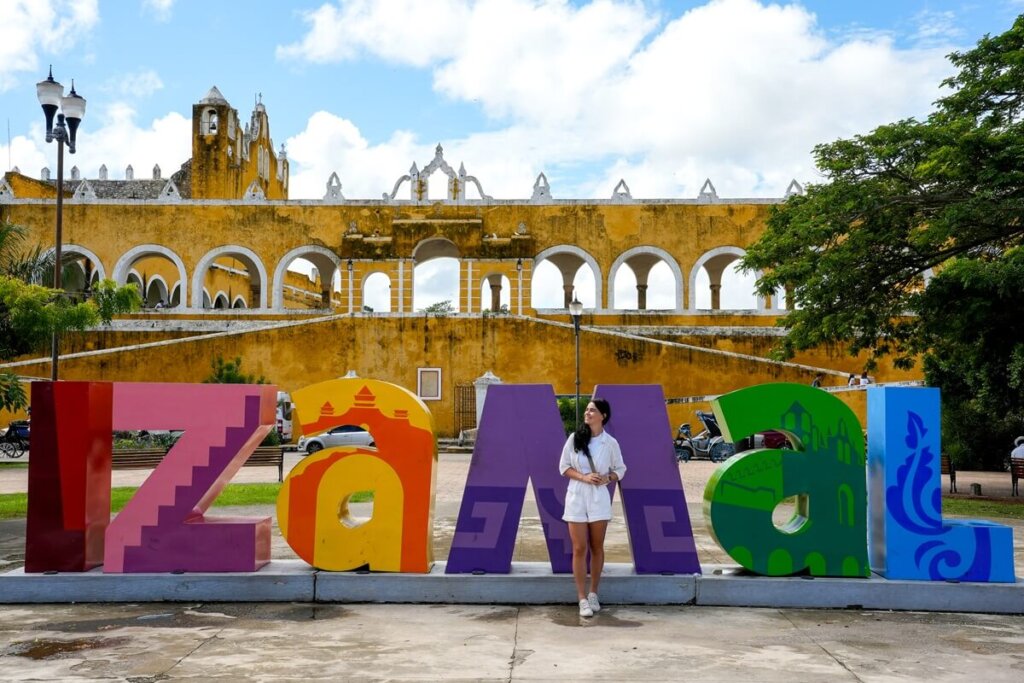
If you want to take some of the iconic photos of the convent, then exit the atrium towards Itzamna Park. It is located to the north of the convent and is a very similar looking square to 5 de Mayo. There are a few benches scattered around the plaza as well as some trees, although they won’t provide much shade either.
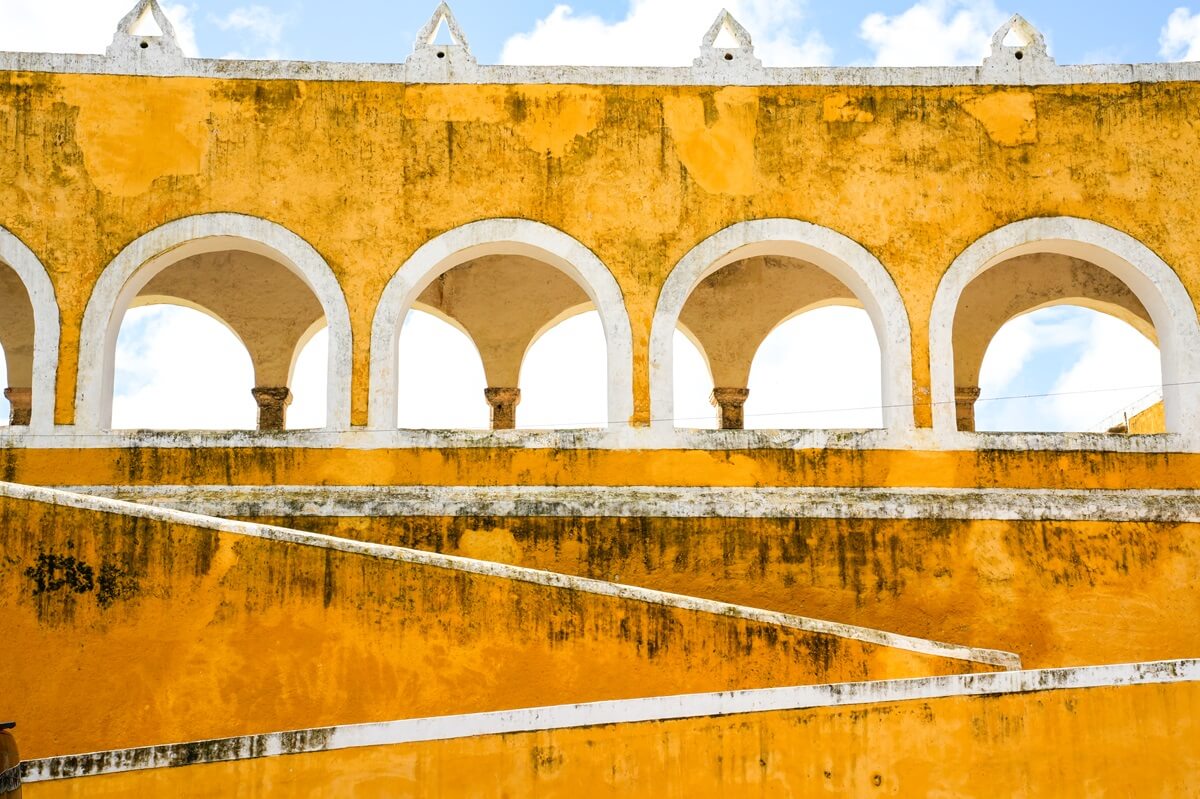
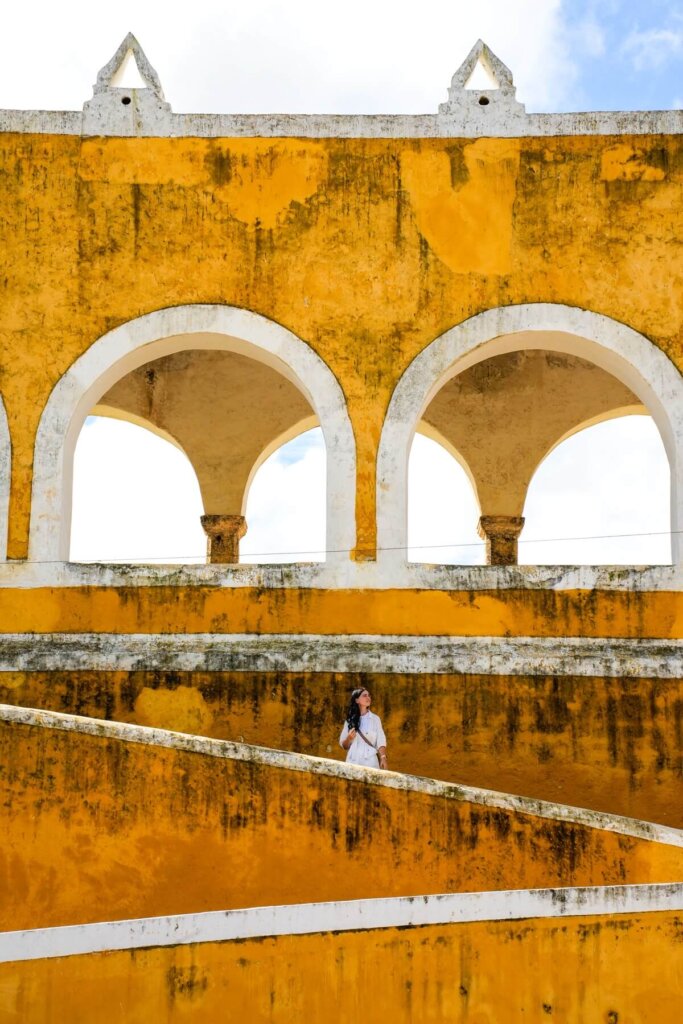
To the south of Itzamna Park is San Antonio de Padua convent’s wall, where you’ll immediately see the zig-zagging stairs and walls that everyone seems to take photos of. Now, it’s worth noting that when we were there in the off season the walls weren’t washed, so they didn’t look nearly as pretty as some of the photos we’d seen on social media.
In front of them we saw some horse-drawn carriages waiting around to take people for a ride. We didn’t want to go on a ride, because we felt for the animals standing there in the crazy heat and humidity. (We were in the Yucatan Peninsula in the hurricane season).
In the middle of the square you’ll find the giant and colourful letters spelling out the town’s name, like they do in most other places in Mexico. It’s another fun photo opportunity, especially with the backdrop of the convent’s yellow wall.
Surrounding the square there are some more arcades with different patterned arches, which makes the square feel like a small atrium too. There are a few restaurants and cafes there; perfect if you’re after some quick refreshments. We got some ice cream from one of the local shops, a nice snack in the heat. If you want to be adventurous, definitely try the ‘elote’, or corn, flavour. It’s not just a unique Mexican ice cream flavour, but it’s also yellow, so it’ll match with the town’s aesthetics perfectly.


Wander Around the Yellow Streets of Izamal
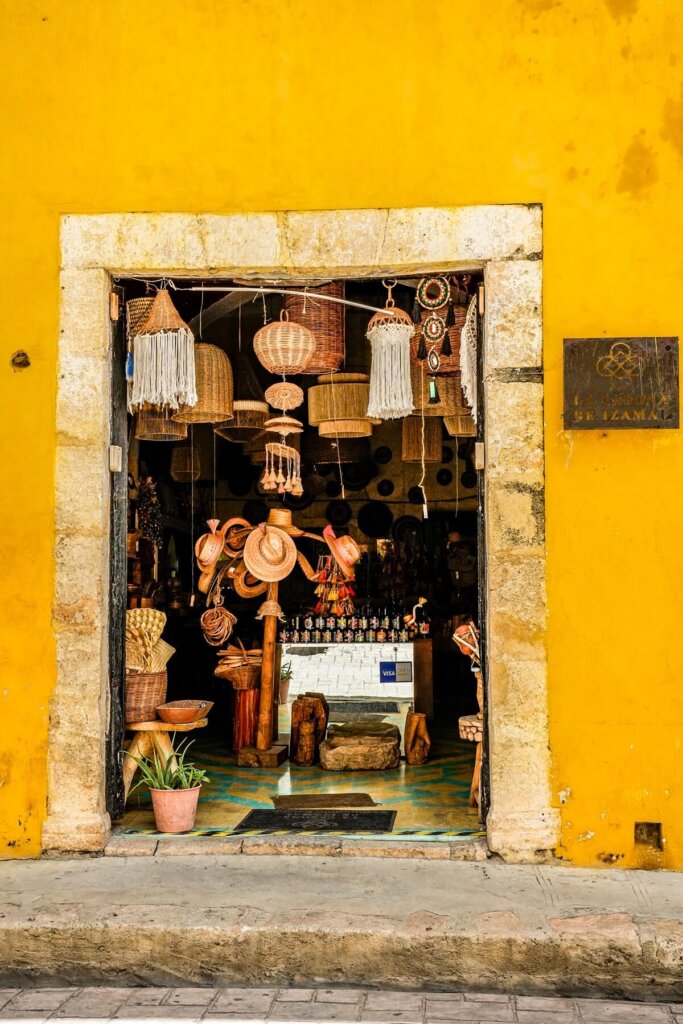
We love nothing more than just wandering the streets of a small town without any particular direction in mind. Izamal is a pretty safe city, so you don’t have to worry too much about walking into the wrong neighbourhood there.
We ended up doing a loop around the centre starting from the east of Parque Itzamna. Firstly, we came across Arco de Izamal right at the eastern corner of the park. If you’ve already explored Merida, then you will have seen similar looking arches there too. From there, we just followed the street with yellow painted buildings on both sides. By turning left at the next junction we arrived at the first Maya pyramid, Piramide de Itzamatul. After our visit, we carried on towards the next Maya site, Piramide Kinich Kak Moo. From there we made our way back to Parque Itzamna, passing Restaurante Kinich, one of the most popular places to try Maya dishes in town.
Whilst strictly speaking not every single building in Izamal is painted yellow, you’ll see that most of the walls around the town centre are. We really enjoyed taking photos of the buildings as we walked around.
Top Tip. We suggest not wearing yellow, so you can stand out in the photos.
Itzamatul Maya Site (Piramide de Itzamatul)
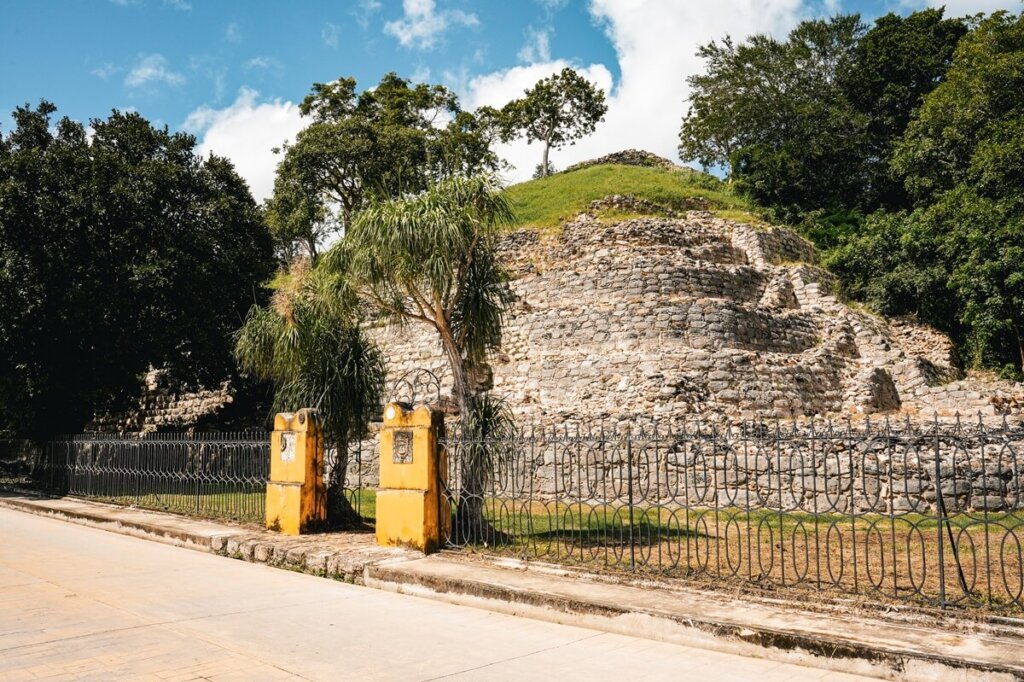
The first Maya ruin we came across was Itzamatul Pyramid as it’s located right around the centre. It is the second-largest pyramid in Izamal, after Kinich Kak Moo, which we walked to next.
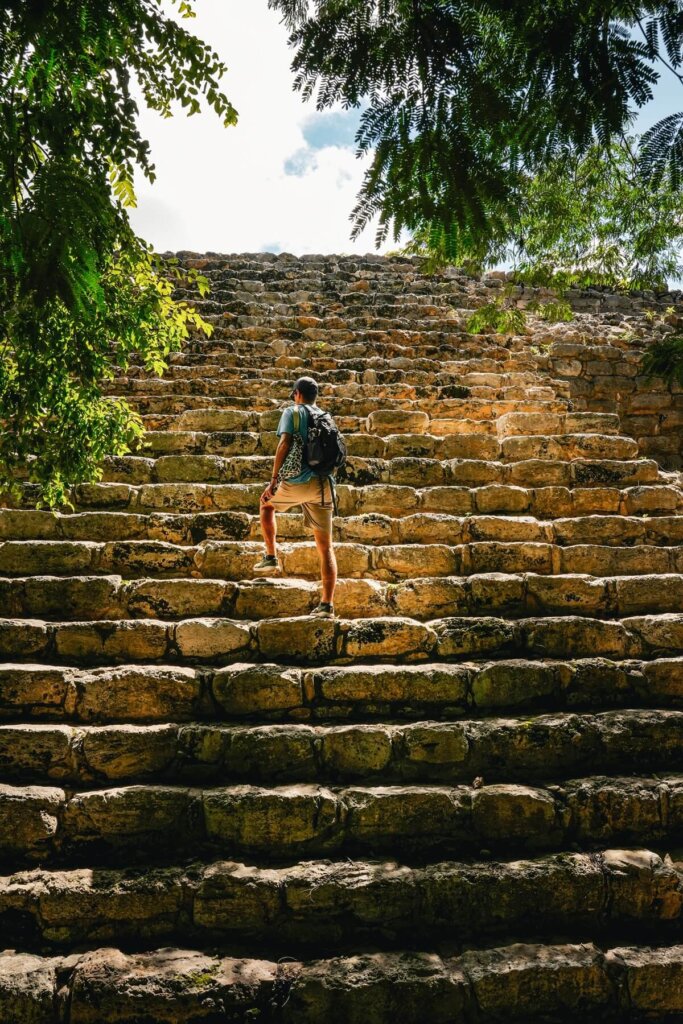
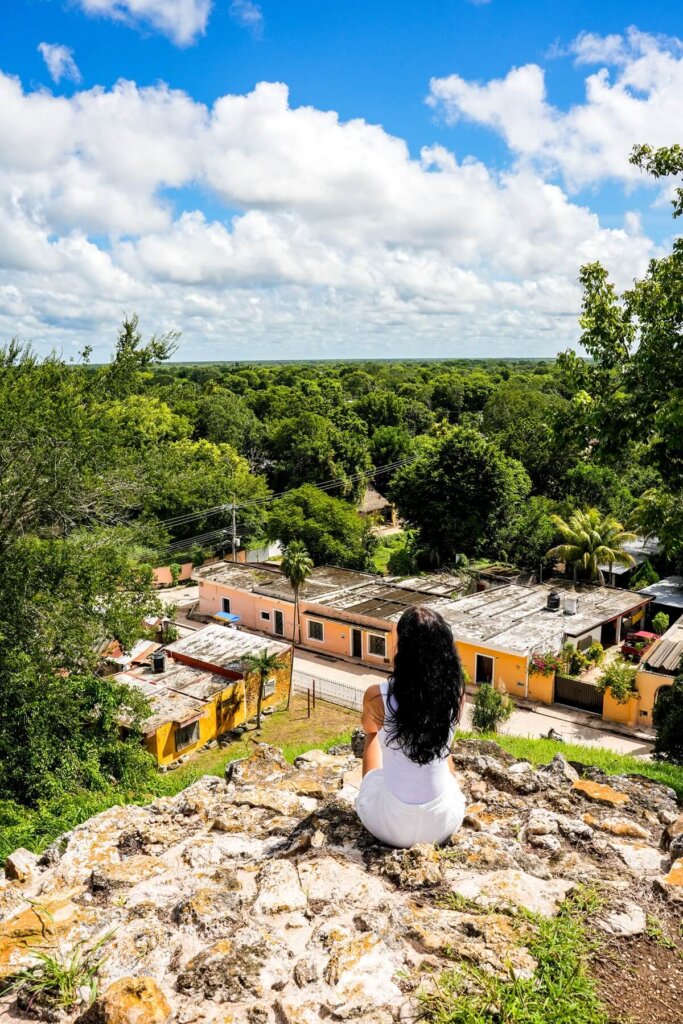
The pyramid is dedicated to the Maya God, Zamna, and was constructed in three stages, with the first stage dating back to between 400 and 600 CE. There’s no entry fee, so we just walked through the gate and went around the back to find the staircase that led us up to the top. From here, we got a little overview of Izamal, although most of the view was covered by the trees.
Most of the Maya ruins that we’d visited up to this point had been located in lush jungles, not in the centre of towns. So although Itzamatul wasn’t the most impressive pyramid we’d ever been to, it was quite a unique archeological site thanks to its location in the middle of a modern urban settlement. Imagine your next door neighbour being an ancient Maya pyramid with thousands of years of history. Pretty cool, wouldn’t you agree?
Kinich Kak Moo Maya Pyramid (Piramide Kinich Kak Moo)
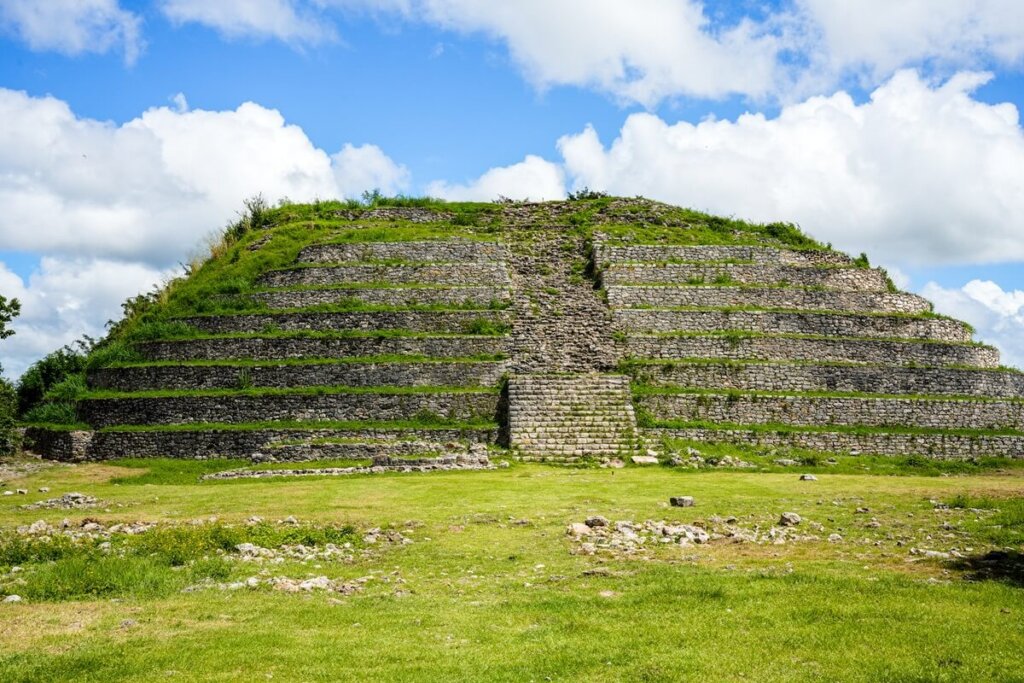
Next on our Izamal itinerary was Kinich Kak Moo Pyramid, located only a few minutes’ walk from Itzamatul.
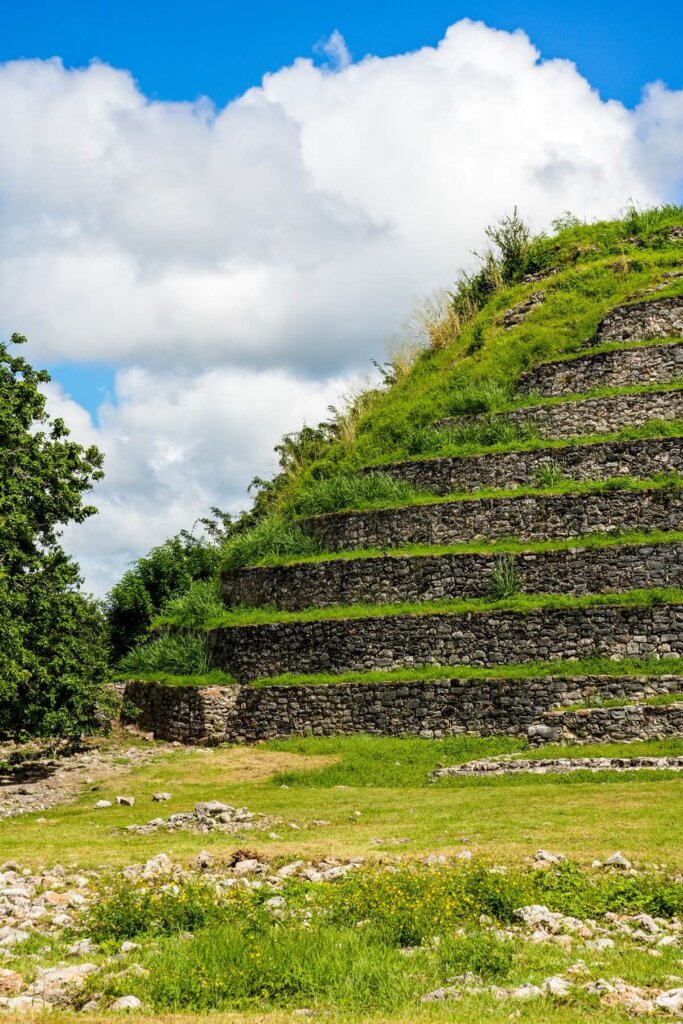
It isn’t just the biggest pyramid in Izamal, but also one of the largest ones in Mexico. It was built between 400 and 600 CE and is dedicated to Kinich Kakmó, which means “the fire macaw with the sun face” in Mayan.
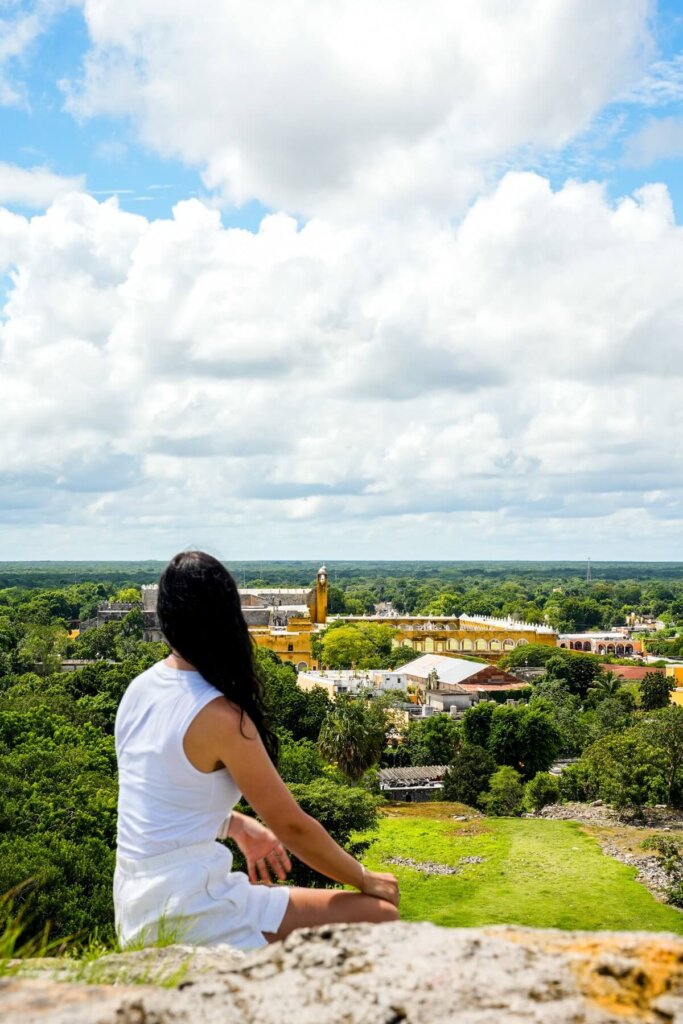
It’s free to enter the site and you can also climb to the top, which we highly recommend for two reasons. Firstly, you’ll be able to get an amazing view of Izamal, especially of the San Antonio de Padua Convent. Secondly, there aren’t that many pyramids you can climb on top of these days, so make the most of the experience here.
There was nobody else there at the time we visited Kinich Kak Moo, so we had the whole place to ourselves, which made our visit just a little bit more special.
Browse Mercado Municipal de Izamal
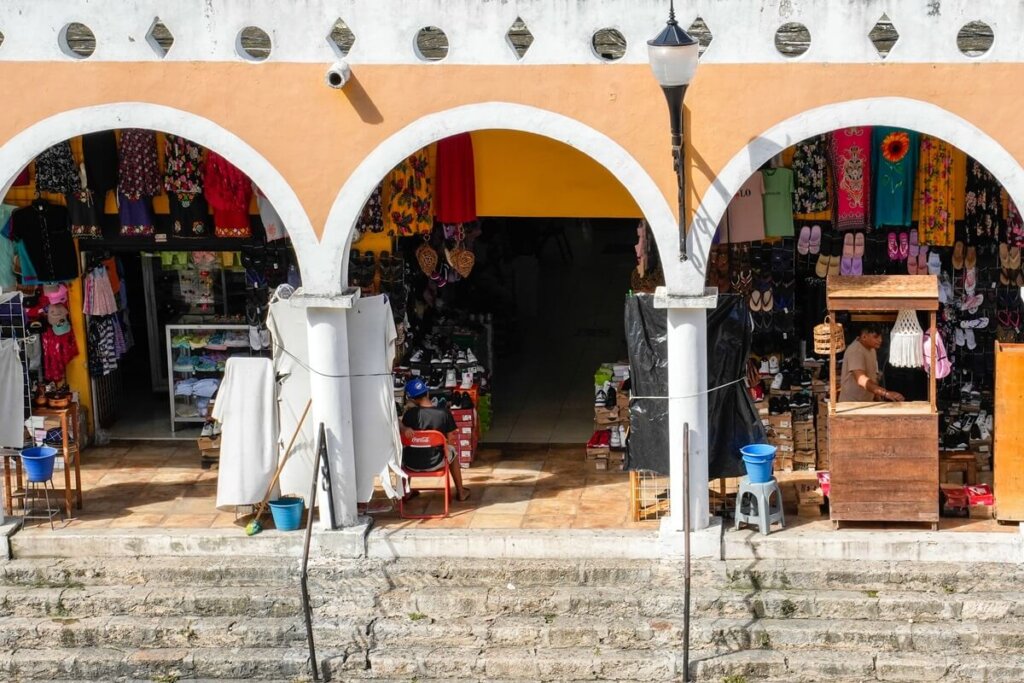
After heading back to the town centre from the pyramids, don’t forget to have a nosy around Izamal’s market. It’s located at the southwestern corner of the convent just next to 5 de Mayo Park. Although it’s a small market, it’s filled with many vendors selling food, vegetables and other products.
If you have some time to spare before your bus back to Merida, definitely take a look around and have a little chat with the locals.
Final Thoughts on One Day in Izamal, Mexico’s Yellow City
As we mentioned at the start, Izamal had been on our bucket list for years. The last time we were in Merida we were way too sick to do a day trip there, which was very unfortunate. So, you can imagine just how excited I was when we were planning our Yucatan trip for the second time. It was worth the wait, as we had a lovely time walking around the yellow coloured streets of Izamal. Even if it was slightly disappointing to see the convent building covered in mold, instead of being a pristine yellow colour. Well, that’s what you get when you travel off season I guess.
Now, let your adventure begin,

Remember…It all starts with a Pin…




I had NO IDEA this place even exists – the photos look incredible! Saving!!
Izamal is such a unique spot in Mexico!
Yellow is definitely not my favorite color but this little town looks absolutely incredible! And a great place for photos! I LOVE this one day izamal itinerary!
Yes, yellow can be a bit too much for sure, but Izamal looks so lovely painted in it!
This seems like a wonderful spot to visit in Mexico, I’m definitely saving this for when I visit soon!
Thank you so much!
This place looks like such a cool spot to visit, I’m definitely saving this for my trip to Mexico!
Thank you so much!
This area looks gorgeous! I’d want to go just for the architecture alone.
Izamal is so photogenic, I loved spending the day there taking photos.
I don’t know why we don’t consider places in Mexico more – looks like a great place to visit.
There are so many beautiful spots in Mexico. Hope you’ll get to visit in the near future.
Never heard of this before! Such an interesting spot to visit. I’m definitely bookmarking this for future travel plans.
Izamal has definitely gained some attention thanks to social media in recent years, but it’s such a cool town to visit.
Izamal is such an interesting place! I also spent a day there when my kids were younger. I would love to go back some day and do some more exploring.