
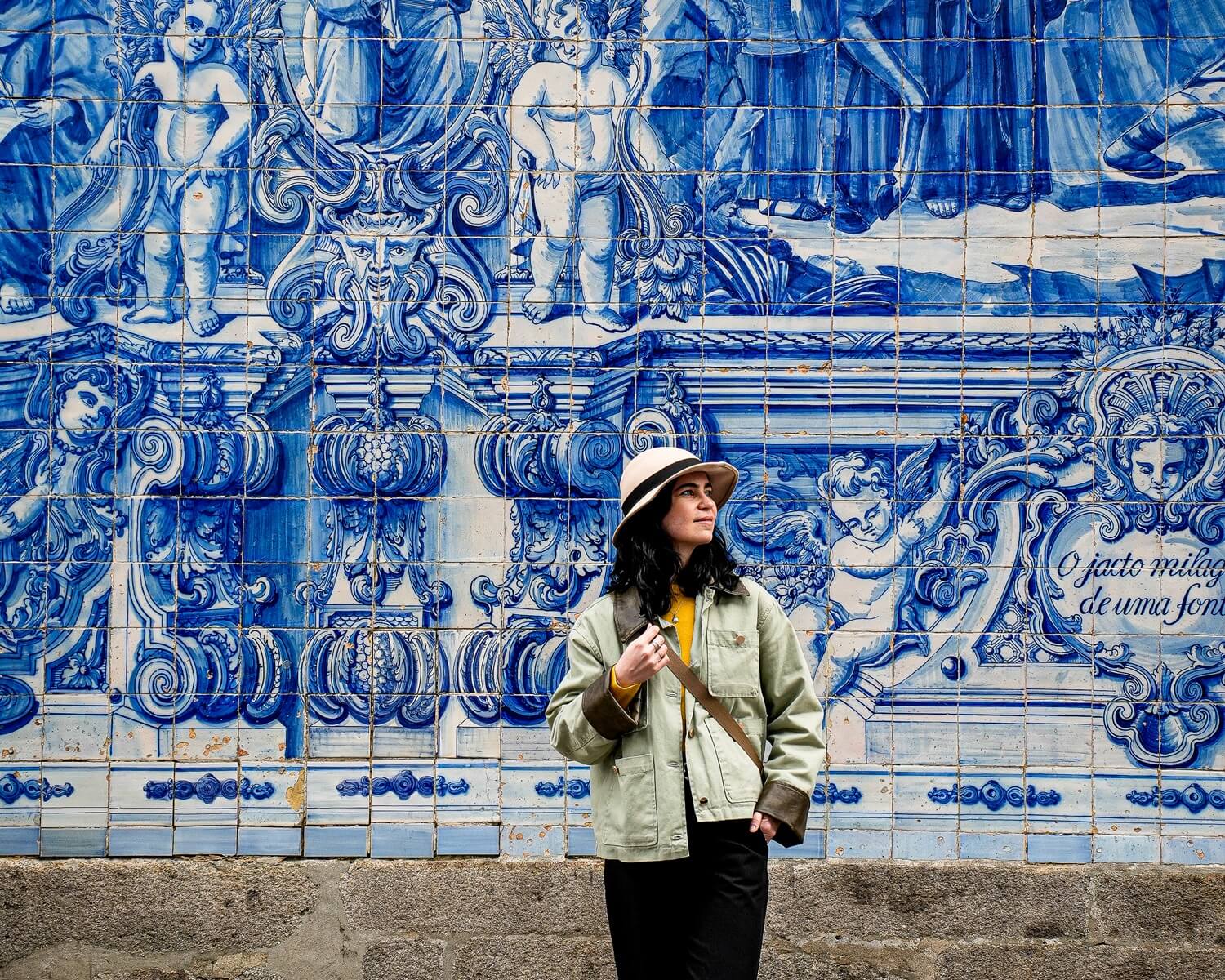
Azulejos in Porto: Where to See Blue Tiles in Porto

When people think of Portugal, some of the things that first come to their minds are beaches, pastel de nata, port wine and blue and white tiles. We didn’t need to walk far to notice that Portuguese tiles, or azulejos, are a clear symbol of Porto. Tiles adorn the façades and interiors of most buildings and churches, and they were also being sold at every single souvenir shop we walked past. In this guide, we’ll list the top places to see these iconic blue and white tiles during your visit to Porto in Portugal.
If you’d like to see what we got up to in Porto, make sure to watch our dedicated Porto video which we’ve shared on our YouTube channel Kitti and Jon.
Disclosure: This post may contain affiliate links, which means we may receive a small commission if you click a link and purchase something. Clicking these links won’t cost you anything, but it will help us to keep this site up and running! Learn more about our affiliate policy.

What Are Azulejos in Porto
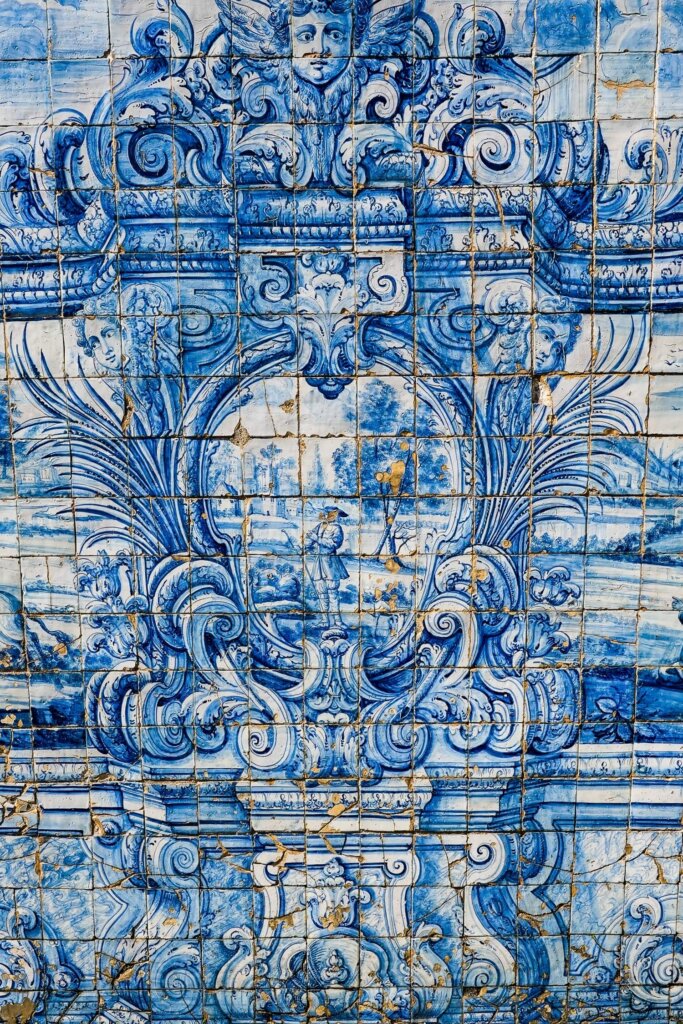
Azulejos are glazed ceramic tiles, mainly in blue and white colours, although there are combinations of other colours too. The name is derived from an Arabic term meaning “small polished stones.” Tiles adorn both the façades and interiors of buildings, churches, palaces and houses in Porto. Azulejos are a symbol of Portugal and are recognised as a cultural heritage, even though they didn’t originate from the country.
The tiles were originally from Persia. They arrived to the Iberian Peninsula in the 13th century, along with the glazed ceramic technique. Whilst the main production centres were in Spain, Portugal stood out for its creative adoption, influenced by Islamic, Italian and Flemish traditions. Since the 15th century, these tiles have been present in Portuguese architecture.
Between the 17th and 18th centuries more religious and figurative panels appeared, transforming walls into visual narratives depicting faith and history. The tiles experienced a renewed enthusiasm in the 19th century, when wealthy families returned to Portugal from Brazil. Mass production began, old factories were revived and new ones opened across the country, especially in Porto. Panels on churches weren’t only decorative pieces but a tool to educate society, depicting biblical passages and Christian values in an accessible and visual way. In order to preserve the handcrafted character, artists began to intentionally introduce small imperfections as a signature of ownership.
Porto has managed to preserve its historic character and become a true open-air gallery, unlike Lisbon, which modernised after a devastating earthquake.
Read Next: How to Spend 3 Days in Porto, Portugal
Best Places to See Blue Tiles (Azulejos) in Porto
Top Tip. Book this 3-hour guided walking tour that takes you to the most iconic landmarks in Porto. Along the way you’ll learn more about Porto’s history, including its azujelos.
Chapel of Souls (Capela das Almas)
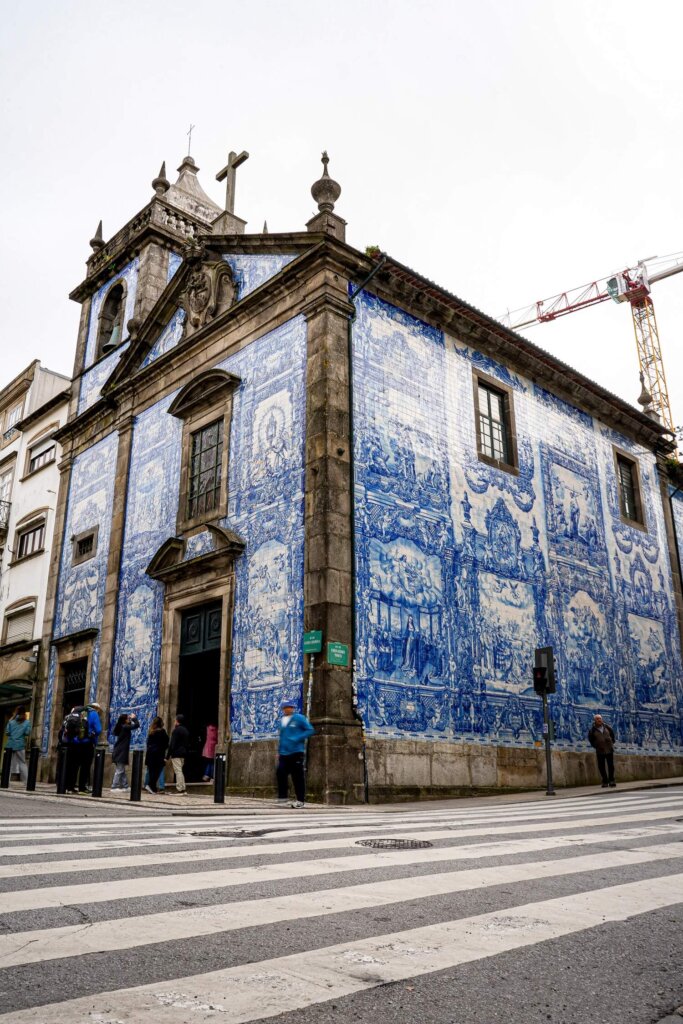
The most photographed building with blue and white tiles in Porto is the Chapel of Souls, or Chapel of Santa Catarina. This small chapel is located at the junction of the Rua de Santa Catarina shopping street and Rua de Fernandes Tomas, just across from Bolhão metro station.
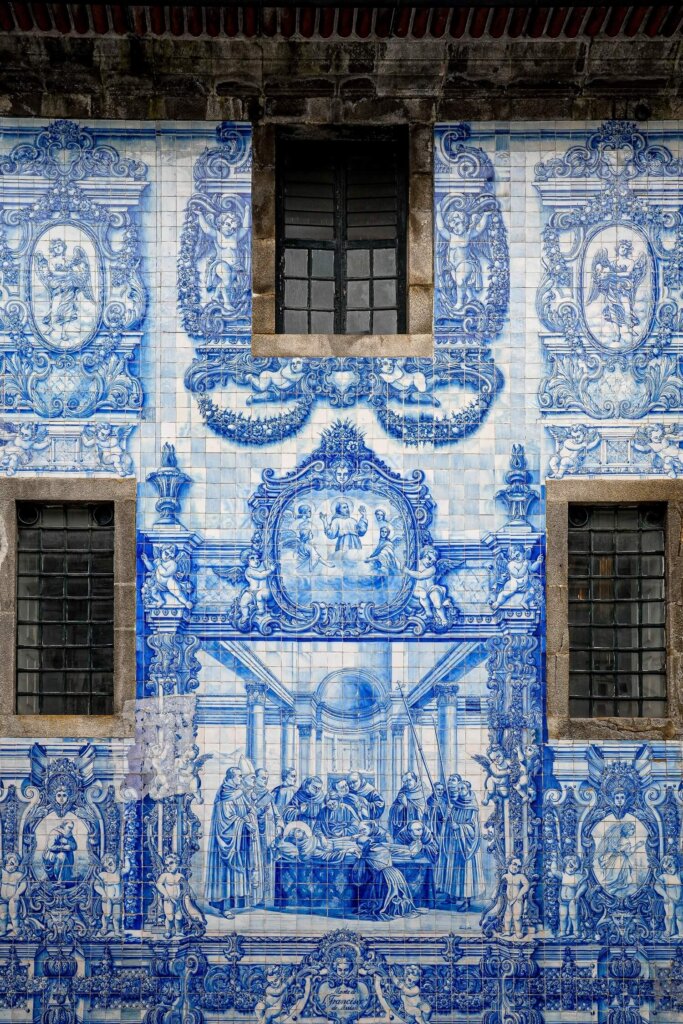
Whilst this church is small in size, nearly 16,000 azulejos cover its façade, which were only installed in 1929. Despite the amount of people surrounding it and all the photos we’d seen of it already, that first glimpse of the chapel in person was nonetheless impressive. The blue hues were much more vivid on the walls than on Igreja do Carmo, so we could see the details more clearly. The tiles were designed by Eduardo Leite and depict the death of St Francis of Assisi and the martyrdom of Santa Catarina.
Although the exterior of this building outshines the interior, it’s always worth popping inside for a few minutes.
Note. The church is located on a very busy street that gets a lot of vehicle and foot traffic. Make sure to stay safe when crossing the road.
São Bento Station
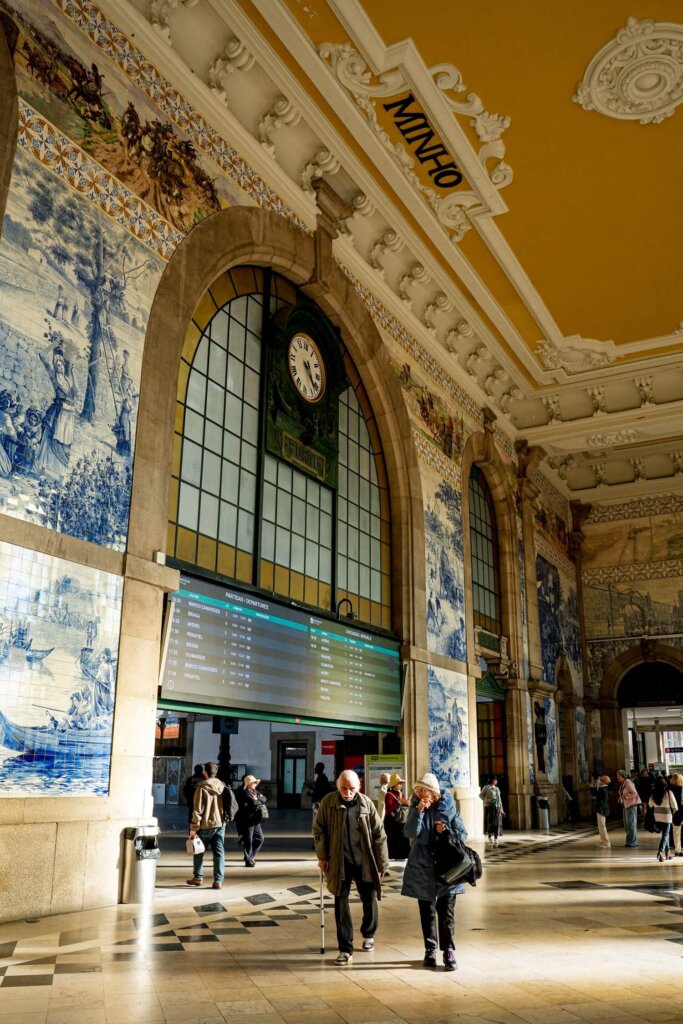
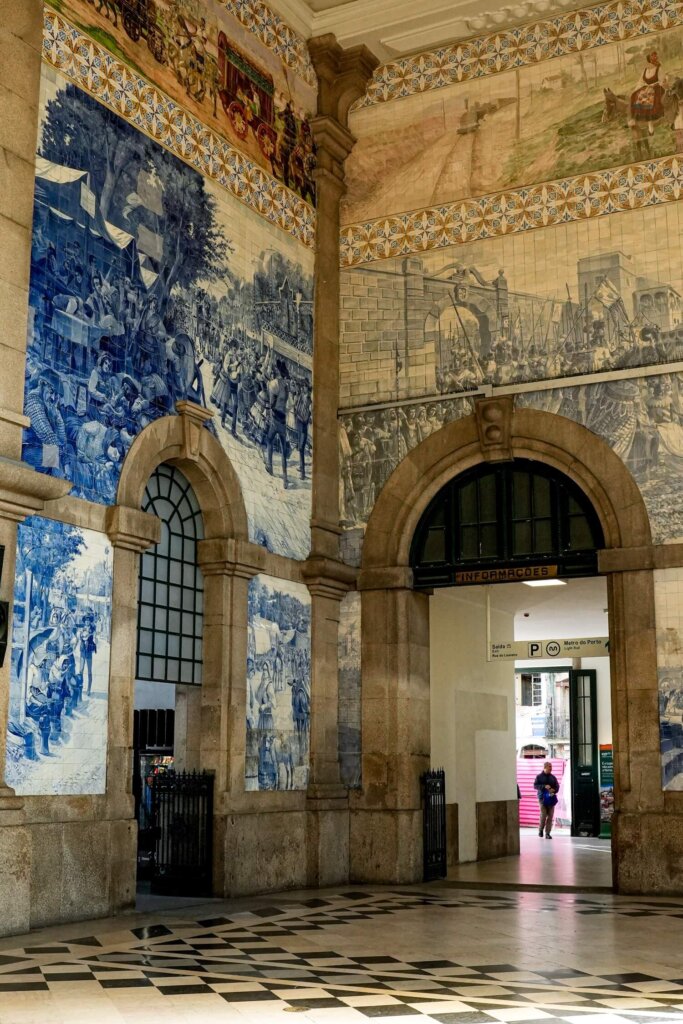
Another must-see place to admire the iconic blue-and-white azulejos in Porto is at São Bento Station. We first noticed that tiles also adorn the walls of train stations in Portugal when we took a day-trip to Sintra from Lisbon. So, of course we had to visit São Bento Station in Porto.
This railway station was built on the site of a former Benedictine monastery and opened to the public in 1916. Today, many visitors stop here to see the over 20,000 tiles that cover its interior atrium. The tiles were designed and painted by Jorge Colaço, representing the story of Portugal’s history.
The station can be quite busy with walking tour groups and regular commuters. Since it’s an active station, just be mindful of those wanting to catch their train whilst you’re appreciating this incredible work of art.
Book this 3-hour guided walking tour, that also stops at the train station, to learn more about its history.
Porto Cathedral (Sé do Porto)
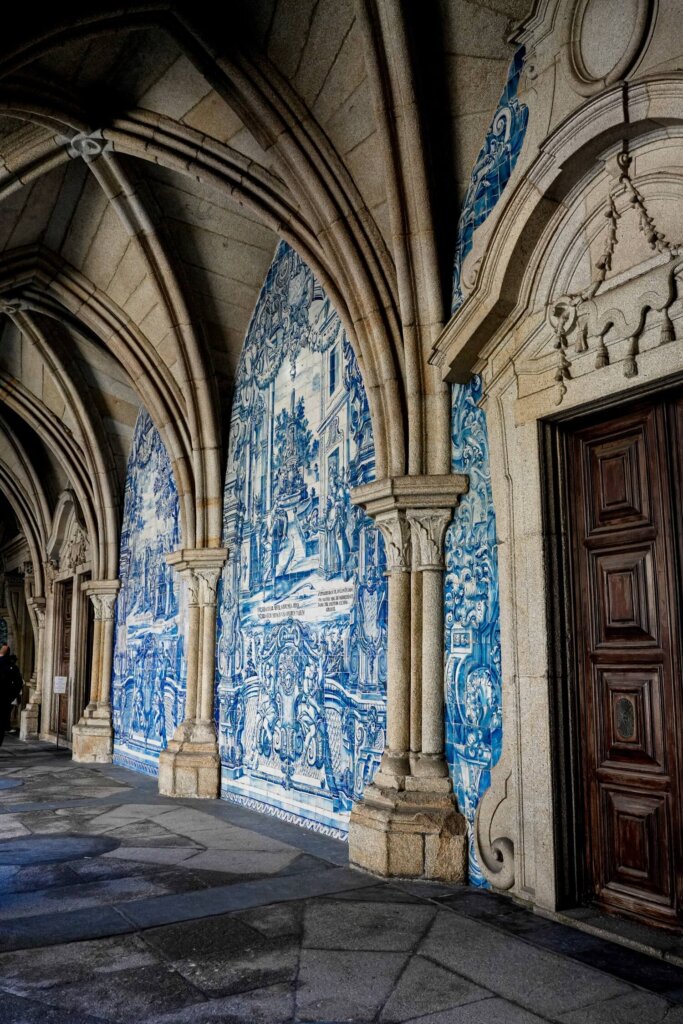
The next place you have to visit to see blue and white tiles is Porto Cathedral (Sé do Porto). Built in the 12th century, this Roman Catholic church is one of the oldest buildings in Porto. Erected on the highest part of the city, its tower rewards you with excellent views of Porto. However, the main reason to visit the Cathedral is its stunning interior.
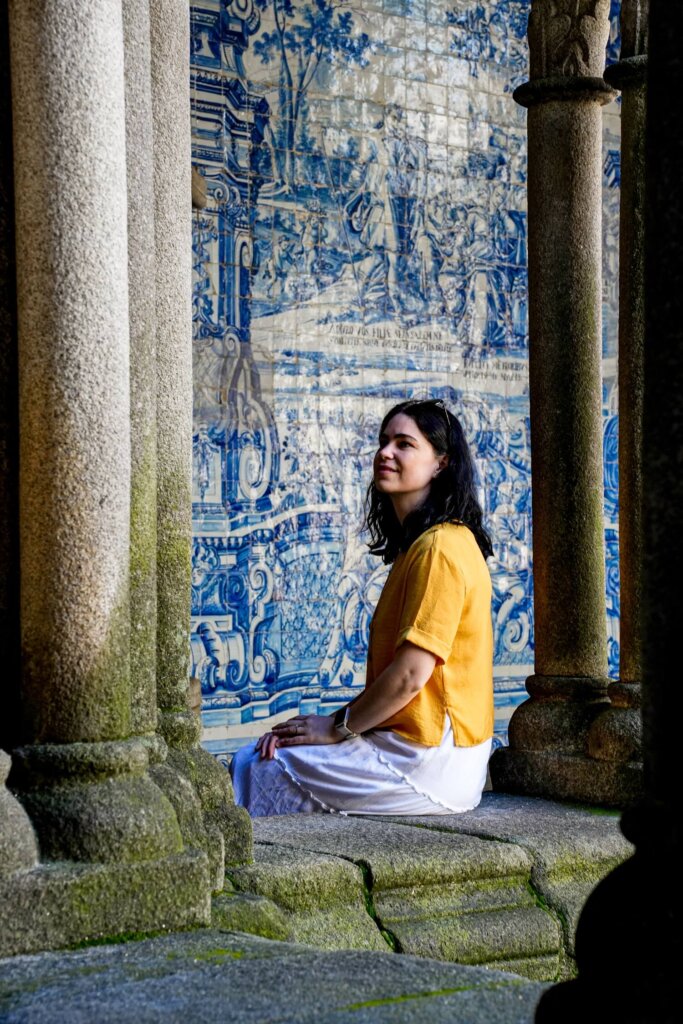
The walls of the gothic cloister are adorned with the most beautiful azulejos we saw in Porto. They were painted between 1729 and 1731 by Valentim de Almeida, depicting scenes from Ovid’s Metamorphoses and the life of the Virgin Mary. In addition, there are more beautiful tiled panels by António Vidal on the upstairs terrace. Inside the Cathedral, stop by the Chapel of the Holy Sacrament, which has an impressive Baroque silver altarpiece.
Entry to Porto Cathedral is only 4 EUR per person, which is totally worth it for seeing the azulejos.


Saint Ildefonso Church (Igreja de Santo Ildefonso)
The Saint Ildefonso Church is another religious building whose façade is covered in blue and white tiles. It is located on the lively Batalha Square, just a short walk from São Bento Station.
The church was built in the 18th century in a Baroque style on the site of an earlier chapel. It stands at the top of a broad staircase, which made it very photogenic. The walls are covered in 11,000 tiles painted by Jorge Colaço, the same artist behind the São Bento Station tiles.
Whilst the tiles weren’t as dramatic as the façade of the Chapel of Souls, we had a lot more space to appreciate them. If you go up the stairs to the left hand side of the church, you can enjoy a lovely view of Torre dos Clérigos and also appreciate just how hilly Porto is.
For a small fee you can also go inside the church. If you’re not that fussed, make sure to browse the stalls selling handmade souvenirs in the square in front of it.
Carmo Church (Igreja do Carmo)
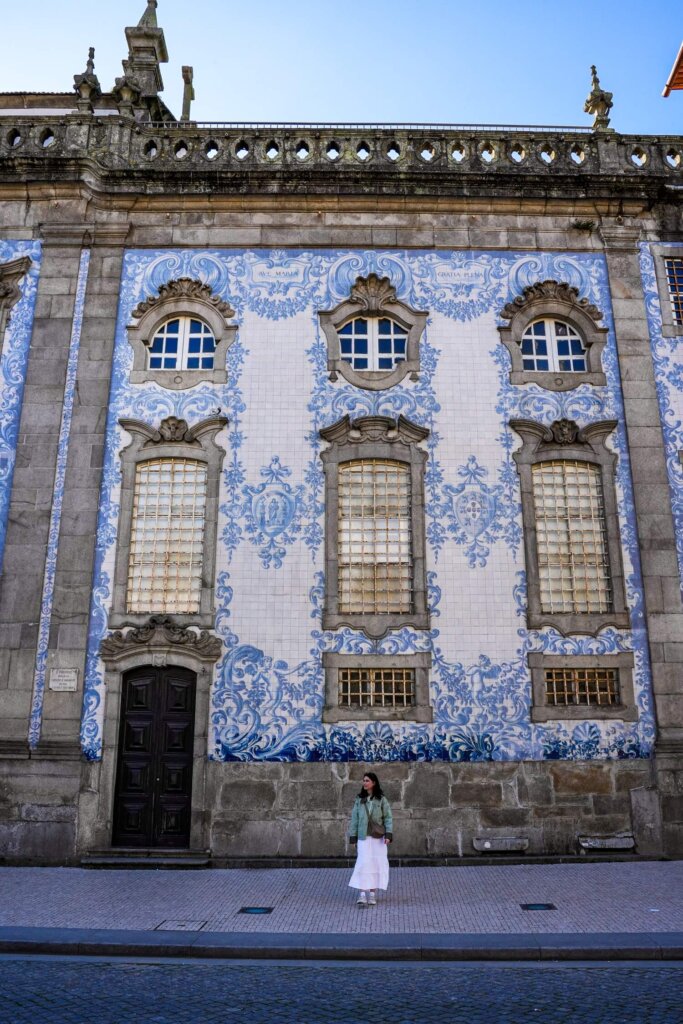
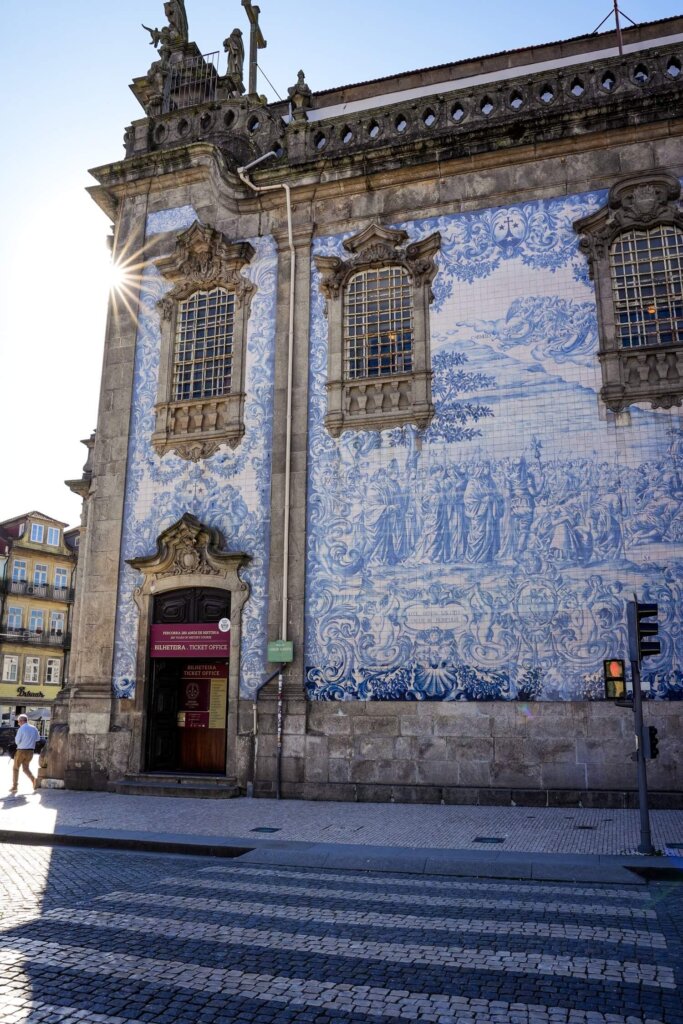
Igreja do Carmo is another impressive church that we’d seen so many photos of before our trip. It is located just around the corner from the Clérigos Bell Tower and Livraria Lello bookshop.
The church was built in the 18th century in a mix of Baroque and Rococo styles. Its side wall is covered in blue and white tiles representing scenes from the foundation of the Carmelite Order and Mount Carmel. These azulejos were designed by Silvestre Silvestri and were added to the church in 1912. Whilst the blue hues of the tiles weren’t as intense as the ones adorning the Chapel of Souls, it was still pretty impressive and photogenic.
Whilst the front of the church doesn’t have azulejos, it’s still worth walking around to see it. It may seem like there’s only one church but in reality Carmo Church has a twin: Igreja dos Carmelitas. The two are separated by a narrow (1 meter wide) house.
Ribeira Neighbourhood for More Colourful Azulejos
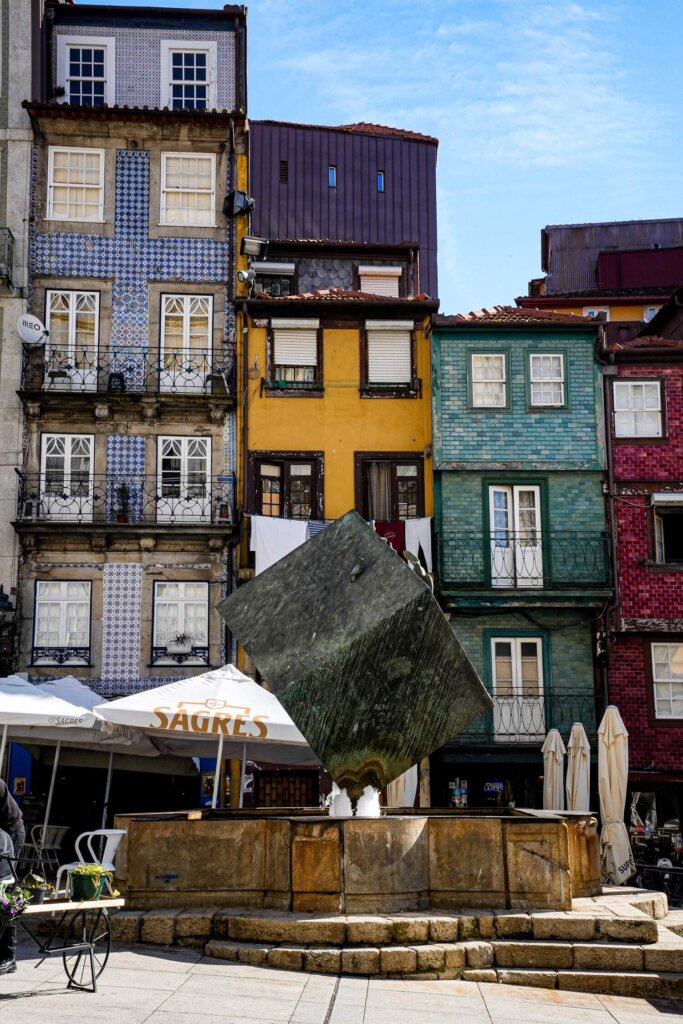
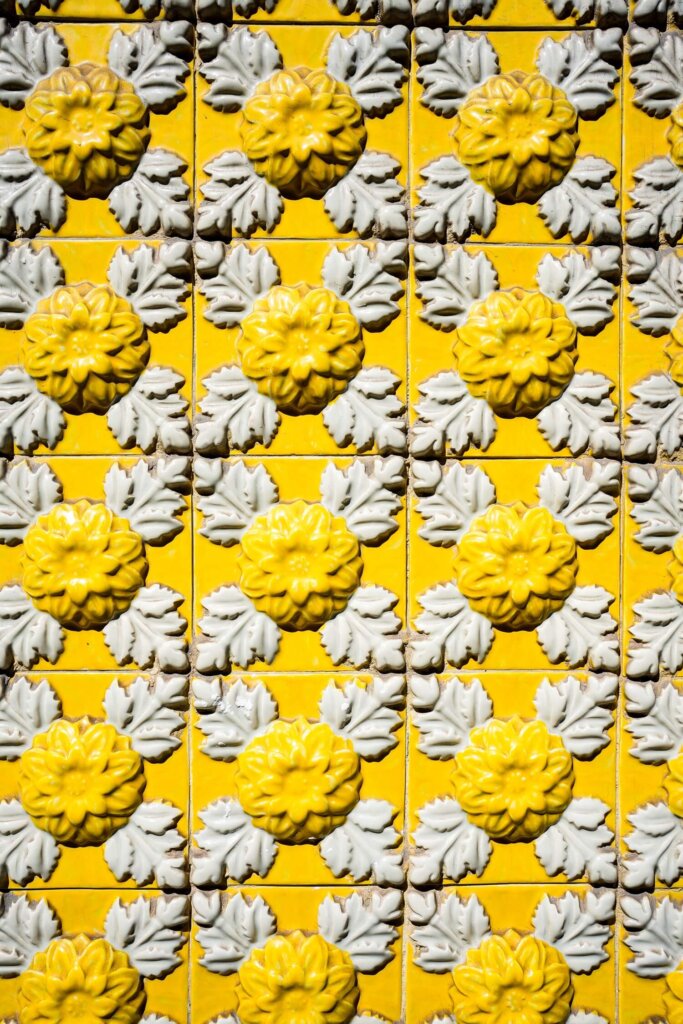
Whilst the blue and white tiles are the more traditional ones, we spotted lots of colorful tiles as we wandered around the Ribeira neighbourhood. This is a must visit area of Porto, and we suggest exploring it on foot. Here we could see azulejos everywhere, adorning the exteriors of many buildings, including people’s homes.
We saw many contemporary designs as we took a stroll along the waterfront, looking up at the old townhouses. We also enjoyed getting lost in the narrow and steep side streets, as well as the popular Rua das Flores, where we noticed more azulejos. Take your time and keep your eyes peeled for some unique patterns.

Church of Santo António dos Congregados (Igreja dos Congregados)
Due to some roadworks in this area, we walked past this church multiple times before we noticed the beautiful tiles adorning its façade. It’s located right next to São Bento Station, which is why it’s so easy to miss.
The church, which is dedicated to Santo Antonio, was built in the 18th century and has a Baroque style façade. If you’re heading to the train station anyway, definitely stop here for a moment to look up and take in the blue and white tiles with a pop of yellow. The tiles were designed by Jorge Colaço and depict the life of Santo Antonio.
Casa da Musica
The “House of Music” is an interesting building that hosts a variety of concerts, from classical music to contemporary genres. Inside, there’s also a room with some incredible contemporary blue and white tiled panels.
You can take a guided tour of the building or even attend a concert. Although it’s slightly outside the historic centre, most metro lines pass by here.
Materials Bank (Banco de Materiais)
The Materials Bank, or Museu da Cidade do Porto, has an extensive collection of traditional Portuguese tiles. Azulejos in Porto need to be protected from general decay, damage, and neglect, as well as thieves. Therefore, the Materials Bank was created to collect lost tiles across the city. Whilst it looks like a museum, in reality it works more like a “bank”. People can bring in damaged azulejos, as well as take them to restore their building’s façade, free of charge.
The Materials Bank is located at Praça Carlos Alberto and you can visit for free.

Buy Your Own Tile
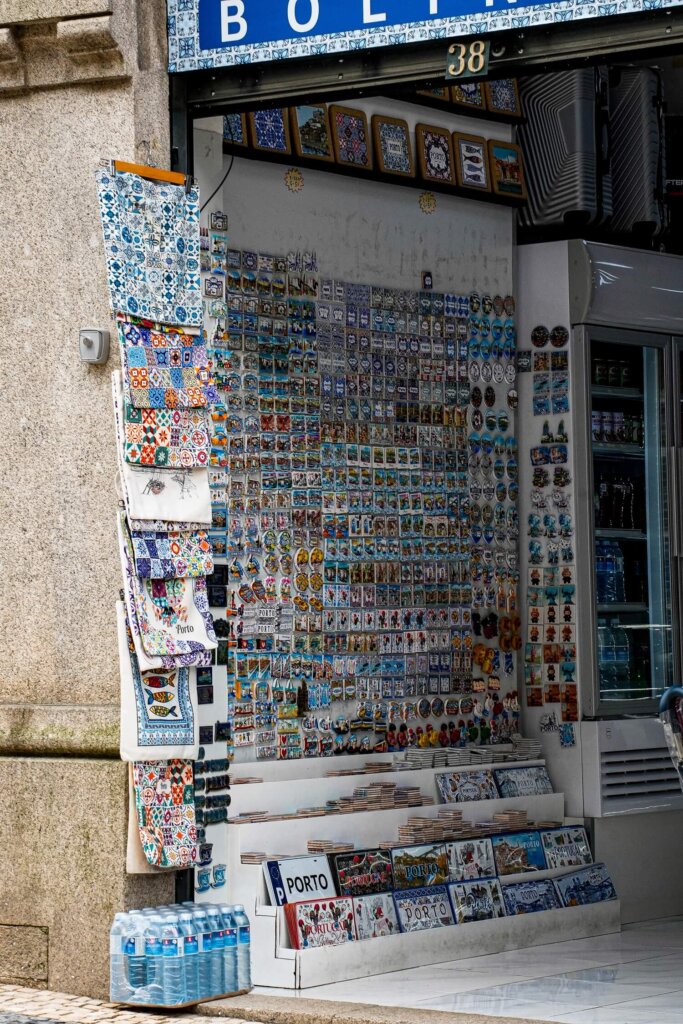
After seeing all the tiles that decorate the surfaces of the buildings, you’ll probably be caught up in azulejos fever like we were. Buying a tile is no doubt the best souvenir you can get to remember your time in Porto. We saw tiles being sold at literally every single gift shop in Porto! Now, many of them are quite cheap, so they probably aren’t the best quality. Sadly, there’s also been a rise in people selling azulejos that have been stolen from private properties! Therefore, we encourage you to find a genuine handmade tile that was painted by a local artist. Below are a few places to check out:
- Prometeu Artesanato. We loved browsing this shop, which had many gorgeous tiles. Azulejos are painted in-house and they were much better quality than the ones in regular souvenir shops. They had many traditional and religious patterns, as well as many funny ones.
- Zinda.Atelier. This small ceramic store is run by artist Zinda Pereira. She has some very unique pieces thanks to her technique, which incorporates traditional as well as uncommon elements.
- Fleurdelis. This tiny store also sells some lovely handmade tiles. They have both vintage and newly made azulejos.
- Gazete Azulejos. Another great shop to buy some tiles. They not only sell them, but run tile-painting workshops as well, where you can paint your own azulejo in Porto.
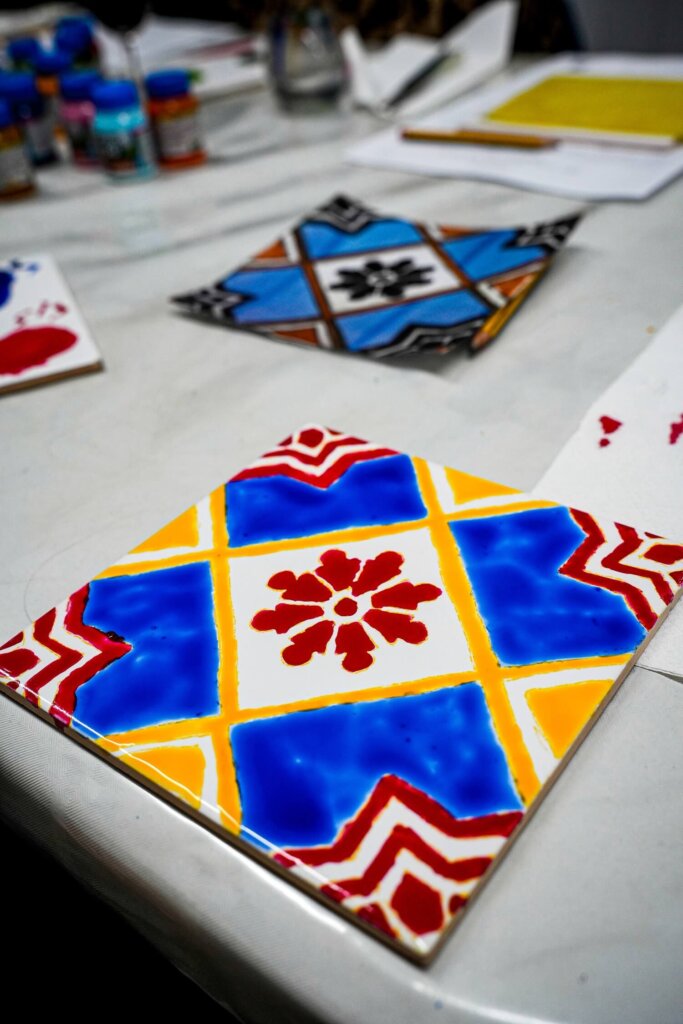
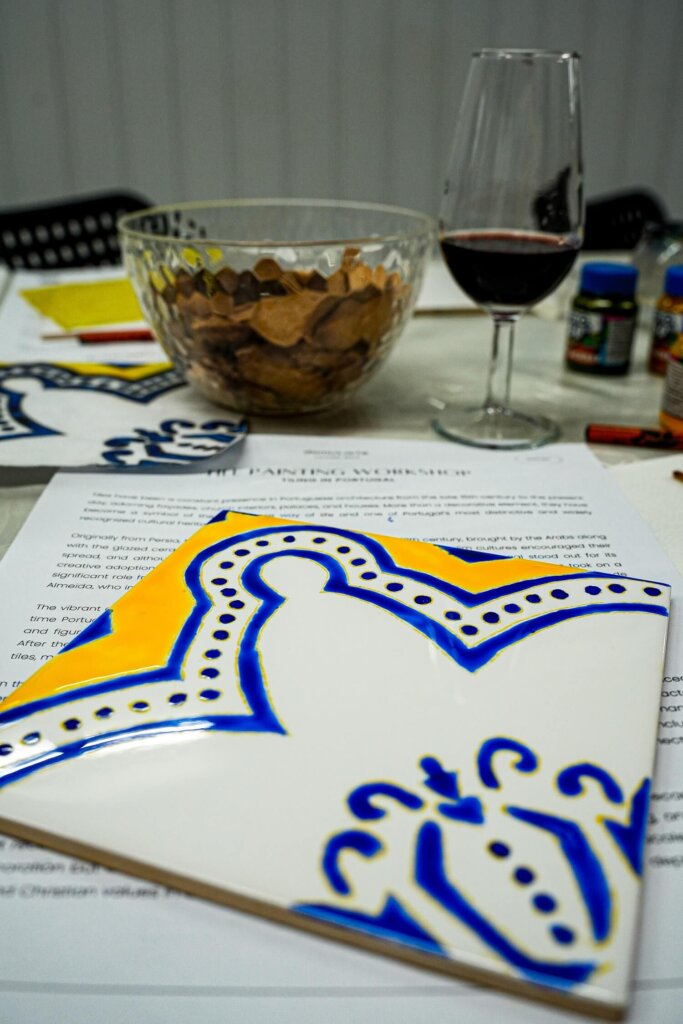
Tile Painting Workshop – Make Your Own Azulejo
Whilst you can just purchase one, having a tile that you painted yourself is going to be a much more meaningful souvenir. There are many workshops held across Porto, so you won’t have trouble finding one.
We booked this 2-hour tile painting workshop held in Domus Arte. It started with a brief history of tiles in Portugal, before we were able to pick the template we wanted to replicate. Luckily, they made it quite easy to recreate our chosen designs and gave us plenty of tips on how to paint for a beautiful end result. Even if you don’t consider yourself skilled enough with a paint brush, you’ll still come away with a lovely hand-made tile. In addition, they also served some port wine and snacks. By the end, we had a much greater appreciation for just how talented the artists who painted these impressive panels are.
We don’t often book these more hands-on activities, but we enjoyed it way more than we anticipated. Since we had a rainy day in Porto, it was a great way to escape from the weather for a few hours. Not to mention that we came away with our own hand-made tiles, which are now proudly displayed on our shelf at home.

Final Thoughts on Azulejos in Porto, Portugal
As you can see, it wasn’t hard to find incredibly beautiful blue and white azulejos in Porto. Everywhere we looked, we spotted more and more unique designs, including many fun colours as well as the traditional ones. Without doubt, the Chapel of Souls was probably the most impressive façade we saw. However, we also could’ve admired the walls of São Bento Station for hours, discovering more and more details. Lastly, painting our own tile definitely made us appreciate just how time consuming it is to create such impressive artwork.
Have you ever been to Porto before? If so, what was your favourite place to see blue and white tiles? We hope that this list will aid you in finding some stunning azulejos during your visit to Porto. If you found this blog post useful and want to show your support, you can buy us a coffee here.
Now, let your adventure begin,

Remember…It all starts with a Pin…




those tiles are amazing. one if the best reasons to visit the area. thank you for the guide.
Thank you!