Crossing the Drake Passage to Antarctica – Sailing Across the World’s Roughest Waters

The majority of travellers who book a trip to Antarctica from Ushuaia will have to cross the Drake Passage. This body of water is known to be the most treacherous in the world and it demands respect from everyone attempting a crossing. Whilst nowadays it’s a much safer voyage, you still won’t know what conditions you’ll get when you book an expedition cruise and how your body will react to being on the choppy sea.
In this post, we share what to expect from crossing the Drake Passage, how to manage seasickness and nausea, and other safety tips based on our personal experience.
If you’d like to see our experience crossing the Drake Passage, make sure to watch the two-part Antarctica series we shared on our YouTube channel Kitti and Jon.
Disclosure: This post may contain affiliate links, which means we may receive a small commission if you click a link and purchase something. Clicking these links won’t cost you anything, but it will help us to keep this site up and running! Learn more about our affiliate policy.
What is the Drake Passage?
The Drake Passage is the body of water between Cape Horn in Chile and the South Shetlands. It spans around 600 miles (1,000 km) at its narrowest point, making it the shortest route between Antarctica and the rest of the world. The Drake influences global ocean circulations, weather systems and climate patterns.
The passage is named after the English privateer and explorer Sir Francis Drake, even though he never actually sailed through it. In 1578, during his circumnavigation of the globe, one of his ships drifted south after passing through the Strait of Magellan. He realised that this was the area where the Pacific and Atlantic oceans meet.
On some Spanish maps, you may find the name Mar de Hoces (Sea of Hoces) instead of the Drake Passage. This is because in 1525, Spanish explorer Francisco de Hoces entered these waters while sailing from the Strait of Magellan.
The first confirmed crossing was in 1616 by Dutch explorer Willem Schouten.
Why the Drake Passage is so Notorious
The Drake is considered one of the most treacherous seas and has some of the strongest currents in the world.
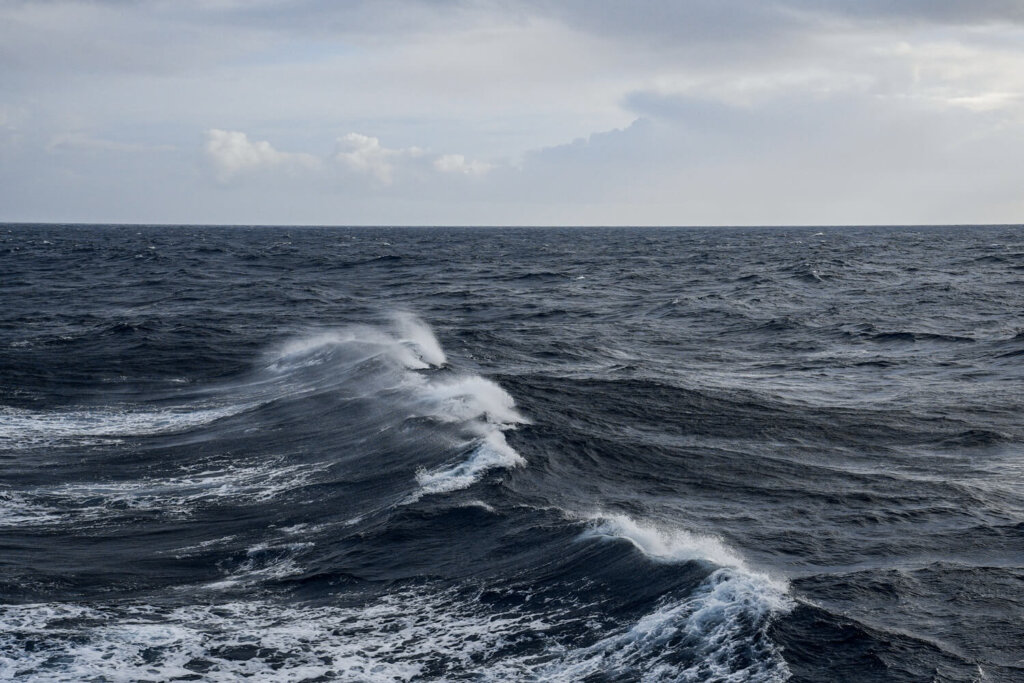
This is because the Southern Ocean isn’t broken up by land, so the wind can just circle around freely. They even named some of these winds according to their latitudes, such as the roaring forties, furious fifties and screaming sixties. In addition, the Antarctic Circumpolar Current, the world’s largest ocean current, flows around the continent uninterrupted. This combination can create swells reaching 13-15 meters (40-50 feet) or higher.
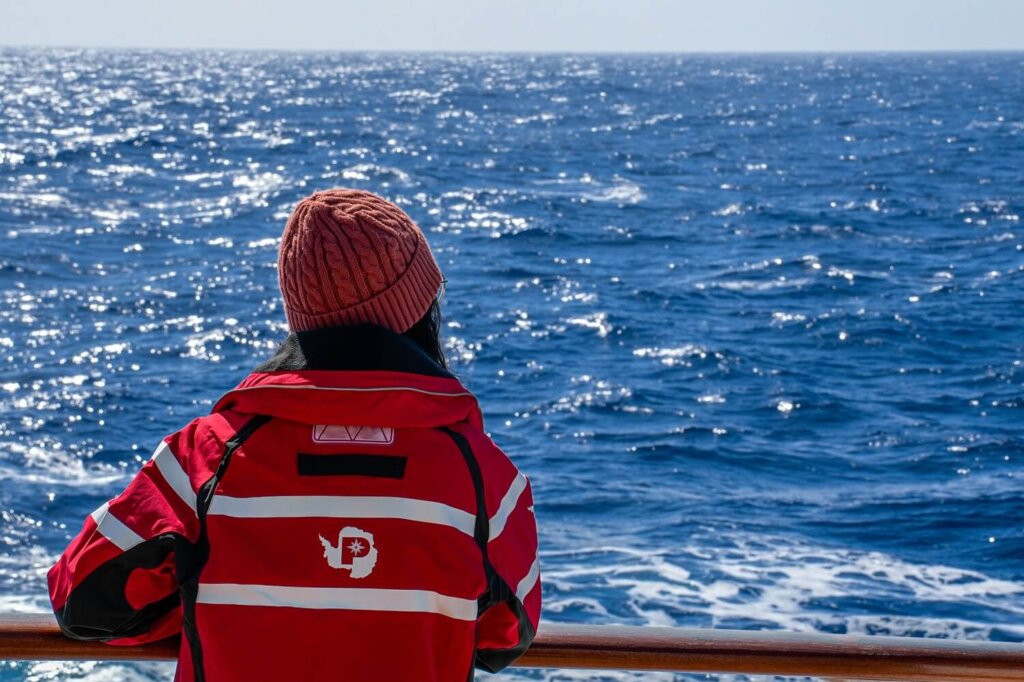
Is Crossing the Drake Dangerous?
The weather around the Drake is quite unpredictable, which makes it one of the most challenging navigation routes in the world.
Over the centuries, the Drake has claimed hundreds of ships and thousands of lives, which is why it’s sometimes called “the graveyard of ships”. So, naturally, you’re wondering just how dangerous crossing the Drake Passage is?
Although you’ll be sailing across the same waters as many explorers in the past, your experience will be much safer thanks to modern technology. Expedition ships today have many advanced features, such as stabilisers suitable for these treacherous conditions. Forecasting is also more accurate, so the crew can prepare accordingly.
Overall, there are many strict safety regulations in place that operators have to follow. For example, if the conditions look too bad then you may have to hang around Ushuaia for a bit longer, or return slightly earlier.
‘Drake Lake’ or ‘Drake Shake’
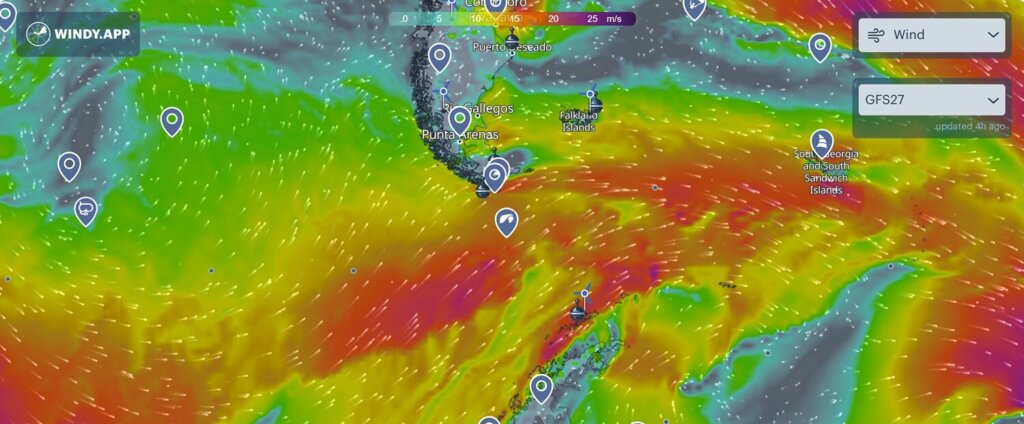
The Drake can still be surprisingly calm, which is commonly referred to as the ‘Drake Lake’. On the contrary, when the swells are high and it’s much windier, you might get what is known as the ‘Drake Shake’. Of course, you can have anything in between too, which is more likely.
Since the conditions can be unpredictable, you won’t know for certain what you’ll get when you book your cruise. There are weather apps though, such as the windy.app, that you can check closer to departure. The expedition team will also tell you about what to expect from the crossing in the pre-meeting and once you’re on board.
We only had about 3m swells on our way to Antarctica, which was just enough to give us a little taste of the Drake. The way back was very similar too, although for that we had to depart a bit earlier. There was a bad weather system coming in, so travellers departing right after we arrived back weren’t so lucky. We’re glad that we didn’t experience a full Shake!
How Long Does it Take to Cross the Drake Passage to Antarctica
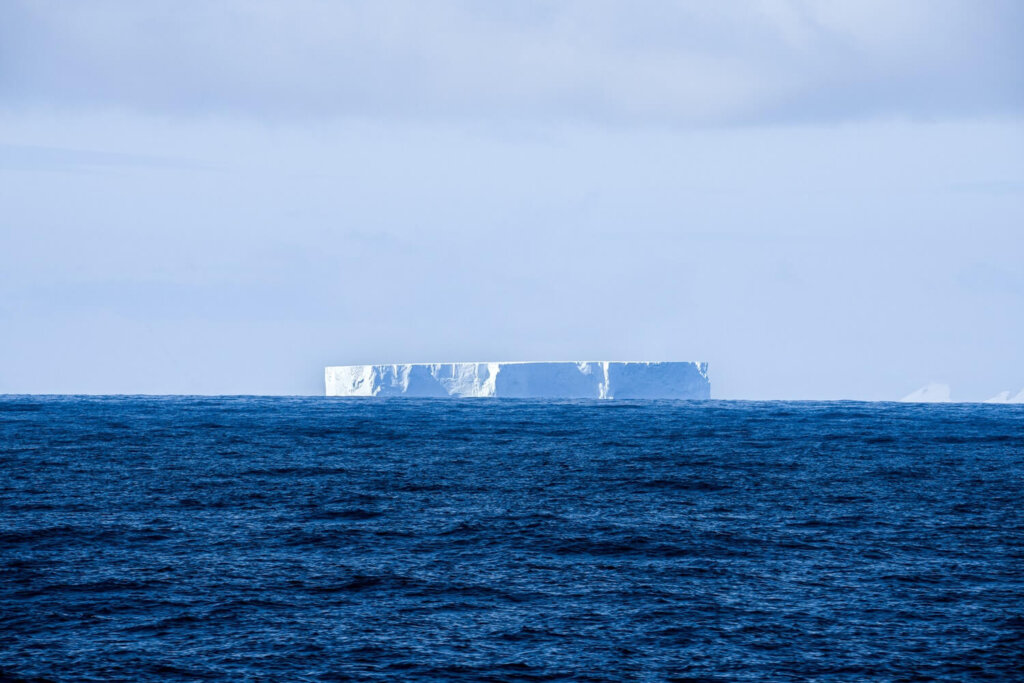
Crossing the Drake takes around two days, although it depends on weather conditions. We made it across in just a day and a half, excited to spot our first icebergs so soon. The team surprised us with a bonus sunset zodiac cruise to celebrate our early arrival.
Of course, you’ll also have to do the crossing on the way back to Ushuaia. This means that if you book the 10-11 day-long ‘Classic Antarctica’ cruise, about 4 days of that will be crossing the Drake Passage.
⛴️Read my guide on what to know before booking an Antarctica cruise.
Can You Visit Antarctica without Crossing the Drake Passage?
Yes. You can actually fly to Antarctica if you want to skip sailing through the rough seas of the Drake Passage.
The most common flight route is between Punta Arenas in Chile and King George Island in the South Shetland Islands. Then, you would join a cruise to traverse around the continent.

Health & Safety When Crossing the Drake Passage
Will You Get Seasick When Crossing the Drake to Antarctica?
You may or may not get seasick when crossing the Drake. Everybody reacts to being at sea differently. It’s a bit like altitude sickness, where you cannot fully predict it, no matter how often you’ve been in that environment.
Of course, during a Drake Shake the chances of seasickness will increase. However, some people can get sick even when the water is much calmer.
Luckily, neither of us got properly seasick during the crossings. However, we still felt nauseous, especially on the first day. Just keep in mind that it’s all part of the experience and the seasickness feeling won’t last long.

Ways to Manage Seasickness or Ease Nausea
Please note that the below suggestions are based on our personal experience and are not to be viewed as official medical advice. We highly encourage you to consult your doctor if you have any questions, concerns or underlying conditions before your cruise.
The cruise doctor did give passengers plenty of information and we also talked to many team members who gave their personal tips and tricks from multiple crossings of the Drake. In addition, fellow passengers also shared with us what worked for them.
1. Book Your Cruise Ship & Cabin Wisely
It’s worth highlighting that not all ships are made equal when it comes to movement. A lot depends on their size, shape, length and height, as well as other design factors.
When you’re booking your cabin, the location of it could be important during the crossing. Rooms on a higher floor and towards the front of the ship will feel the impact of the waves more than others. Having a floor to ceiling window or balcony would allow you to look at the horizon without leaving your room.
Some of our fellow passengers, whose suites were located on the top floor, told us they felt quite rough. Our room was closer to the front of the ship too but on a lower floor. We certainly felt a difference in movement every time we went to the dining room at the back of the ship. Of course, since we booked our cruise at the last-minute, we couldn’t pick our cabin location.
🛳️Read my detailed guide on how we saved over 50% on our Antarctica cruise.
2. Tablets and Patches
One of the most popular cures for seasickness is oral tablets. If you can, we suggest bringing the ones recommended by your doctor from home. Alternatively, you can also buy some in Ushuaia (which is what we did). Medication will also be available from the cruise doctor, but it’s best to have your own too just in case.
There are also patches that you can put behind your ear. These worked well for some people and less so for others. Some may prefer not to take anything at all and to use pressure wristbands or other natural remedies. Tablets and patches can make you drowsy, so bear that in mind before taking them. Unless you know what works for you from previous experiences, it may just be a case of trial and error on your Antarctica cruise.
3. Take Medication Early
If you’re prone to motion sickness, are genuinely worried about getting seasick, or have been informed that the crossing may be quite choppy, it’s usually advised to take the medication before you actually get sick.
We were told that we would hit the Drake around midnight, so decided to take the tablets before going to bed. That was the only time we took medication though because we didn’t get seasick and also didn’t want to feel too drowsy. Plus, the Drake got smoother the closer we got to Antarctica.


4. Avoid Eating too Much
One of the best tips we got from an expedition team member during dinner on the first night was to eat less during the first breakfast. This was quite hard when we saw the extensive buffet. However, eating a small portion of simple foods is important and actually helped to keep everything down.
You may not feel bad whilst dining, but quite a few people had to dash to the bathroom after getting up, with nausea hitting them quickly.
It’s also important to eat something though, even if you are feeling seasick.
5. Stay Hydrated
Staying hydrated is essential to avoid getting seriously ill. Drink plenty of fluids, ideally with electrolytes because these flush out of your body quickly when you’re sick. We brought some from home and added them to our water-bottles.
Drinking ginger, lemon or mint flavoured tea can also be soothing if you’re feeling nauseous.
🧤Read my Antarctica packing list
6. Tell the Cruise Doctor if You Got Seasick
If you do get seasick, then you or someone you share the room with should inform the doctor on board. They can make sure that you’re okay, are not going to spread anything unwanted around the ship and can aid you in recovering faster.
7. Sanitising is Important
Viruses on a cruise ship can spread fast. As you’ll see further below, you’ll be touching handrails and other parts of the ship and be in close proximity to your fellow passengers. Therefore, sanitising and washing your hands will be incredibly important whether you’re seasick or not.
8. Other Natural Remedies to Ease Nausea
If you’re lucky enough to only experience minor nausea, you can try many well-known natural remedies.
- Ginger is probably one of the most common remedies to ease nausea. I genuinely love ginger and so had it in all forms on the cruise including tea, ginger ale and crystallised ginger bites. Mint and lemon may also work and I even read about green apples helping as well.
- Plugging an ear. The doctor suggested that having an earplug in the opposite ear to your dominant one could help. You’re making your brain focus on your hearing rather than the moving ship. It did work for some people.
- Lie down & keep the room cool. Another suggestion we got was to lie down in bed when we felt nauseous. In between presentations, which took place on the top floor at the front of the ship, we went to lie down for a bit. It seemed to help us feel better instantly. Just be careful not to get up too quickly though. The room was also a bit cooler, which kind of imitated being out in the fresh air.
- Get some fresh air. If you’re allowed outside during the Drake crossing, we suggest going out onto the decks regularly. The fresh air works like magic and definitely helped us a lot.
- Watch the horizon. Another well-known thing to do is to look at the horizon. I use this method every time I’m on a choppy boat ride and it does work. You essentially tell your brain that the world isn’t moving.


Preventing Injuries & Damage During the Drake
Being seasick is many travellers’ main concern when it comes to crossing the Drake. However, you also have to make sure that you avoid getting physically injured or accidentally damaging your belongings (aka your expensive camera gear).
1. Always Hold Onto Something When Walking Around the Ship
During the initial health & safety briefing we were told to always have one hand on the ship when it’s moving around. This was common practice throughout the whole voyage, as you can never predict when the captain needs to swerve suddenly to avoid something.
We got our sea legs pretty quickly but have to admit that walking around the ship during the crossing felt like a full-body workout. For example, we always had to grab the railing in the hallways and when going up and down the stairs. Open spaces were trickier to cross, so we always ended up going around furniture that we could grab onto.
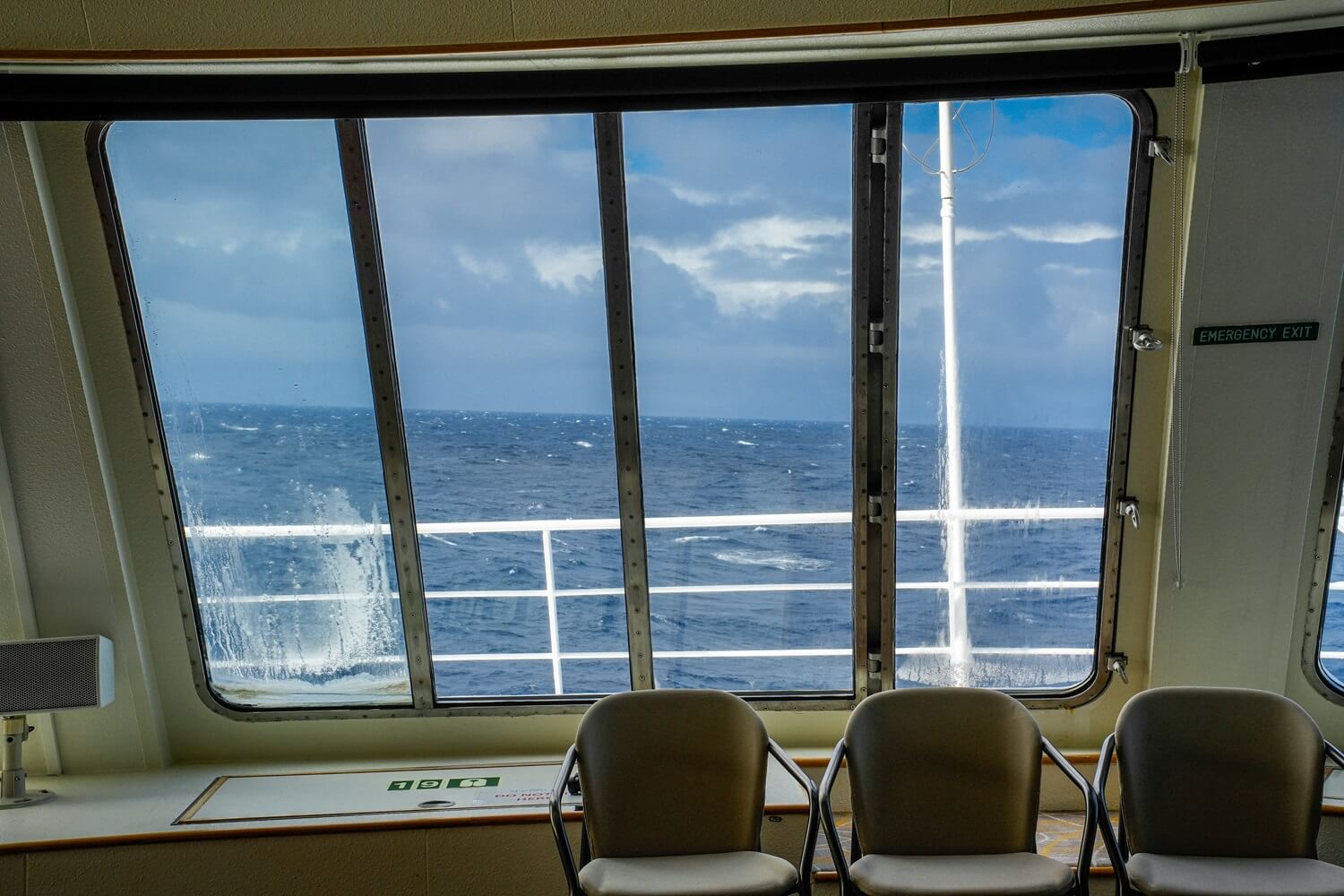
In the dining rooms, you’ll also see that the chairs will be chained to the floor to prevent you from tipping over. Depending on the roughness of the Drake crossing, some or all of the decks may be closed off. Even if you can go outside, it’s very important that you always hold onto something. And lastly, you may even be told not to leave your room if the water is extremely rough, for safety reasons.
2. Secure Your Belongings in the Room
If you’re going to Antarctica, the chances are pretty high that you’re carrying expensive camera gear and other tech. We highly recommend keeping everything that could break or get damaged secure during the crossing. What you want to avoid is breaking your costly lenses because they rolled off the table while you weren’t in the room to catch them. It’s so easy to just leave your phone on charge, then come back to find it on the floor after a sudden movement.
Other things can move around your bedroom as well, which can be especially annoying at night. Learn from me and don’t leave your lip balm in the drawer of the nightstand if you want a good night’s sleep. Or your wheeled suitcase loose in the closet.
3. Be Careful Putting Things Downs Around the Ship
Your cup of coffee may spill all over the table if you’re not holding onto it (true story). So, you want to avoid placing your electronics next to things that can damage them and don’t leave them unattended.
It’ll become second nature quickly but it’s also so easy to forget about something that’s not an issue on stable ground.
4. Access to Certain Areas May be Closed Off
Depending on the conditions, you may not be able to get out onto the decks at all. Even with a 3m swell, the front of the ship was completely off-limits. Luckily, we could go out onto the back decks, which didn’t move around as much. However, you may not be allowed outside at all. In fact, in very rough conditions, you may be asked not to leave your room either.
It’s important to follow the rules for your own and your fellow passenger’s safety.
Things to Do Whilst Crossing the Drake Passage
If the conditions are manageable and you feel fine, then there will be plenty of things to do to fill up your days. We definitely didn’t get bored during the crossing.
Wildlife Watching
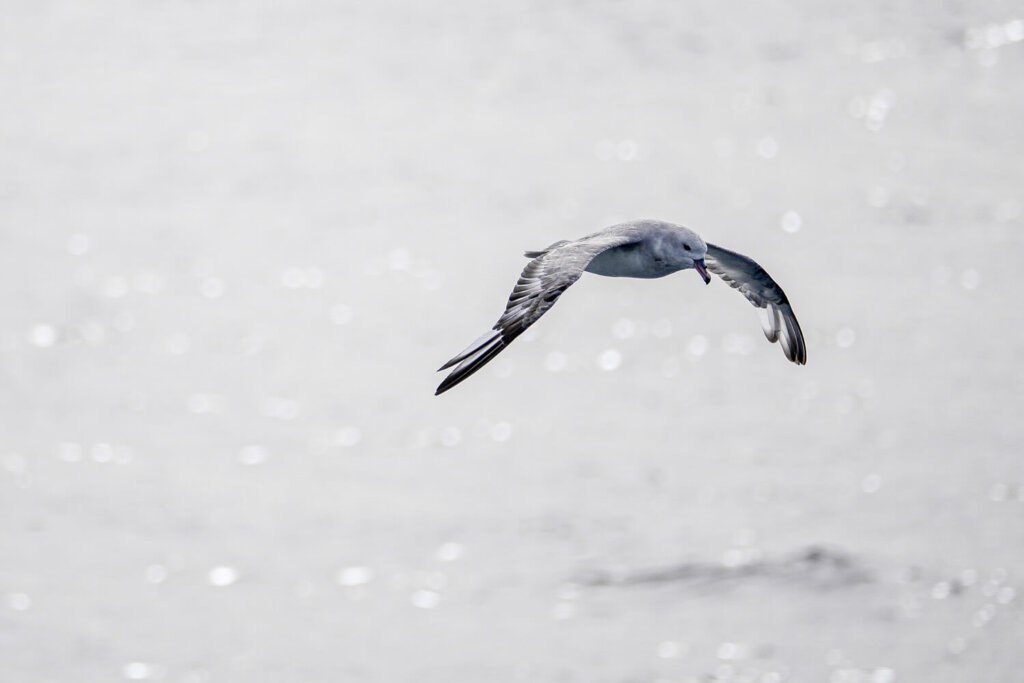
Despite the notorious conditions, the Drake actually offers great wildlife watching opportunities. A great variety of seabirds can follow the ship, including albatrosses, petrels, shearwaters and storm-petrels. You can certainly capture some lovely images. In addition, you may even spot whales and dolphins, especially if the water is calmer.
If it’s possible to be out on the decks and you’re feeling up to it, we highly recommend spending some time outside.
Attending Lectures
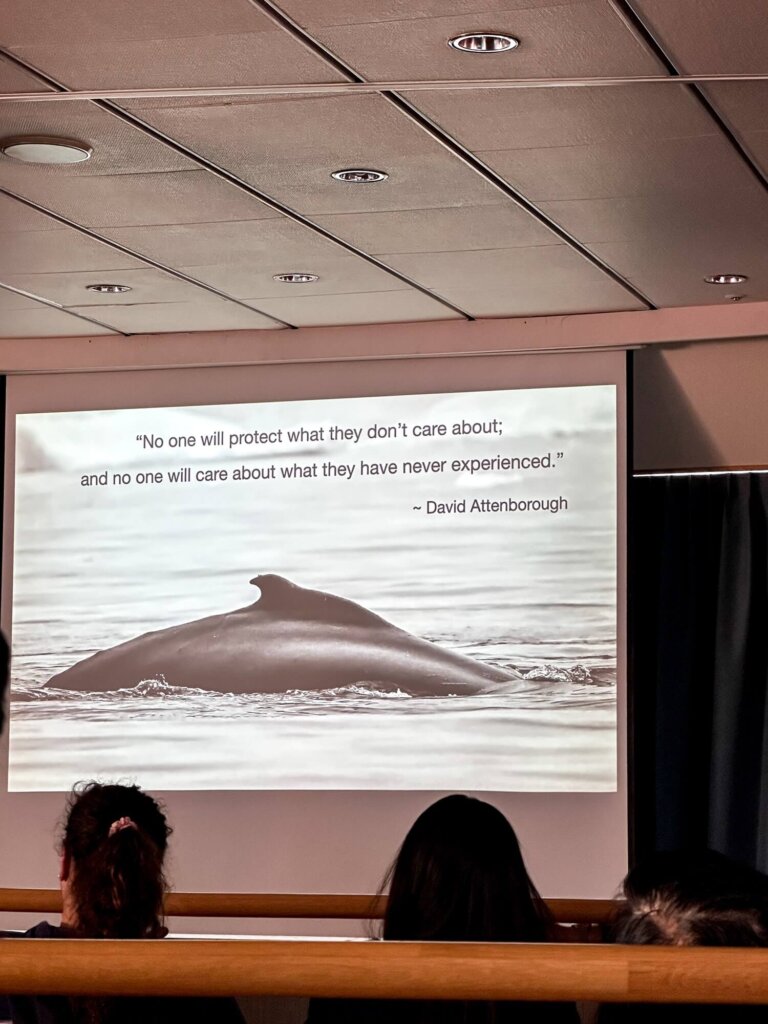
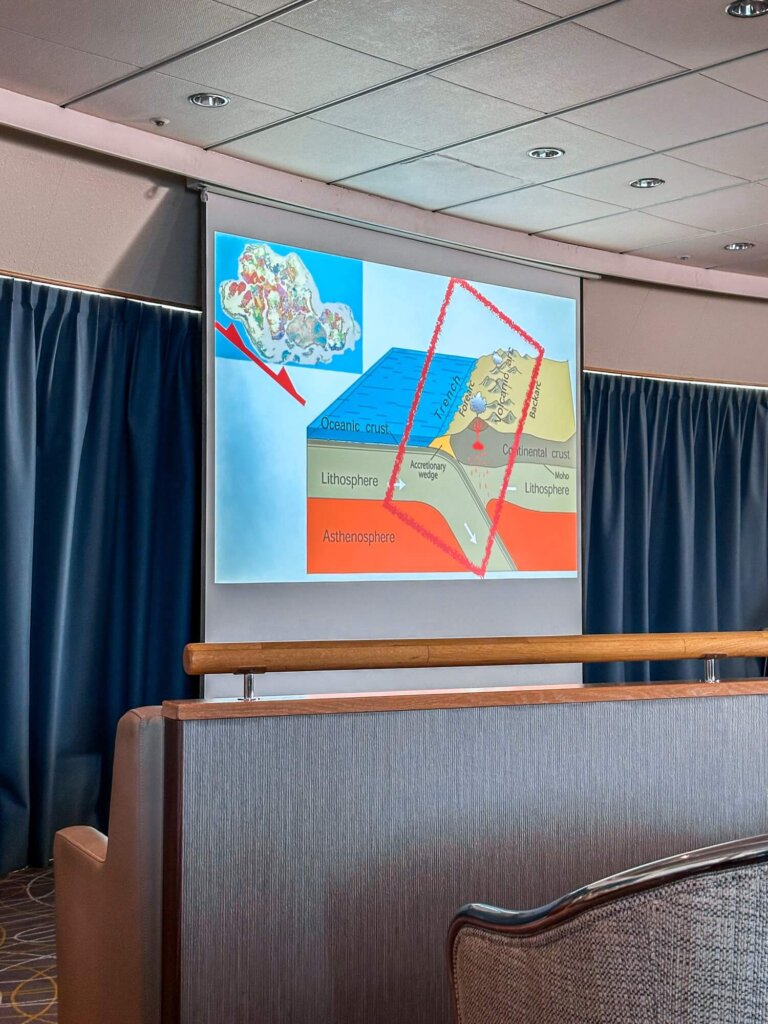
Between meals there were different lectures we could attend. Expedition team members presented different topics on Antarctica, including history, geology, ecology, the wildlife and even photography tips. Thankfully, we were feeling fine to sit through them because they were incredibly informative. They also streamed these lectures on the TV in our rooms, so even if you don’t feel like sitting up, you can watch them from bed.
When we were getting closer to Antarctica, we also had mandatory safety briefings that included learning about the procedure of using the zodiacs, bio security and other environmental protection measures that would be in place during landings.
Join Citizen Science Programs
During our entire voyage, we could join citizen science programs. These allowed us to get involved in data collecting to contribute to scientific research.
Whilst crossing the Drake we had cloud and bird surveys, which was a great way to train our eyes to spotting wildlife, as well as learning about different species, knowing that our findings would be analysed by scientists.

Final Thoughts on Crossing the Drake Passage
Sailing through the Drake Passage was definitely an unforgettable experience. We were thankful that we had a safe crossing, with just enough swell to appreciate why it can be so treacherous. It was also lucky that we didn’t get seasick, so we could enjoy attending lectures and observing wildlife, instead of being in bed the whole time. After a day and a half of being surrounded by nothing but water, spotting the first icebergs in the distance was extra special.
If you’re currently preparing for your Antarctica trip, we hope that you found this post useful. In case you wish to show your support, you can buy us a coffee here.
Now, let your adventure begin,

Remember…It all starts with a Pin…